
Can You Buy a Car Without a License?

Yes, you can legally buy a car without a license in most U.S. states—but there are important limitations. While no law prevents an unlicensed person from purchasing a vehicle, you’ll face hurdles with insurance, registration, and financing. This guide breaks down what you need to know to make an informed decision.
Key Takeaways
- You can legally purchase a car without a driver’s license: Most states allow anyone to buy a vehicle regardless of licensing status, though dealerships may have their own policies.
- Insurance is required to register and drive the car: Even if you’re not driving, you’ll need a licensed driver to insure and operate the vehicle legally.
- Financing may be more difficult without a license: Lenders often prefer borrowers with valid IDs and driving records, but alternative documentation can help.
- Registration requires proof of insurance and ID: You’ll typically need a government-issued ID (not necessarily a driver’s license) and valid insurance to register the vehicle.
- Consider your long-term plans: If you don’t plan to drive, think about whether owning a car makes financial and practical sense.
- Use a trusted licensed co-signer or agent: Having someone with a license help with paperwork and insurance can streamline the process.
- Alternative transportation may be smarter: For non-drivers, rideshares, public transit, or car-sharing services might offer better value than ownership.
📑 Table of Contents
- Can You Buy a Car Without a License? The Short Answer
- Legal Rights: Can an Unlicensed Person Legally Buy a Car?
- Financing a Car Without a Driver’s License
- Insurance: The Biggest Hurdle for Unlicensed Buyers
- Registration and Titling: What You Need to Know
- Practical Considerations: Should You Buy a Car Without a License?
- Tips for a Smooth Purchase Process
- Conclusion: Yes, You Can—But Think It Through
Can You Buy a Car Without a License? The Short Answer
So, you’re thinking about buying a car—but you don’t have a driver’s license. Maybe you’re waiting to get your license, recovering from surgery, living in a city with great public transit, or simply don’t drive. Whatever your reason, you’re probably wondering: *Can I actually buy a car without a license?*
The short answer? Yes, in most cases, you can legally purchase a car without holding a driver’s license. There’s no federal law—and very few state laws—that explicitly prohibit someone from buying a vehicle simply because they aren’t licensed to drive. However, while the purchase itself may be possible, the real challenges come *after* you sign the paperwork.
Owning a car involves more than just handing over cash or signing a loan agreement. You’ll need to register the vehicle, insure it, and—if you ever want to drive it—comply with state driving laws. And that’s where things get tricky for unlicensed buyers. This guide will walk you through every step of the process, from understanding your legal rights to navigating insurance and registration hurdles. Whether you’re buying for investment, resale, or future use, knowing the ins and outs will save you time, money, and frustration.
Legal Rights: Can an Unlicensed Person Legally Buy a Car?
Visual guide about Can You Buy a Car Without a License?
Image source: websplashers.com
Let’s get one thing straight: **buying a car is a financial transaction, not a driving privilege.** Just like you can buy a boat, a motorcycle, or a lawnmower without a license, you can buy a car without one too. The law doesn’t tie vehicle ownership to driving ability. In fact, many people own cars they never drive—classic car collectors, investors, or parents buying vehicles for their children are common examples.
State Laws Vary—But Ownership Isn’t Restricted
Most U.S. states do not require a driver’s license to purchase a vehicle. For instance, in California, Texas, Florida, and New York, you can walk into a dealership, choose a car, and complete the sale without showing a driver’s license. However, dealerships may ask for *some form of government-issued ID*—like a passport, state ID card, or military ID—to verify your identity and process the sale.
That said, some states have nuanced rules. For example, in Arizona, while you can buy a car without a license, you must provide a valid ID to register it. And in a few rare cases, local dealerships might refuse to sell to someone without a license due to internal policies or concerns about resale and insurance. But these are exceptions, not the rule.
What About Private Sales?
Buying from a private seller is often even easier. Private sales typically involve less paperwork and fewer identity checks than dealerships. You and the seller agree on a price, sign a bill of sale, and transfer the title. As long as you can provide basic identification and payment, the transaction can go through smoothly.
One tip: If you’re buying privately, make sure the title is clean (no liens), and consider getting a vehicle history report (like from Carfax or AutoCheck) to avoid scams. Also, meet in a safe, public place and bring a friend if possible.
Special Cases: Minors and Non-Residents
Can a minor buy a car without a license? Technically, yes—but with caveats. Minors (under 18) can own property, including cars, but they usually can’t sign binding contracts without a parent or guardian. So while a 16-year-old could inherit or be gifted a car, purchasing one independently might require adult co-signature.
Non-residents or foreign nationals can also buy cars in the U.S. without a license, provided they have valid identification (like a passport) and meet state-specific requirements for registration and insurance.
Financing a Car Without a Driver’s License
Visual guide about Can You Buy a Car Without a License?
Image source: ukcompass.com
Now that we’ve established you *can* buy a car without a license, let’s talk money. Financing is where things get more complicated. Most lenders—banks, credit unions, and even dealership financing departments—prefer borrowers who have a driver’s license. Why? Because it’s a form of government-issued ID that’s widely accepted and often tied to credit history.
Why Lenders Care About Your License
A driver’s license serves multiple purposes in the lending process:
– It confirms your identity and age.
– It’s often linked to your credit report.
– It signals that you’re legally allowed to operate a vehicle, which reduces risk for the lender.
Without a license, lenders may see you as a higher-risk borrower. They might worry that you won’t be able to use the car (and thus make payments), or that you’re hiding something.
Can You Still Get a Car Loan?
Yes—but you’ll need to work a little harder. Here are some strategies:
1. Use an Alternative ID: Bring a passport, state-issued ID card, or military ID. These are accepted as valid identification in most financial transactions.
2. Show Proof of Income: Lenders want to know you can repay the loan. Pay stubs, tax returns, or bank statements can help prove your financial stability.
3. Consider a Co-Signer: If you have a family member or friend with good credit and a valid license, they can co-sign the loan. This reduces the lender’s risk and increases your chances of approval.
4. Save for a Larger Down Payment: Putting down 20–30% (or more) shows financial responsibility and lowers the loan amount, making you a more attractive borrower.
5. Shop Around: Not all lenders have the same requirements. Credit unions, in particular, are often more flexible than big banks. Online lenders may also offer options for non-traditional borrowers.
Example: Maria’s Story
Maria, a 24-year-old graphic designer, doesn’t drive due to a medical condition. She wanted to buy a used sedan to lend to her sister, who commutes to college. She didn’t have a driver’s license but had a state ID and steady income. She applied for a loan at her local credit union, brought her passport and three months of pay stubs, and was approved with a 6.5% interest rate. Her sister insured the car under her own name and drives it daily.
Maria’s story shows that with the right documentation and planning, financing is possible—even without a license.
Insurance: The Biggest Hurdle for Unlicensed Buyers
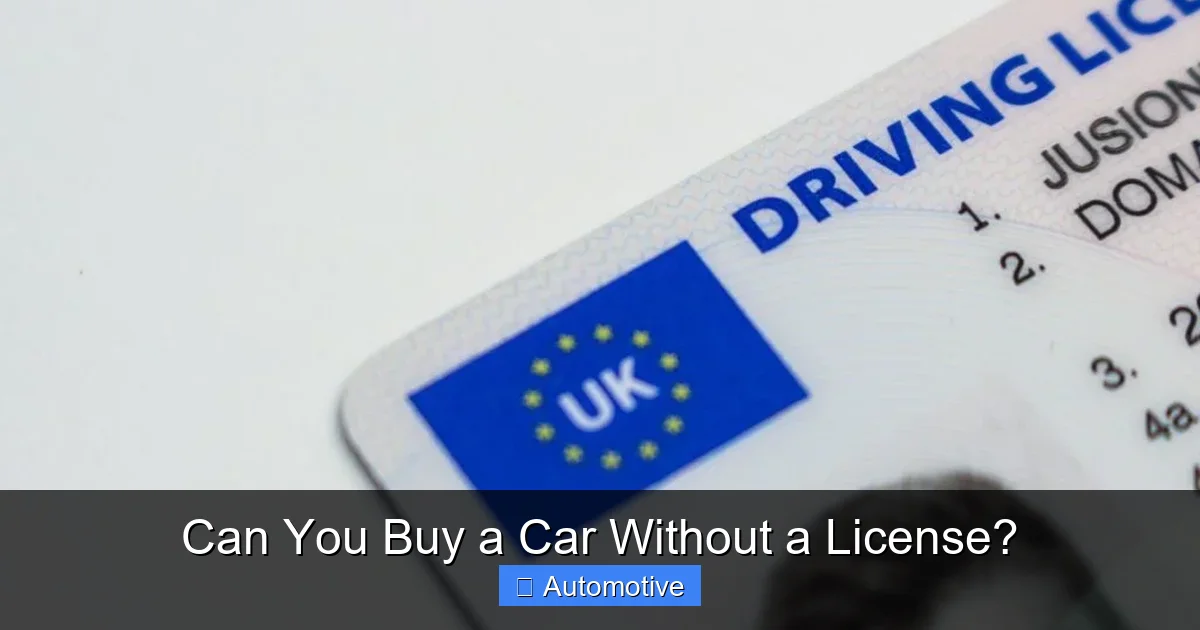
Visual guide about Can You Buy a Car Without a License?
Image source: ukcompass.com
Here’s the reality: **you cannot legally register or drive a car without insurance.** And that’s where unlicensed buyers often hit a wall. Insurance companies require a licensed driver to be listed as the primary operator on the policy. If you don’t have a license, you can’t be the named driver—but you can still own the car.
How to Insure a Car You Don’t Drive
The key is to have a licensed driver insure the vehicle. Here are your options:
1. Add a Licensed Driver as the Primary Insured: Your spouse, sibling, parent, or friend can take out the policy in their name and list you as the registered owner. This is the most common solution.
2. Use a “Garaging” Address: If the car will be parked at someone else’s home (like a family member’s), that person can insure it and list their address as the garaging location.
3. Named Non-Driver Policies (Rare): A few insurers offer policies for vehicle owners who don’t drive. These are typically for classic cars, stored vehicles, or investment purposes. They’re expensive and hard to find, but they exist.
4. Storage Insurance: If you’re keeping the car in a garage and not driving it, you can get a storage policy that covers theft, fire, and vandalism—but not liability or collision. This is cheaper but limits your options.
Important Notes on Insurance
– You must disclose the truth: Don’t lie about who will be driving the car. If an unlicensed person is listed as the primary driver, the insurer can deny claims or cancel the policy.
– Premiums may be higher: Insuring a car for someone else (especially a young or high-risk driver) can increase costs.
– State requirements vary: Some states require all registered owners to be listed on the insurance policy, even if they don’t drive.
Example: James and His Classic Mustang
James, a 60-year-old retiree, bought a 1967 Mustang as a weekend project car. He hasn’t driven in years due to vision issues and doesn’t have a current license. He registered the car in his name and insured it under his son’s policy, listing the son as the primary driver. The car is stored in James’s garage, and his son takes it out for maintenance drives. James pays the insurance premiums and enjoys the car without ever getting behind the wheel.
Registration and Titling: What You Need to Know
Once you’ve bought and insured the car, you’ll need to register it with your state’s Department of Motor Vehicles (DMV) or equivalent agency. This step is crucial—without registration, you can’t legally drive the car (even if someone else is driving it).
Required Documents for Registration
While requirements vary by state, you’ll typically need:
– A completed application for title and registration
– Proof of ownership (the signed title or bill of sale)
– Proof of insurance
– Valid government-issued ID (passport, state ID, etc.)
– Payment for registration fees and taxes
Can You Register a Car Without a License?
Yes—but again, you’ll need a valid ID. Most states accept non-driver IDs for registration purposes. For example, California issues “DMV Identification Cards” to residents who don’t drive. These cards look like driver’s licenses but don’t grant driving privileges. They’re perfect for car buyers who need ID for registration, insurance, or banking.
What If You Don’t Have Any ID?
This is rare, but if you lack any form of government-issued ID, you may need to obtain one first. Visit your local DMV or state ID office with documents like a birth certificate, Social Security card, and proof of residence. The process can take a few weeks, so plan ahead.
Out-of-State Registration
If you buy a car in one state but live in another, you’ll usually need to register it in your home state within 30 days. This may require an emissions test, safety inspection, or VIN verification. Check your state’s DMV website for specifics.
Practical Considerations: Should You Buy a Car Without a License?
Just because you *can* buy a car without a license doesn’t mean you *should*. Owning a vehicle comes with ongoing costs—insurance, registration, maintenance, parking, and depreciation. If you don’t plan to drive, ask yourself: Is this the best use of your money?
When It Makes Sense
There are valid reasons to buy a car without a license:
– Investment or resale: Classic cars, rare models, or undervalued vehicles can appreciate in value.
– Gifting or lending: Buying a car for a family member or friend who needs reliable transportation.
– Future use: Planning to get your license soon and want to secure a good deal now.
– Business purposes: Using the car for deliveries, rentals, or as part of a rideshare fleet (with a licensed driver).
When It Doesn’t Make Sense
Avoid buying a car if:
– You live in a city with excellent public transit, biking, or rideshare options.
– You can’t afford the ongoing costs of ownership.
– You have no one to insure or drive the car.
– You’re buying on impulse without a clear plan.
Alternatives to Car Ownership
Before committing to a purchase, consider these options:
– Rideshare services: Uber, Lyft, and local taxis offer on-demand transportation.
– Car-sharing programs: Zipcar, Turo, and Getaround let you rent cars by the hour or day.
– Public transit passes: Monthly bus or subway passes are often cheaper than car payments.
– Bike or scooter rentals: Great for short trips in urban areas.
These alternatives can save you thousands per year and reduce stress.
Tips for a Smooth Purchase Process
If you’ve decided to move forward, here are some practical tips to make the process easier:
1. Bring a Licensed Friend or Family Member: They can help with paperwork, insurance, and even test-driving the car.
2. Get Pre-Approved for Financing: Know your budget before shopping. This gives you negotiating power and avoids surprises.
3. Choose a Simple, Reliable Model: Avoid high-end or exotic cars that are harder to insure and maintain.
4. Use Online Tools: Websites like Kelley Blue Book, Edmunds, and TrueCar help you compare prices and find fair deals.
5. Get a Pre-Purchase Inspection: Even if you’re not driving it, have a mechanic check the car for hidden problems.
6. Keep Records: Save all paperwork—title, registration, insurance, loan documents—in a secure place.
Conclusion: Yes, You Can—But Think It Through
So, can you buy a car without a license? Absolutely. The law doesn’t stop you. But the real challenge lies in the practicalities: insurance, registration, financing, and long-term costs. For many people, especially those who don’t drive, alternative transportation options may be smarter and more affordable.
However, if you have a clear reason for buying—like investing, gifting, or preparing for future driving—then go for it. Just make sure you have a plan for insuring and registering the vehicle, and consider enlisting the help of a licensed friend or family member.
At the end of the day, car ownership is a big responsibility. Whether you’re behind the wheel or not, you’re still on the hook for payments, maintenance, and legal compliance. But with the right preparation, you can navigate the process smoothly—even without a license.
Frequently Asked Questions
Can I buy a car without a driver’s license in any state?
Yes, in most U.S. states, you can legally purchase a car without a driver’s license. However, you’ll still need a valid government-issued ID (like a passport or state ID card) for registration and financing purposes.
Do I need insurance to buy a car if I don’t have a license?
You don’t need insurance to buy the car, but you will need it to register and legally operate the vehicle. A licensed driver must be listed as the primary insured on the policy.
Can I finance a car without a driver’s license?
Yes, but it may be more difficult. Lenders often prefer borrowers with a driver’s license, but you can improve your chances by using alternative IDs, showing proof of income, or getting a co-signer.
Who can insure a car if the owner doesn’t have a license?
A licensed family member, friend, or co-signer can take out the insurance policy in their name and list you as the registered owner. This is the most common solution for unlicensed buyers.
Can I register a car in my name without a license?
Yes, as long as you have a valid government-issued ID (such as a state ID card or passport) and proof of insurance. Most states allow non-drivers to register vehicles.
Is it smart to buy a car if I don’t plan to drive?
It depends on your goals. If you’re buying for investment, resale, or to lend to someone else, it might make sense. But if you don’t need the car, alternatives like rideshares or public transit are usually more cost-effective.