
What Is Full Coverage Car Insurance?

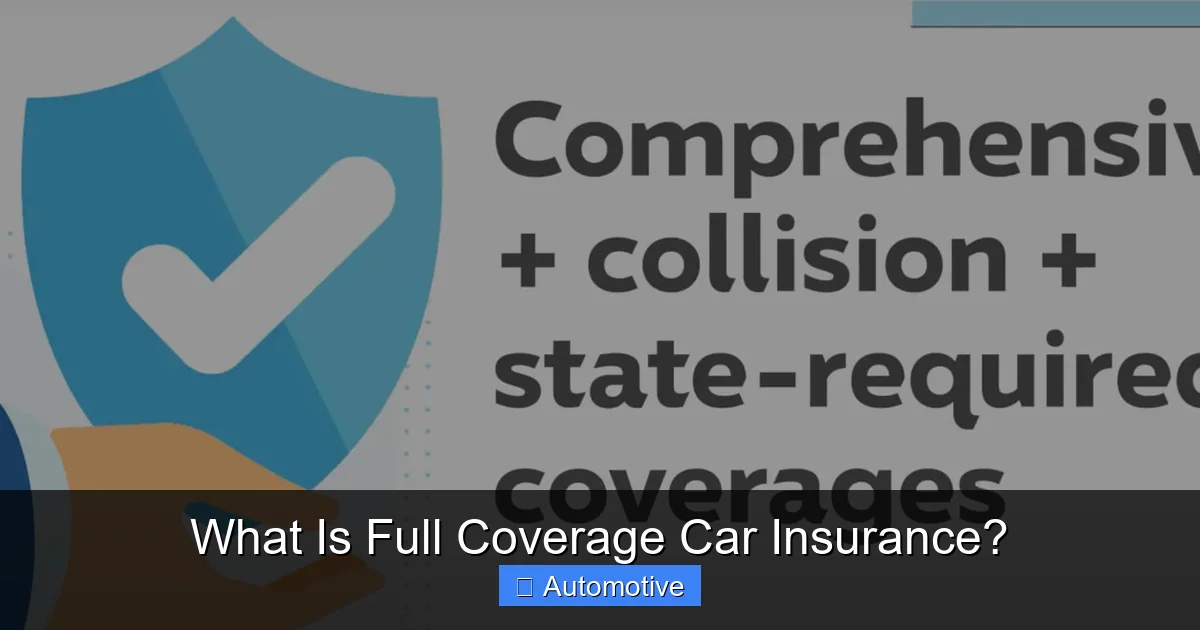
Full coverage car insurance isn’t a single policy—it’s a combination of coverages that protect you, your vehicle, and others in a wide range of situations. It typically includes liability, collision, and comprehensive insurance, offering broader protection than state-minimum plans.
Key Takeaways
- Full coverage is not one policy: It’s a bundle of liability, collision, and comprehensive insurance that offers extensive protection.
- It’s often required for financed or leased cars: Lenders and leasing companies usually mandate full coverage to protect their investment.
- It covers more than just accidents: Comprehensive coverage protects against theft, vandalism, weather, and animal collisions.
- It doesn’t cover everything: Mechanical breakdowns, normal wear and tear, and personal items in the car are typically excluded.
- Premiums are higher than basic liability: Expect to pay more for the added protection, but it can save you thousands in out-of-pocket costs.
- Deductibles affect your costs: Choosing a higher deductible lowers your premium but increases what you pay out of pocket after a claim.
- It’s ideal for newer or valuable vehicles: If your car is worth more than $4,000, full coverage is usually a smart financial move.
📑 Table of Contents
- What Is Full Coverage Car Insurance?
- Breaking Down the Components of Full Coverage
- What Full Coverage Does (and Doesn’t) Cover
- When Is Full Coverage Worth It?
- How Much Does Full Coverage Car Insurance Cost?
- Common Misconceptions About Full Coverage
- How to Choose the Right Full Coverage Policy
- Conclusion
What Is Full Coverage Car Insurance?
When you hear the term “full coverage car insurance,” you might picture a policy that protects you from every possible mishap on the road. And while that’s close, it’s not quite accurate. Full coverage isn’t a single type of insurance—it’s actually a combination of several coverages that work together to give you much broader protection than the basic liability insurance required by most states.
Think of it like building a safety net. Basic liability insurance catches you if you cause an accident and damage someone else’s car or injure another person. But it doesn’t help if your own car is damaged, stolen, or destroyed. That’s where full coverage steps in. It adds layers of protection so that whether you’re at fault or not, whether the damage comes from a crash, a hailstorm, or a thief, you’re better covered.
So, what exactly does “full coverage” include? At its core, it typically bundles three main types of insurance: liability, collision, and comprehensive. Some drivers also add extras like uninsured motorist coverage or personal injury protection, depending on their needs and state laws. But the foundation is always those three core components.
This combination is especially important if you’re financing or leasing a vehicle. Lenders want to make sure their investment is protected, so they usually require full coverage until the loan is paid off. Even if you own your car outright, full coverage can be a smart choice—especially if your vehicle is newer, expensive, or you rely on it daily.
In this guide, we’ll break down what full coverage really means, what it covers (and what it doesn’t), how much it costs, and whether it’s the right choice for you. Whether you’re shopping for your first car or reevaluating your current policy, understanding full coverage will help you make a confident, informed decision.
Breaking Down the Components of Full Coverage
Visual guide about What Is Full Coverage Car Insurance?
Image source: images.contentstack.io
To truly understand full coverage car insurance, you need to know what’s inside the package. It’s not magic—it’s a smart combination of three key coverages, each designed to protect you in different scenarios. Let’s look at each one in detail.
Liability Insurance: Protecting Others
Liability insurance is the backbone of any auto policy, and it’s required in almost every state. It covers damages and injuries you cause to other people and their property in an accident where you’re at fault. It doesn’t cover your own injuries or vehicle—just the other party.
There are two parts to liability coverage:
– Bodily Injury Liability: Pays for medical bills, lost wages, and pain and suffering of others injured in an accident you caused. For example, if you rear-end another car and the driver needs surgery, this coverage helps pay those costs.
– Property Damage Liability: Covers the cost of repairing or replacing another person’s property—usually their vehicle, but it could also include a fence, mailbox, or building.
Most states set minimum liability limits, like 25/50/25 (which means $25,000 per person for injury, $50,000 per accident, and $25,000 for property damage). But these minimums are often too low to cover serious accidents. That’s why many experts recommend higher limits—especially if you have assets to protect.
Collision Coverage: Protecting Your Vehicle in Accidents
Collision coverage steps in when your car is damaged in a crash—whether you hit another vehicle, a tree, or even a pothole. It pays to repair or replace your car, minus your deductible, regardless of who’s at fault.
Let’s say you skid on ice and hit a guardrail. Your car’s front end is smashed. Liability insurance won’t help because it only covers others. But collision coverage will pay for the repairs (after you pay your deductible, say $500). This is crucial if you have a newer or more valuable car.
Collision coverage is especially important if you’re financing or leasing. Lenders want to ensure the car can be repaired or replaced if damaged, so they require this coverage. Even if you own your car, collision can save you from paying thousands out of pocket after an accident.
Comprehensive Coverage: Protection Beyond Collisions
Comprehensive coverage is like the “everything else” protection for your vehicle. It covers damage that doesn’t result from a collision—things like theft, vandalism, fire, hail, falling objects, and even hitting an animal.
Imagine you park your car overnight and wake up to find it covered in dents from a hailstorm. Or you come back from shopping and discover your window is smashed and your stereo is gone. Comprehensive coverage would help pay for those repairs or replacements.
It also covers events like:
– A tree branch falling on your car during a storm
– Your car being stolen and not recovered
– A rock cracking your windshield on the highway
– A deer jumping into your path and causing damage
Like collision, comprehensive coverage has a deductible. You choose it when you buy the policy, and it affects your premium. A higher deductible means lower monthly payments, but more out-of-pocket costs if you file a claim.
Together, liability, collision, and comprehensive form the core of full coverage. But remember—full coverage doesn’t mean “covers everything.” There are still limits and exclusions, which we’ll explore next.
What Full Coverage Does (and Doesn’t) Cover
Visual guide about What Is Full Coverage Car Insurance?
Image source: res.cloudinary.com
Now that you know the three main parts of full coverage, let’s get real about what it actually protects you from—and what it leaves out. This is where many drivers get confused. Just because you have “full coverage” doesn’t mean you’re covered for every possible problem.
What Full Coverage Includes
Full coverage is designed to protect you in a wide range of situations. Here’s a breakdown of common scenarios it covers:
– At-fault accidents: If you cause a crash, liability covers the other driver’s injuries and car damage, while collision covers your own vehicle.
– Not-at-fault accidents: Even if someone else hits you, your collision coverage can still help repair your car (though you may be able to recover costs from the other driver’s insurer).
– Theft: If your car is stolen, comprehensive coverage can pay to replace it (up to the car’s actual cash value).
– Weather damage: Hail, floods, windstorms—comprehensive covers these “acts of nature.”
– Vandalism: If someone keys your car or breaks windows, comprehensive steps in.
– Animal collisions: Hitting a deer, raccoon, or other animal is covered under comprehensive.
– Falling objects: A tree limb, construction debris, or even a satellite (yes, it happens!) falling on your car is covered.
These protections give you peace of mind, knowing that most unexpected events won’t leave you with a huge repair bill.
What Full Coverage Does NOT Include
Here’s where things get tricky. Full coverage has limits. It won’t pay for:
– Mechanical breakdowns: If your engine fails due to normal wear and tear, that’s not covered. This is considered maintenance, not an accident or external event.
– Normal wear and tear: Worn-out brakes, tires, or belts aren’t covered. Insurance isn’t a maintenance plan.
– Personal items in the car: If your laptop, phone, or luggage is stolen from your vehicle, your auto insurance won’t cover it. That’s what homeowners or renters insurance is for.
– Rental car reimbursement (unless added): If your car is in the shop after an accident, you’ll need to add rental reimbursement coverage to get a loaner car.
– Towing and roadside assistance (unless added): Jump-starts, flat tires, or towing to a repair shop aren’t included unless you buy extra coverage.
– Custom parts and equipment: If you’ve added a high-end sound system, custom wheels, or a lift kit, you may need additional coverage to protect those upgrades.
Also, full coverage only pays up to the actual cash value (ACV) of your car—what it’s worth at the time of the claim, not what you paid for it. If your car is older or has high mileage, the payout might be less than you expect.
Optional Add-Ons That Enhance Full Coverage
While the core three coverages form the foundation, you can boost your protection with optional add-ons:
– Rental Reimbursement: Pays for a rental car while yours is being repaired after a covered claim.
– Towing and Labor: Covers towing and roadside assistance like jump-starts or tire changes.
– Gap Insurance: If your car is totaled and you owe more on the loan than the car is worth, gap insurance covers the difference.
– New Car Replacement: If your new car is totaled within the first year, this pays for a brand-new replacement of the same make and model.
– Accident Forgiveness: Prevents your premium from increasing after your first at-fault accident.
These extras can make full coverage even more valuable, especially for newer or financed vehicles.
When Is Full Coverage Worth It?
Visual guide about What Is Full Coverage Car Insurance?
Image source: foyinsurance.com
So, should you get full coverage? The answer depends on your car, your budget, and your risk tolerance. It’s not always necessary—but for many drivers, it’s a smart investment.
You Should Consider Full Coverage If:
– You’re financing or leasing a car: Lenders require it to protect their investment. Without it, you could be in violation of your loan agreement.
– Your car is newer or valuable: If your vehicle is worth more than $4,000–$5,000, full coverage is usually worth the cost. The potential repair or replacement cost far exceeds the annual premium.
– You drive frequently or in high-risk areas: If you commute long distances, drive in heavy traffic, or live in an area with high theft or weather risks, full coverage offers valuable protection.
– You can’t afford major out-of-pocket repairs: If a $3,000 repair bill would break your budget, full coverage can save you from financial stress.
– You want peace of mind: Knowing you’re protected from a wide range of risks can reduce anxiety on the road.
You Might Skip Full Coverage If:
– Your car is old or has low value: If your car is worth less than $2,000, the cost of full coverage might exceed its value. In that case, liability-only may be more economical.
– You have significant savings: If you can easily pay for repairs or replace your car out of pocket, you might not need the extra coverage.
– You rarely drive: If your car sits in the garage most of the time, the risk of damage is lower, and you might opt for minimal coverage.
A good rule of thumb: If the annual cost of full coverage is more than 10% of your car’s value, it might not be worth it. For example, if your car is worth $3,000 and full coverage costs $400 a year, that’s over 13%—possibly too high. But if your car is worth $20,000 and coverage costs $1,200, that’s only 6%, which is reasonable.
How Much Does Full Coverage Car Insurance Cost?
The cost of full coverage car insurance varies widely based on several factors. On average, drivers in the U.S. pay between $1,500 and $2,500 per year for full coverage, but your rate could be higher or lower depending on your situation.
Factors That Affect Your Premium
– Location: Urban areas with high traffic, theft, and accident rates tend to have higher premiums. Rural areas are usually cheaper.
– Age and driving history: Younger drivers, especially teens, pay more due to higher risk. A clean driving record can lower your rates.
– Vehicle type: Sports cars, luxury vehicles, and models with high repair costs are more expensive to insure.
– Credit score: In most states, insurers use credit-based insurance scores to determine risk. Better credit often means lower premiums.
– Coverage limits and deductibles: Higher liability limits and lower deductibles increase your premium. Choosing a $1,000 deductible instead of $500 can save you 10–20% on collision and comprehensive.
– Annual mileage: The more you drive, the higher your risk—and your premium.
Ways to Save on Full Coverage
– Raise your deductible: Increasing from $500 to $1,000 can reduce your premium significantly.
– Bundle policies: Many insurers offer discounts if you bundle auto with home or renters insurance.
– Maintain a clean record: Avoid accidents and tickets to keep your rates low.
– Take a defensive driving course: Some insurers offer discounts for completing approved courses.
– Ask about discounts: Good student, low mileage, anti-theft devices, and paperless billing can all lower your cost.
– Shop around: Compare quotes from at least three insurers every year or two. Rates can vary by hundreds of dollars.
Remember, the cheapest policy isn’t always the best. Make sure you’re getting the coverage you need at a price you can afford.
Common Misconceptions About Full Coverage
Despite its name, “full coverage” doesn’t mean “covers everything.” Unfortunately, many drivers assume it does—and that can lead to costly surprises. Let’s clear up some of the most common myths.
Myth 1: “Full Coverage Means I’m Fully Protected”
Reality: Full coverage protects your car in many situations, but not all. It won’t cover mechanical failures, normal wear, or personal belongings. It also has limits—both in coverage amounts and what’s included.
Myth 2: “It’s the Same in Every State”
Reality: While the core components are similar, state laws vary. Some states require additional coverages like personal injury protection (PIP) or uninsured motorist coverage. Always check your state’s requirements.
Myth 3: “It’s Only for New Cars”
Reality: While it’s most valuable for newer vehicles, older cars can still benefit—especially if they’re reliable and you rely on them daily. It’s about value and need, not just age.
Myth 4: “I Can’t Change My Coverage Once I Buy It”
Reality: You can adjust your coverage at any time. If your car’s value drops, you might drop collision and comprehensive. If you get a new car, you can upgrade. Just be aware of any penalties or fees.
Myth 5: “Full Coverage Is Too Expensive”
Reality: While it costs more than liability-only, the protection is often worth it. A single accident or theft could cost thousands—far more than a year of premiums.
Understanding these myths helps you make smarter decisions and avoid gaps in your protection.
How to Choose the Right Full Coverage Policy
Choosing the right full coverage policy isn’t just about price—it’s about matching your coverage to your needs. Here’s how to do it right.
Step 1: Assess Your Vehicle’s Value
Use tools like Kelley Blue Book or Edmunds to find your car’s current market value. If it’s under $4,000, you might consider dropping collision and comprehensive. If it’s higher, full coverage is likely worth it.
Step 2: Evaluate Your Risk Tolerance
Are you comfortable paying $2,000 out of pocket for repairs? If not, full coverage gives you financial protection. If you’re risk-averse, lean toward higher coverage.
Step 3: Compare Quotes
Get quotes from multiple insurers. Look at the total coverage, deductibles, limits, and discounts. Don’t just focus on price—check customer service and claims satisfaction ratings.
Step 4: Review Annually
Your needs change. Review your policy every year, especially after major life events like buying a new car, moving, or improving your credit.
Conclusion
Full coverage car insurance is one of the best ways to protect yourself, your vehicle, and your finances on the road. While it’s not a single policy, the combination of liability, collision, and comprehensive coverage offers broad protection against accidents, theft, weather, and more.
It’s especially valuable for financed or leased vehicles, newer cars, and drivers who want peace of mind. But it’s not one-size-fits-all. Consider your car’s value, your budget, and your risk tolerance when deciding.
By understanding what full coverage includes—and what it doesn’t—you can make an informed choice that keeps you safe and secure behind the wheel.
Frequently Asked Questions
Is full coverage car insurance required by law?
No, full coverage is not required by law in most states. However, if you’re financing or leasing a vehicle, your lender will likely require it to protect their investment.
Does full coverage include rental car reimbursement?
Not automatically. Rental reimbursement is an optional add-on that you must purchase separately. It covers the cost of a rental car while your vehicle is being repaired after a covered claim.
Will full coverage pay for my car if it’s totaled?
Yes, but only up to the actual cash value of your car at the time of the loss. This amount factors in depreciation, so it may be less than what you originally paid.
Can I drop full coverage on an older car?
Yes, if your car has low market value and you can afford to repair or replace it out of pocket, you may choose to drop collision and comprehensive coverage. Just make sure you’re comfortable with the risk.
Does full coverage protect me if I’m hit by an uninsured driver?
Only if you have uninsured/underinsured motorist coverage, which is not part of standard full coverage. You must add it separately in most states.
How do I know if I have full coverage?
Check your policy declaration page. If you have liability, collision, and comprehensive coverage listed, you likely have full coverage. Contact your insurer if you’re unsure.