
Does Car Insurance Cover Acts of God

Car insurance may cover “acts of God” like hurricanes, floods, or hail—but only if you have comprehensive coverage. Liability and collision policies typically exclude natural disasters, so understanding your policy details is crucial to avoid surprise out-of-pocket costs.
Key Takeaways
- Comprehensive coverage is key: It’s the only standard auto insurance type that typically covers damage from natural disasters like floods, hurricanes, and wildfires.
- Liability and collision don’t cover acts of God: These policies only pay for accidents involving other vehicles or objects, not weather-related damage.
- Not all natural events are equal: Some insurers may exclude certain disasters (like earthquakes) unless you add specific endorsements.
- Document everything after a disaster: Take photos, file a police report if needed, and contact your insurer immediately to speed up claims.
- Geographic location matters: If you live in a high-risk area (e.g., flood zones or wildfire-prone regions), consider additional protection or specialized policies.
- Rental reimbursement can help: If your car is unusable due to an act of God, this add-on covers temporary transportation costs.
- Review your policy annually: Climate risks are changing—make sure your coverage keeps up with evolving threats in your area.
📑 Table of Contents
- Does Car Insurance Cover Acts of God?
- What Exactly Are “Acts of God” in Insurance?
- How Auto Insurance Types Handle Acts of God
- Real-Life Scenarios: When Acts of God Lead to Claims
- What’s Typically Excluded (Even with Comprehensive)
- How to Make Sure You’re Protected
- The Bottom Line: Peace of Mind Is Worth the Premium
Does Car Insurance Cover Acts of God?
Imagine waking up after a fierce thunderstorm to find your car buried under a fallen tree branch, dented by hail, or submerged in floodwater. Your first thought? “Will my car insurance cover this?” The answer isn’t always straightforward—it depends heavily on the type of coverage you carry and what exactly happened.
The term “acts of God” refers to natural disasters or severe weather events that are beyond human control—things like hurricanes, tornadoes, earthquakes, floods, wildfires, and heavy snowstorms. While these events are unpredictable, your financial protection against them shouldn’t be. Understanding whether your auto insurance policy covers such incidents can mean the difference between a minor inconvenience and a major financial setback.
In this guide, we’ll break down exactly what “acts of God” means in insurance terms, which types of coverage apply, real-life examples of claims, and practical steps you can take to ensure you’re protected when nature strikes. Whether you’re a new driver or have been behind the wheel for decades, this information could save you thousands.
What Exactly Are “Acts of God” in Insurance?
In the world of insurance, “acts of God” isn’t a religious reference—it’s a legal and industry term used to describe natural events that occur without human intervention. These are typically sudden, uncontrollable, and unpredictable forces of nature that cause damage to property, including vehicles.
Common Examples of Acts of God
Some of the most frequent acts of God that affect cars include:
- Floods: Rising water can ruin engines, electronics, and interiors—even if the car isn’t fully submerged.
- Hurricanes and tropical storms: High winds can send debris flying, while storm surges bring flood damage.
- Hailstorms: Ice pellets can dent hoods, break windshields, and damage paint.
- Wildfires: Smoke, ash, and flames can destroy vehicles parked near affected areas.
- Tornadoes and windstorms: Flying debris and structural collapses can crush or damage cars.
- Earthquakes: Ground shaking can cause landslides, falling trees, or building collapses that impact parked vehicles.
- Heavy snow and ice: Accumulation can lead to roof collapses on garages or damage from icy road conditions.
Why the Term Matters
Insurance companies use “acts of God” to distinguish between damage caused by nature versus human actions (like vandalism or theft). This distinction helps determine which part of your policy—if any—will respond to a claim. Importantly, most standard auto policies don’t automatically include protection against these events unless you’ve specifically added comprehensive coverage.
How Auto Insurance Types Handle Acts of God
Not all car insurance is created equal—and when it comes to natural disasters, your level of protection hinges on the specific coverages you’ve purchased. Let’s look at how the three main types of auto insurance treat acts of God.
Liability Coverage: What It Does (and Doesn’t) Cover
Liability insurance is required in almost every state and covers damage you cause to others—like their car, property, or medical bills—if you’re at fault in an accident. However, liability does not cover your own vehicle, regardless of how it was damaged. That means if a tornado flips your car, liability won’t pay a dime toward repairs.
Collision Coverage: For Crashes, Not Calamities
Collision insurance pays to repair or replace your car if it’s damaged in a crash—whether you hit another vehicle, a guardrail, or even a pothole. But here’s the catch: collision only applies to collisions with objects or vehicles, not to damage caused by weather or natural events. So if hail dents your roof, collision won’t help.
Comprehensive Coverage: Your Best Bet Against Nature
This is where acts of God come into play. Comprehensive coverage is designed specifically for non-collision incidents, including theft, vandalism, falling objects, and—yes—natural disasters. If your car is damaged by a flood, struck by lightning, or crushed by a falling tree during a storm, comprehensive is typically the coverage that kicks in.
It’s important to note that comprehensive usually comes with a deductible (the amount you pay out of pocket before insurance kicks in), just like collision. However, it’s often relatively affordable—adding just $100–$200 per year to your premium for significant peace of mind.
Real-Life Scenarios: When Acts of God Lead to Claims
Let’s walk through a few realistic situations to see how insurance responds—and what you can expect.
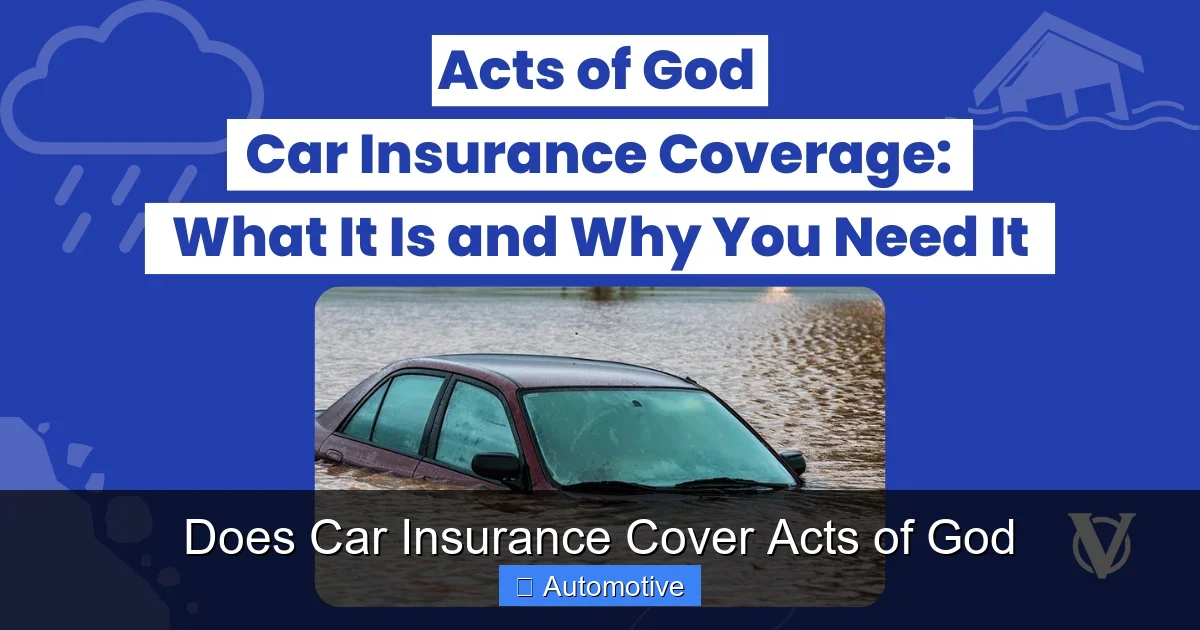
Visual guide about Does Car Insurance Cover Acts of God
Image source: vigattininsurance.com
Scenario 1: Flood Damage in a Hurricane
Maria lives in coastal Florida and parks her sedan on the street during Hurricane Ian. Rising floodwaters reach the dashboard, ruining the electrical system and interior. She has comprehensive coverage with a $500 deductible.
Outcome: Her insurer approves the claim. After paying the $500 deductible, they cover the remaining $8,500 in repairs. Without comprehensive, she’d be on the hook for the full amount.
Scenario 2: Hailstorm Destroys Windshield and Roof
James lives in Oklahoma, where spring hailstorms are common. During a severe storm, baseball-sized hailstones smash his windshield and leave dozens of dents across the roof and hood. He has full coverage, including comprehensive.
Outcome: His insurer covers windshield replacement and paintless dent repair. Total claim: $3,200 minus his $250 deductible.
Scenario 3: Wildfire Ash Damages Paint and AC System
Lena’s SUV is parked outside her home in California during a wildfire. While the vehicle isn’t burned, thick layers of ash clog the air filters and etch the paint. She files a comprehensive claim.
Outcome: Most insurers will cover cleaning, filter replacement, and paint correction if the damage is deemed significant. However, minor cosmetic issues might fall below the deductible threshold.
Scenario 4: Earthquake Causes Garage Collapse
David’s car is crushed when his garage roof collapses during an earthquake in Oregon. His policy includes comprehensive coverage but excludes earthquakes unless specified.
Outcome: If his policy has an earthquake endorsement, he’s covered. If not, the claim may be denied—even though the damage wasn’t his fault. This highlights why reading the fine print matters.
What’s Typically Excluded (Even with Comprehensive)
While comprehensive coverage is broad, it’s not all-encompassing. Certain acts of God may still be excluded depending on your policy, insurer, or location.
Earthquakes and Landslides
In many states, earthquake damage isn’t automatically included in standard comprehensive policies. You may need to purchase a separate endorsement or a standalone earthquake policy—especially if you live in California, Alaska, or the Pacific Northwest.
Gradual Water Damage
Comprehensive usually covers sudden flooding (like a flash flood), but not slow, seepage-type water damage over time. For example, if your car sits in a damp garage for months and develops mold, that’s unlikely to be covered.
Acts of War or Nuclear Events
Most policies explicitly exclude damage caused by war, terrorism, or nuclear accidents—even if they’re technically “natural” in origin (like a nuclear plant meltdown triggered by an earthquake).
Negligence Can Void Coverage
If you knowingly park your car in a flood zone during a hurricane warning or ignore evacuation orders, your insurer might deny the claim citing negligence. Always follow official safety guidance.
How to Make Sure You’re Protected
Given the rising frequency of extreme weather events due to climate change, it’s more important than ever to review your auto insurance strategy.
Step 1: Check Your Policy Declarations Page
This document lists your exact coverages, limits, and deductibles. Look for “comprehensive” and confirm it’s active. If it’s missing, contact your agent to add it.
Step 2: Understand Your Deductible
A lower deductible means higher premiums but less out-of-pocket cost when you file a claim. If you live in a high-risk area, consider a $250 or $500 deductible instead of $1,000.
Step 3: Add Rental Reimbursement
If your car is in the shop for weeks after a disaster, rental reimbursement (usually $20–$50/day) can cover a temporary vehicle. It’s a small add-on with big benefits.
Step 4: Consider Gap Insurance
If your car is totaled by an act of God and you owe more on your loan than the car’s value, gap insurance covers the difference. This is especially useful for newer vehicles that depreciate quickly.
Step 5: Document Everything
After a disaster, take timestamped photos of the damage, note weather conditions, and file a claim ASAP. Keep receipts for towing, rentals, or temporary repairs.
Step 6: Review Annually
Climate risks are evolving. If you’ve moved to a wildfire-prone area or installed a garage, update your policy accordingly.
The Bottom Line: Peace of Mind Is Worth the Premium
No one plans for a tornado to rip through their neighborhood or a river to overflow its banks. But when these events happen, having the right insurance can turn a potential financial disaster into a manageable inconvenience.
While liability and collision cover the basics, comprehensive coverage is your shield against acts of God. It’s not just for luxury cars—it’s a smart investment for any driver, especially those in regions prone to extreme weather. The cost is modest compared to the potential repair or replacement bills you could face.
Don’t wait until the next storm warning to check your policy. Take 10 minutes today to call your insurer, review your declarations page, and ask: “Am I covered if nature strikes?” Your future self will thank you.
Frequently Asked Questions
Does car insurance cover flood damage?
Yes, but only if you have comprehensive coverage. Flood damage from hurricanes, heavy rains, or rising rivers is typically covered under this policy type. Liability and collision do not apply.
Will my insurance pay if a tree falls on my car during a storm?
Yes, as long as you carry comprehensive coverage. Falling trees, branches, or other debris due to wind, ice, or storms are standard covered perils under comprehensive insurance.
Is earthquake damage covered by auto insurance?
It depends. Most standard comprehensive policies exclude earthquakes unless you add a specific endorsement. Drivers in high-risk zones should ask their insurer about earthquake coverage options.
What if my car is totaled by a wildfire?
If you have comprehensive coverage, your insurer will typically pay the actual cash value of your car (minus your deductible) if it’s declared a total loss due to fire, including wildfires.
Can I file a claim if my car is damaged by hail?
Absolutely—if you have comprehensive coverage. Hail damage is one of the most common claims under this policy and usually covers dents, broken glass, and paint damage.
Do I need comprehensive coverage if I live in a low-risk area?
Even in mild climates, unexpected events like falling branches, flash floods, or vandalism can occur. Comprehensive coverage is relatively inexpensive and offers valuable protection beyond just acts of God.