
Can a Car Battery Die While Driving?

Yes, a car battery can die while driving—but it’s rarely the battery itself that fails. Instead, issues with the alternator, loose connections, or electrical drains often cause power loss. Understanding how your charging system works helps prevent unexpected breakdowns.
Key Takeaways
- Your battery doesn’t power the car while driving: Once the engine runs, the alternator takes over to supply electricity and recharge the battery.
- A failing alternator is the real culprit: If the alternator stops working, the battery drains quickly, leading to stalling or electrical failure.
- Warning lights are your first clue: A battery or charging system warning light on your dashboard often appears before total failure.
- Loose or corroded connections matter: Poor battery terminals can interrupt power flow even if the battery and alternator are fine.
- Extreme temperatures affect performance: Cold weather reduces battery capacity; heat accelerates internal wear.
- Parasitic drains can sneak up on you: Faulty wiring or aftermarket devices may slowly drain the battery even while driving.
- Regular maintenance prevents surprises: Testing the battery and alternator every 6–12 months helps catch problems early.
📑 Table of Contents
Can a Car Battery Die While Driving?
You’re cruising down the highway, enjoying your favorite playlist, when suddenly your dashboard lights flicker. The radio cuts out. Your headlights dim. And then—your engine sputters and dies. Panic sets in. Did your car battery just die… while you were driving?
It’s a scary thought, and one many drivers have feared at some point. The good news? While it *can* happen, it’s not as simple as “the battery died.” In fact, your car battery isn’t even the main source of power once the engine is running. So what’s really going on under the hood?
Understanding how your vehicle’s electrical system works is key to answering this question. Most people assume the battery powers everything in their car—but that’s only half the story. The battery’s main job is to start the engine. Once the engine is running, a different component takes over: the alternator. This small but mighty device generates electricity to run your car’s systems and recharge the battery simultaneously.
So if your car dies while driving, it’s rarely because the battery “ran out of juice” like a phone battery. Instead, it’s usually a sign that the alternator—or something connected to it—has failed. And when that happens, the battery can’t keep up with the electrical demand, leading to a rapid loss of power.
In this guide, we’ll break down exactly why a car might lose power while driving, how to spot the warning signs, and what you can do to prevent it from happening to you. Whether you’re a daily commuter or an occasional road-tripper, knowing how your car’s electrical system works could save you from being stranded—and maybe even prevent costly repairs down the line.
How Your Car’s Electrical System Works

Visual guide about Can a Car Battery Die While Driving?
Image source: batteryhacker.com
To understand whether a car battery can die while driving, you first need to know how your vehicle’s electrical system operates. Think of it like a team: the battery and alternator work together, but they have very different roles.
The Battery: The Starter
Your car battery is essentially a rechargeable energy storage unit. Its primary job is to provide a burst of power to start the engine. When you turn the key or press the start button, the battery sends electricity to the starter motor, which cranks the engine to life. This process requires a lot of energy—especially in cold weather—which is why batteries are built to deliver high current for short periods.
But once the engine is running, the battery’s role shifts. It becomes a backup power source, ready to supply electricity if the alternator can’t keep up. For example, if you’re idling at a traffic light with the headlights, AC, and radio on, the alternator might struggle to meet all those demands. That’s when the battery steps in to help.
The Alternator: The Power Generator
This is where the alternator takes center stage. Once the engine is running, the alternator uses mechanical energy from the engine (via a belt) to generate electricity. It powers all the electrical components in your car—lights, infotainment system, climate control, sensors, and more—while also recharging the battery.
Think of the alternator as your car’s onboard power plant. It keeps everything running smoothly and ensures the battery stays charged for the next start. A healthy alternator typically produces between 13.5 and 14.5 volts when the engine is running. If it drops below that range, your battery won’t recharge properly.
How They Work Together
Here’s the key takeaway: your car doesn’t run on battery power while driving—it runs on alternator power. The battery is there as a safety net. So if your car dies while you’re on the road, it’s almost always because the alternator failed, not the battery.
For example, imagine you’re driving at night with the headlights, wipers, and heater on. That’s a lot of electrical load. If your alternator is weak or broken, it can’t generate enough power to meet those demands. The battery tries to compensate, but it drains quickly—usually within 15 to 30 minutes. Once the battery is depleted, your car loses power, and the engine stalls.
This is why a dying alternator often mimics a dead battery. But unlike a dead battery, which you can jump-start, a failed alternator won’t keep your car running—even with a jump. You’ll need a tow to get it fixed.
Common Causes of Power Loss While Driving
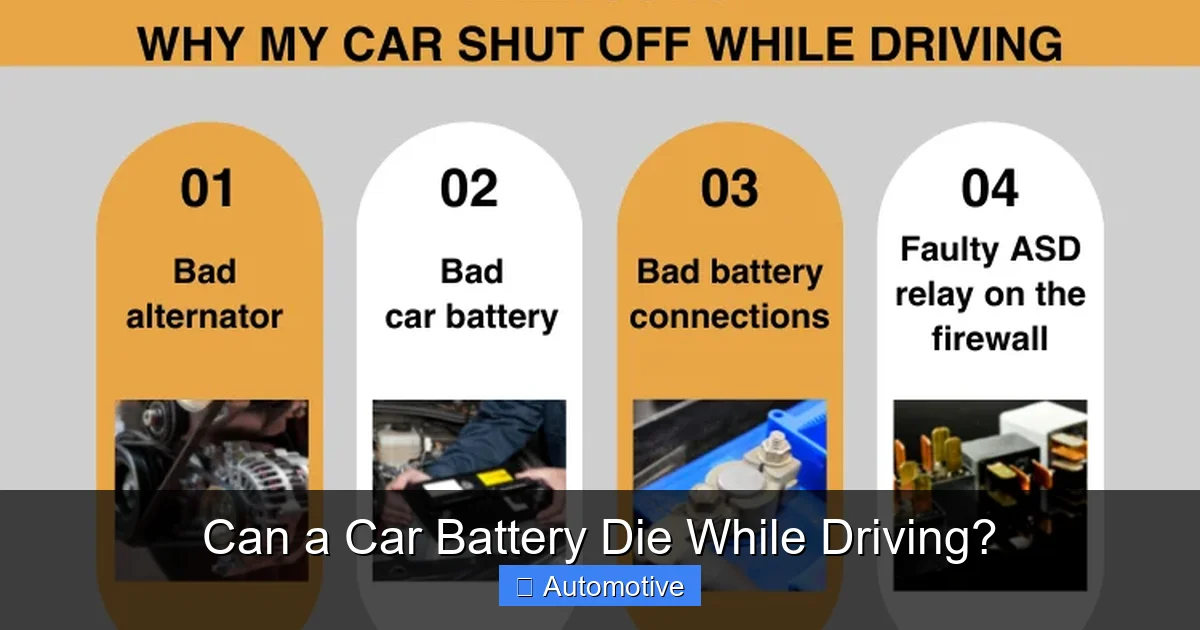
Visual guide about Can a Car Battery Die While Driving?
Image source: batteryglobe.com
Now that you know the alternator is the real workhorse, let’s look at the most common reasons your car might lose power while driving—even if the battery seems fine.
1. Alternator Failure
This is the number one cause of sudden power loss. Alternators don’t last forever. Over time, their internal components—like the voltage regulator, diodes, or bearings—can wear out. When that happens, the alternator stops generating electricity.
Symptoms of a failing alternator include:
– Dim or flickering headlights
– Dashboard warning lights (especially the battery or charging light)
– Electrical accessories acting sluggish (slow power windows, weak radio signal)
– A burning smell (from an overheating alternator or belt)
– Difficulty starting the car, even after it’s been running
If you notice any of these signs, get your alternator tested as soon as possible. Many auto parts stores offer free alternator testing.
2. Loose or Corroded Battery Connections
Even if your battery and alternator are in perfect condition, poor connections can disrupt the flow of electricity. Corrosion—a white, powdery buildup on the battery terminals—acts like insulation, blocking the transfer of power. Loose cables can also cause intermittent contact, leading to sudden power loss.
This is especially common in older vehicles or those exposed to moisture and road salt. A quick visual inspection can reveal corrosion. If you see buildup, clean the terminals with a mixture of baking soda and water, then tighten the connections securely.
3. Serpentine Belt Issues
The serpentine belt is what drives the alternator (along with other components like the water pump and power steering). If this belt slips, cracks, or breaks, the alternator can’t spin, and power generation stops.
A broken serpentine belt is often accompanied by a loud squealing noise before failure. If you hear unusual sounds from under the hood, pull over safely and inspect the belt. Replacing a worn belt is relatively inexpensive and can prevent a breakdown.
4. Electrical Shorts or Parasitic Drains
Sometimes, a hidden electrical issue—like a short circuit or a device drawing power when it shouldn’t—can drain the battery even while driving. This is called a parasitic drain.
Common culprits include:
– Faulty aftermarket accessories (dash cams, GPS units, phone chargers)
– Malfunctioning interior lights that stay on
– Damaged wiring or blown fuses
These drains can slowly deplete the battery, especially if the alternator is already struggling. If your battery keeps dying unexpectedly, have a mechanic perform a parasitic drain test.
5. Extreme Weather Conditions
Temperature extremes affect both batteries and alternators. In cold weather, battery capacity drops significantly—by up to 50% at 0°F. This makes it harder for the battery to assist the alternator during high-demand situations.
In hot weather, the opposite problem occurs: heat accelerates the breakdown of internal battery components and can cause alternator overheating. If you live in a climate with extreme temperatures, regular maintenance is even more important.
Warning Signs Your Battery or Alternator Is Failing

Visual guide about Can a Car Battery Die While Driving?
Image source: carhelpers.com
The good news? Most electrical failures don’t happen without warning. Your car usually gives you clues long before it leaves you stranded. Here’s what to watch for.
Dashboard Warning Lights
The most obvious sign is the battery or charging system warning light. It looks like a battery symbol or says “ALT” or “CHG.” If this light comes on while driving, it means the alternator isn’t producing enough power.
Don’t ignore it. While you might be able to drive for a short distance, the battery will drain quickly. Pull over as soon as it’s safe and call for help.
Dim or Flickering Lights
If your headlights, dashboard lights, or interior lights dim—especially when you accelerate or turn on accessories—it’s a strong sign the alternator isn’t keeping up. Flickering lights that pulse with engine RPMs are another red flag.
Slow or Unresponsive Accessories
Electrical components like power windows, seats, or the radio may operate more slowly than usual. This happens because the alternator can’t supply enough current to meet demand.
Strange Noises
A failing alternator may produce a whining or grinding noise, especially when the engine is under load. This could indicate worn bearings or a slipping belt.
Frequent Battery Issues
If your battery keeps dying—even after being replaced—it’s likely not the battery’s fault. A weak alternator can’t recharge it properly, leading to repeated failures.
Burning Smell
An overheating alternator or slipping belt can produce a burning rubber or electrical smell. If you notice this, stop driving immediately to prevent damage.
What to Do If Your Car Dies While Driving
Even with precautions, electrical failures can still happen. If your car suddenly loses power while driving, stay calm and follow these steps.
1. Stay Calm and Signal
First, don’t panic. Turn on your hazard lights to alert other drivers. This is especially important if you’re on a highway or busy road.
2. Steer to Safety
Try to guide your car to the shoulder or a safe area. Even without power, you’ll have steering and braking assistance for a short time—especially if you’re moving slowly.
3. Turn Off Non-Essential Accessories
If the engine stalls but you still have some power, turn off the radio, AC, and headlights. This reduces the load on the battery and may give you enough juice to restart the car—if the alternator is still working.
4. Attempt a Restart
Try turning the key to restart the engine. If it starts but dies again immediately, the alternator is likely failing. If it doesn’t start at all, the battery may be completely drained.
5. Call for Help
If you can’t restart the car, call roadside assistance or a tow truck. Do not attempt to drive with a known alternator issue—it could cause further damage.
6. Get It Diagnosed
Once your car is towed, have a mechanic inspect the alternator, battery, and charging system. They can run tests to pinpoint the exact cause and recommend repairs.
How to Prevent Battery and Alternator Problems
The best way to avoid being stranded is through regular maintenance. Here’s how to keep your electrical system in top shape.
Schedule Regular Inspections
Have your battery and alternator tested every 6 to 12 months, especially if your car is more than 3 years old. Many auto parts stores offer free testing.
Check Battery Connections
Inspect the battery terminals for corrosion and tightness. Clean them if needed and ensure cables are secure.
Listen for Unusual Noises
Pay attention to squealing, grinding, or whining sounds from under the hood. These could indicate belt or alternator issues.
Limit Electrical Load
Avoid using multiple high-draw accessories (like heated seats, AC, and headlights) at the same time, especially in older vehicles.
Replace the Serpentine Belt on Schedule
Most manufacturers recommend replacing the serpentine belt every 60,000 to 100,000 miles. Check your owner’s manual for specifics.
Keep Your Car Clean
Dirt, moisture, and road salt can accelerate corrosion. Regularly clean under the hood and around the battery.
Use a Battery Maintainer
If you don’t drive often, consider using a battery maintainer or trickle charger to keep the battery charged.
Conclusion
So, can a car battery die while driving? Technically, yes—but it’s rarely the battery’s fault. More often, the real issue lies with the alternator, belt, or electrical connections. Your battery is designed to start the car, not power it indefinitely. Once the engine runs, the alternator takes over, and if it fails, the battery drains quickly, leading to stalling or electrical failure.
The key to avoiding this scenario is awareness and maintenance. Pay attention to warning signs like dim lights, dashboard alerts, or strange noises. Test your battery and alternator regularly, and don’t ignore corrosion or loose connections. A little prevention goes a long way.
Remember: your car’s electrical system is a team effort. When one component fails, the whole system suffers. By understanding how it works and staying proactive, you can keep your car running smoothly—and avoid the stress of a sudden breakdown on the road.
Whether you’re commuting to work or heading out on a weekend adventure, a little knowledge can make all the difference. So next time you turn the key, rest easy knowing your car is ready for the journey ahead.
Frequently Asked Questions
Can a car battery die while driving?
Yes, but it’s usually due to a failing alternator, not the battery itself. The alternator powers the car while driving, and if it fails, the battery drains quickly.
How long can a car run on battery power alone?
Most cars can run for 15 to 30 minutes on battery power alone, depending on electrical load. However, this drains the battery and can leave you stranded.
What does a failing alternator sound like?
A failing alternator may produce a whining, grinding, or squealing noise, especially when accelerating or using electrical accessories.
Can I drive with the battery light on?
You can drive for a short distance, but it’s risky. The alternator isn’t charging the battery, so power will eventually run out. Get it checked immediately.
How often should I replace my car battery?
Most car batteries last 3 to 5 years. Have yours tested annually after the 3-year mark to catch weakening performance early.
Will a new battery fix a charging problem?
Not necessarily. If the alternator is faulty, a new battery will drain quickly. Always test both the battery and alternator to diagnose the issue.