
Is Dodge Colt Vista a Good Car to Buy

The Dodge Colt Vista is a budget-friendly compact car with decent fuel economy and practical features, but it lacks modern safety tech and long-term reliability. While it may suit buyers seeking affordability and basic transportation, its age and limited availability make it a niche choice today.
Thinking about buying a used car on a tight budget? You might have come across the Dodge Colt Vista—a compact wagon that quietly roamed American roads from the late 1970s through the early 2000s. At first glance, it looks unassuming: boxy, simple, and undeniably dated. But don’t let its humble appearance fool you. The Colt Vista has a loyal following among frugal drivers, DIY mechanics, and those who appreciate no-nonsense transportation.
So, is the Dodge Colt Vista a good car to buy in 2024? The answer isn’t a simple yes or no. It depends heavily on your needs, expectations, and how much you’re willing to compromise on modern features. If you’re looking for a reliable, fuel-efficient daily driver with a low purchase price, the Colt Vista might surprise you. But if you prioritize safety, technology, or long-term resale value, you’ll likely want to keep shopping.
In this comprehensive guide, we’ll dive deep into the history, performance, reliability, and real-world value of the Dodge Colt Vista. Whether you’re a first-time car buyer, a college student needing a cheap ride, or a gearhead looking for a restoration project, this article will help you decide if the Colt Vista fits your lifestyle.
Key Takeaways
- Affordable Purchase Price: The Dodge Colt Vista is widely available on the used market at very low prices, making it an attractive option for budget-conscious buyers.
- Good Fuel Economy: With EPA estimates ranging from 28 to 34 MPG combined, the Colt Vista delivers solid fuel efficiency, especially for city driving.
- Limited Safety Features: Built before modern safety standards, it lacks airbags, ABS, and electronic stability control, raising concerns for safety-conscious drivers.
- Reliability Varies by Model Year: Earlier models (1980s–1990s) are prone to rust and mechanical issues, while later versions (1990s–2000s) show improved durability but still depend heavily on maintenance history.
- Spacious Interior for Its Size: The wagon-style Vista offers surprising cargo space and seating flexibility, ideal for small families or weekend adventurers.
- Parts Availability is Decent: As a rebadged Mitsubishi, many components are shared with popular models, making repairs and maintenance more manageable.
- Not Ideal for Long-Term Ownership: Due to aging design and declining resale value, the Colt Vista is best suited as a short-term commuter or project vehicle.
📑 Table of Contents
A Brief History of the Dodge Colt Vista
The Dodge Colt Vista didn’t start life as a Dodge at all. In fact, it began as a collaboration between Chrysler and Mitsubishi—a partnership that brought Japanese engineering to American showrooms under various brand names. The original Dodge Colt debuted in the late 1970s as a rebadged version of the Mitsubishi Mirage. Over time, the lineup expanded to include coupes, sedans, and the versatile wagon variant known as the Vista.
The Vista first appeared in the early 1980s and quickly gained popularity thanks to its practical design. Unlike many compact cars of the era, the Vista offered a tall roofline, fold-down rear seats, and a generous cargo area—features that made it ideal for families, campers, and anyone who needed extra space without stepping up to a full-size station wagon.
Throughout the 1980s and 1990s, the Colt Vista evolved alongside its Mitsubishi counterpart. Engine options ranged from modest 1.4L and 1.5L four-cylinders to more spirited 1.6L and 2.0L units in later models. Transmissions included manual and automatic options, with front-wheel drive as standard. The Vista was also offered in different trim levels, from basic economy models to slightly more upscale versions with air conditioning, power steering, and upgraded interiors.
One of the most notable aspects of the Colt Vista’s history is its role as an entry-level vehicle. It was never marketed as a performance car or a luxury cruiser. Instead, it was positioned as an affordable, no-frills option for people who needed reliable transportation. This humble positioning helped it build a reputation for simplicity and accessibility—but also meant it was often overlooked in favor of flashier competitors.
By the early 2000s, the Colt Vista had largely faded from the market. Chrysler ended its partnership with Mitsubishi on certain models, and the Dodge brand shifted focus toward trucks, SUVs, and muscle cars. Today, the Colt Vista is considered a classic example of 1980s–1990s compact wagon design—a relic of a bygone era, but one that still holds appeal for the right buyer.
Performance and Driving Experience

Visual guide about Is Dodge Colt Vista a Good Car to Buy
Image source: gomotors.net
Let’s be honest: the Dodge Colt Vista was never built for speed. But that doesn’t mean it’s a slouch on the road—especially when you consider its intended purpose. Most models came equipped with small, fuel-efficient four-cylinder engines that prioritized economy over excitement. The earlier versions (1980s) typically featured 1.4L or 1.5L engines producing around 70–80 horsepower. While that might sound underwhelming by today’s standards, it was perfectly adequate for city driving and highway cruising at moderate speeds.
Later models, particularly those from the mid-1990s to early 2000s, offered more power. The 1.6L and 2.0L engines delivered up to 110–130 horsepower, which made merging onto highways and climbing hills noticeably easier. These engines were paired with either a 5-speed manual or a 3- or 4-speed automatic transmission. The manual gearbox was praised for its smooth shifts and light clutch, making it a favorite among driving enthusiasts who appreciated a more engaged experience.
Fuel economy is where the Colt Vista truly shines. Depending on the engine and transmission, you can expect EPA estimates between 28 and 34 miles per gallon combined. In real-world driving, many owners report even better numbers—especially with the smaller engines and manual transmissions. For example, a well-maintained 1995 Colt Vista with the 1.5L engine and 5-speed manual can easily achieve 35+ MPG on the highway. That kind of efficiency makes it a great choice for commuters or students trying to save on gas.
Handling is another area where the Vista performs admirably for its class. The suspension setup—MacPherson struts in front and a torsion beam rear—provides a comfortable ride over bumps and potholes. Steering is light and responsive, though not particularly sporty. It’s not the kind of car that will thrill you on a twisty backroad, but it’s more than capable of handling daily errands, school runs, and weekend trips with ease.
One thing to keep in mind is noise levels. The cabin can get a bit loud at highway speeds, especially in older models with minimal sound insulation. Wind noise and road rumble are noticeable, but they’re hardly deal-breakers for a car in this price range. If you’re used to driving modern vehicles with quiet cabins, the Vista might feel a bit primitive—but again, that’s part of its charm for some buyers.
Interior Comfort and Practicality
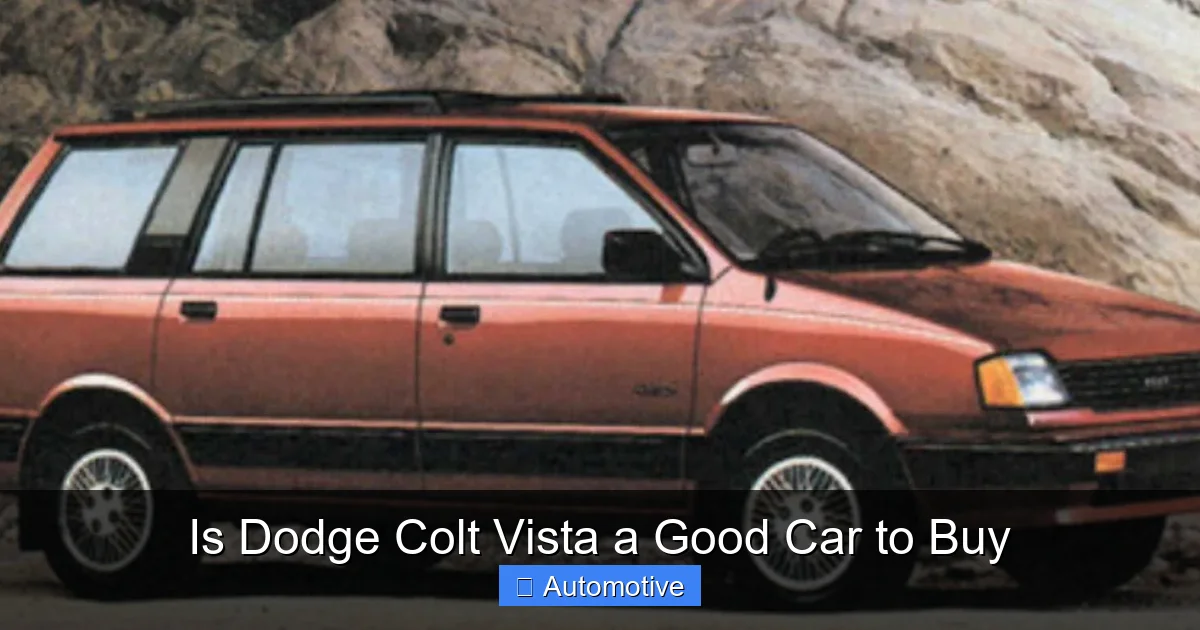
Visual guide about Is Dodge Colt Vista a Good Car to Buy
Image source: s.car.info
Step inside a Dodge Colt Vista, and you’ll immediately notice its utilitarian design. The dashboard is simple, with basic gauges and controls laid out in a straightforward manner. Materials are mostly hard plastic, which isn’t luxurious but is durable and easy to clean. Seats are cloth-covered and reasonably comfortable for short to medium-length trips, though long drives may leave you wanting more lumbar support.
Where the Vista truly excels is in space and versatility. Despite its compact exterior dimensions, the interior feels surprisingly roomy. The tall roofline provides ample headroom for both front and rear passengers, and legroom is adequate for adults—especially in the front seats. The rear bench seat folds flat in a 60/40 split, creating a large, flat cargo area perfect for hauling groceries, camping gear, or furniture.
Cargo capacity is one of the Vista’s strongest selling points. With the rear seats up, you get around 25 cubic feet of storage—more than many modern compact SUVs. Fold the seats down, and that number jumps to nearly 60 cubic feet. That’s enough space to fit a bicycle, a small mattress, or several large suitcases with ease. The rear hatch opens wide, and the load floor is low, making it easy to load and unload heavy items.
Storage compartments are plentiful, too. There are door pockets, a glove box, and a center console (in some models), plus cup holders for front and rear passengers. While it lacks modern conveniences like USB ports or touchscreen infotainment, the Vista does offer basic amenities such as AM/FM radio, air conditioning (on higher trims), and power windows and locks (in later models).
For families or outdoor enthusiasts, the Vista’s practicality is hard to beat. It’s the kind of car that can handle school drop-offs during the week and a weekend camping trip without breaking a sweat. And because it’s so lightweight and fuel-efficient, you won’t feel guilty about using it for everything.
Reliability and Maintenance
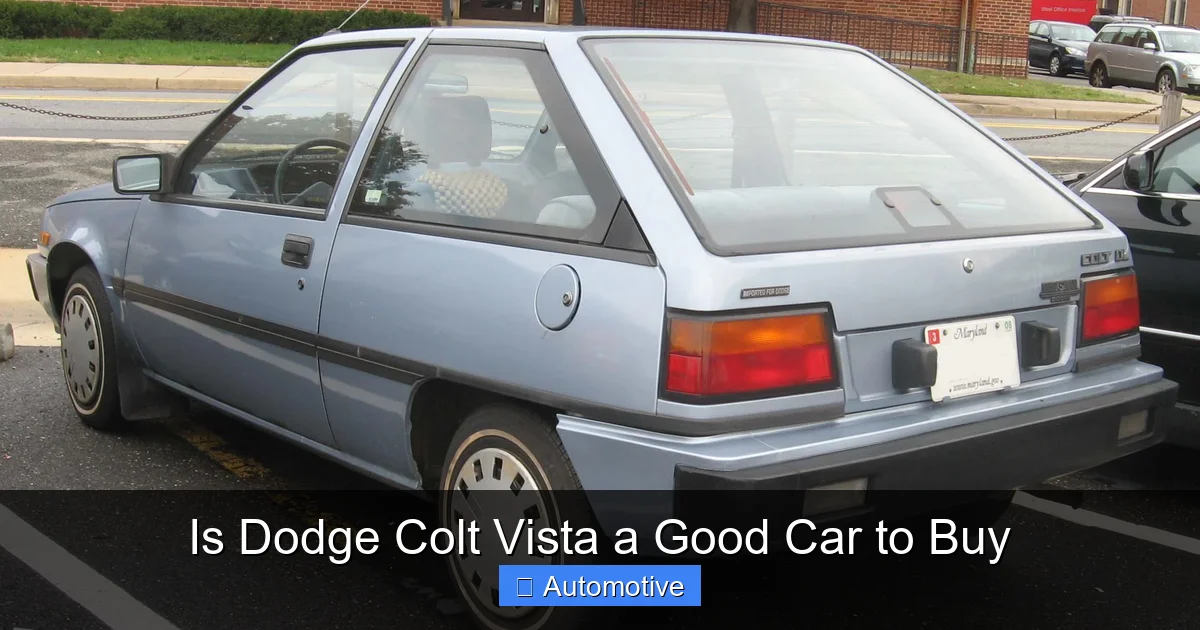
Visual guide about Is Dodge Colt Vista a Good Car to Buy
Image source: momentcar.com
When it comes to reliability, the Dodge Colt Vista is a mixed bag—but generally leans positive if you choose the right model and maintain it well. As a rebadged Mitsubishi, the Vista benefits from Japanese engineering known for durability and simplicity. Many of its components are shared with the Mitsubishi Mirage, Lancer, and Eclipse, which means parts are relatively easy to find and often affordable.
That said, age is a major factor. Older models (pre-1990) are more prone to rust, especially in regions with harsh winters and road salt. Check the wheel wells, floor pans, and undercarriage carefully when inspecting a used Vista. Rust can compromise structural integrity and lead to expensive repairs if left unchecked.
Mechanical issues vary by engine and year. The smaller 1.4L and 1.5L engines are known for their longevity—many have surpassed 200,000 miles with regular oil changes and basic maintenance. The 1.6L and 2.0L engines are also reliable but may require more attention to timing belts, water pumps, and gaskets as they age.
Common problems to watch for include:
– Oil leaks (especially around the valve cover and rear main seal)
– Worn suspension components (ball joints, struts, bushings)
– Electrical gremlins (faulty switches, wiring issues)
– Transmission wear (particularly in high-mileage automatics)
The good news? Most of these issues are fixable with basic tools and mechanical knowledge. The Colt Vista is a favorite among DIY mechanics because it’s simple to work on—no complex electronics or turbo systems to worry about. Online forums and repair manuals are widely available, and many parts can be sourced from junkyards or aftermarket suppliers.
Regular maintenance is key to keeping a Vista running smoothly. Stick to the factory-recommended service schedule: oil changes every 3,000–5,000 miles, coolant flushes every 30,000 miles, and timing belt replacements every 60,000–90,000 miles (depending on the engine). Neglecting these tasks can lead to premature engine failure.
If you’re buying a used Vista, always get a pre-purchase inspection from a trusted mechanic. Look for signs of poor maintenance, accident damage, or flood exposure. A clean title, low mileage (under 120,000 miles), and a documented service history are strong indicators of a well-cared-for vehicle.
Safety Features and Ratings
Here’s where the Dodge Colt Vista falls short by modern standards. Built before the widespread adoption of advanced safety technology, the Vista lacks many features we now take for granted. Most models do not have airbags—some don’t even have seatbelt pretensioners. Anti-lock brakes (ABS) and electronic stability control (ESC) are virtually nonexistent, especially in earlier versions.
Crash test ratings are limited, but available data suggests the Vista performs poorly in frontal and side impacts compared to modern vehicles. The National Highway Traffic Safety Administration (NHTSA) did not extensively test the Vista, but similar Mitsubishi models from the same era received low scores in crashworthiness.
That doesn’t mean the Vista is unsafe—just that it’s not as protective in a collision as a newer car. The body structure is relatively rigid for its time, and the seatbelts do provide basic restraint. But without airbags or crumple zones designed for modern crash standards, occupants are at greater risk in serious accidents.
For this reason, the Colt Vista is not recommended for families with young children or drivers who frequently travel on high-speed highways. If safety is a top priority, consider a newer compact car with at least six airbags, ABS, and a 4- or 5-star safety rating.
That said, defensive driving and proper maintenance can go a long way. Keep your tires inflated, brakes in good condition, and lights working. Avoid distracted driving, and always wear your seatbelt. While the Vista won’t protect you like a 2024 Honda Civic, it can still be a safe vehicle if driven responsibly.
Cost of Ownership and Value
One of the biggest draws of the Dodge Colt Vista is its low cost of ownership. Purchase prices are extremely affordable—most used models sell for between $1,000 and $4,000, depending on condition, mileage, and location. Even in excellent shape, you’ll rarely pay more than $5,000.
Insurance is also cheap. Because the Vista is not a high-performance or luxury vehicle, premiums are typically low—especially for older drivers or those with clean records. Comprehensive and collision coverage may not even be worth it on a car valued under $3,000.
Fuel costs are minimal thanks to the Vista’s excellent fuel economy. At current gas prices (around $3.50 per gallon), driving 12,000 miles per year would cost roughly $1,200–$1,500—significantly less than most SUVs or trucks.
Maintenance and repairs are generally affordable, especially if you do some work yourself. Common parts like brakes, shocks, and belts are inexpensive and widely available. Even major repairs—like a timing belt job or transmission rebuild—are usually under $1,500 if you shop around.
Depreciation is another advantage. Since the Vista has already lost most of its value, it won’t drop much further. You can buy one, drive it for a few years, and sell it for nearly the same price—making it a smart choice for short-term use.
However, resale value is limited. The Vista isn’t a collector’s item (yet), and demand is low. If you plan to keep it long-term, that’s fine—but don’t expect it to appreciate or hold its value like a classic Mustang or Toyota Land Cruiser.
Who Should Buy a Dodge Colt Vista?
The Dodge Colt Vista isn’t for everyone—but it’s perfect for the right buyer. Here’s who should consider it:
– **Budget-conscious buyers:** If you need reliable transportation for under $3,000, the Vista is hard to beat.
– **College students:** Its low cost, good fuel economy, and practicality make it ideal for campus life.
– **DIY mechanics:** Simple design and easy access to parts make it a great project car.
– **Commuters:** With excellent MPG and compact size, it’s perfect for city driving and parking.
– **Outdoor enthusiasts:** The wagon body and fold-flat seats are great for camping and gear hauling.
On the flip side, avoid the Vista if you:
– Need advanced safety features
– Want modern tech (infotainment, Bluetooth, etc.)
– Plan to keep the car for 10+ years
– Drive mostly on highways at high speeds
Final Verdict: Is the Dodge Colt Vista a Good Car to Buy?
So, is the Dodge Colt Vista a good car to buy? The answer depends on your priorities.
If you’re looking for an affordable, fuel-efficient, and practical compact wagon that gets the job done without breaking the bank, the Colt Vista is a solid choice. It’s reliable (with proper maintenance), easy to drive, and surprisingly versatile. For under $4,000, you can own a car that costs pennies to operate and still has plenty of life left.
But if you expect modern safety, technology, or long-term resale value, you’ll be disappointed. The Vista is a product of its time—simple, no-frills, and built for function over form.
In today’s market, the Colt Vista is best suited as a second car, a commuter, or a project vehicle. It won’t turn heads or win awards, but it will get you from point A to point B reliably and affordably.
If you’re willing to embrace its quirks and limitations, the Dodge Colt Vista might just be the hidden gem you’ve been looking for.
Frequently Asked Questions
Is the Dodge Colt Vista reliable?
The Dodge Colt Vista is generally reliable, especially later models from the 1990s and early 2000s. With proper maintenance, many have surpassed 200,000 miles. However, older models may suffer from rust and wear-related issues.
How many miles per gallon does a Dodge Colt Vista get?
Fuel economy ranges from 28 to 34 MPG combined, depending on the engine and transmission. Smaller engines and manual transmissions tend to be the most efficient.
Are parts for the Dodge Colt Vista easy to find?
Yes, because the Colt Vista is a rebadged Mitsubishi, many parts are shared with popular models like the Mirage and Lancer, making them relatively easy and affordable to source.
Does the Dodge Colt Vista have airbags?
Most models do not have airbags, especially those from the 1980s and early 1990s. Some later trims may include driver-side airbags, but side or curtain airbags are rare.
Can the Dodge Colt Vista handle long road trips?
Yes, it can handle long trips, but cabin noise and lack of modern comforts may make it less enjoyable than newer vehicles. It’s best suited for moderate-distance travel with regular breaks.
What’s the average price of a used Dodge Colt Vista?
Used Dodge Colt Vistas typically sell for $1,000 to $4,000, depending on condition, mileage, and location. Well-maintained, low-mileage examples may reach $5,000.