
Can You Tow a Car with Someone in It?

Towing a car with someone inside is extremely dangerous and generally illegal. Even if it seems convenient, having a passenger in a towed vehicle can lead to serious injury, legal trouble, and mechanical failure. Always follow safety guidelines and use proper towing equipment to protect everyone involved.
Key Takeaways
- It’s unsafe and often illegal: Towing a car with a person inside poses serious safety risks and may violate traffic laws in many areas.
- Passenger injury risk is high: Sudden stops, swerves, or equipment failure can cause severe harm to someone inside a towed vehicle.
- Proper towing equipment is essential: Using the right tow bar, dolly, or flatbed trailer reduces risks and ensures stability during transport.
- Legal consequences may apply: Law enforcement can issue fines or citations for unsafe towing practices, especially with passengers onboard.
- Alternative solutions exist: Use professional towing services or have the driver operate the disabled vehicle if it’s safe to do so.
- Always prioritize safety over convenience: Never compromise passenger safety for the sake of saving time or effort during a tow.
- Check local regulations: Towing laws vary by state and country, so always verify local rules before attempting any towing operation.
📑 Table of Contents
- Can You Tow a Car with Someone in It? The Truth About Safety and Legality
- The Dangers of Towing a Car with a Passenger Inside
- Legal Implications: Is It Even Allowed?
- When Might It Be (Technically) Allowed?
- Safe Alternatives to Towing with a Passenger
- Best Practices for Safe Towing
- Real-Life Example: What Went Wrong
- Conclusion: Safety First, Always
Can You Tow a Car with Someone in It? The Truth About Safety and Legality
Imagine this: your friend’s car breaks down on a remote highway. It’s getting dark, and the nearest tow truck is two hours away. You’ve got a tow bar in your trunk, and you’re thinking, “Why not just tow them back with their friend still inside?” It seems like a quick fix—after all, the person is just sitting there, right?
But here’s the hard truth: **towing a car with someone in it is a terrible idea**. It’s not just risky—it’s potentially deadly. And in many places, it’s outright illegal.
We’ve all been in situations where convenience tempts us to cut corners. But when it comes to towing, cutting corners can lead to catastrophic consequences. Whether you’re using a tow bar, a dolly, or a flatbed trailer, having a passenger inside the towed vehicle dramatically increases the danger for everyone on the road.
In this article, we’ll dive deep into why towing a car with someone inside is a bad move, what the laws say, and how to handle vehicle recovery safely and legally. We’ll also explore real-world examples, expert recommendations, and practical alternatives so you’re prepared the next time you’re faced with a breakdown.
The Dangers of Towing a Car with a Passenger Inside
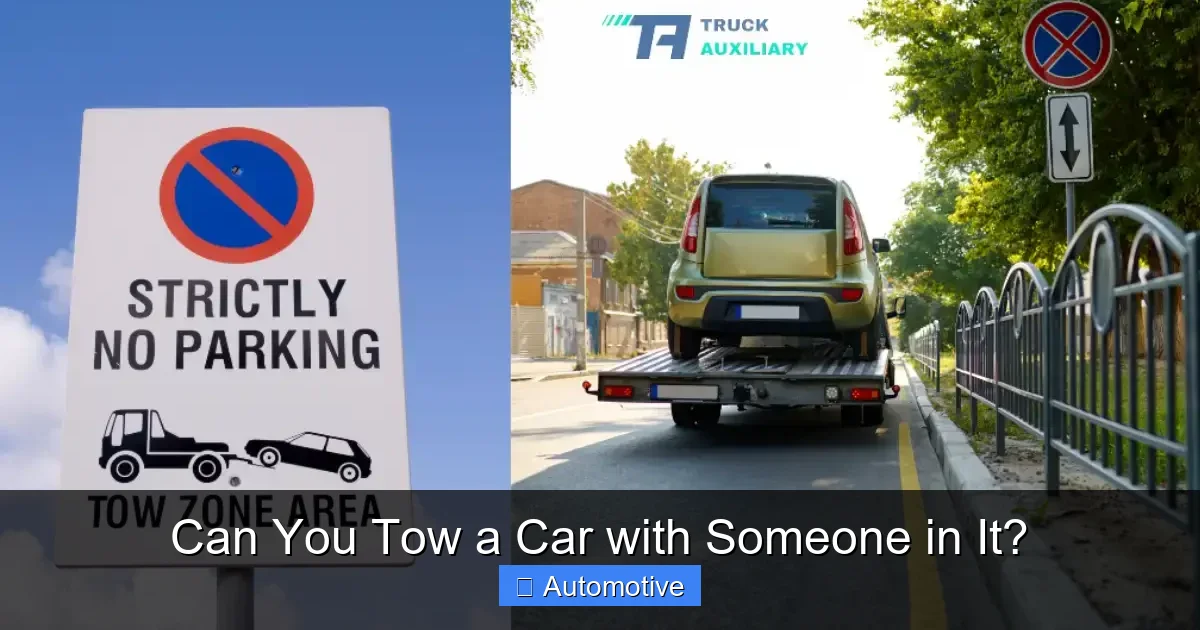
Visual guide about Can You Tow a Car with Someone in It?
Image source: truckauxiliary.com
Let’s start with the most important point: **safety**. When you tow a car, you’re essentially turning it into a semi-trailer. That means it has no independent control—no steering input from the driver, no active braking (unless equipped with a supplemental system), and no ability to respond quickly to road conditions.
Now, imagine someone is sitting inside that powerless vehicle. They’re completely at the mercy of the towing vehicle and the equipment connecting the two. Here’s what can go wrong:
Loss of Control and Sudden Movements
Towed vehicles are inherently unstable. Even with the best equipment, they can sway, fishtail, or jackknife—especially at higher speeds or in windy conditions. If a passenger is inside, they have no way to brace themselves or react. A sudden swerve by the towing vehicle could send the towed car into a violent oscillation, potentially causing it to roll or collide with other vehicles.
For example, in 2018, a Florida man was killed when the car he was riding in—towed by a friend—lost control on a highway curve. The towed vehicle flipped, and the passenger was ejected. Investigators later confirmed that the lack of steering and braking in the towed car made recovery impossible once it began to sway.
Inadequate Restraint Systems
Most cars aren’t designed to protect occupants during a tow. Seatbelts and airbags are engineered for forward collisions, not the lateral forces and sudden jolts that occur during towing. If the towed vehicle is hit from the side or rear, the passenger inside could be thrown around like a ragdoll.
Even if the passenger is wearing a seatbelt, the forces involved in a towing accident can exceed what the restraint system is built to handle. There’s also the risk of the seatbelt failing under extreme stress or the airbag deploying unexpectedly, causing injury.
Equipment Failure
Tow bars, hitches, and straps can fail—especially if they’re old, damaged, or improperly rated for the weight of the vehicle. A broken tow bar doesn’t just mean the car comes loose; it means it becomes a rogue projectile on the highway.
If someone is inside when that happens, the results can be fatal. The passenger has no way to escape, and the sudden release of tension can cause the towed vehicle to spin out or crash into oncoming traffic.
No Emergency Response Capability
What if the passenger has a medical emergency while being towed? A heart attack, seizure, or severe allergic reaction could go unnoticed until it’s too late. There’s no way for the towing driver to monitor the passenger’s condition, and pulling over safely on a busy road isn’t always possible.
Even something as simple as a child unbuckling their seatbelt or opening a door mid-tow can lead to disaster. Most towed vehicles don’t have child safety locks engaged, and doors can swing open if the latch fails.
Legal Implications: Is It Even Allowed?
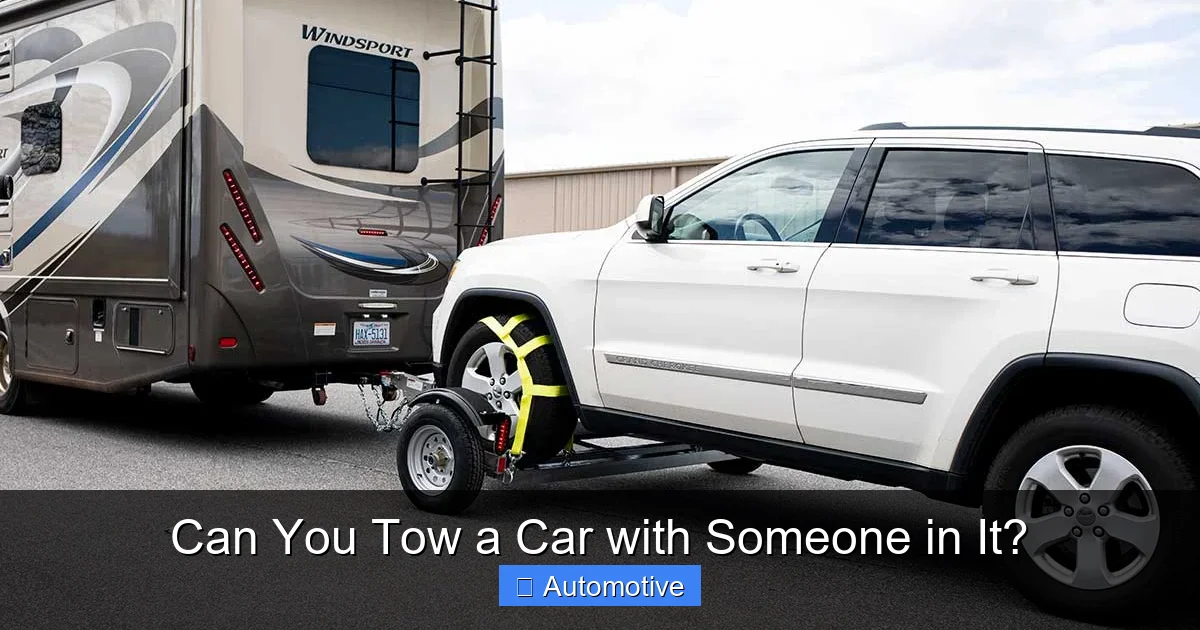
Visual guide about Can You Tow a Car with Someone in It?
Image source: cartowdolly.com
Beyond the safety concerns, there’s a major legal issue: **towing a car with someone in it is often against the law**.
While specific regulations vary by state and country, most jurisdictions prohibit passengers in towed vehicles unless certain conditions are met—and even then, it’s rare.
State Laws in the U.S.
In the United States, traffic laws are governed at the state level. Here’s a snapshot of what some states say:
– **California**: Vehicle Code Section 24003 states that no person shall ride in a towed vehicle unless it’s a licensed tow truck with proper safety equipment and the passenger is an employee performing duties.
– **Texas**: The Texas Transportation Code prohibits passengers in towed vehicles unless the vehicle is being operated under a special permit (e.g., for film production or parades).
– **New York**: NY Vehicle and Traffic Law § 375(21) requires that towed vehicles be operated by a licensed driver if they’re on public roads—meaning someone must be driving, not riding.
In most cases, if you’re towing a car with a passenger inside, you’re violating the law—even if no one gets hurt.
International Regulations
Outside the U.S., the rules are even stricter. In the UK, for example, the Road Vehicles (Construction and Use) Regulations 1986 explicitly forbid passengers in towed vehicles unless the vehicle is designed for it (like a caravan or trailer with seating). Australia has similar laws under its national road rules.
Even in countries where it’s technically allowed under certain conditions—like with a licensed recovery vehicle—the risks usually outweigh the benefits.
Insurance and Liability Issues
Here’s another reason to avoid it: **insurance companies may deny claims** if they discover a passenger was in a towed vehicle during an accident.
Most auto insurance policies include clauses that void coverage for illegal or reckless behavior. If you’re towing a car with someone inside and get into a crash, your insurer could argue that you were operating the vehicle in an unsafe manner, leaving you personally liable for damages, medical bills, and legal fees.
And if the passenger is injured or killed, their family could sue you for negligence. Courts have ruled in favor of plaintiffs in similar cases, especially when the towing was done without proper equipment or training.
When Might It Be (Technically) Allowed?
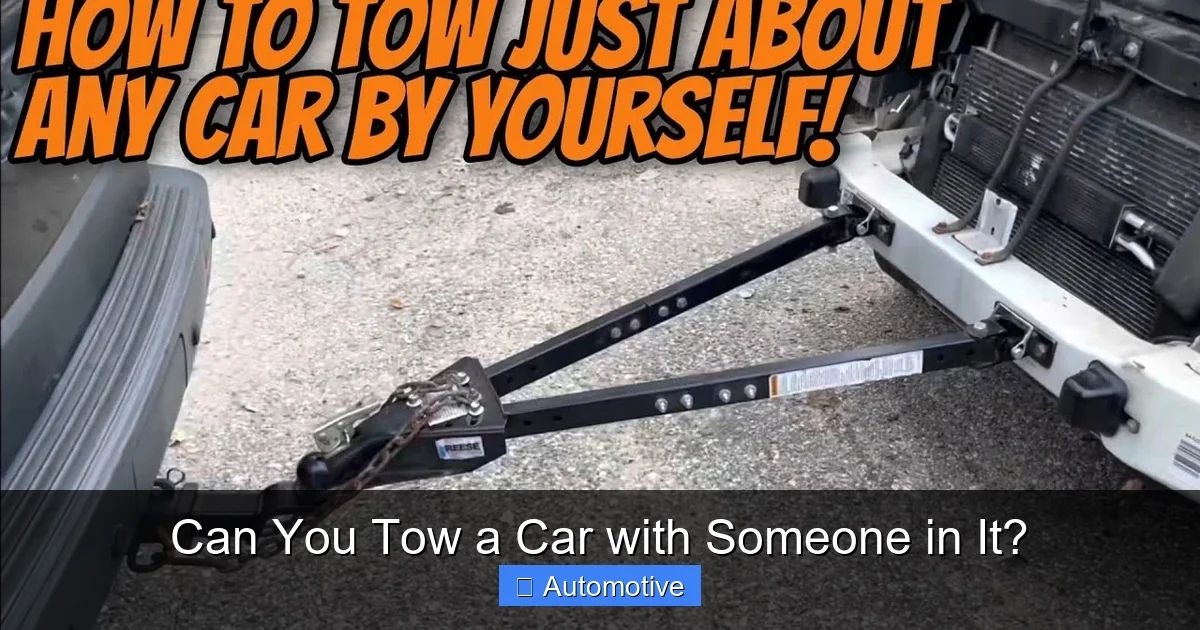
Visual guide about Can You Tow a Car with Someone in It?
Image source: i.ytimg.com
Now, you might be thinking: “But what about tow trucks? They sometimes have people in the back.”
That’s a fair point—but there’s a big difference.
Professional Towing Operations
Licensed tow trucks are equipped with specialized systems designed to safely transport disabled vehicles. These include:
– **Integrated braking systems** that allow the towed vehicle to brake in sync with the tow truck.
– **Steering locks** that prevent the wheels from turning unintentionally.
– **Secure mounting** on flatbeds or dollies that eliminate sway.
– **Trained operators** who know how to handle emergencies.
Even then, passengers are rarely allowed unless they’re employees performing a job—and even that’s becoming less common due to liability concerns.
Parades, Film Productions, and Special Events
There are rare exceptions. For example, in a parade, a vintage car might be towed with a driver inside for ceremonial purposes. Or in a movie shoot, a vehicle might be towed with an actor inside—but only under strict safety protocols, with stunt coordinators, and on closed roads.
These are highly controlled environments, not everyday scenarios. They also require permits, insurance waivers, and safety inspections.
DIY Towing: The Risks Outweigh the Rewards
For the average driver, there’s no safe or legal way to tow a car with someone inside. Even if you’re using a high-quality tow bar and both vehicles are in good condition, the risks are too high.
And let’s be honest: if you’re considering this, you’re probably in a stressful situation. Stress leads to poor decisions. It’s better to take a breath, call for help, and wait for a professional.
Safe Alternatives to Towing with a Passenger
So, what should you do if you’re stuck with a broken-down car and no tow truck in sight?
Here are safer, smarter options:
Call a Professional Towing Service
This is the gold standard. Professional tow trucks are equipped to handle all types of vehicles safely. They can flatbed your car, use a dolly, or even winch it onto a trailer—all without putting anyone at risk.
Yes, it might cost $100–$300, but that’s a small price to pay for peace of mind and safety.
Use a Flatbed Trailer
If you have access to a flatbed trailer and a vehicle capable of pulling it, this is the safest DIY towing method. The disabled car is secured on the trailer, completely immobilized, and no one needs to be inside.
Just make sure the trailer is rated for the weight of the car, and use proper tie-down straps.
Have the Driver Operate the Vehicle (If Safe)
If the car has minor issues—like a dead battery or flat tire—it might be drivable once repaired. In that case, have the driver get behind the wheel and follow you to a safe location.
This only works if the car can steer, brake, and accelerate independently. Never do this if the transmission is damaged or the wheels are locked.
Use a Tow Dolly for Front-Wheel Drive Cars
A tow dolly lifts the front wheels off the ground, allowing the car to be towed with the rear wheels rolling. This is safer than a tow bar because it reduces sway.
But again—no passengers. The driver should not be inside.
Wait for Help in a Safe Location
If you’re on the side of the road, turn on your hazard lights, stay inside the vehicle with seatbelts on, and call for roadside assistance. If it’s unsafe to stay (e.g., on a narrow shoulder), exit the vehicle and move to a safe area behind a guardrail.
Your safety is more important than getting home quickly.
Best Practices for Safe Towing
If you do need to tow a vehicle—without anyone inside—here are some essential tips:
Use the Right Equipment
– **Tow bar**: Best for short distances and light vehicles. Ensure it’s rated for the combined weight.
– **Tow dolly**: Ideal for front-wheel drive cars. Lifts the front wheels.
– **Flatbed trailer**: Safest option for long distances or heavy vehicles.
Always inspect equipment for cracks, rust, or wear before use.
Check Weight Limits
Never exceed the towing capacity of your vehicle or the rating of your hitch. Overloading can cause brake failure, transmission damage, or loss of control.
Secure the Vehicle Properly
Use safety chains, straps, and wheel chocks. Double-check all connections before driving.
Drive Slowly and Smoothly
Avoid sudden acceleration, hard braking, or sharp turns. Keep speeds under 45 mph, especially with a tow bar.
Communicate with the Driver (If Applicable)
If the towed vehicle has a driver (e.g., in a drivable car), use hand signals or a two-way radio to coordinate stops and turns.
Practice in a Safe Area
If you’ve never towed before, practice in an empty parking lot. Get a feel for how the towed vehicle behaves.
Real-Life Example: What Went Wrong
Let’s look at a real case to drive the point home.
In 2021, a family in Ohio attempted to tow their minivan with their teenage daughter inside because they didn’t want her to wait alone on the roadside. They used a basic tow bar and drove at 50 mph on a rural highway.
About 20 minutes in, a gust of wind caused the minivan to sway violently. The father in the towing vehicle tried to correct, but the minivan fishtailed and slammed into the guardrail. The daughter suffered a broken arm and concussion.
The police report cited “unsafe towing with passenger onboard” as a contributing factor. The family was fined, and their insurance claim was partially denied due to negligence.
This tragic incident could have been avoided with a simple call to a tow truck.
Conclusion: Safety First, Always
So, can you tow a car with someone in it? Technically, yes—but you absolutely shouldn’t.
The risks are too high, the laws are too strict, and the consequences too severe. Whether it’s a friend, family member, or stranger, no one should ever ride in a towed vehicle.
Instead, rely on professional towing services, use proper equipment, and always prioritize safety over speed or convenience. Remember: a few extra minutes or dollars spent on a safe solution is worth far more than a lifetime of regret.
When it comes to towing, the rule is simple: **if someone’s inside, don’t tow it**. Period.
Frequently Asked Questions
Is it legal to tow a car with a passenger inside?
In most states and countries, it is illegal to tow a car with someone inside unless specific safety conditions are met—such as using a licensed tow truck with proper equipment. Even then, it’s rare and highly regulated.
What happens if I get caught towing with a passenger?
You could face fines, citations, or even criminal charges depending on the jurisdiction. Insurance companies may also deny claims related to the incident.
Can I tow my own car with a friend inside if we’re careful?
No. Even with caution, the risks of injury, equipment failure, and loss of control are too high. It’s never worth endangering a life for convenience.
Are there any safe ways to transport someone in a towed vehicle?
Only in highly controlled environments like film productions or parades, with permits, safety gear, and professional oversight. For everyday use, it’s not safe or legal.
What should I do if my car breaks down and no tow truck is available?
Stay in the vehicle with seatbelts on, turn on hazard lights, and call roadside assistance. If it’s unsafe to stay, move to a secure area and wait for help.
Can a tow dolly or flatbed make it safer to have a passenger inside?
No. Even with a dolly or flatbed, the passenger is still at risk from sudden movements, equipment failure, or accidents. The safest rule is: no passengers in towed vehicles.