
How Much Is Car Insurance in Florida?

Car insurance in Florida is among the most expensive in the U.S., with average annual premiums exceeding $2,500. Rates vary widely based on location, driving history, and coverage needs, but understanding the state’s unique requirements can help you find better deals.
If you’re driving in the Sunshine State, you’ve probably noticed that car insurance isn’t cheap. In fact, Florida consistently ranks as one of the most expensive states for auto insurance in the U.S. Whether you’re a new driver, a long-time resident, or just moving to Florida, understanding how much car insurance costs—and why—can help you make smarter financial decisions.
So, how much is car insurance in Florida, really? The short answer: it depends. But on average, Floridians pay over $2,500 per year for full coverage, and even the minimum required coverage can cost well over $1,000 annually. That’s nearly double the national average of around $1,700. These high costs aren’t random—they’re driven by a mix of state laws, environmental risks, and insurance industry challenges unique to Florida.
But don’t let the numbers scare you. With the right knowledge, you can navigate the system, find affordable options, and still get the protection you need. This guide will break down everything you need to know about car insurance costs in Florida, from state requirements to money-saving tips.
Key Takeaways
- Florida has some of the highest car insurance rates in the nation, with an average annual cost of over $2,500—nearly double the national average.
- State-mandated coverage includes Personal Injury Protection (PIP) and Property Damage Liability (PDL), but these minimums may not be enough for full protection.
- Your location within Florida significantly impacts your premium, with urban areas like Miami and Tampa costing more than rural regions.
- Driving history, age, credit score, and vehicle type all influence your rate, so maintaining a clean record and good credit can lead to savings.
- Shopping around and bundling policies can save hundreds per year, as insurers vary greatly in pricing and discounts offered.
- Uninsured motorist coverage is highly recommended, as Florida has one of the highest rates of uninsured drivers in the country.
- Usage-based insurance programs and defensive driving courses may qualify you for additional discounts.
📑 Table of Contents
- Why Is Car Insurance So Expensive in Florida?
- Florida’s Minimum Car Insurance Requirements
- Average Car Insurance Costs in Florida
- Factors That Affect Your Car Insurance Rate
- How to Save Money on Car Insurance in Florida
- The Importance of Uninsured Motorist Coverage
- Final Thoughts: Is Car Insurance in Florida Worth It?
Why Is Car Insurance So Expensive in Florida?
Florida’s high car insurance rates aren’t just a rumor—they’re a well-documented reality. But what makes the Sunshine State so costly for drivers? The reasons are complex, but they boil down to a few key factors: state-mandated coverage, high accident rates, severe weather, and a problematic insurance climate.
First, Florida is a no-fault state, which means drivers must carry Personal Injury Protection (PIP) insurance to cover their own medical expenses after an accident, regardless of who’s at fault. While this system is designed to reduce lawsuits, it’s also been exploited by fraudsters and medical providers, driving up costs for everyone. In fact, Florida has one of the highest rates of PIP fraud in the country, with some estimates suggesting billions of dollars lost annually to fraudulent claims.
Second, Florida has a high population density in urban areas like Miami, Fort Lauderdale, and Tampa. More cars on the road mean more accidents, and more accidents mean higher claims and premiums. According to the Florida Highway Safety and Motor Vehicles (FLHSMV), there were over 400,000 traffic crashes in the state in 2022 alone—many of them resulting in injuries or fatalities.
Third, Florida is no stranger to extreme weather. Hurricanes, flooding, and heavy rains can damage vehicles and increase the risk of accidents. Insurers factor in these environmental risks when setting rates, especially in coastal regions. For example, a driver in Key West may pay significantly more than someone in Tallahassee due to hurricane exposure.
Finally, the insurance market in Florida has been unstable in recent years. Many national insurers have pulled back or raised rates dramatically due to rising claims, litigation, and fraud. This has left fewer options for consumers and driven up prices across the board.
The Role of Fraud and Litigation
One of the biggest contributors to high insurance costs in Florida is the prevalence of insurance fraud, particularly related to PIP claims. Some medical providers and attorneys have been accused of inflating bills, performing unnecessary treatments, or even staging accidents to collect insurance payouts. This “PIP fraud epidemic” has led to higher premiums for honest drivers.
Additionally, Florida allows for what’s known as “assignment of benefits” (AOB), where policyholders sign over their insurance claim rights to third parties like repair shops or medical providers. While intended to streamline repairs, AOB has been abused, leading to inflated claims and lawsuits. In response, the state passed reforms in 2019 and 2023 to curb abuse, but the effects on premiums are still unfolding.
Weather and Natural Disasters
Florida’s tropical climate brings beauty—but also risk. Hurricanes like Ian (2022) and Irma (2017) caused billions in vehicle damage, leading to massive insurance payouts. Even outside of major storms, daily thunderstorms, flooding, and high humidity can damage cars and increase accident risks. Insurers account for these risks by charging higher premiums, especially in South Florida and the Gulf Coast.
Florida’s Minimum Car Insurance Requirements
Visual guide about How Much Is Car Insurance in Florida?
Image source: i2.wp.com
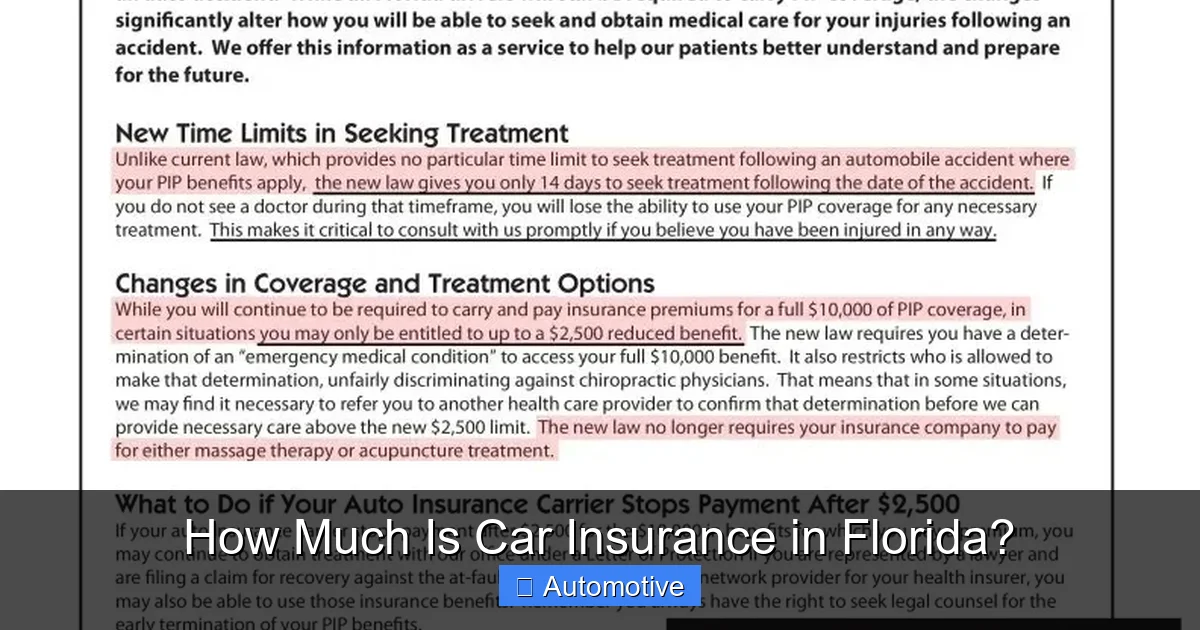
Before we dive into average costs, it’s important to understand what coverage you’re legally required to carry in Florida. Unlike most states, Florida does not require bodily injury liability coverage. Instead, it mandates two types of coverage:
– Personal Injury Protection (PIP): Covers 80% of medical expenses and 60% of lost wages up to $10,000, regardless of fault.
– Property Damage Liability (PDL): Covers damage you cause to someone else’s property, with a minimum of $10,000.
This no-fault system means your own insurance pays for your injuries first, even if the other driver caused the accident. While this reduces the need for lawsuits, it also means you’re limited in your ability to sue unless your injuries meet a certain threshold (e.g., permanent disability or significant disfigurement).
Why Minimum Coverage Isn’t Enough
While the state minimums keep you legal, they offer very little protection. A $10,000 PIP limit can be exhausted quickly in a serious accident, especially with rising medical costs. And $10,000 in property damage coverage won’t come close to covering the cost of damaging a luxury car or multiple vehicles.
For this reason, most financial experts recommend purchasing more than the minimum. Adding bodily injury liability, uninsured motorist coverage, and comprehensive and collision coverage can provide much-needed peace of mind.
Optional Coverage Worth Considering
Beyond the basics, several optional coverages can enhance your protection:
– Uninsured/Underinsured Motorist (UM/UIM): Covers your expenses if you’re hit by a driver with no insurance or insufficient coverage. Given that nearly 20% of Florida drivers are uninsured, this is a smart addition.
– Comprehensive Coverage: Pays for non-collision damage like theft, vandalism, or weather-related incidents.
– Collision Coverage: Covers damage to your car from accidents, regardless of fault.
– Medical Payments (MedPay): Similar to PIP but with fewer restrictions and often used to supplement it.
– Rental Reimbursement and Roadside Assistance: Helpful add-ons for convenience and peace of mind.
Average Car Insurance Costs in Florida
Visual guide about How Much Is Car Insurance in Florida?
Image source: ultracarinsurance.com
So, how much is car insurance in Florida, on average? Let’s break it down by coverage level and driver profile.
According to recent data from sources like the National Association of Insurance Commissioners (NAIC) and independent rate comparison sites, the average annual premium for full coverage in Florida is approximately $2,600. For minimum coverage, the average is around $1,200 per year. However, these are just averages—your actual rate could be much higher or lower depending on several factors.
Cost by Age and Gender
Age and gender play a significant role in determining your premium. Young drivers, especially teens, face the highest rates due to their lack of experience and higher accident rates. For example:
– A 16-year-old male driver in Miami might pay over $8,000 per year for full coverage.
– A 25-year-old female with a clean record might pay around $2,200.
– A 45-year-old married driver with a good driving history could pay as little as $1,800.
Gender also affects rates, though the difference is smaller for older drivers. In Florida, male drivers typically pay 5–10% more than female drivers of the same age and profile.
Cost by Location
Where you live in Florida makes a huge difference. Urban areas with high traffic, crime, and accident rates tend to have the highest premiums. Here’s a rough breakdown:
– Miami: Average full coverage premium: $3,200–$4,000 per year
– Fort Lauderdale: $2,800–$3,500
– Tampa: $2,500–$3,200
– Orlando: $2,300–$3,000
– Jacksonville: $2,000–$2,700
– Tallahassee (rural): $1,800–$2,400
Even within cities, ZIP codes matter. A driver in a high-crime neighborhood may pay significantly more than someone just a few miles away in a safer area.
Cost by Vehicle Type
The car you drive also impacts your insurance cost. Insurers consider factors like repair costs, theft rates, and safety ratings. For example:
– A new luxury SUV like a BMW X5 or Mercedes GLE can cost $3,000+ per year to insure.
– A mid-size sedan like a Honda Accord or Toyota Camry might cost $2,000–$2,500.
– A used economy car like a Hyundai Elantra or Ford Focus could be under $1,800.
Electric vehicles (EVs) like Teslas often have higher premiums due to expensive parts and specialized repair needs, even though they may have lower accident rates.
Factors That Affect Your Car Insurance Rate
Visual guide about How Much Is Car Insurance in Florida?
Image source: directautoinsurance.org
Your premium isn’t set in stone. Several personal and external factors influence how much you pay. Understanding these can help you take control of your costs.
Driving Record
Your driving history is one of the biggest factors. A clean record with no accidents or tickets can lead to significant discounts. Conversely, a DUI, at-fault accident, or multiple speeding tickets can double or even triple your premium.
For example, a driver with a DUI in Florida might see their rate jump from $2,000 to $5,000 or more per year. Even a single speeding ticket can increase your rate by 10–20%.
Credit Score
In Florida, insurers are allowed to use credit-based insurance scores to determine rates. Drivers with poor credit (below 600) often pay much more than those with excellent credit (750+). This is because studies show a correlation between credit history and claim frequency.
Improving your credit score by paying bills on time, reducing debt, and checking for errors on your report can lead to lower premiums over time.
Annual Mileage
The more you drive, the higher your risk of an accident. Insurers may ask for your annual mileage and adjust your rate accordingly. If you work from home or have a short commute, you may qualify for a low-mileage discount.
Some insurers offer usage-based programs (like Progressive’s Snapshot or Allstate’s Drivewise) that track your driving habits via a mobile app or device. Safe driving behaviors—like smooth braking and avoiding late-night trips—can earn you discounts of 10–30%.
Marital Status and Occupation
Married drivers tend to pay less than single drivers, as they’re statistically less likely to file claims. Similarly, certain professions (like teachers, engineers, or government employees) may qualify for occupational discounts.
How to Save Money on Car Insurance in Florida
Despite the high costs, there are proven ways to reduce your car insurance premium in Florida. Here are some practical tips:
Shop Around Annually
Insurance rates change frequently, and loyalty doesn’t always pay. Get quotes from at least three different insurers each year. Use online comparison tools or work with an independent agent who can access multiple carriers.
Some of the most affordable insurers in Florida include:
– GEICO
– State Farm
– Progressive
– Farmers
– USAA (for military members and families)
Bundling Policies
Many insurers offer discounts if you bundle your auto policy with home, renters, or life insurance. Bundling can save you 10–25% on your total premium.
Increase Your Deductible
Raising your deductible—the amount you pay out of pocket before insurance kicks in—can lower your premium. For example, increasing your collision deductible from $500 to $1,000 could save you $100–$200 per year. Just make sure you can afford the higher deductible if you need to file a claim.
Take a Defensive Driving Course
Florida allows drivers to complete a state-approved defensive driving course to earn a discount—typically 5–10% off your premium. These courses are often available online and take just a few hours.
Maintain Continuous Coverage
Letting your policy lapse can lead to higher rates when you reinstate coverage. Insurers view gaps in coverage as a red flag. Even if you’re not driving, consider a non-owner policy to maintain continuous coverage.
Ask About Discounts
Don’t assume discounts are automatic. Ask your insurer about:
– Good student discounts (for full-time students with B averages)
– Military discounts
– Low-mileage discounts
– Anti-theft device discounts
– Paperless billing and auto-pay discounts
The Importance of Uninsured Motorist Coverage
One of the smartest moves you can make in Florida is adding uninsured/underinsured motorist (UM/UIM) coverage. With nearly 1 in 5 drivers on the road uninsured, the risk of being hit by someone without coverage is real.
UM coverage protects you if the at-fault driver has no insurance or not enough to cover your damages. Without it, you could be left paying for medical bills, car repairs, and lost wages out of pocket.
For example, imagine you’re rear-ended by a driver with only the minimum $10,000 PDL coverage. Your medical bills total $25,000, and your car is totaled. Without UM coverage, you’d have to sue the other driver personally—a difficult and uncertain process. With UM, your own insurance steps in to cover the gap.
Most experts recommend carrying UM limits equal to your bodily injury liability limits for maximum protection.
Final Thoughts: Is Car Insurance in Florida Worth It?
Yes—car insurance in Florida is not just a legal requirement; it’s a financial necessity. While the costs are high, the risks of going uninsured or underinsured are far greater. A single accident could lead to tens of thousands in out-of-pocket expenses, lawsuits, or even license suspension.
The key is to be proactive. Understand your coverage needs, shop around regularly, and take advantage of every discount available. By doing so, you can find affordable, reliable protection that gives you peace of mind on Florida’s busy roads.
Remember, how much is car insurance in Florida isn’t just about the number on your bill—it’s about the value of being protected when you need it most.
Frequently Asked Questions
How much is car insurance in Florida for a new driver?
New drivers in Florida, especially teens, can expect to pay $3,000 to $8,000 per year for full coverage, depending on age, location, and vehicle. Adding a young driver to a parent’s policy is usually cheaper than getting a standalone policy.
Is car insurance cheaper in rural areas of Florida?
Yes, drivers in rural areas like Tallahassee or Gainesville typically pay less than those in urban centers like Miami or Tampa due to lower traffic, crime, and accident rates.
Can I drive without car insurance in Florida?
No. Florida law requires all drivers to carry at least $10,000 in PIP and $10,000 in PDL coverage. Driving without insurance can result in fines, license suspension, and vehicle impoundment.
Does my credit score affect my car insurance rate in Florida?
Yes, Florida allows insurers to use credit-based insurance scores. Drivers with poor credit may pay significantly more than those with good or excellent credit.
What is the best car insurance company in Florida?
The “best” insurer depends on your needs, but GEICO, State Farm, and Progressive are often rated highly for affordability, customer service, and coverage options in Florida.
How can I lower my car insurance premium in Florida?
You can save by shopping around, bundling policies, maintaining a clean driving record, improving your credit, taking a defensive driving course, and asking about available discounts.