
Can a Car Be Registered in Two Names?

Yes, a car can be registered in two names—whether as joint tenants or with rights of survivorship. This setup is common among couples, family members, or business partners, but it comes with legal and financial responsibilities that both parties should understand.
Key Takeaways
- Joint ownership is allowed: Most states permit two or more people to register a vehicle together, either as joint tenants or with rights of survivorship.
- Both names appear on the title and registration: Each owner is legally responsible for the vehicle, including registration, insurance, and maintenance.
- Insurance must include both owners: Auto insurance policies typically require both registered owners to be listed, which can affect premiums and coverage.
- Selling or transferring ownership requires both signatures: Unless one owner is removed legally, both parties must agree to sell or transfer the car.
- Disputes can complicate ownership: Without clear agreements, disagreements over use, payments, or sale can lead to legal challenges.
- State laws vary: Registration rules differ by state, so always check your local DMV guidelines before registering a car in two names.
- Consider a co-ownership agreement: A written contract outlining responsibilities can prevent misunderstandings and protect both parties.
📑 Table of Contents
Can a Car Be Registered in Two Names?
So, you’re thinking about buying a car with someone else—maybe your spouse, a family member, or a business partner. You’ve probably asked yourself: *Can a car be registered in two names?* The short answer is yes. But the longer, more important answer involves understanding what that means legally, financially, and practically.
Registering a car in two names is not only possible—it’s fairly common. Whether you’re sharing a vehicle with your partner, helping an aging parent get back on the road, or starting a small delivery business with a friend, joint ownership can make sense. But it’s not as simple as just putting both names on the paperwork. There are rules, responsibilities, and potential pitfalls to consider.
In this guide, we’ll walk you through everything you need to know about registering a car in two names. From how it works and why people do it, to the legal implications and how to avoid common mistakes, we’ve got you covered. By the end, you’ll know whether joint registration is right for you—and how to do it the smart way.
How Joint Car Registration Works
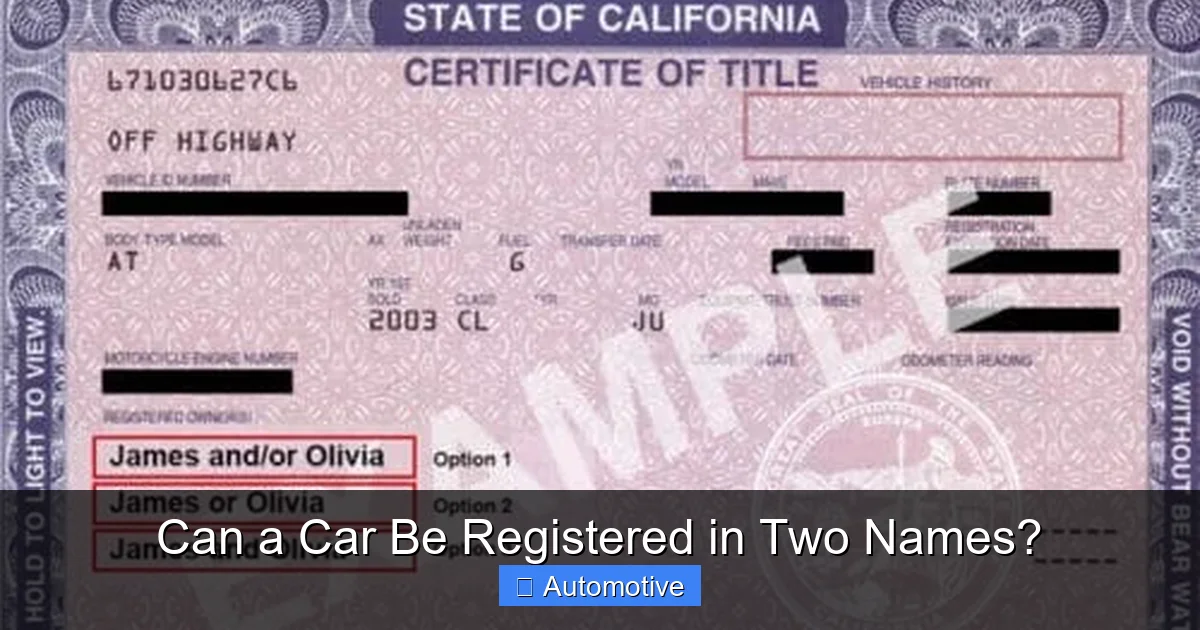
Visual guide about Can a Car Be Registered in Two Names?
Image source: dollarbreak.com
When a car is registered in two names, both individuals are legally recognized as owners of the vehicle. This means their names appear on the vehicle title and registration documents issued by the Department of Motor Vehicles (DMV) or equivalent agency in your state. But not all joint ownership is the same—there are different ways to structure it, and each comes with its own set of rules.
Types of Joint Ownership
There are two primary ways to register a car in two names: **joint tenancy** and **tenancy in common**. Some states also offer a third option called **community property**, which applies to married couples in certain jurisdictions.
Joint Tenancy: This is the most common form of joint ownership for married couples and close family members. In a joint tenancy, both owners have equal rights to the vehicle. If one owner passes away, their share automatically transfers to the surviving owner—this is known as the “right of survivorship.” No probate is required, which can simplify estate planning.
Tenancy in Common: With this structure, each owner holds a specific percentage of the vehicle (e.g., 50/50 or 70/30). Unlike joint tenancy, there’s no automatic right of survivorship. If one owner dies, their share goes to their heirs or as specified in their will. This option is often used by business partners or friends who want more flexibility in ownership shares.
Community Property: In states like California, Texas, and Arizona, married couples may register a vehicle as community property. This means the car is considered jointly owned by both spouses, regardless of who paid for it or whose name is on the loan. If the couple divorces or one spouse dies, the vehicle is typically split equally.
How to Register a Car in Two Names
The process of registering a car in two names is similar to registering it in one name, but with a few extra steps. Here’s what you’ll typically need:
– A completed vehicle registration application (available at your local DMV or online)
– The vehicle title, signed by the seller (if applicable)
– Proof of insurance that lists both owners
– Valid identification for both individuals (driver’s license, state ID, etc.)
– Payment for registration fees and any applicable taxes
Both parties must usually be present at the DMV to sign the paperwork, though some states allow one owner to sign with a notarized power of attorney. It’s important to check your state’s specific requirements, as they can vary widely.
For example, in Florida, both owners must appear in person to register a vehicle jointly. In contrast, New York allows one owner to register the car on behalf of both, provided they have proper documentation.
Why People Register Cars in Two Names

Visual guide about Can a Car Be Registered in Two Names?
Image source: images.squarespace-cdn.com
There are many practical and personal reasons why someone might choose to register a car in two names. Let’s explore some of the most common scenarios.
Married Couples and Domestic Partners
For married couples, joint registration is often a natural choice. It reflects shared financial responsibility and makes it easier to manage household expenses. If both spouses use the car regularly, having both names on the title ensures that either can handle registration renewals, insurance claims, or repairs without needing permission from the other.
It also simplifies estate planning. With joint tenancy and right of survivorship, the surviving spouse automatically inherits the vehicle if one partner passes away—no lengthy legal process required.
Parents and Children
Many parents register cars in both their name and their child’s name, especially when the child is a teenager or young adult. This can help the child build credit if they’re making loan payments, and it gives the parent legal control over the vehicle. It’s also useful if the child is away at college—parents can still handle registration or insurance issues if needed.
However, this arrangement requires trust. If the child wants to sell the car or move out of state, the parent’s signature will be required unless they’re legally removed from the title.
Business Partners and Co-Owners
Small business owners often register company vehicles in multiple names for liability and operational reasons. For example, two partners in a landscaping business might jointly own a work truck. This ensures that either partner can make decisions about the vehicle, authorize repairs, or sell it if the business dissolves.
In these cases, a formal co-ownership agreement is highly recommended to outline each person’s responsibilities, usage rights, and what happens if one partner wants to exit the arrangement.
Gifts and Loans
Sometimes, a car is given as a gift—but the giver wants to retain some control. Registering the car in both names allows the recipient to use the vehicle while the original owner maintains legal ownership. This is common when parents buy a car for their child but want to ensure it’s not sold or misused.
Similarly, if someone lends money to a friend or family member to buy a car, they might require their name on the title as collateral until the loan is repaid.
Legal and Financial Responsibilities of Joint Ownership

Visual guide about Can a Car Be Registered in Two Names?
Image source: images.squarespace-cdn.com
While registering a car in two names offers convenience and shared responsibility, it also comes with legal and financial obligations that both parties must understand.
Liability and Insurance
One of the biggest concerns with joint ownership is liability. If the car is involved in an accident, both owners can be held responsible—even if only one person was driving. This is why auto insurance is so important.
Most insurance companies require that all registered owners be listed on the policy. If one owner is excluded, the insurer may deny a claim, leaving both parties financially exposed. Additionally, if one owner has a poor driving record or lapses in coverage, it can drive up premiums for both.
For example, imagine Sarah and her sister Emma co-own a sedan. Sarah is the primary driver, but Emma is listed on the title. If Sarah gets into an accident while driving, the insurance company will look at both of their driving histories when processing the claim. If Emma has a DUI on her record, it could affect the payout or even lead to policy cancellation.
Registration and Taxes
Both owners are responsible for keeping the vehicle registration current. This includes paying renewal fees, passing emissions tests (if required), and updating the DMV if the car is sold or moved to a new state.
Sales tax is another consideration. In most states, if a car is purchased jointly, the tax is based on the full purchase price—even if only one person is financing it. Some states offer exemptions for gifts between family members, but these rules vary.
Selling or Transferring the Vehicle
One of the most significant downsides of joint ownership is that selling or transferring the car requires consent from both parties. Both names must sign the title when selling to a third party. If one owner refuses to cooperate—whether due to a dispute, divorce, or simply a change of heart—the sale can be blocked.
This can become especially complicated in cases of separation or divorce. Even if a court orders one spouse to transfer their interest in the car, the DMV will still require both signatures unless a legal document (like a divorce decree) is provided.
Loan and Financing Issues
If the car is financed, both owners are typically responsible for the loan—even if only one person is making the payments. This means if one owner stops paying, the other is still on the hook. Defaulting on the loan can damage both credit scores and lead to repossession.
Some lenders may require both parties to co-sign the loan, especially if one has poor credit. While this can help secure financing, it also increases financial risk for the co-signer.
Potential Risks and How to Avoid Them
Joint car ownership isn’t without risks. Without clear communication and proper documentation, things can go sideways quickly. Here are some common pitfalls and how to avoid them.
Disagreements Over Use or Sale
Imagine you and your sibling co-own a classic car. You want to keep it in the family, but your sibling wants to sell it to pay off debt. Without a prior agreement, this can lead to conflict—and even legal action.
To prevent this, create a written co-ownership agreement before registering the car. This document should outline:
– Who can drive the car and when
– How maintenance and repairs will be paid for
– What happens if one owner wants to sell
– How disputes will be resolved
Having this in writing can save a lot of headaches down the road.
One Owner Misuses the Vehicle
If one owner uses the car excessively, racks up parking tickets, or drives recklessly, it can create problems for the other owner. For example, unpaid tickets can lead to registration holds or even impoundment.
To protect yourself, consider setting usage limits in your agreement. You might also require regular check-ins or shared access to the vehicle’s maintenance records.
Death or Incapacity of an Owner
If one owner passes away or becomes incapacitated, managing the vehicle can become complicated—especially if there’s no right of survivorship. The deceased owner’s estate may need to go through probate to transfer their share, which can delay decisions about the car.
Using joint tenancy with right of survivorship can help avoid this. Alternatively, include the vehicle in a will or living trust to ensure a smooth transfer.
State-Specific Rules and Requirements
It’s important to remember that car registration laws vary by state. What works in California may not apply in Ohio. Always check your local DMV website or consult a legal professional before registering a car in two names.
Examples of State Variations
– California: Allows joint ownership with right of survivorship. Married couples can also register vehicles as community property.
– Texas: Permits joint tenancy and tenancy in common. Both owners must be present to register unless a power of attorney is used.
– New York: Requires both owners to be listed on the title, but one can register the vehicle with proper documentation.
– Florida: Both owners must appear in person to sign the registration forms.
– Illinois: Offers “and” or “or” designations on titles. “And” means both must sign for transactions; “or” allows either to act alone.
Some states also have unique rules about insurance. For instance, in Michigan, no-fault insurance laws mean that both owners’ policies may be involved in an accident claim, regardless of who was driving.
Tips for Successful Joint Car Ownership
If you’re considering registering a car in two names, here are some practical tips to make the process smoother and reduce the risk of conflict.
1. Choose the Right Ownership Structure
Think carefully about whether joint tenancy, tenancy in common, or community property makes the most sense for your situation. Consider factors like marital status, financial contributions, and long-term plans.
2. Get Everything in Writing
A co-ownership agreement is not legally required, but it’s one of the best ways to protect both parties. Include details about payments, usage, maintenance, and what happens if the relationship ends.
3. Keep Records Organized
Store registration documents, insurance policies, and maintenance receipts in a shared digital folder or physical file. This makes it easier to manage renewals and resolve disputes.
4. Communicate Regularly
Check in with your co-owner periodically to discuss any concerns, changes in usage, or financial contributions. Open communication can prevent small issues from becoming big problems.
5. Review Insurance Coverage
Make sure your insurance policy reflects the joint ownership and covers both drivers adequately. Consider adding roadside assistance, gap coverage, or rental reimbursement for extra protection.
6. Know How to Remove a Name
If you ever need to remove one owner from the title—due to a breakup, move, or sale—know the process. It usually requires both parties to sign a title transfer form and pay a small fee. In some cases, a court order may be needed.
Conclusion
So, can a car be registered in two names? Absolutely. It’s a legal and practical option for couples, families, and business partners who want to share ownership of a vehicle. But it’s not a decision to take lightly.
Joint registration comes with shared responsibilities—financially, legally, and logistically. Both owners must be prepared to handle registration, insurance, maintenance, and potential disputes. Without clear communication and proper documentation, even the best intentions can lead to conflict.
The key to success is planning ahead. Choose the right ownership structure, create a written agreement, and stay informed about your state’s rules. When done correctly, registering a car in two names can be a smart, fair, and convenient way to share the road.
Whether you’re buying your first car with your partner or helping a loved one get back on their feet, understanding the ins and outs of joint ownership will help you make the best decision for your situation.
Frequently Asked Questions
Can a car be registered in two names in all states?
Yes, most states allow a car to be registered in two names, but the specific rules and requirements vary. Always check with your local DMV to confirm the process and documentation needed in your area.
Do both owners need to be on the car insurance policy?
In most cases, yes. Insurance companies typically require all registered owners to be listed on the policy to ensure full coverage and avoid claim denials.
What happens if one owner wants to sell the car but the other doesn’t?
Both owners must agree to sell the vehicle unless a court order or legal document states otherwise. Without mutual consent, the sale cannot proceed.
Can I remove my name from a jointly registered car?
Yes, but it usually requires the other owner’s signature and a title transfer form. Some states may also require a notarized affidavit or court approval.
Is joint ownership the same as co-signing a car loan?
No. Joint ownership means both people own the car. Co-signing means you’re responsible for the loan but may not have ownership rights unless your name is on the title.
What’s the difference between “and” and “or” on a car title?
“And” means both owners must sign for transactions like selling or transferring the car. “Or” allows either owner to act alone, giving more flexibility but less control.
