
What Can Cause a Car Battery to Drain?

A car battery can drain due to electrical drains, extreme temperatures, aging components, or poor maintenance. Understanding these causes helps you avoid being stranded with a dead battery and keeps your vehicle running smoothly.
Key Takeaways
- Parasitic drain: Small electrical devices like clocks or alarms can slowly drain your battery when the car is off.
- Extreme temperatures: Both hot and cold weather reduce battery efficiency and lifespan.
- Aging battery: Most car batteries last 3–5 years; older ones lose charge-holding ability.
- Faulty charging system: A bad alternator or loose belt won’t recharge the battery while driving.
- Leaving lights or accessories on: Interior lights, headlights, or phone chargers left on overnight can kill the battery.
- Corroded or loose terminals: Poor connections prevent proper charging and increase resistance.
- Short driving trips: Frequent short drives don’t give the alternator enough time to fully recharge the battery.
📑 Table of Contents
- What Can Cause a Car Battery to Drain?
- 1. Parasitic Drain: The Silent Battery Killer
- 2. Extreme Temperatures: Heat and Cold Take a Toll
- 3. Aging Battery: Time Takes Its Toll
- 4. Faulty Charging System: The Alternator’s Role
- 5. Leaving Lights or Accessories On
- 6. Corroded or Loose Battery Terminals
- 7. Short Driving Trips and Lack of Use
- Conclusion
What Can Cause a Car Battery to Drain?
Picture this: It’s a chilly Monday morning. You’re running late for work, grab your keys, hop in the car, turn the key—and nothing. The engine won’t start. The dashboard lights flicker weakly, and you’re left wondering, “Why is my car battery dead… again?”
It’s a frustrating scenario that millions of drivers face each year. A dead car battery can leave you stranded, late for appointments, or even in unsafe situations. But here’s the good news: most battery drain issues are preventable. By understanding what can cause a car battery to drain, you can take simple steps to avoid being caught off guard.
Car batteries are the heart of your vehicle’s electrical system. They power everything from the starter motor to the radio, lights, and climate control. When they fail, your car simply won’t start. While batteries naturally wear out over time, many drain issues stem from everyday habits, environmental factors, or overlooked maintenance. In this guide, we’ll explore the most common causes of car battery drain, how to spot them early, and what you can do to keep your battery healthy and reliable.
Whether you’re a new driver or a seasoned car owner, knowing what drains your battery can save you time, money, and stress. Let’s dive into the details—because no one likes being left in the dark.
1. Parasitic Drain: The Silent Battery Killer
Visual guide about What Can Cause a Car Battery to Drain?
Image source: compressorlab.com
One of the most common—and sneaky—causes of a car battery drain is something called parasitic drain. This happens when small electrical devices in your car continue to draw power from the battery even when the engine is off.
You might be thinking, “But I turned everything off!” And you’re probably right. However, modern vehicles are packed with electronics that stay active even when the car is parked. Things like the clock, security system, onboard computer, and infotainment system all need a small amount of power to function. Normally, this draw is minimal and won’t drain your battery overnight. But if something goes wrong, that tiny trickle can become a flood.
What Causes Parasitic Drain?
Parasitic drain becomes a problem when the electrical draw exceeds what’s considered normal—usually more than 50 milliamps (mA) when the car is off. Several issues can cause this:
– A malfunctioning module: The body control module, radio, or alarm system might get stuck in an “on” state, continuously drawing power.
– Aftermarket accessories: Devices like dash cams, GPS units, or phone chargers plugged into the cigarette lighter can drain the battery if left connected.
– Faulty wiring or relays: Damaged wires or stuck relays can create unintended circuits that keep drawing current.
For example, imagine you installed a new dash cam that’s supposed to turn off when the car is parked. But if its internal timer is faulty, it might keep recording—and drawing power—all night. Over time, this can completely drain your battery.
How to Detect Parasitic Drain
Detecting parasitic drain requires a bit of detective work. Here’s a simple method using a multimeter:
1. Turn off the car and remove the key.
2. Disconnect the negative battery terminal.
3. Set your multimeter to measure current (amps).
4. Connect the multimeter between the negative terminal and the negative cable.
5. Check the reading. If it’s above 50 mA, you likely have a parasitic drain.
If you’re not comfortable doing this yourself, a mechanic can perform a parasitic drain test in minutes.
How to Fix It
Once you’ve confirmed a parasitic drain, the next step is identifying the source. Start by unplugging aftermarket devices. If the drain stops, you’ve found the culprit. If not, a professional may need to check the vehicle’s electrical system for faulty modules or wiring.
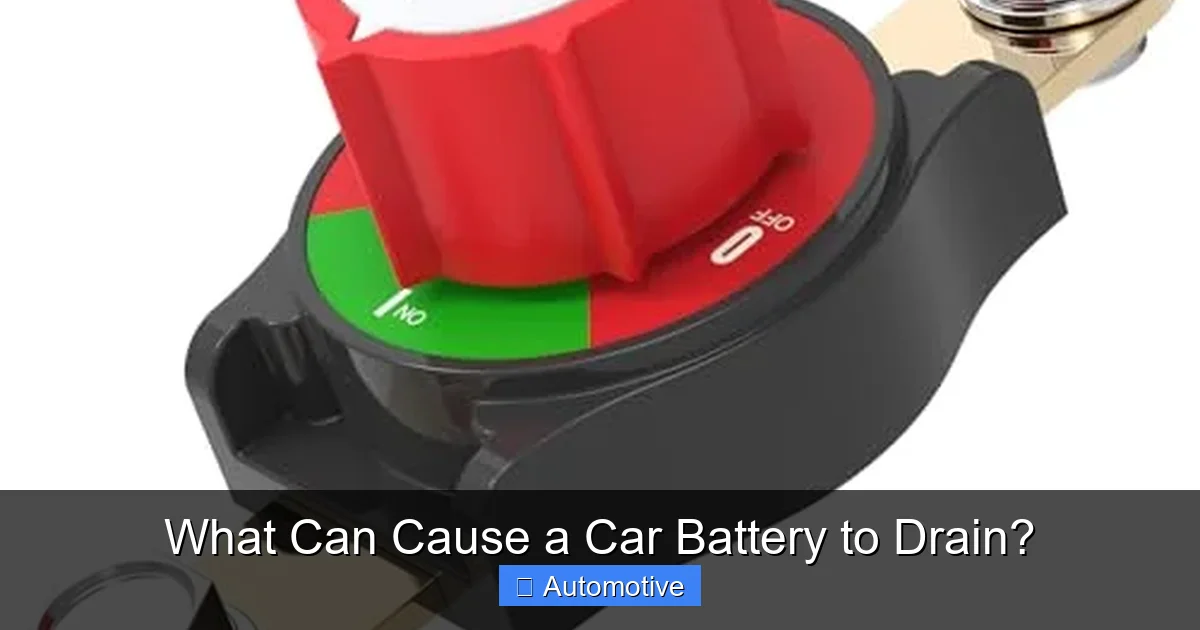
Prevention is key. Avoid leaving devices plugged in overnight, and consider using a battery disconnect switch if you store your car for long periods.
2. Extreme Temperatures: Heat and Cold Take a Toll

Visual guide about What Can Cause a Car Battery to Drain?
Image source: howstereo.com
Weather plays a huge role in your car battery’s health. Both extreme heat and cold can cause a car battery to drain faster than usual. It’s not just about comfort—temperature affects the chemical reactions inside the battery that produce electricity.
How Cold Weather Affects Batteries
In cold weather, the chemical reactions inside a lead-acid battery slow down. This reduces the battery’s ability to deliver the high burst of power needed to start the engine. At 32°F (0°C), a battery can lose up to 35% of its power. At 0°F (-18°C), that number jumps to 60%.
This is why so many people experience dead batteries during winter. The cold weakens the battery, and if it’s already aging or undercharged, it may not have enough juice to turn over the engine.
Additionally, cold weather increases engine oil viscosity, making it harder for the engine to turn. This puts even more demand on the battery.
How Heat Damages Batteries
You might think heat is better for batteries, but that’s not true. High temperatures—especially above 90°F (32°C)—can actually shorten a battery’s lifespan. Heat accelerates the corrosion of internal components and causes the electrolyte (the liquid inside) to evaporate faster.
In hot climates, a car battery may only last 2–3 years instead of the typical 4–5. Parking in direct sunlight or in a hot garage can make this worse.
Tips to Protect Your Battery from Temperature Extremes
– Use a battery blanket or insulation: In cold climates, these help keep the battery warm and improve starting power.
– Park in the garage: Even an unheated garage offers more protection than parking outside.
– Use a trickle charger or maintainer: These devices keep your battery fully charged during long periods of inactivity, especially in winter.
– Check battery fluid levels: In hot weather, low electrolyte levels can lead to overheating and failure.
By taking these steps, you can reduce the impact of temperature on your battery and extend its life.
3. Aging Battery: Time Takes Its Toll
Visual guide about What Can Cause a Car Battery to Drain?
Image source: poweringsolution.com
No battery lasts forever. Over time, the internal plates degrade, the electrolyte breaks down, and the battery loses its ability to hold a charge. Most car batteries are designed to last 3–5 years, but this can vary based on usage, climate, and maintenance.
Signs Your Battery Is Getting Old
How do you know when your battery is nearing the end of its life? Look for these warning signs:
– Slow engine crank: When you turn the key, the engine turns over slowly or hesitates.
– Dim headlights: Lights appear weaker than usual, especially when the car is idling.
– Check engine or battery warning light: This light on the dashboard may indicate a charging problem.
– Swollen battery case: A bloated or warped battery case can be a sign of overheating or internal damage.
– Old age: If your battery is more than 3 years old, it’s a good idea to have it tested regularly.
For example, if your car starts fine in the morning but struggles later in the day, it could be a sign the battery isn’t holding a charge well.
How to Test an Aging Battery
Most auto parts stores offer free battery testing. They’ll use a load tester to check the battery’s voltage and cranking power. A healthy battery should read around 12.6 volts when the car is off and maintain at least 9.6 volts during a load test.
You can also use a multimeter at home. With the engine off, a reading below 12.4 volts suggests the battery is undercharged or aging.
When to Replace Your Battery
Don’t wait until your car won’t start. Replace your battery proactively if:
– It’s more than 4 years old.
– It fails a load test.
– You notice any of the warning signs above.
Replacing a battery before it fails can save you from being stranded and often costs less than emergency roadside assistance.
4. Faulty Charging System: The Alternator’s Role
Your car’s battery doesn’t just store power—it’s constantly being recharged by the alternator while the engine runs. If the alternator isn’t working properly, the battery won’t get the charge it needs, leading to a slow drain over time.
How the Alternator Works
The alternator is a small generator powered by a belt connected to the engine. It converts mechanical energy into electrical energy, which charges the battery and powers the car’s electrical systems. When the alternator fails, the battery has to pick up the slack—and it can’t do that forever.
Signs of a Bad Alternator
A failing alternator often shows symptoms similar to a dead battery, which can make diagnosis tricky. Watch for:
– Flickering or dim lights: Headlights or interior lights that dim or flicker while driving.
– Battery warning light: A light shaped like a battery or “ALT” on the dashboard.
– Electrical issues: Power windows, radio, or other accessories acting up.
– Strange noises: A whining or grinding sound from the engine bay could indicate a worn alternator bearing.
– Frequent jump-starts: If your battery keeps dying despite being new, the alternator may not be charging it.
For instance, if your headlights dim when you turn on the AC or radio, it could mean the alternator isn’t producing enough power.
Testing the Alternator
A mechanic can test the alternator’s output with a multimeter. With the engine running, the alternator should produce between 13.8 and 14.4 volts. Anything outside this range suggests a problem.
Loose or worn belts can also affect alternator performance. A slipping belt won’t spin the alternator fast enough to generate proper power.
Preventing Charging System Issues
Regular maintenance can help avoid alternator problems:
– Have the charging system checked during routine service.
– Replace worn belts and tensioners.
– Keep the alternator clean and free of debris.
If you suspect an alternator issue, get it checked immediately. A failing alternator can damage the battery and other electrical components.
5. Leaving Lights or Accessories On
It sounds simple, but one of the most common causes of a dead battery is human error: leaving lights or accessories on when the car is off.
Common Culprits
– Interior lights: Forgetting to turn off the dome light or trunk light.
– Headlights: Leaving them on overnight, especially if you have manual controls.
– Cigarette lighter accessories: Phone chargers, air compressors, or coolers left plugged in.
– Aftermarket devices: Dash cams, GPS units, or security systems that don’t auto-shutoff.
Modern cars often have automatic shutoff features, but older models or faulty sensors can leave lights on indefinitely.
How Much Power Do These Devices Use?
Even small devices can drain a battery over time. For example:
– A dome light uses about 1–2 amps. Left on for 8 hours, it can drain 8–16 amp-hours.
– A phone charger uses 1–2 amps. Overnight, that’s another 8–16 amp-hours.
– A typical car battery holds about 48 amp-hours.
So, two devices left on overnight could drain nearly half your battery’s capacity.
Tips to Avoid This Mistake
– Make it a habit: Always double-check that lights and accessories are off before leaving the car.
– Use reminder stickers:Install automatic shutoff devices: Some aftermarket products can cut power to accessories after a set time.
– Upgrade to LED lights: They use less power and are less likely to drain the battery.
A little awareness goes a long way in preventing this common cause of battery drain.
6. Corroded or Loose Battery Terminals
Your battery can’t deliver power if the connections are bad. Corrosion or loose terminals create resistance, preventing proper charging and starting.
What Causes Corrosion?
Corrosion appears as a white, green, or blue powdery substance around the battery terminals. It forms when hydrogen gas escapes from the battery and reacts with metal. This buildup acts like insulation, blocking the flow of electricity.
Signs of Bad Connections
– Difficulty starting the car.
– Flickering lights.
– A burning smell near the battery.
– Visible corrosion or loose cables.
How to Clean Battery Terminals
Cleaning terminals is simple:
1. Turn off the car and remove the keys.
2. Disconnect the negative cable first, then the positive.
3. Mix baking soda and water to make a paste.
4. Scrub the terminals and cable ends with a brush.
5. Rinse with water and dry thoroughly.
6. Reconnect the positive cable first, then the negative.
7. Apply a thin layer of petroleum jelly or terminal protector to prevent future corrosion.
Preventing Corrosion
– Keep the battery clean and dry.
– Use terminal protectors or sprays.
– Check connections regularly during oil changes.
Good connections ensure your battery can deliver full power when needed.
7. Short Driving Trips and Lack of Use
If you only drive short distances—like to the store or school—your battery may not get enough time to recharge fully. The alternator needs time to restore the charge used during startup.
Why Short Trips Are a Problem
Starting the engine uses a lot of power—sometimes 2–3 times the battery’s normal output. If you only drive for 5–10 minutes, the alternator doesn’t have enough time to replenish that energy. Over time, the battery slowly loses its charge.
What Happens During Long Periods of Inactivity?
If your car sits for days or weeks without being driven, the battery will naturally lose charge due to parasitic drain and self-discharge. A fully charged battery can lose 1% of its charge per day when not in use.
Solutions for Short Trips and Storage
– Take longer drives: Once a week, drive for at least 20–30 minutes to let the alternator recharge the battery.
– Use a battery maintainer: These devices plug into a wall outlet and keep the battery topped up.
– Disconnect the battery: If storing the car for weeks, disconnect the negative terminal to reduce drain.
By giving your battery time to recharge, you can avoid unexpected failures.
Conclusion
Understanding what can cause a car battery to drain is the first step toward preventing it. From parasitic drain and extreme temperatures to aging batteries and human error, many factors can leave you stranded. But with regular maintenance, awareness, and a few simple habits, you can keep your battery healthy and your car ready to go.
Start by checking your battery’s age and condition. Test it annually, especially before winter. Keep terminals clean, avoid leaving accessories on, and ensure your alternator is working properly. If you notice slow cranking, dim lights, or frequent jump-starts, don’t ignore the signs.
A little attention goes a long way. By taking care of your battery, you’re not just avoiding inconvenience—you’re protecting your vehicle’s entire electrical system. So the next time you turn the key, you’ll hear that satisfying engine roar, not a weak click. Stay charged, stay safe, and keep rolling.
Frequently Asked Questions
Why does my car battery keep dying even though it’s new?
A new battery can still die if there’s a parasitic drain, a faulty alternator, or if you frequently take short trips. It’s important to have the charging system tested to rule out underlying electrical issues.
How long should a car battery last?
Most car batteries last 3–5 years, depending on climate, driving habits, and maintenance. In hot climates, they may wear out faster due to heat damage.
Can a bad alternator drain a new battery?
Yes, a failing alternator won’t recharge the battery while driving, causing it to drain quickly—even if the battery itself is new.
Is it safe to jump-start a car with a drained battery?
Yes, as long as you follow proper jump-starting procedures and ensure the cables are connected correctly. However, repeated jump-starts may indicate a deeper issue.
How can I prevent my battery from draining in winter?
Use a battery maintainer, park in a garage, and avoid leaving accessories on. Cold weather reduces battery power, so keeping it charged is essential.
Should I replace my battery if it’s over 4 years old?
It’s a good idea to have it tested. If it shows signs of weakness or fails a load test, replace it before it leaves you stranded.