
Where Can I Get a Donated Car for Free?

Getting a donated car for free is possible through nonprofit organizations, government assistance programs, and community initiatives. This guide walks you through trusted sources, application steps, and eligibility requirements to help you find safe, reliable transportation at no cost.
Key Takeaways
- Nonprofit charities offer free donated cars: Organizations like Good News Garage and 1-800-Charity Cars provide vehicles to low-income individuals, veterans, and families in need.
- Eligibility varies by program: Most require proof of income, employment, valid driver’s license, and insurance to ensure responsible use of the vehicle.
- Government and state programs exist: Some states partner with nonprofits or offer transportation assistance through workforce development or social service departments.
- Churches and local groups help too: Religious organizations and community centers often run car donation programs for their members or local residents.
- Be cautious of scams: Only apply through verified, reputable organizations—avoid websites asking for upfront fees or personal financial information.
- Prepare required documents early: Having ID, proof of income, insurance, and residency ready speeds up the application process.
- Follow up and stay patient: Free car programs have high demand, so persistence and timely responses improve your chances.
📑 Table of Contents
- Where Can I Get a Donated Car for Free?
- Top Nonprofit Organizations That Give Away Free Cars
- Government and State-Sponsored Programs
- Community and Faith-Based Organizations
- How to Apply for a Free Donated Car
- Tips to Increase Your Chances of Getting a Free Car
- Avoiding Scams and Fake Car Donation Sites
- What to Do After Receiving a Donated Car
- Conclusion
Where Can I Get a Donated Car for Free?
Imagine needing a car to get to work, take your kids to school, or visit the doctor—but not being able to afford one. For many low-income families, veterans, single parents, and individuals facing financial hardship, reliable transportation isn’t a luxury—it’s a necessity. The good news? You don’t always have to buy a car to get one. There are real, legitimate ways to get a donated car for free.
Across the United States, numerous nonprofit organizations, government-backed initiatives, and community groups collect donated vehicles and give them away to people in need. These programs aim to break the cycle of poverty by providing safe, dependable transportation that helps recipients keep jobs, access healthcare, and improve their quality of life. While it’s not as simple as filling out a form and driving off in a new car, the process is straightforward—if you know where to look and how to apply.
In this guide, we’ll walk you through the most trusted sources for free donated cars, explain how the application process works, and share practical tips to increase your chances of success. Whether you’re a veteran, a single parent, or someone rebuilding after a setback, this information could be the key to unlocking a brighter, more mobile future.
Top Nonprofit Organizations That Give Away Free Cars
Several national and regional charities specialize in providing free donated cars to individuals and families who meet specific criteria. These organizations rely on vehicle donations from the public and often partner with mechanics, insurers, and volunteers to refurbish and deliver safe, roadworthy vehicles.
Visual guide about Where Can I Get a Donated Car for Free?
Image source: dollarsprout.com
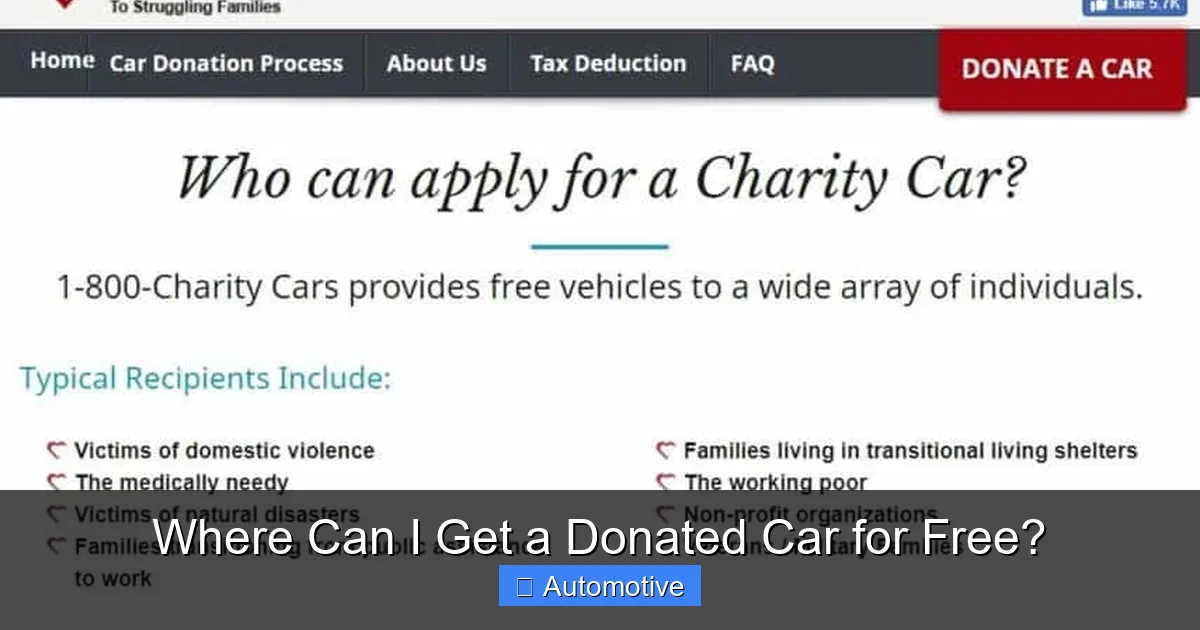
1-800-Charity Cars
One of the most well-known programs is 1-800-Charity Cars, a nonprofit that has distributed thousands of vehicles since its founding. They focus on helping people who are unemployed, underemployed, or facing medical or family crises. Recipients might include single mothers, veterans, disabled individuals, or those transitioning out of homelessness.
To qualify, applicants must demonstrate a genuine need for transportation and show how a car will improve their situation—such as enabling them to keep a job or attend medical appointments. The application process is online and includes a detailed questionnaire about your circumstances, references, and a short video explaining your need. While the waitlist can be long, many recipients report life-changing results.
Good News Garage
Operating primarily in New England, Good News Garage is another respected organization that provides free cars to low-income families. They work closely with social service agencies, shelters, and workforce programs to identify qualified applicants.
What sets Good News Garage apart is their emphasis on long-term stability. Recipients often receive not just a car, but also support with insurance, maintenance, and driver education. They require applicants to have a valid driver’s license, proof of income (even if minimal), and a plan for how the car will be used. The vehicle may not be brand new, but it’s inspected and safe to drive.
Vehicles for Change
Based in Maryland but serving multiple states, Vehicles for Change offers free or low-cost cars to individuals working toward self-sufficiency. Their mission is to help people gain independence through reliable transportation.
Applicants must be employed or have a job offer, have a valid license, and be able to afford insurance and gas. The organization also provides financial coaching and support to help recipients maintain their vehicles and build credit. While some cars are given for free, others are sold at a deeply discounted rate—still far below market value.
Free Charity Cars (FreeCharityCars.org)
This online platform connects donors with recipients through a peer-to-peer model. Unlike traditional charities, Free Charity Cars allows individuals to donate directly to someone in need, often with a personal story shared on the site.
Applicants create a profile explaining their situation, upload photos, and wait for a donor to choose them. While not every application results in a car, the personal touch can make a big difference. The site is free to use, and no fees are ever charged to applicants.
Government and State-Sponsored Programs
While there’s no federal program that directly gives away free cars, several state and local governments partner with nonprofits or run their own transportation assistance initiatives. These programs are often tied to workforce development, welfare-to-work transitions, or veteran support.
Visual guide about Where Can I Get a Donated Car for Free?
Image source: michiganmobility.org
State Workforce Development Programs
Some states offer transportation assistance as part of their employment support services. For example, California’s CalWORKs program provides temporary financial aid to low-income families, and in some counties, this includes help with car purchases or repairs.
Similarly, Texas Workforce Commission partners with local agencies to offer vehicle assistance to job seekers. While not all programs give away cars for free, some provide grants or low-interest loans specifically for transportation needs. It’s worth contacting your local Department of Social Services or Workforce Center to ask about available resources.
Veteran-Specific Transportation Programs
Military veterans have access to unique benefits, including transportation support. The U.S. Department of Veterans Affairs (VA) offers a program called the Automobile Adaptive Equipment (AAE) grant, which helps veterans with service-connected disabilities purchase or modify a vehicle.
Additionally, organizations like Operation Homefront and Veterans Auto Donation Program provide free cars to veterans and military families in crisis. These programs often prioritize those transitioning to civilian life, dealing with PTSD, or facing housing instability.
Local Housing and Homelessness Initiatives
Cities with high rates of homelessness sometimes run car donation programs to help individuals regain stability. For instance, Seattle’s Solid Ground organization has partnered with local mechanics and donors to provide free vehicles to people exiting homelessness.
These programs typically require applicants to be enrolled in housing assistance, job training, or mental health services. The goal is to support long-term independence, not just short-term relief.
Community and Faith-Based Organizations
Don’t overlook the power of local communities. Churches, mosques, synagogues, and neighborhood groups often run their own car donation initiatives to help members or residents in need.
Visual guide about Where Can I Get a Donated Car for Free?
Image source: tinyhousedesign.com
Churches and Religious Charities
Many religious organizations believe in helping their flock with practical needs. For example, Catholic Charities and Salvation Army chapters across the country occasionally offer free cars as part of their broader assistance programs.
These donations are usually funded through community fundraisers, member donations, or partnerships with local dealerships. To apply, you may need to be a member of the congregation or referred by a social worker. While not every church offers this, it’s worth asking your local place of worship if they have any transportation assistance programs.
Rotary Clubs and Lions Clubs
Service organizations like Rotary International and Lions Clubs are known for their community outreach. Some local chapters organize “car giveaways” for individuals facing hardship, such as medical emergencies or job loss.
These events are often publicized through local newspapers or community bulletin boards. Participation may require an application and proof of need, but the process is usually straightforward and community-driven.
Local Nonprofits and Shelters
Domestic violence shelters, homeless shelters, and food banks sometimes receive car donations and pass them on to clients. For example, a shelter helping women escape abusive relationships might provide a car to help them get to work or school safely.
These programs are often small-scale and not widely advertised, so it’s important to build relationships with local service providers. If you’re already receiving assistance from a shelter or nonprofit, ask if they offer transportation support.
How to Apply for a Free Donated Car
Applying for a free donated car isn’t like ordering online—it requires preparation, honesty, and patience. Here’s a step-by-step guide to help you navigate the process successfully.
Step 1: Determine Your Eligibility
Before applying, review the requirements of each program. Most ask for:
- A valid driver’s license
- Proof of income (pay stubs, tax returns, or benefit statements)
- Proof of residency (utility bill or lease agreement)
- Proof of insurance (or willingness to obtain it)
- A clear explanation of why you need a car
Some programs prioritize specific groups, such as veterans, single parents, or people with disabilities. Be honest about your situation—exaggerating or falsifying information can disqualify you.
Step 2: Gather Required Documents
Having your paperwork ready saves time and shows you’re serious. Create a folder with copies of:
- Driver’s license
- Social Security card
- Recent pay stubs or benefit letters
- Lease or mortgage statement
- Auto insurance quote (even if you don’t have a policy yet)
If you’re applying through a nonprofit, they may also ask for references—usually two people who can vouch for your character and need.
Step 3: Submit Your Application
Most applications are submitted online. Fill out every field completely and double-check for errors. When explaining your need, be specific: “I need a car to drive 45 minutes to my new job” is stronger than “I need a car to get around.”
Some programs ask for a short video or written statement. Use this opportunity to share your story—your challenges, your goals, and how a car will help you move forward.
Step 4: Wait and Follow Up
After submitting, be patient. Wait times can range from a few weeks to several months, depending on demand and funding. Don’t call every day, but a polite follow-up email every 3–4 weeks is appropriate.
If you’re waitlisted, ask if there’s anything else you can do to strengthen your application. Some programs allow you to update your status if your situation changes (e.g., you start a new job).
Step 5: Prepare for Delivery
If approved, you’ll need to arrange insurance and registration before taking possession of the car. Some programs help with this—others expect you to handle it yourself.
Make sure you understand any conditions. For example, some charities require you to keep the car for a minimum period or report back on how it’s helping you.
Tips to Increase Your Chances of Getting a Free Car
Competition for free donated cars is high, but you can improve your odds with these smart strategies.
Be Honest and Specific
Don’t just say you “need a car.” Explain how it will change your life. For example: “Without a car, I can’t get to my new job at the hospital, and I risk losing it.” Concrete examples show you’ve thought through the impact.
Apply to Multiple Programs
Don’t put all your hopes on one organization. Apply to 3–5 reputable programs to increase your chances. Just make sure each application is tailored to that group’s mission.
Get Help from a Social Worker
If you’re working with a case manager, counselor, or social worker, ask them to write a letter of support. Many charities value third-party endorsements because they confirm your need and credibility.
Maintain Clean Records
Having a suspended license, unpaid tickets, or a history of insurance lapses can hurt your application. Take steps to resolve any issues before applying.
Stay Persistent
Rejection doesn’t mean you’re not deserving—it often means the program is full or funding is limited. Keep applying, and don’t give up. Many people receive cars after multiple attempts.
Avoiding Scams and Fake Car Donation Sites
Unfortunately, not all websites offering “free cars” are legitimate. Scammers prey on people in vulnerable situations, asking for fees, personal information, or upfront payments.
Red Flags to Watch For
- Websites that ask for money to “process” your application
- Claims that you’ve “won” a car without applying
- Poor grammar, broken links, or no contact information
- Pressure to act immediately or provide bank details
How to Verify a Legitimate Program
Always check if the organization is registered as a 501(c)(3) nonprofit. You can verify this on IRS.gov or GuideStar.org. Look for reviews on Charity Navigator or BBB Wise Giving Alliance.
Legitimate charities will never charge you to apply. If in doubt, call the organization directly using a phone number from their official website—not from an email or ad.
What to Do After Receiving a Donated Car
Getting a free car is just the beginning. To make the most of this opportunity, take these steps:
Get Insurance Immediately
Most states require insurance before you can register a vehicle. Shop around for affordable coverage—some nonprofits offer discounted rates through partners.
Register the Car
Visit your local DMV with the title, proof of insurance, and ID. Some charities handle the transfer for you; others require you to do it.
Maintain the Vehicle
Even if the car is older, regular maintenance prevents breakdowns. Follow the owner’s manual for oil changes, tire rotations, and inspections.
Give Back When You Can
Many recipients feel inspired to help others once they’re back on their feet. Consider volunteering, donating, or sharing your story to support the next person in need.
Conclusion
Getting a donated car for free is not only possible—it’s happening every day across the country. From national charities like 1-800-Charity Cars to local churches and state programs, there are real opportunities for people in need to receive safe, reliable transportation at no cost.
The key is to research thoroughly, apply honestly, and stay persistent. While the process may take time, the reward—a car that helps you keep a job, care for your family, or regain independence—is worth the effort. Remember, you’re not alone. Thousands of people have walked this path before you, and with the right approach, you can too.
Frequently Asked Questions
Can I really get a donated car for free?
Yes, many nonprofit organizations give away donated cars for free to individuals in need. Programs like 1-800-Charity Cars and Good News Garage have helped thousands of people obtain reliable transportation at no cost.
Do I have to pay anything to apply for a free car?
No legitimate charity will charge you to apply. Be wary of any website or organization that asks for application fees, processing charges, or upfront payments—these are likely scams.
What documents do I need to apply?
Most programs require a valid driver’s license, proof of income, proof of residency, and a willingness to obtain auto insurance. Some may also ask for references or a personal statement.
How long does it take to get a donated car?
Wait times vary by program and demand. Some people receive a car within weeks, while others may wait several months. Following up politely and staying patient can help.
Can veterans get free donated cars?
Yes, veterans are often prioritized by many car donation programs. Organizations like Vehicles for Change and the VA offer special assistance for military members and their families.
What if I don’t qualify for a free car?
If you don’t meet the criteria for a free car, some programs offer low-cost vehicles or financial assistance for repairs. You can also explore public transportation, carpooling, or local ride-share programs as alternatives.