
Can a Bad Battery Make Your Car Overheat?

A bad battery won’t directly cause your car to overheat, but it can trigger a chain reaction that leads to engine overheating. Weak batteries strain the alternator, disrupt cooling systems, and cause electrical failures—all of which may result in elevated engine temperatures.
Key Takeaways
- A failing battery doesn’t overheat the engine directly: Overheating is typically caused by coolant issues, radiator problems, or thermostat failure—not the battery itself.
- Electrical strain can indirectly cause overheating: A weak battery forces the alternator to work harder, potentially overloading the electrical system and affecting cooling components.
- Modern cars rely on battery-powered cooling systems: Electric water pumps, cooling fans, and sensors depend on stable voltage—low voltage from a bad battery can impair their function.
- Symptoms often overlap: Both a bad battery and overheating may cause hard starts, dim lights, or warning lights—making diagnosis tricky without proper testing.
- Regular maintenance prevents both issues: Checking battery health, coolant levels, and electrical connections can stop problems before they escalate.
- Ignoring a weak battery risks bigger damage: Continued use of a failing battery can damage the alternator, ECU, and other critical components.
- Professional diagnosis is key: If your car is overheating and the battery is old, have both systems inspected together to pinpoint the root cause.
📑 Table of Contents
- Can a Bad Battery Make Your Car Overheat?
- How Your Car’s Cooling System Works
- The Role of the Battery in Your Car’s Electrical System
- Indirect Ways a Bad Battery Can Cause Overheating
- Symptoms That Link a Bad Battery to Overheating
- How to Diagnose and Prevent the Problem
- Real-World Example: The Case of the Overheating SUV
- Conclusion
Can a Bad Battery Make Your Car Overheat?
You’re cruising down the highway, the sun is shining, and everything seems fine—until the temperature gauge starts creeping into the red zone. Your first thought might be: “Is my radiator clogged? Did I forget to check the coolant?” But what if the real culprit isn’t under the hood at all—but under the seat or in the trunk? Could a bad battery actually be making your car overheat?
It’s a question that surprises many drivers. After all, the battery and the engine cooling system seem like completely separate parts of your vehicle. One powers your lights and radio; the other keeps your engine from melting. But in modern cars, these systems are more interconnected than you might think.
While a bad battery won’t directly cause your engine to overheat—like a blown head gasket or a failed water pump would—it can set off a domino effect that leads to overheating. Think of it like this: your car’s electrical system is the nervous system of the vehicle. When the battery is weak or failing, it sends weak signals, disrupts power flow, and forces other components to work overtime. And when those components include cooling fans, water pumps, and temperature sensors, things can go wrong fast.
So, can a bad battery make your car overheat? The short answer is: not directly, but yes—indirectly, it absolutely can. Understanding how these systems interact is key to preventing breakdowns, costly repairs, and dangerous situations on the road.
How Your Car’s Cooling System Works
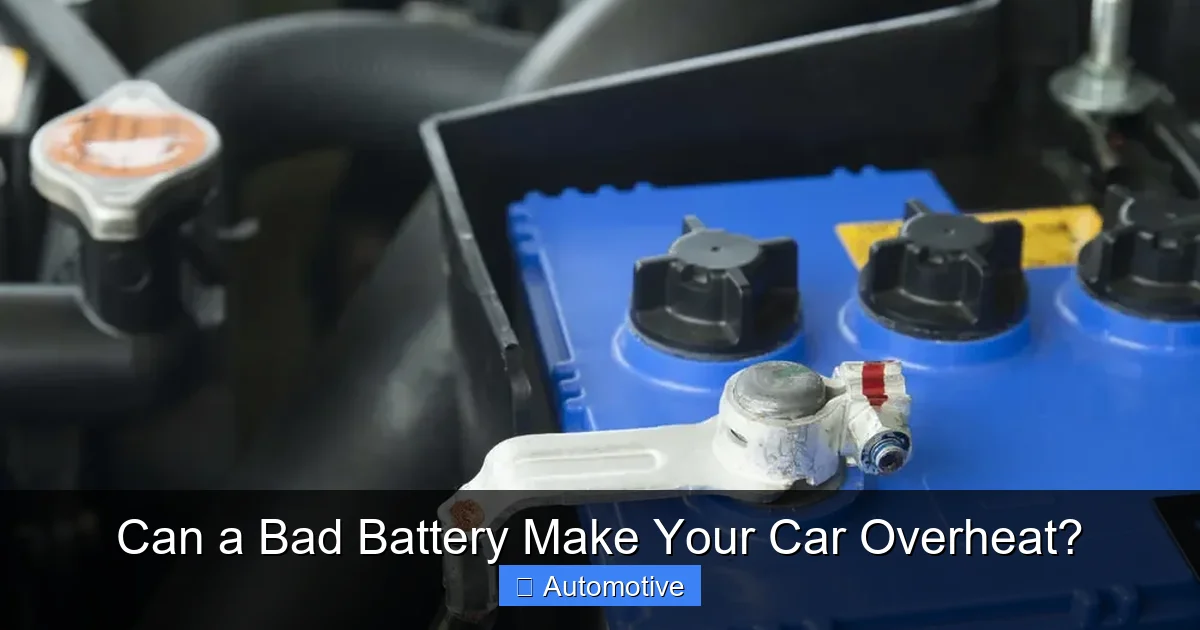
Visual guide about Can a Bad Battery Make Your Car Overheat?
Image source: res.cloudinary.com
Before we dive into the battery-overheating connection, let’s quickly go over how your car’s cooling system keeps your engine at the right temperature. Most people know that coolant flows through the engine to absorb heat, but the full process is a bit more complex.
Your engine burns fuel to create power, and that process generates a lot of heat—enough to destroy the engine if left unchecked. The cooling system’s job is to regulate that heat and keep the engine operating between 195°F and 220°F (90°C to 104°C), which is the ideal range for performance and efficiency.
Here’s how it works: A water pump circulates coolant (a mix of antifreeze and water) through passages in the engine block and cylinder head. As the coolant absorbs heat, it flows to the radiator, where air passing through (either from driving or a cooling fan) cools it down. Then, the cooled fluid returns to the engine to repeat the cycle.
But that’s not all. A thermostat acts like a gatekeeper, opening and closing to control coolant flow based on engine temperature. When the engine is cold, the thermostat stays closed, allowing the engine to warm up quickly. Once it reaches operating temperature, the thermostat opens, letting coolant flow freely.
Modern cars also use electric cooling fans that kick on when the engine gets too hot—especially when you’re idling in traffic. These fans are controlled by sensors and the engine control unit (ECU), which monitor temperature and activate the fans as needed.
And here’s where the battery comes in: all these components—the water pump (in some vehicles), cooling fans, sensors, and the ECU—rely on electrical power. If the battery is weak or failing, it can’t deliver the consistent voltage these systems need to function properly. That’s the first link in the chain that can lead to overheating.
The Role of the Battery in Your Car’s Electrical System
Visual guide about Can a Bad Battery Make Your Car Overheat?
Image source: samfordgarage.com.au
Your car’s battery does more than just start the engine. It’s the heart of the entire electrical system, providing power to everything from your headlights and radio to the fuel injectors and onboard computers. Even when the engine is running, the battery helps stabilize voltage and supply power during high-demand situations.
When you turn the key, the battery sends a surge of electricity to the starter motor, which cranks the engine. Once the engine is running, the alternator takes over, generating electricity to power the car’s systems and recharge the battery. But the battery still plays a crucial role—it acts as a buffer, smoothing out voltage fluctuations and providing extra power when needed.
A healthy battery delivers around 12.6 volts when the car is off and about 13.7 to 14.7 volts when the engine is running (thanks to the alternator). If the battery is weak, old, or damaged, it may only deliver 12 volts or less when off, and the alternator may struggle to maintain proper voltage under load.
This is where problems begin. Many modern cars use electric water pumps instead of mechanical ones. These pumps rely entirely on battery power to circulate coolant. If the battery is weak, the pump may run slower or intermittently, reducing coolant flow and causing the engine to overheat—even if everything else is working perfectly.
Similarly, electric cooling fans need a steady supply of electricity to spin at the right speed. A weak battery can cause the fans to run sluggishly or not at all, especially at idle when airflow through the radiator is minimal. Without proper airflow, the radiator can’t cool the coolant effectively, and engine temperatures rise.
Even the sensors that monitor engine temperature depend on stable voltage. If the battery is failing, these sensors may send inaccurate readings to the ECU, which could delay fan activation or cause the engine to run hotter than necessary.
In short, while the battery doesn’t generate heat like the engine does, it powers the systems that keep that heat in check. When the battery fails, those systems can fail too—leading to overheating.
Indirect Ways a Bad Battery Can Cause Overheating
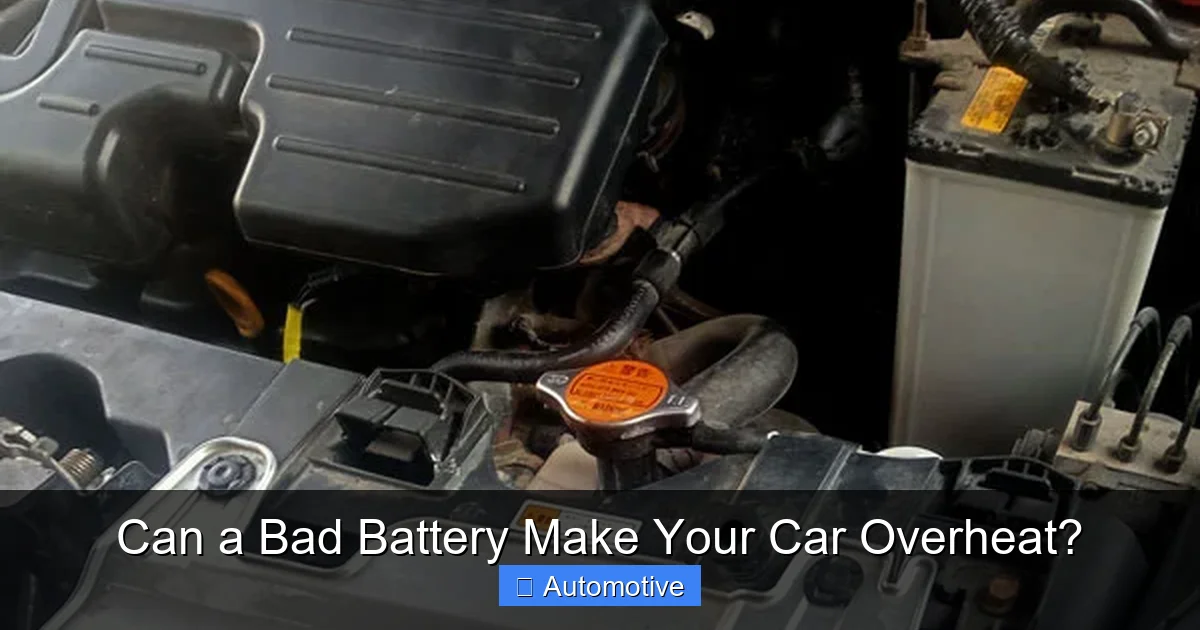
Visual guide about Can a Bad Battery Make Your Car Overheat?
Image source: cartipsandsolutions.com
Now that we understand how the battery and cooling system are connected, let’s look at the specific ways a bad battery can indirectly cause your car to overheat.
1. Overworking the Alternator
When your battery is weak or failing, it can’t hold a charge properly. This forces the alternator to work harder to keep the electrical system running and recharge the battery. The alternator is driven by a belt connected to the engine, so when it’s under extra load, it creates more resistance—like dragging a heavy load behind your car.
This increased load can cause the engine to run hotter than normal, especially in stop-and-go traffic or when using multiple electrical accessories (like air conditioning, heated seats, or high-beam headlights). Over time, this extra strain can contribute to elevated engine temperatures.
Worse yet, a failing alternator can overheat itself, potentially damaging internal components and reducing its ability to generate power. If the alternator fails completely, the battery will drain quickly, and the car may stall—leaving you stranded with an overheating engine.
2. Reduced Performance of Electric Cooling Fans
Most modern cars use electric cooling fans that turn on when the engine reaches a certain temperature. These fans are essential for maintaining airflow through the radiator when the car is idling or moving slowly.
But electric fans need a strong, consistent power supply to spin at full speed. If the battery is weak, the voltage drops, and the fans may run slower or not at all. This is especially dangerous in traffic or on hot days when natural airflow is minimal.
For example, imagine you’re stuck in a traffic jam on a 95°F (35°C) day. Your engine is running, but the car isn’t moving. Without the cooling fans working properly, the radiator can’t dissipate heat effectively. The engine temperature rises, and before you know it, the warning light comes on.
Even if the fans do turn on, they might not run long enough or fast enough to cool the engine adequately. This can lead to gradual overheating that’s easy to miss until it’s too late.
3. Malfunctioning Electric Water Pumps
In many newer vehicles, the water pump is electrically powered rather than mechanically driven by a belt. This design allows for more precise control of coolant flow, improving efficiency and reducing engine load.
However, electric water pumps depend entirely on the battery and electrical system. If the battery is weak, the pump may not receive enough power to circulate coolant effectively. This can result in poor heat transfer, hot spots in the engine, and eventually, overheating.
Some cars even have dual cooling systems—one for the engine and one for the transmission or turbocharger—each with its own electric pump. A weak battery can affect all of them, increasing the risk of overheating in multiple systems.
4. Sensor and ECU Errors
Your car’s engine control unit (ECU) relies on input from various sensors to manage engine performance, including temperature sensors, coolant level sensors, and fan speed sensors. These sensors send data to the ECU, which then adjusts fuel delivery, ignition timing, and cooling system operation.
But sensors need stable voltage to function correctly. A weak battery can cause voltage drops that lead to inaccurate readings. For example, a temperature sensor might report a lower temperature than actual, causing the ECU to delay turning on the cooling fan. Or a coolant level sensor might give a false “full” reading, even if the coolant is low.
These errors can prevent the cooling system from responding properly to rising temperatures, allowing the engine to overheat before the driver even notices.
5. Increased Electrical Load from Accessories
When the battery is weak, the alternator works harder to compensate. But if you’re also using power-hungry accessories—like the air conditioner, heated seats, or a high-wattage sound system—the electrical load increases even more.
This extra demand can push the alternator beyond its limits, causing it to overheat or fail. And since the alternator is belt-driven, a failing alternator can also cause the belt to slip or break, which may disable the water pump (in mechanical systems) or other critical components.
In some cases, the ECU may reduce engine power or shut down non-essential systems to protect the electrical system. But this can also affect cooling performance, especially if the fans or water pump are considered “non-essential” during a power-saving mode.
Symptoms That Link a Bad Battery to Overheating
Because a bad battery and engine overheating share some common symptoms, it can be tricky to tell which problem came first. Here are some signs that might indicate a connection between the two:
Dim or Flickering Lights
If your headlights, dashboard lights, or interior lights dim when you turn on the air conditioner or accelerate, it could be a sign of a weak battery or alternator. This voltage drop can also affect cooling fans and sensors, contributing to overheating.
Slow Engine Crank
A battery that struggles to start the engine is often on its last legs. If you notice the engine cranking slowly—especially in cold weather—it’s time to test the battery. A weak battery can also cause the engine to run rough or stall, which may lead to overheating if the cooling system is affected.
Warning Lights on the Dashboard
The battery light, check engine light, or temperature warning light may come on if there’s an electrical issue. While the temperature light directly indicates overheating, the battery or check engine light could point to an underlying electrical problem that’s contributing to the issue.
Overheating at Idle
If your car overheats when idling but runs fine at highway speeds, it’s often a sign of a cooling fan problem. Since electric fans rely on battery power, a weak battery could be the root cause—especially if the fans don’t turn on or spin slowly.
Frequent Need for Jump Starts
If you’re jump-starting your car regularly, the battery is almost certainly failing. This constant strain on the electrical system can affect all components, including those responsible for cooling.
Burning Smell or Smoke
In extreme cases, an overworked alternator or electrical short caused by a failing battery can produce a burning smell or even smoke. This is a serious warning sign that requires immediate attention.
How to Diagnose and Prevent the Problem
If you suspect your car is overheating due to a bad battery, it’s important to diagnose both systems properly. Here’s how to do it:
Test the Battery
Use a multimeter to check the battery voltage. With the engine off, a healthy battery should read around 12.6 volts. If it’s below 12.4 volts, the battery may be weak. With the engine running, voltage should be between 13.7 and 14.7 volts. If it’s lower, the alternator may not be charging properly.
Many auto parts stores offer free battery and alternator testing. They can also check the battery’s cold cranking amps (CCA) and overall health.
Inspect the Cooling System
Check the coolant level in the overflow tank and radiator (when cool). Look for leaks, cracks, or corrosion in hoses, the radiator, and the water pump. Make sure the radiator cap is sealing properly—a faulty cap can cause coolant to boil over.
Check the Cooling Fans
Turn on the air conditioning and let the engine idle. The cooling fans should turn on within a few minutes. If they don’t, or if they spin slowly, there may be an electrical issue—possibly related to the battery or alternator.
Scan for Error Codes
Use an OBD2 scanner to check for diagnostic trouble codes (DTCs). Codes related to the cooling system, alternator, or battery can help pinpoint the problem. For example, a P0562 code indicates low system voltage, which could be caused by a bad battery.
Replace the Battery if Needed
Most car batteries last 3 to 5 years. If yours is older than that—or if it fails a load test—replace it. Choose a battery with the correct group size, CCA rating, and reserve capacity for your vehicle.
Maintain Regular Service
Follow your vehicle’s maintenance schedule for coolant flushes, belt inspections, and electrical system checks. Clean battery terminals regularly to ensure good connections.
Real-World Example: The Case of the Overheating SUV
Let’s look at a real-world scenario to illustrate how a bad battery can lead to overheating.
Sarah owns a 2018 SUV with an electric water pump and dual cooling fans. She noticed her temperature gauge creeping up during summer traffic, but it returned to normal on the highway. She assumed it was a coolant issue and topped off the reservoir.
But the problem persisted. One day, her car stalled at a red light. She managed to restart it, but the temperature light came on again. She took it to a mechanic, who found the battery was only 2 years old but tested weak—holding just 11.8 volts when off.
Further inspection revealed the electric water pump was running intermittently, and the cooling fans were slow to activate. The mechanic replaced the battery, and the overheating stopped. The alternator was also showing signs of wear from overworking, so it was replaced as a precaution.
In this case, the bad battery didn’t cause overheating directly—but it disrupted the cooling system enough to create a dangerous situation. Sarah’s story shows how interconnected these systems are and why it’s important to check the battery when diagnosing overheating.
Conclusion
So, can a bad battery make your car overheat? The answer is nuanced. A failing battery won’t melt your engine like a blown head gasket or a seized water pump would. But it can weaken the electrical systems that keep your engine cool—especially in modern vehicles with electric pumps, fans, and sensors.
From overworking the alternator to slowing down cooling fans, a weak battery can set off a chain reaction that leads to overheating. And because the symptoms often overlap, it’s easy to misdiagnose the problem.
The best defense is prevention. Test your battery regularly, especially if it’s more than three years old. Keep an eye on warning lights, listen for unusual sounds, and don’t ignore slow cranking or dim lights. And if your car starts overheating, don’t assume it’s just a coolant issue—check the battery and electrical system too.
Your car’s cooling system is only as strong as its power source. Keep the battery healthy, and you’ll keep your engine cool—no matter how hot it gets outside.
Frequently Asked Questions
Can a dead battery cause my car to overheat?
A dead battery won’t directly cause overheating, but it can prevent cooling components like electric fans and water pumps from working. If the engine is running but the battery is dead, the alternator may not provide enough power to run these systems, leading to overheating.
How do I know if my battery is causing overheating?
Look for signs like dim lights, slow cranking, or overheating at idle. Test the battery voltage—if it’s below 12.4 volts when off or the alternator isn’t charging properly, the battery may be contributing to cooling system failure.
Can a bad alternator cause overheating?
Yes. A failing alternator can overheat itself and reduce power to cooling systems. It may also cause the battery to drain, leading to electrical failures that affect fans, pumps, and sensors.
Should I replace my battery if my car overheats?
Not necessarily—but if the battery is old or weak, it’s worth testing. Overheating can have many causes, but a bad battery can be a hidden contributor, especially in modern cars with electric cooling systems.
How often should I replace my car battery?
Most car batteries last 3 to 5 years. Have it tested annually after the 3-year mark, especially if you notice slow starts, dim lights, or electrical issues.
Can low coolant cause a battery problem?
No, low coolant doesn’t affect the battery directly. But both issues can stem from poor maintenance. Regularly checking coolant levels and battery health can prevent both problems.
