
Can You Pump a Car Tire with a Bike Pump?

Yes, you can pump a car tire with a bike pump in a pinch, but it’s not recommended for regular use. While technically possible, the process is extremely time-consuming and physically demanding due to the large air volume required. It’s best reserved for emergencies when no other option is available.
Key Takeaways
- It is possible to inflate a car tire with a bike pump, but it requires significant time and effort due to the high air volume needed.
- Bike pumps are not designed for car tires and lack the pressure capacity and airflow rate required for efficient inflation.
- Using a bike pump in an emergency is better than driving on a flat, but it should only be a temporary fix until proper equipment is available.
- Portable electric tire inflators are a far better alternative for car owners who want a compact, reliable solution.
- Always check your tire pressure after using a bike pump to ensure it meets the manufacturer’s recommended PSI.
- Repeated use of a bike pump on car tires can damage the pump due to overheating and excessive strain.
- Prevention is key—maintain proper tire pressure regularly to avoid unexpected flats and the need for makeshift solutions.
📑 Table of Contents
- Can You Pump a Car Tire with a Bike Pump? The Surprising Truth
- Understanding How Bike Pumps Work
- Why Bike Pumps Aren’t Ideal for Car Tires
- When Might You Actually Use a Bike Pump on a Car Tire?
- Step-by-Step Guide: How to Pump a Car Tire with a Bike Pump
- Better Alternatives to Bike Pumps for Car Tires
- Tips for Maintaining Proper Tire Pressure
- Conclusion: Yes, But Only in Emergencies
Can You Pump a Car Tire with a Bike Pump? The Surprising Truth
Imagine this: You’re driving down the road, and suddenly your car starts to feel sluggish. You pull over and discover one of your tires is dangerously low on air. You don’t have a portable air compressor, and the nearest gas station is miles away. But wait—you have a trusty bike pump in your trunk from your weekend cycling trips. Can you use it to inflate your car tire?
The short answer is yes, you can pump a car tire with a bike pump. But the longer, more practical answer is: it’s not ideal, and it’s definitely not something you’d want to do regularly. While it’s technically possible, the process is slow, exhausting, and inefficient. Still, in a true emergency, a bike pump might just save the day.
Car tires require significantly more air volume and higher pressure than bike tires. A typical car tire needs between 30 and 35 PSI (pounds per square inch), and sometimes more for larger vehicles like SUVs or trucks. In contrast, a road bike tire might need 80–120 PSI, but it holds far less air overall. This difference in volume is the main challenge when using a bike pump on a car tire.
But don’t let that discourage you entirely. If you’re stranded with no other options, a bike pump can get you back on the road—just don’t expect a quick fix. In this article, we’ll explore how bike pumps work, why they’re not the best tool for car tires, and when (and how) you might use one in a pinch. We’ll also look at better alternatives and share practical tips to help you stay prepared.
Understanding How Bike Pumps Work
Visual guide about Can You Pump a Car Tire with a Bike Pump?
Image source: boxercycles.com
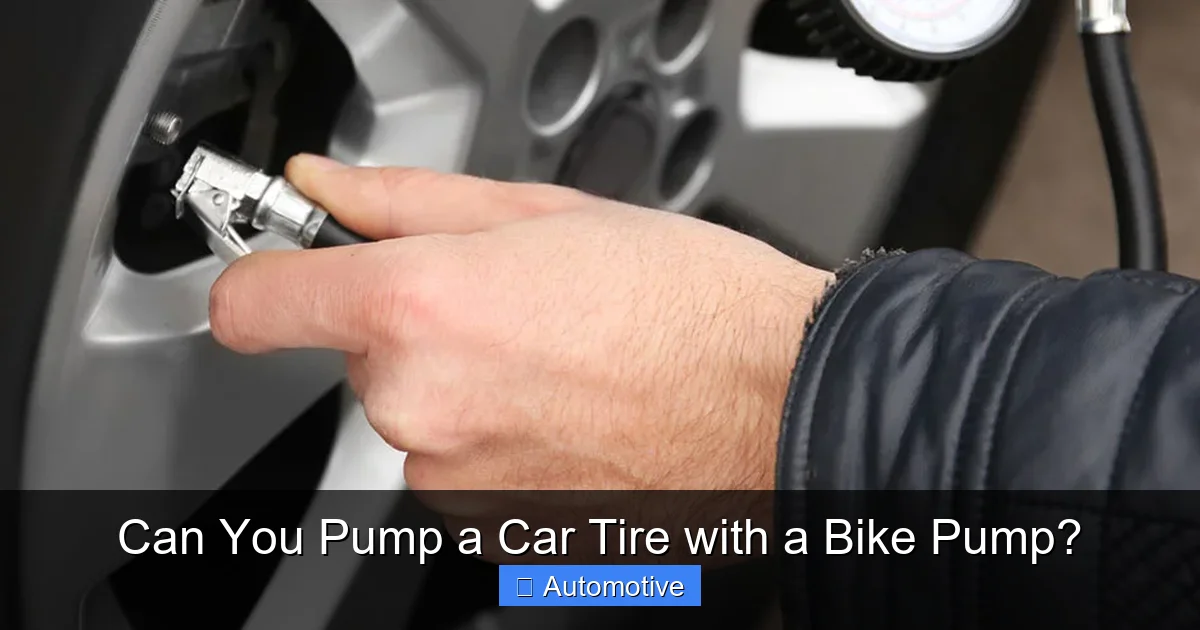
To understand whether a bike pump can inflate a car tire, it helps to know how these pumps function. Bike pumps come in two main types: floor pumps and hand pumps. Floor pumps are larger, have a stable base, and use a long hose and piston to deliver air efficiently. Hand pumps are compact and portable, designed to be carried on a bike for roadside repairs.
Both types work by drawing air into a cylinder and then forcing it out through a valve into the tire. The key difference lies in their design and capacity. Floor pumps can generate high pressure and move a decent volume of air per stroke, making them better suited for high-pressure bike tires. Hand pumps, while portable, are much slower and require more effort.
Most bike pumps are designed to handle pressures up to 120–160 PSI, which is more than enough for car tires that typically need 30–35 PSI. So in terms of pressure capability, a bike pump can technically meet the requirement. The real issue is volume. A car tire can hold anywhere from 1 to 2 cubic feet of air, depending on its size. A bike pump, especially a hand pump, might only deliver a few cubic inches per stroke. That means you could be pumping for 20 to 40 minutes—or even longer—to fully inflate a single car tire.
Another factor is the valve type. Most car tires use a Schrader valve, which is the same type found on bike tires and even some air mattresses. This means compatibility isn’t usually an issue. You can typically connect a bike pump to a car tire without any adapters, as long as the pump has a Schrader-compatible head.
But even with compatibility and sufficient pressure capacity, the real challenge is the sheer amount of work involved. Pumping a car tire with a bike pump is like trying to fill a swimming pool with a garden hose—it’s possible, but it’s going to take a long time and a lot of effort.
Why Bike Pumps Aren’t Ideal for Car Tires
Visual guide about Can You Pump a Car Tire with a Bike Pump?
Image source: bikingbro.com
While it’s technically feasible to use a bike pump on a car tire, there are several compelling reasons why it’s not a good long-term or frequent solution. Let’s break down the main drawbacks.
Volume vs. Effort
The biggest issue is the volume of air required. A standard car tire holds about 15 to 20 times more air than a typical bike tire. Even a high-quality floor pump might only deliver 0.5 to 1 liter of air per stroke. To fill a car tire from flat to 35 PSI, you could need 500 to 1,000 pump strokes—depending on the tire size and how flat it was to begin with.
Imagine doing 800 push-ups in a row. That’s roughly the physical effort involved. It’s not just tiring—it’s impractical, especially if you’re in a hurry or in an unsafe location like the side of a busy highway.
Time Consumption
Time is another major factor. Inflating a car tire with a bike pump can take anywhere from 20 minutes to over an hour. Compare that to a portable electric inflator, which can do the job in 3 to 5 minutes. If you’re trying to get back on the road quickly, a bike pump simply isn’t efficient.
Risk of Pump Damage
Bike pumps aren’t built to handle the workload of inflating car tires repeatedly. The internal seals, pistons, and hoses can overheat or wear out quickly when used beyond their intended purpose. After a few uses on a car tire, your bike pump might start leaking air, losing pressure, or even breaking down entirely.
Lack of Pressure Gauge Accuracy
Many bike pumps come with built-in pressure gauges, but these are often calibrated for high-pressure, low-volume applications like road bike tires. When used on a car tire, the gauge may not be accurate at lower pressures. This means you could overinflate or underinflate your tire without realizing it, which can affect handling, fuel efficiency, and tire wear.
Physical Strain and Safety
Pumping a car tire by hand is physically demanding. It can cause muscle strain, especially in your arms, shoulders, and back. If you’re not in good physical condition, or if you’re trying to do this in extreme weather (like cold or heat), the risk of injury increases. Additionally, spending a long time on the side of the road can be unsafe, especially at night or in high-traffic areas.
Not a Reliable Long-Term Solution
Even if you manage to inflate your tire with a bike pump, it’s only a temporary fix. You still need to get to a proper air source to ensure the tire is at the correct pressure and to check for leaks or damage. Relying on a bike pump regularly could lead to chronic underinflation, which increases the risk of tire failure, blowouts, and reduced fuel economy.
When Might You Actually Use a Bike Pump on a Car Tire?
Visual guide about Can You Pump a Car Tire with a Bike Pump?
Image source: i.ytimg.com
Despite the drawbacks, there are rare situations where using a bike pump on a car tire might be your best—or only—option. Let’s explore a few realistic scenarios.
Emergency Roadside Situation
You’re on a remote road, far from any gas stations or service centers. Your tire is low, and you notice a slow leak. You have a bike pump in your trunk, and no other tools. In this case, using the bike pump to add enough air to get you to the nearest town might be a lifesaver. Even if it takes 30 minutes, it’s better than being stranded.
Minor Top-Offs
If your tire is only slightly underinflated—say, 28 PSI instead of 32 PSI—a bike pump might be sufficient for a quick top-off. This is less taxing than inflating a completely flat tire and could be manageable with a floor pump. Just be sure to check the pressure afterward with a reliable gauge.
Camping or Overlanding Adventures
If you’re on a multi-day camping trip or overlanding in a remote area, you might carry a bike pump as part of your gear. In such cases, having any air source is valuable. You might use the pump to adjust tire pressure for different terrains (like lowering PSI for sand or mud), even if it takes longer.
Teaching Moment or DIY Experiment
Some people might try it out of curiosity or as a learning experience. While not practical, it can be a good way to understand the differences between bike and car tires, and the importance of proper tools. Just don’t make it a habit.
Backup for Electric Inflator Failure
If your portable electric tire inflator runs out of battery or breaks down, a bike pump can serve as a backup. It’s not ideal, but it’s better than nothing. This is why some prepared drivers carry both types of pumps.
In all these cases, the key is to use the bike pump as a last resort—not as a primary solution. It’s a tool of desperation, not convenience.
Step-by-Step Guide: How to Pump a Car Tire with a Bike Pump
If you find yourself in a situation where you need to use a bike pump on a car tire, here’s how to do it safely and effectively.
Step 1: Check the Tire and Valve
Before you start, inspect the tire for visible damage like cuts, punctures, or bulges. If the tire is severely damaged, pumping it might not help—or could even be dangerous. Next, locate the valve stem and remove the valve cap. Make sure the valve is clean and not clogged.
Step 2: Attach the Pump
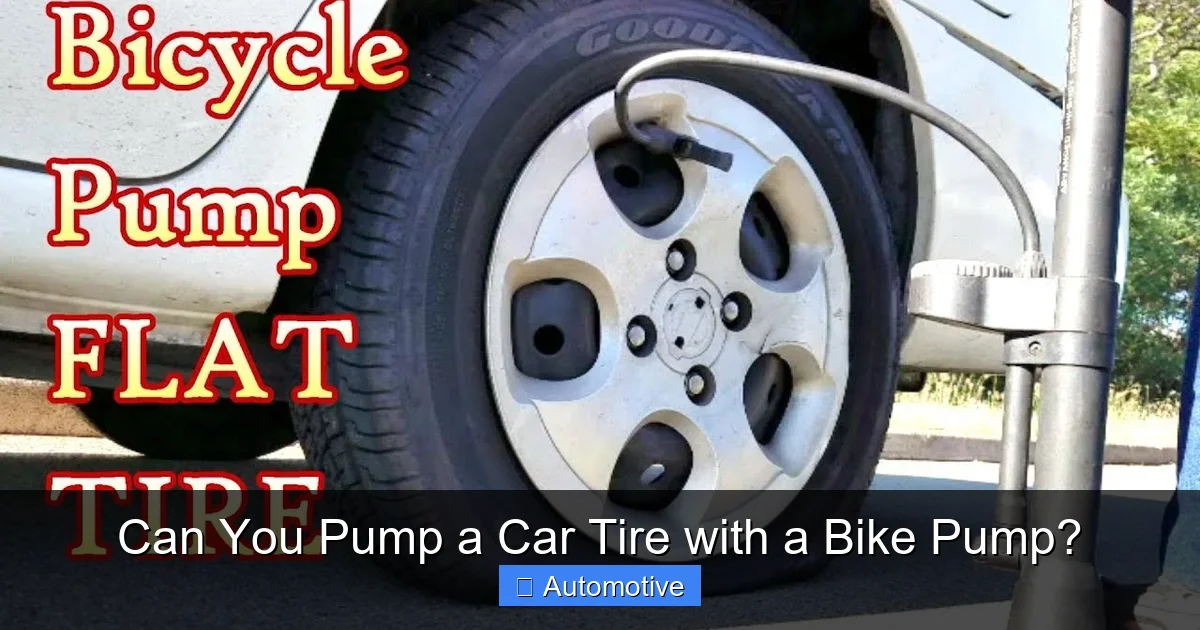
Most bike pumps have a dual-head design that fits both Schrader and Presta valves. Since car tires use Schrader valves, you’ll want to use the larger opening. Press the pump head firmly onto the valve stem and lock it in place (if your pump has a lever or locking mechanism). Make sure it’s secure to prevent air leaks.
Step 3: Start Pumping
Begin pumping slowly and steadily. If you’re using a floor pump, stand on the base for stability and use both hands on the handle. For a hand pump, brace it against the ground or your knee to reduce strain. Focus on full, deep strokes to maximize air delivery.
Step 4: Monitor Progress
If your pump has a pressure gauge, check it periodically. Car tires typically need 30–35 PSI, but refer to your vehicle’s door jamb sticker or owner’s manual for the exact recommendation. If your pump doesn’t have a gauge, you’ll need to stop and use a separate tire pressure gauge after every few minutes of pumping.
Step 5: Take Breaks
This process is physically demanding. Don’t try to power through without rest. Take short breaks every 5–10 minutes to avoid fatigue and overheating the pump. Stay hydrated, especially in hot weather.
Step 6: Recheck and Secure
Once you’ve reached the desired pressure, remove the pump head carefully to avoid losing air. Replace the valve cap tightly. Use a reliable tire pressure gauge to double-check the PSI. If it’s still low, continue pumping in short bursts.
Step 7: Drive Cautiously
Even after inflating the tire, drive slowly and carefully to the nearest service station. Have the tire inspected for leaks or damage. A bike pump can get you moving, but it doesn’t fix underlying problems.
Better Alternatives to Bike Pumps for Car Tires
While a bike pump can work in a pinch, there are far better tools designed specifically for car tires. Here are some superior alternatives.
Portable Electric Tire Inflators
These compact devices plug into your car’s 12V cigarette lighter or USB port and can inflate a tire in minutes. Many models come with digital pressure gauges, auto-shutoff features, and LED lights for nighttime use. Brands like AstroAI, Viair, and Black+Decker offer reliable options under $50.
12V Air Compressors
Similar to portable inflators but often more powerful, 12V air compressors can handle larger tires and higher pressures. They’re ideal for SUVs, trucks, or RVs. Some models even include attachments for inflating sports equipment or air mattresses.
Tire Repair Kits with Sealant
For small punctures, a tire sealant kit can be a quick fix. These kits inject a liquid sealant into the tire through the valve stem, which plugs the hole and allows you to drive to a repair shop. They’re not a permanent solution, but they’re faster and easier than pumping.
Onboard Air Systems
For serious off-roaders or frequent travelers, an onboard air compressor system mounted in the vehicle provides constant access to air. These systems can run air tools, inflate tires, and even adjust suspension. They’re more expensive but offer unmatched convenience.
Gas Station Air Pumps
When available, gas station air pumps are free or low-cost and provide fast, accurate inflation. Many now include digital displays and preset pressure options. Just be sure to check the pressure yourself, as these pumps can sometimes be inaccurate.
Tips for Maintaining Proper Tire Pressure
The best way to avoid needing a bike pump on a car tire is to maintain proper tire pressure regularly. Here are some practical tips.
Check Tire Pressure Monthly
Tires naturally lose air over time—about 1–2 PSI per month. Check your tire pressure at least once a month, preferably when the tires are cold (before driving). Use a reliable digital or analog gauge.
Follow Manufacturer Recommendations
Don’t rely on the maximum PSI listed on the tire sidewall. Instead, use the recommended pressure found on the driver’s side door jamb, in the owner’s manual, or in the fuel filler door. This ensures optimal performance, safety, and fuel efficiency.
Adjust for Load and Conditions
If you’re carrying heavy loads or towing, you may need to increase tire pressure slightly. Similarly, adjust for extreme temperatures—cold weather reduces pressure, while hot weather increases it.
Inspect Tires Regularly
Look for signs of wear, cracking, or damage during your monthly checks. Rotate your tires every 5,000 to 7,000 miles to ensure even wear. Replace tires when the tread depth reaches 2/32 of an inch.
Keep a Portable Inflator in Your Car
Even if you don’t plan to use it often, a small electric inflator takes up minimal space and can be a lifesaver. Pair it with a tire pressure gauge for peace of mind.
Conclusion: Yes, But Only in Emergencies
So, can you pump a car tire with a bike pump? Absolutely. Is it a good idea? Only in rare, emergency situations. While a bike pump can technically inflate a car tire, the process is slow, labor-intensive, and potentially damaging to the pump. It’s not a reliable or efficient solution for regular use.
For everyday drivers, investing in a portable electric tire inflator is a smarter, safer choice. These devices are affordable, easy to use, and designed specifically for car tires. They save time, reduce physical strain, and provide accurate pressure readings.
That said, if you’re ever stranded with only a bike pump, don’t despair. With patience and persistence, you can get your tire inflated enough to reach help. Just remember: it’s a temporary fix. Once you’re back on the road, have your tire properly inspected and maintained.
The key takeaway is preparation. Keep the right tools in your car, check your tire pressure regularly, and know your options. That way, you’ll never have to rely on a bike pump unless absolutely necessary—and even then, you’ll be ready.
Frequently Asked Questions
Can a bike pump fully inflate a flat car tire?
Yes, a bike pump can fully inflate a flat car tire, but it will take a very long time—possibly 30 minutes to over an hour—and require significant physical effort. It’s only practical in emergency situations.
Will using a bike pump damage my car tire?
No, using a bike pump won’t damage your car tire, but it may not inflate it to the correct pressure if the pump lacks an accurate gauge. Always double-check with a reliable tire pressure gauge afterward.
Can I use a hand pump or do I need a floor pump?
A floor pump is much more efficient and less tiring than a hand pump, but both can work. A hand pump will take significantly longer and require more effort due to its smaller air delivery per stroke.
Is it safe to drive after inflating a tire with a bike pump?
Yes, as long as the tire reaches the recommended PSI and there’s no visible damage. However, you should still visit a service station to check for leaks or punctures, as the bike pump only addresses air loss, not the cause.
Can I use a bike pump on all car tires, including SUVs and trucks?
Technically yes, but larger tires on SUVs and trucks require even more air volume, making the process even more time-consuming and difficult. It’s not recommended for heavy-duty vehicles.
What’s the best alternative to a bike pump for car tires?
The best alternative is a portable electric tire inflator that plugs into your car’s 12V outlet. These devices are fast, accurate, and designed specifically for car tires, making them ideal for emergencies.