
How to Get a Replacement Title for Your Car

Getting a replacement title for your car doesn’t have to be stressful. Whether it’s lost, stolen, or damaged, most states allow you to request a duplicate title online, by mail, or in person—often within a few weeks.
Losing your car title can feel like a major setback—especially if you’re planning to sell your vehicle, transfer ownership, or register it in a new state. The title is the legal proof that you own your car, and without it, many everyday tasks become difficult or even impossible. But here’s the good news: getting a replacement title for your car is usually a straightforward process. Most states have streamlined systems in place to help drivers obtain a duplicate title quickly and efficiently.
Whether your original title was lost in a move, damaged beyond recognition, or stolen during a break-in, you’re not alone. Thousands of drivers face this issue every year, and the Department of Motor Vehicles (DMV) or equivalent agency in each state is well-equipped to handle these requests. The key is knowing where to start, what documents you’ll need, and how to avoid common pitfalls that can delay the process. In this guide, we’ll walk you through every step of getting a replacement title—from understanding why it matters to receiving your new document in the mail.
We’ll also cover state-specific nuances, tips for speeding up the process, and what to do if you’re dealing with a lienholder or out-of-state title. By the end of this article, you’ll feel confident and prepared to handle a lost or damaged car title like a pro. So take a deep breath—this isn’t as scary as it seems, and we’re here to help.
Key Takeaways
- Act quickly: Report a missing title as soon as possible to avoid delays in selling, registering, or insuring your vehicle.
- Check your state’s DMV website: Requirements vary by state, so always verify the specific forms, fees, and processes for your location.
- Gather required documents: You’ll typically need your driver’s license, vehicle registration, VIN, and a completed application form.
- Pay the replacement fee: Most states charge between $5 and $50 for a duplicate title, payable by cash, check, or card depending on the method.
- Use certified mail if mailing: If applying by mail, send your documents via certified mail with return receipt for tracking and proof of delivery.
- Consider expedited service: Some states offer faster processing for an additional fee—ideal if you need the title urgently.
- Keep your new title safe: Store your replacement title in a secure place, like a fireproof safe or safety deposit box, to prevent future issues.
📑 Table of Contents
Why You Need a Car Title (And What Happens If You Don’t Have One)
Your car title isn’t just a piece of paper—it’s a critical legal document that proves ownership of your vehicle. Think of it like a birth certificate for your car. It lists essential details such as the vehicle identification number (VIN), make, model, year, and the name of the legal owner. If you ever want to sell your car, transfer ownership to a family member, or register it in a new state, you’ll need that title. Without it, you’re essentially stuck.
Imagine trying to sell your car to a private buyer. They’ll ask to see the title to verify you’re the rightful owner. If you can’t produce it, they may walk away—no matter how much they liked the car. The same goes for dealerships. Even if you’re trading in your vehicle, the dealer will need the title to complete the transaction. And if you’re moving to a new state, you’ll need to register your car there, which almost always requires a title.
But it’s not just about selling or registering. Your title also plays a role in insurance claims, especially if your car is totaled in an accident. Insurance companies often require proof of ownership before issuing a payout. And if your car is ever stolen, having a copy of the title (or knowing how to get a replacement quickly) can help law enforcement verify your claim.
So what happens if you don’t have your title and don’t replace it? You could face delays in selling your car, fines for late registration, or even legal complications if someone else tries to claim ownership. In rare cases, a missing title could raise red flags during a background check or vehicle inspection. That’s why it’s so important to act fast when you realize your title is missing.
Common Scenarios That Lead to a Lost Title
There are several everyday situations that can result in a lost or misplaced car title. One of the most common is moving to a new home. During the chaos of packing and unpacking, important documents like titles, registration, and insurance papers can easily get buried in a box or accidentally thrown away. It’s not uncommon for people to realize their title is missing weeks or even months after the move.
Another frequent cause is damage. Titles can get wet, burned, or torn—especially if they’re stored in a glove compartment or garage where they’re exposed to the elements. Over time, ink can fade, making the document illegible. If your title is so damaged that the VIN or owner name can’t be read, it’s effectively useless and needs to be replaced.
Theft is another possibility. While car titles aren’t as valuable as cash or electronics, they can be targeted during break-ins, especially if they’re kept in the vehicle. A thief might steal the title to sell the car illegally or use it to commit fraud. That’s why it’s always best to store your title in a secure location—not in your car.
Sometimes, the title is simply misplaced. You might have lent it to a family member for registration purposes, or it could have been left at the DMV during a previous visit. It’s also possible that the title was never received in the first place—especially if you bought your car from a private seller and the previous owner forgot to mail it.
No matter how it happened, the solution is the same: apply for a replacement title as soon as possible. The longer you wait, the more complications you might face.
How to Apply for a Replacement Car Title
Visual guide about How to Get a Replacement Title for Your Car
Image source: res.cloudinary.com
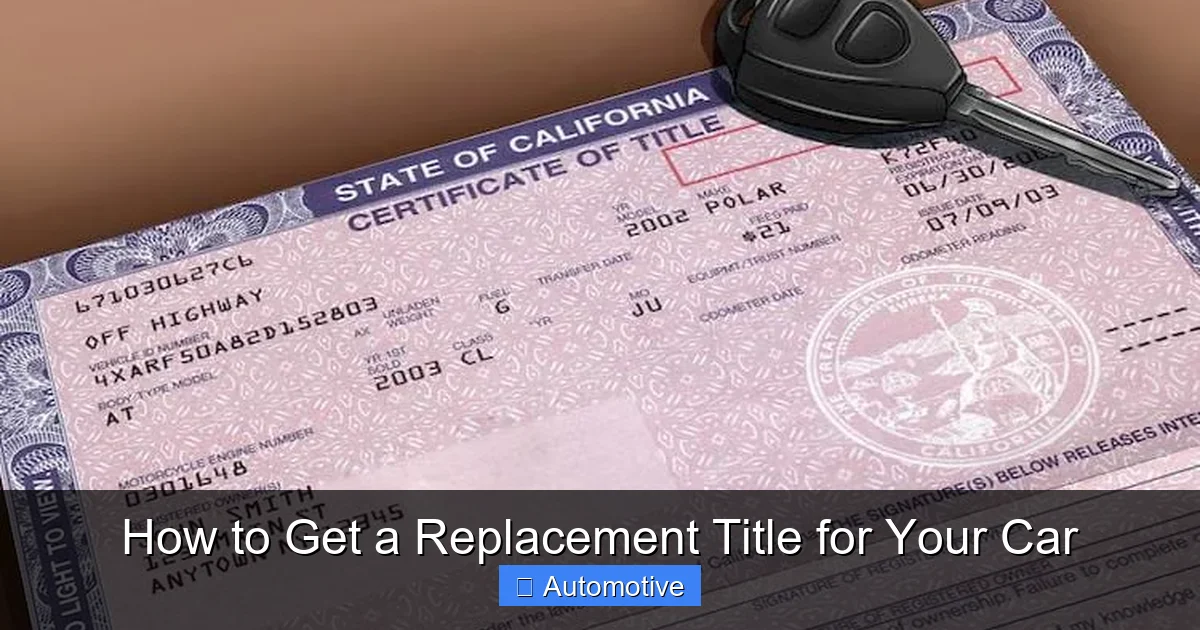
The process for getting a replacement title varies slightly from state to state, but the general steps are similar across the country. Most states allow you to apply online, by mail, or in person at a local DMV office. The method you choose will depend on your state’s policies, your schedule, and how quickly you need the title.
Before you begin, it’s important to check your state’s DMV website. This is your best source of accurate, up-to-date information. Look for a section labeled “Duplicate Title,” “Replacement Title,” or “Lost Title.” There, you’ll find the specific forms, fees, and instructions for your state.
In most cases, you’ll need to fill out an application for a duplicate title. This form typically asks for your name, address, driver’s license number, vehicle information (including VIN), and the reason for the replacement (e.g., lost, stolen, damaged). Some states also require you to provide a notarized affidavit if the title was stolen.
Once you’ve completed the form, you’ll need to gather supporting documents. These usually include a valid photo ID (like your driver’s license), proof of vehicle registration, and sometimes a lien release if there’s a loan on the car. If you’re applying by mail, make copies of everything—don’t send originals unless specifically instructed.
After that, it’s just a matter of submitting your application and paying the fee. Most states charge between $5 and $50 for a duplicate title. Payment methods vary: some DMVs accept cash, check, or money order for in-person visits, while online applications may require a credit or debit card.
Applying In Person
If you prefer face-to-face service or need your title quickly, visiting your local DMV office is a solid option. This method allows you to ask questions, get immediate feedback, and often receive your replacement title the same day—especially if your state offers same-day processing.
To apply in person, start by locating your nearest DMV office. Use your state’s official DMV website to find the address, hours, and any appointment requirements. Some states require appointments for title services, while others operate on a walk-in basis. It’s always a good idea to call ahead or check online to avoid a long wait.
When you arrive, bring all required documents: your completed application, valid ID, vehicle registration, and payment for the fee. If your title was stolen, you may also need to bring a police report. The DMV clerk will review your paperwork, verify your identity, and process your request.
One advantage of applying in person is that you can often get a temporary title or receipt that proves you’ve applied for a duplicate. This can be helpful if you need to sell or register your car while waiting for the official title to arrive.
Applying Online
Many states now offer online services for duplicate title requests, making the process faster and more convenient. If your state allows online applications, this is often the quickest way to get a replacement title—especially if you don’t live near a DMV office.
To apply online, visit your state’s official DMV website and look for the “Duplicate Title” or “Replace Title” option. You’ll typically need to create an account or log in with your driver’s license number and personal information. Then, follow the prompts to enter your vehicle details, upload required documents (like a scanned copy of your ID), and pay the fee electronically.
One thing to note: not all states allow online title replacements, especially if there’s a lien on the vehicle. If your car is still financed, the lienholder (usually a bank or credit union) may need to approve the replacement before it can be issued. In those cases, you may need to contact the lienholder directly or apply by mail.
Applying by Mail
If you can’t visit the DMV in person and your state doesn’t offer online services, mailing your application is your best bet. This method takes longer—usually 2 to 6 weeks—but it’s reliable and widely accepted.
To apply by mail, download the duplicate title application from your state’s DMV website. Fill it out completely and accurately. Then, gather your supporting documents: a copy of your ID, vehicle registration, and any other required forms. If your title was stolen, include a copy of the police report.
Make sure to send everything in a secure envelope. Use certified mail with return receipt requested so you can track the package and confirm delivery. This is especially important if you’re sending original documents—though it’s always safer to send copies unless the DMV specifically asks for originals.
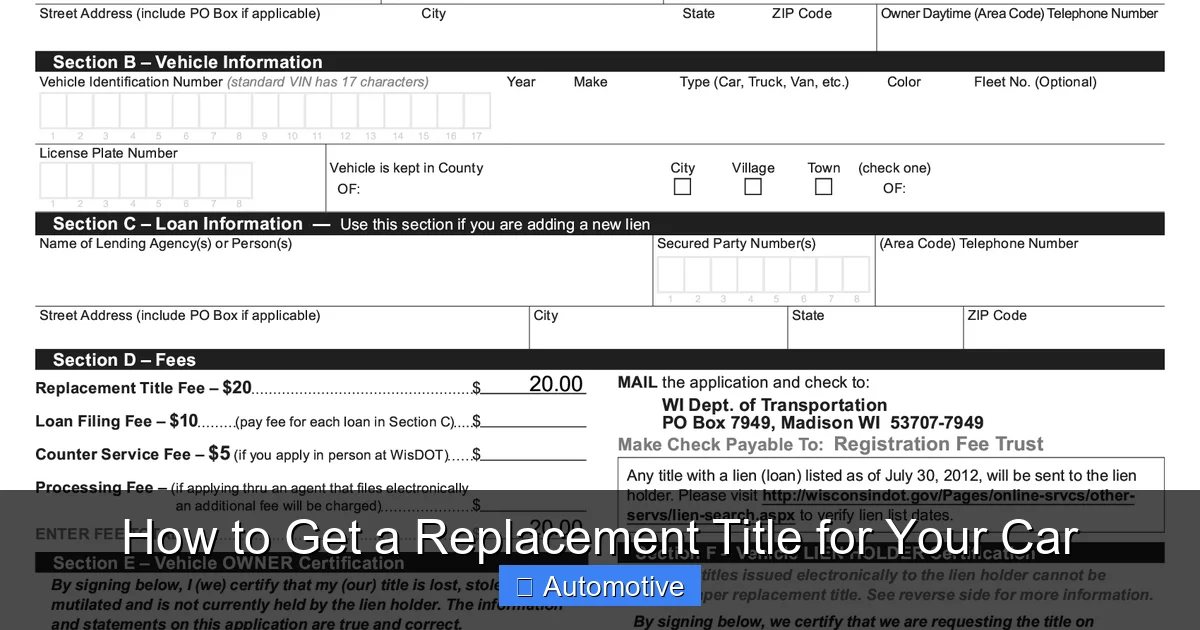
Include a check or money order for the replacement fee. Do not send cash through the mail. Write your name and address clearly on the envelope, and double-check the mailing address on the DMV website to ensure it goes to the right office.
Required Documents and Information
Visual guide about How to Get a Replacement Title for Your Car
Image source: images.squarespace-cdn.com
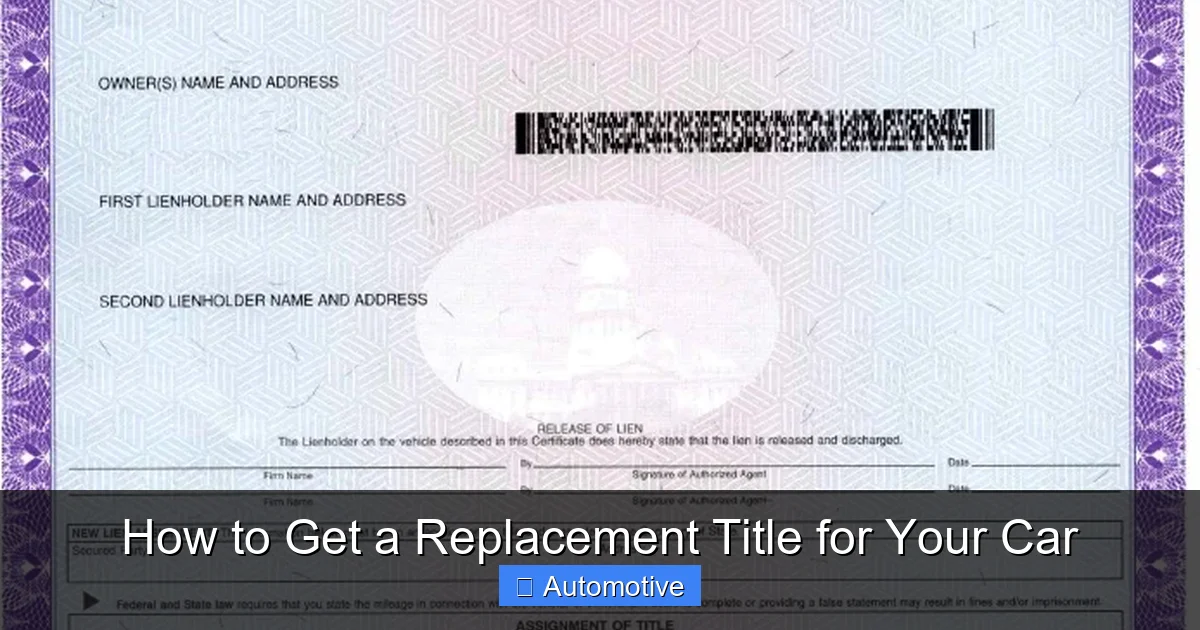
No matter which method you use to apply for a replacement title, you’ll need to provide certain documents and information. Having these ready ahead of time will save you time and prevent delays.
The most important document is your valid government-issued photo ID, such as a driver’s license or state ID card. This proves your identity and ensures that only the rightful owner can request a duplicate title.
You’ll also need your vehicle’s registration card. This shows that the car is currently registered in your name and helps the DMV verify ownership. If you don’t have the registration, you may need to request a copy first.
Your vehicle identification number (VIN) is another key piece of information. You can find the VIN on the driver’s side dashboard (visible through the windshield), on the door jamb, or on your registration and insurance documents. Make sure the VIN on your application matches the one on your car.
If there’s a lien on your vehicle—meaning you’re still making payments on a loan—you may need to provide a lien release or contact the lienholder directly. Some states require the lienholder’s permission before issuing a duplicate title. In those cases, the title may be sent directly to the lienholder instead of to you.
In rare cases, you might need a notarized affidavit, especially if the title was stolen. This is a sworn statement that confirms the title is missing and that you’re the legal owner. You can usually get this notarized at a bank, post office, or UPS store for a small fee.
What If You’re Not the Registered Owner?
If you’re not the registered owner of the vehicle—for example, if you’re buying a car from a family member or inheriting one—the process can be a bit more complicated. In most cases, the current owner must apply for the replacement title first, then transfer ownership to you.
However, some states allow a power of attorney (POA) to act on behalf of the owner. If you have a valid POA, you may be able to apply for the duplicate title yourself. Check with your state’s DMV to see if this option is available.
If the vehicle is part of an estate (e.g., after the owner has passed away), you may need to provide a death certificate, will, or court order proving your right to the vehicle. This process can take longer, so it’s best to start as early as possible.
Fees and Processing Times
Visual guide about How to Get a Replacement Title for Your Car
Image source: blanker.org
The cost of a replacement title varies by state, but most charge between $5 and $50. Some states have flat fees, while others base the cost on the vehicle’s value or age. For example, California charges $20 for a duplicate title, while Texas charges $11. Florida charges $75.25, which is on the higher end.
Processing times also vary. If you apply in person, you may receive your title the same day—especially if your state offers instant issuance. Online applications are usually processed within 1 to 2 weeks, while mail-in requests can take 2 to 6 weeks.
If you need your title urgently, some states offer expedited service for an additional fee. This can cut processing time down to a few days. Check your state’s DMV website to see if this option is available.
Payment Methods
Payment methods depend on how you apply. For in-person visits, most DMVs accept cash, check, or money order. Some also accept credit or debit cards, but there may be a processing fee.
Online applications typically require a credit or debit card. Make sure your card is enabled for online transactions and has sufficient funds.
For mail-in applications, always use a check or money order. Do not send cash. Make the payment payable to the appropriate state agency (e.g., “California DMV” or “Texas DPS”).
Special Situations: Liens, Out-of-State Titles, and More
Not all title replacement requests are straightforward. If your car has a lien, is registered in another state, or is part of an estate, you may face additional steps.
If there’s a lien on your vehicle, the title is usually held by the lienholder (like a bank). In that case, you’ll need to contact the lienholder to request a duplicate title. They may charge a fee and require you to submit a form. Once approved, the title will be sent to them—not to you—until the loan is paid off.
If your car is registered in another state, you’ll need to contact that state’s DMV to request a duplicate title. You can usually do this by mail or online. Once you receive the title, you can then transfer it to your new state if you’ve moved.
Tips to Avoid Future Title Issues
Once you’ve received your replacement title, take steps to protect it. Store it in a fireproof safe, safety deposit box, or secure digital scan. Never keep it in your car. Consider making a photocopy and storing it separately. And if you sell your car, remember to sign the title correctly and keep a copy for your records.
Conclusion
Getting a replacement title for your car is a common but manageable task. By following your state’s guidelines, gathering the right documents, and choosing the best application method, you can get your duplicate title quickly and without stress. Don’t let a missing title hold you back—take action today and get back on the road with confidence.
Frequently Asked Questions
How long does it take to get a replacement car title?
Processing times vary by state and method. In-person applications may offer same-day service, while online requests typically take 1–2 weeks. Mail-in applications can take 2–6 weeks.
Can I get a replacement title if my car has a lien?
Yes, but the lienholder (usually a bank) must approve the request. The duplicate title will be sent to them, not to you, until the loan is paid off.
Do I need a police report if my title was stolen?
Some states require a police report for stolen titles, especially if you’re filing a notarized affidavit. Check your state’s DMV website for specific requirements.
Can I apply for a replacement title online?
Many states allow online applications, but not all. Check your state’s DMV website to see if online services are available and if there are any restrictions.
What if I moved to a new state and lost my title?
Contact your previous state’s DMV to request a duplicate title. Once received, you can use it to register your vehicle in your new state.
How much does a replacement title cost?
Fees range from $5 to $50, depending on the state. Some states charge more for expedited service or if the vehicle has a lien.