
How Soon Can You Get a Repossessed Car Back?

If your car has been repossessed, you may be able to get it back—but timing and actions matter. The process depends on your state laws, loan terms, and whether you can pay what you owe. Acting quickly and understanding your options can help you regain your vehicle faster.
Key Takeaways
- You may reclaim your car immediately after repossession if you pay the full outstanding balance, fees, and repossession costs. This is known as “reinstating” the loan and is often possible within a short window, typically before the car is sold.
- State laws heavily influence how long you have to redeem your vehicle. Some states allow redemption periods of 10 to 30 days, while others offer no formal window, making speed critical.
- Contact your lender as soon as possible after repossession. Open communication can lead to repayment plans, loan modifications, or temporary holds on sale of the vehicle.
- Reinstatement is usually cheaper than redemption. Reinstatement lets you continue your original loan, while redemption requires paying the full balance plus all fees in one lump sum.
- Once the car is sold at auction, recovery becomes nearly impossible. After sale, you may still owe a deficiency balance, but the vehicle itself is gone.
- Legal assistance can help protect your rights. A consumer rights attorney can negotiate with lenders, challenge improper repossession, or help you file for bankruptcy if needed.
- Prevent future repossession by communicating early. If you’re struggling with payments, contact your lender before missing them to explore options like deferment or refinancing.
📑 Table of Contents
- How Soon Can You Get a Repossessed Car Back?
- Understanding Car Repossession: What Happens When Your Car Is Taken
- Can You Get Your Repossessed Car Back? Your Legal Rights
- How Soon Can You Actually Get Your Car Back?
- Step-by-Step Guide: How to Get Your Repossessed Car Back
- What If You Can’t Get Your Car Back?
- How to Avoid Repossession in the Future
- Final Thoughts: Acting Fast Is Key
How Soon Can You Get a Repossessed Car Back?
Finding out your car has been repossessed is a stressful and overwhelming experience. One moment you’re driving to work, and the next, you’re facing the reality that your vehicle—your primary mode of transportation—has been taken. The immediate question that comes to mind is: *Can I get my car back?* And if so, *how soon?*
The good news is that in many cases, yes, you can get your repossessed car back. But the timeline and process depend on several factors, including your state’s laws, the terms of your loan agreement, and how quickly you act. The sooner you respond, the better your chances of reclaiming your vehicle before it’s sold at auction. While the process isn’t always quick or easy, understanding your rights and options can make a significant difference.
This guide will walk you through everything you need to know about getting your repossessed car back—how soon it’s possible, what steps to take, and what to avoid. Whether you’re dealing with a missed payment or a full repossession, we’ll help you navigate the situation with clarity and confidence.
Understanding Car Repossession: What Happens When Your Car Is Taken
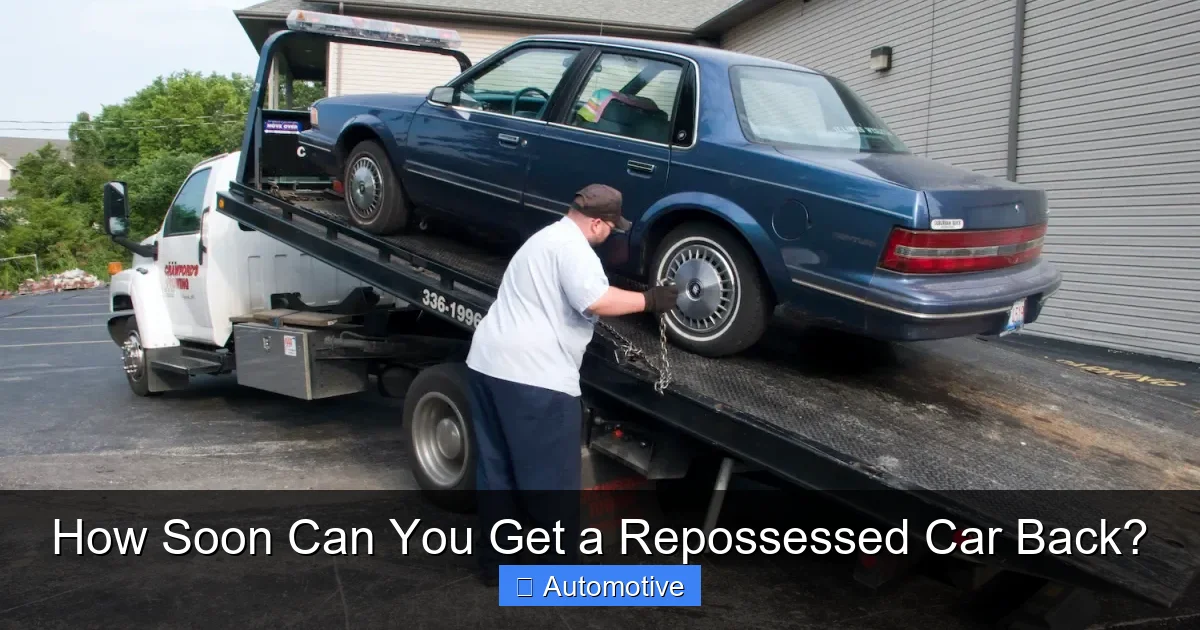
Visual guide about How Soon Can You Get a Repossessed Car Back?
Image source: motorbiscuit.com
Before diving into how to get your car back, it’s important to understand how repossession works. Car repossession occurs when you fall behind on your auto loan payments and the lender exercises its right to take back the vehicle. This is typically outlined in your loan agreement, which gives the lender the legal authority to repossess the car if you default.
How Repossession Works
Repossession doesn’t usually require a court order. As long as the lender doesn’t breach the peace (meaning they don’t use force, threats, or enter your home without permission), they can send a repossession agent to take your car—even if it’s parked in your driveway or on the street. The agent will tow the vehicle to a storage lot, and you’ll usually receive a notice in the mail informing you of the repossession.
Once your car is repossessed, the clock starts ticking. The lender will typically send you a notice detailing the amount you owe, including the remaining loan balance, late fees, repossession fees, and storage costs. This notice may also include information about your right to redeem or reinstate the loan.
Why Timing Is Critical
The key to getting your car back lies in acting quickly. Most lenders will hold the vehicle for a short period—anywhere from a few days to a few weeks—before selling it at auction. During this time, you have the opportunity to reclaim the car by paying what you owe. But once the car is sold, your chances of getting it back drop to nearly zero.
For example, imagine your car is repossessed on a Monday. If you contact your lender by Wednesday and arrange to pay the full amount due, you might be able to pick up your car by Friday. But if you wait two weeks, the car could already be sold, and you’ll lose your chance.
Can You Get Your Repossessed Car Back? Your Legal Rights

Visual guide about How Soon Can You Get a Repossessed Car Back?
Image source: bglawtx.com
Yes, in most cases, you can get your repossessed car back—but it depends on your actions and the laws in your state. The two main ways to reclaim your vehicle are through reinstatement or redemption.
Reinstatement: Getting Your Loan Back on Track
Reinstatement allows you to bring your loan current by paying the past-due amount, plus any fees and repossession costs. Once you do this, your loan returns to its original terms, and you can continue making regular payments. This is often the fastest and most affordable way to get your car back.
For instance, if you owed $1,200 in missed payments and $500 in repossession and storage fees, you’d need to pay $1,700 to reinstate the loan. Once paid, your lender will release the car, and you can drive away—usually within 24 to 48 hours.
Reinstatement is typically available for a limited time, often up to 10 to 30 days after repossession, depending on your state. Some lenders may even allow reinstatement right up until the car is sold at auction, but this isn’t guaranteed.
Redemption: Paying Off the Entire Loan
Redemption means paying the full remaining balance of your loan, plus all fees and costs, in one lump sum. This effectively pays off the loan entirely, and the lender releases the car to you. While this option gives you full ownership, it’s often more expensive than reinstatement and may not be feasible for everyone.
For example, if you still owe $15,000 on your loan and have $1,000 in fees, you’d need $16,000 to redeem the vehicle. This can be a tough hurdle, especially if you’re already struggling financially.
State Laws and Your Rights
Your ability to get your car back depends heavily on where you live. Some states have strong consumer protection laws that give you a clear redemption or reinstatement period. Others offer little to no formal window, leaving it up to the lender.
For example:
– In California, you have up to 15 days after repossession to redeem your vehicle by paying the full balance.
– In Texas, you may have up to 30 days to reinstate the loan, depending on the lender’s policies.
– In New York, there’s no statutory redemption period, so acting quickly is essential.
Always check your state’s Department of Motor Vehicles (DMV) or consumer protection agency website for specific rules.
How Soon Can You Actually Get Your Car Back?

Visual guide about How Soon Can You Get a Repossessed Car Back?
Image source: youngmarrlaw.com
Now for the big question: *How soon can you get your repossessed car back?* The answer varies, but in many cases, you can reclaim your vehicle within a few days—if you act fast.
Immediate Reclamation (Same Day or Next Day)
In some cases, you can get your car back the same day it’s repossessed—or at least within 24 hours. This is most likely if:
– You contact the lender immediately.
– You have the funds to pay the full amount due.
– The car hasn’t been moved to a distant storage facility.
For example, if your car is towed on a Tuesday morning and you call the lender by noon with a payment plan or full payment, they may release the vehicle by that evening. Some lenders even offer same-day release if you pay in cash or certified funds.
Typical Timeline: 2 to 7 Days
For most people, the process takes between 2 and 7 days. This includes:
– Receiving the repossession notice (1–3 days).
– Contacting the lender and negotiating terms (1 day).
– Gathering funds and making payment (1–2 days).
– Scheduling pickup or delivery of the vehicle (1 day).
During this time, your car is usually held at a local tow yard or storage facility. You’ll need to pay storage fees, which can add up quickly—sometimes $25 to $50 per day. That’s why acting fast not only increases your chances of getting the car back but also saves you money.
Delays and Complications
Several factors can delay the process:
– **Lender responsiveness:** Some lenders are slow to respond or require multiple forms.
– **Funds availability:** If you need to borrow money or sell assets, it may take time.
– **Storage location:** If the car is towed to a remote lot, pickup may take longer.
– **Legal disputes:** If you believe the repossession was illegal, you may need to involve an attorney, which can slow things down.
For example, if your lender is based in another state and requires written documentation, it could take several days just to process your reinstatement request.
Step-by-Step Guide: How to Get Your Repossessed Car Back
Getting your car back after repossession is possible—but it requires quick, strategic action. Follow these steps to maximize your chances of success.
Step 1: Confirm the Repossession
First, make sure your car was actually repossessed and not stolen or towed for another reason. Check your mail for a repossession notice, which should include:
– The name of the lender or repossession company.
– The date and location of repossession.
– The total amount owed.
– Instructions for reclaiming the vehicle.
If you don’t receive a notice within a few days, contact your lender directly. Keep records of all communications.
Step 2: Contact Your Lender Immediately
Call your lender as soon as possible—ideally within 24 hours of repossession. Be polite but firm. Ask:
– What is the total amount needed to reinstate or redeem the loan?
– Is reinstatement still an option?
– Where is the car being stored, and what are the daily storage fees?
– Can they hold the car while you gather funds?
Some lenders may offer a short grace period or payment plan. Others may require full payment upfront.
Step 3: Gather the Funds
You’ll need to pay:
– Past-due payments.
– Late fees.
– Repossession fees (typically $200–$500).
– Storage fees (can be $25–$50 per day).
– Any other charges outlined in your notice.
If you don’t have the money, consider:
– Borrowing from family or friends.
– Selling personal items.
– Taking out a short-term loan (be cautious of high interest).
– Using a credit card (only if you can pay it off quickly).
Avoid payday loans or title loans if possible—they often lead to more debt.
Step 4: Make the Payment
Once you have the funds, pay the lender in full. Use a method that provides proof of payment, such as:
– Cashier’s check.
– Money order.
– Bank wire transfer.
– Certified check.
Avoid cash unless you get a signed receipt. Keep all documentation.
Step 5: Retrieve Your Vehicle
After payment, the lender should release the car. You’ll need to:
– Pick up the vehicle from the storage lot (bring ID and proof of payment).
– Pay any remaining storage fees directly to the tow company.
– Get your personal belongings from the car.
Some lenders may deliver the car to you, but this is rare and may incur additional fees.
Step 6: Review Your Loan Terms
Once you have your car back, review your loan agreement. Make sure the reinstatement terms are clear and that your payment schedule is updated. Set up automatic payments or reminders to avoid future issues.
What If You Can’t Get Your Car Back?
Unfortunately, not everyone can reclaim their repossessed vehicle. If the car has already been sold at auction, or if you can’t afford to pay what’s owed, your options are limited—but not hopeless.
You May Still Owe Money (Deficiency Balance)
Even if you don’t get the car back, you might still owe money. This is called a deficiency balance—the difference between what you owed and what the car sold for at auction.
For example, if you owed $12,000 and the car sold for $8,000, you could still be responsible for the $4,000 difference. The lender may sue you for this amount or send it to collections.
Negotiate a Settlement
If you can’t pay the full deficiency, contact the lender to negotiate a settlement. They may accept a lump-sum payment for less than the full amount—sometimes 50% or less—to close the account.
For instance, if you owe $4,000, they might accept $2,000 as full payment. Get any agreement in writing.
Consider Bankruptcy
In extreme cases, filing for bankruptcy (Chapter 7 or Chapter 13) can stop collection efforts and may eliminate or restructure your debt. This is a major decision with long-term credit consequences, so consult a bankruptcy attorney first.
Rebuild Your Credit
Repossession stays on your credit report for seven years, but you can start rebuilding immediately. Pay all other bills on time, keep credit card balances low, and consider a secured credit card to establish positive history.
How to Avoid Repossession in the Future
The best way to deal with repossession is to prevent it from happening again. Here’s how:
Communicate Early
If you’re struggling to make payments, contact your lender before you miss a due date. Many lenders offer:
– Payment deferments (postponing payments for a month or two).
– Loan modifications (lowering interest rates or extending the term).
– Temporary hardship programs.
For example, during the pandemic, many lenders offered 60- to 90-day payment pauses. Don’t wait until you’re three months behind—act early.
Budget and Plan Ahead
Create a monthly budget that includes your car payment, insurance, gas, and maintenance. If money is tight, look for ways to reduce expenses or increase income.
Consider downsizing to a more affordable vehicle if your current car is too expensive to maintain.
Refinance Your Loan
If interest rates have dropped or your credit has improved, refinancing could lower your monthly payment. Shop around with banks, credit unions, and online lenders to find the best rate.
Build an Emergency Fund
Even a small emergency fund—$500 to $1,000—can help cover unexpected expenses and prevent missed payments. Start small and build over time.
Know Your Rights
Familiarize yourself with your state’s repossession laws and your loan agreement. Understanding your rights can help you respond quickly and effectively if repossession ever happens again.
Final Thoughts: Acting Fast Is Key
Getting a repossessed car back is possible—but time is not on your side. The sooner you act, the better your chances of reclaiming your vehicle before it’s sold. Whether through reinstatement or redemption, the process requires quick communication, financial planning, and persistence.
Remember, repossession doesn’t have to be the end of the road. With the right steps, you can get your car back, repair your credit, and move forward with confidence. And most importantly, use this experience as a lesson to build better financial habits and avoid similar situations in the future.
Your car is more than just a vehicle—it’s your freedom, your commute, your lifeline. Don’t give up. Take action today.
Frequently Asked Questions
Can I get my repossessed car back the same day?
Yes, in some cases. If you contact your lender immediately and pay the full amount due, including fees, they may release the vehicle within 24 hours—especially if it’s still at a nearby storage facility.
How much does it cost to get a repossessed car back?
The cost includes past-due payments, late fees, repossession fees ($200–$500), and daily storage fees ($25–$50). Total costs can range from a few hundred to several thousand dollars, depending on how long the car has been held.
What happens if I can’t afford to get my car back?
If you can’t pay, the car will likely be sold at auction. You may still owe a deficiency balance, which the lender can pursue through collections or legal action. Consider negotiating a settlement or seeking legal advice.
Can I stop repossession after it’s started?
Once the repossession agent has taken the car, you can’t stop it. But you can still reclaim the vehicle by paying what you owe before it’s sold. Act quickly to increase your chances.
Does repossession hurt my credit?
Yes, repossession severely damages your credit score and stays on your credit report for seven years. It can make it harder to get loans, credit cards, or even rent an apartment in the future.
Can I sue if my car was repossessed illegally?
Yes, if the lender breached the peace (e.g., used force, threatened you, or entered your home without permission), you may have grounds for a lawsuit. Consult a consumer rights attorney to explore your options.