
How Much Is Car Insurance in South Carolina?

Car insurance in South Carolina costs around $1,800 to $2,200 per year on average, but prices vary widely based on age, driving record, location, and coverage level. This guide breaks down average premiums, state requirements, and smart ways to save on your policy.
Key Takeaways
- Average annual premium: Full coverage car insurance in South Carolina costs about $2,000 per year, while minimum coverage averages around $1,200.
- State minimum requirements: SC law requires at least $25,000 bodily injury per person, $50,000 per accident, and $25,000 property damage liability.
- Factors affecting cost: Age, driving history, credit score, vehicle type, and ZIP code all influence your premium.
- Cheapest cities: Smaller towns like Greenville and Spartanburg often have lower rates than urban areas like Charleston or Columbia.
- Discount opportunities: Safe driver, multi-policy, good student, and low-mileage discounts can reduce your bill by 10–30%.
- Penalties for going uninsured: Driving without insurance in SC can result in fines, license suspension, and vehicle registration holds.
- Shopping tips: Compare at least three quotes annually and consider raising deductibles to lower monthly payments.
📑 Table of Contents
- How Much Is Car Insurance in South Carolina? A Complete Guide
- Average Car Insurance Costs in South Carolina
- South Carolina Car Insurance Requirements
- What Affects Your Car Insurance Rate in South Carolina?
- Cheapest and Most Expensive Cities for Car Insurance in SC
- How to Save Money on Car Insurance in South Carolina
- Top Car Insurance Companies in South Carolina
- Final Thoughts: Finding the Right Policy for You
How Much Is Car Insurance in South Carolina? A Complete Guide
If you’re a driver in South Carolina, you’ve probably asked yourself: “How much is car insurance in South Carolina?” It’s a fair question—and an important one. Car insurance isn’t just a legal requirement; it’s your financial safety net in case of an accident, theft, or natural disaster. But with so many variables affecting your rate, it’s easy to feel overwhelmed.
The good news? Understanding the basics can help you make smarter choices and potentially save hundreds of dollars each year. In this guide, we’ll walk you through everything you need to know about car insurance costs in the Palmetto State—from state-mandated coverage to hidden discounts and regional price differences. Whether you’re a new driver, a long-time resident, or just moving to South Carolina, this article will give you the clarity and confidence to find the right policy at the right price.
Average Car Insurance Costs in South Carolina

Visual guide about How Much Is Car Insurance in South Carolina?
Image source: general.com
So, what’s the real number? On average, South Carolina drivers pay between $1,800 and $2,200 per year for full coverage car insurance. That breaks down to about $150 to $185 per month. For minimum liability coverage—just enough to meet state law—the average drops to around $1,200 annually, or roughly $100 per month.
These averages come from data compiled by major insurers and state regulatory agencies. However, it’s crucial to remember that “average” doesn’t mean “your rate.” Your personal premium could be significantly higher or lower depending on your unique profile.
For example, a 25-year-old male with a clean driving record living in Greenville might pay $1,400 a year for full coverage. Meanwhile, a 19-year-old female in downtown Charleston with a recent speeding ticket could see premiums closer to $3,000. That’s why getting personalized quotes is essential.
Full Coverage vs. Minimum Coverage: What’s the Difference?
Let’s clarify what these terms mean. Minimum coverage refers to the bare-bones liability insurance required by South Carolina law. It covers damages you cause to others—not your own vehicle. Full coverage, on the other hand, typically includes liability plus collision and comprehensive insurance, which protect your car from accidents, theft, vandalism, and weather-related damage.
Most financial experts recommend full coverage if your car is worth more than $4,000. Why? Because if you total your vehicle in an accident, minimum coverage won’t help you replace it. Full coverage gives you peace of mind and better financial protection.
How South Carolina Compares Nationally
South Carolina’s car insurance rates are slightly above the national average. The U.S. average for full coverage is about $1,770 per year, while SC sits around $2,000. That puts the state in the upper-middle range—more expensive than neighbors like Georgia ($1,650) but cheaper than Florida ($2,800) or Michigan ($3,500).
Several factors contribute to this positioning. South Carolina has a high rate of uninsured drivers (about 13%), which can drive up costs for insured motorists. Additionally, the state experiences frequent severe weather, including hurricanes and flooding, increasing comprehensive claims.
South Carolina Car Insurance Requirements

Visual guide about How Much Is Car Insurance in South Carolina?
Image source: americaninsurance.com
Before we dive deeper into pricing, let’s cover the legal basics. South Carolina law requires all drivers to carry a minimum amount of liability insurance. This isn’t optional—it’s mandatory.
Minimum Liability Coverage Limits
As of 2024, the state-mandated minimums are:
– $25,000 bodily injury per person
– $50,000 bodily injury per accident
– $25,000 property damage per accident
This is often written as 25/50/25. These numbers represent the maximum your insurer will pay for injuries and damages you cause to others in an at-fault accident.
But here’s the catch: these limits may not be enough. Medical bills can easily exceed $25,000, especially in serious crashes. If you’re sued and damages surpass your coverage, your personal assets—like your home or savings—could be at risk. That’s why many financial advisors recommend increasing your liability limits to 100/300/100 or higher.
Uninsured/Underinsured Motorist Coverage
South Carolina also requires uninsured motorist (UM) coverage with the same minimum limits as your liability policy (25/50/25). This protects you if you’re hit by a driver with no insurance or insufficient coverage. Given that over 1 in 8 SC drivers are uninsured, this coverage is more than just a formality—it’s a necessity.
Some drivers opt to waive UM coverage in writing, but this is generally not advised. The few dollars saved aren’t worth the risk of being left with massive medical bills after an accident with an uninsured driver.
Proof of Insurance and Penalties
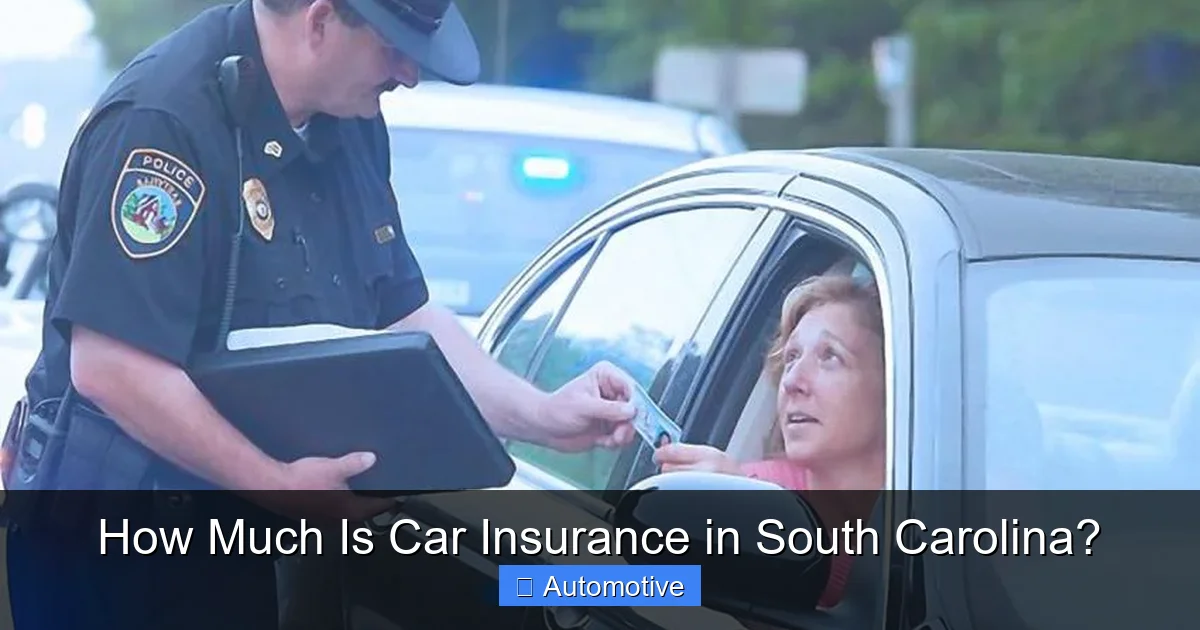
You must carry proof of insurance in your vehicle at all times. Police officers can request it during traffic stops. If you’re caught driving without insurance, the penalties are steep:
– First offense: Up to $500 fine and/or 30 days in jail
– License suspension for up to 30 days
– Vehicle registration suspension
– Possible requirement to file an SR-22 (proof of future financial responsibility)
Repeat offenses lead to longer suspensions and higher fines. Getting insured again after a lapse can also result in much higher premiums due to the “high-risk” label.
What Affects Your Car Insurance Rate in South Carolina?
Visual guide about How Much Is Car Insurance in South Carolina?
Image source: americaninsurance.com
Now that you know the basics, let’s explore the factors that determine how much you’ll actually pay. Insurance companies use complex algorithms to assess risk, but the main variables are consistent across most providers.
Age and Driving Experience
Age is one of the biggest predictors of risk. Teen drivers (16–19) pay the highest premiums due to inexperience and higher accident rates. In South Carolina, a 17-year-old driver might pay $4,000 or more per year for full coverage.
Rates begin to drop around age 25 and continue decreasing until about age 65. After that, premiums may rise slightly due to increased health-related driving risks.
Driving Record
Your driving history speaks volumes. A clean record with no accidents or tickets can earn you significant discounts. But even one incident can spike your rates:
– Speeding ticket: +10–20%
– At-fault accident: +20–50%
– DUI/DWI: +80–150% or more
In South Carolina, a DUI conviction can lead to license suspension, mandatory alcohol education, and an SR-22 requirement for up to three years.
Credit Score
Yes, your credit matters—even for car insurance. South Carolina allows insurers to use credit-based insurance scores to set rates. Drivers with excellent credit (750+) often pay 20–30% less than those with poor credit (below 600).
Why? Studies show a correlation between credit behavior and claim frequency. While controversial, this practice is legal and widespread in SC.
Location (ZIP Code)
Where you live plays a major role. Urban areas like Charleston, Columbia, and Greenville tend to have higher rates due to traffic density, theft rates, and accident frequency. Rural areas like Dillon or Union usually offer lower premiums.
Even within the same city, ZIP codes matter. A home near a busy highway or high-crime neighborhood may cost more to insure than one in a quiet suburb.
Vehicle Type
The car you drive directly impacts your premium. Sports cars, luxury vehicles, and models with high repair costs typically cost more to insure. For example, insuring a Honda Civic will be far cheaper than a BMW X5 or a Dodge Challenger.
Safety ratings also matter. Vehicles with high crash-test scores and advanced safety features (like automatic braking or lane departure warnings) may qualify for discounts.
Annual Mileage
The more you drive, the higher your risk of an accident. Insurers often ask for your annual mileage. If you commute 20,000 miles a year, expect to pay more than someone who drives 5,000 miles. Low-mileage drivers may qualify for usage-based discounts.
Cheapest and Most Expensive Cities for Car Insurance in SC
Let’s zoom in on geography. Car insurance rates can vary dramatically across South Carolina, even between neighboring towns.
Cheapest Cities
According to recent data, the most affordable places for car insurance in South Carolina include:
– **Greenville**: Average full coverage around $1,700/year
– **Spartanburg**: About $1,750/year
– **Anderson**: Roughly $1,800/year
– **Rock Hill**: Around $1,850/year
These areas benefit from lower population density, fewer traffic incidents, and lower crime rates compared to coastal or metropolitan regions.
Most Expensive Cities
On the flip side, drivers in these cities often face higher premiums:
– **Charleston**: Average full coverage near $2,400/year
– **Columbia**: About $2,300/year
– **Myrtle Beach**: Around $2,250/year
– **North Charleston**: Roughly $2,350/year
High traffic volume, tourism-related congestion, and higher rates of vehicle theft contribute to these elevated costs.
Why Location Matters
It’s not just about population. Insurers also consider:
– Frequency of natural disasters (e.g., hurricanes in coastal areas)
– Local repair shop labor rates
– State and local taxes
– Availability of public transportation (less driving = lower risk)
Even moving just 10 miles can change your rate. If you’re house-hunting or relocating, it’s worth checking insurance costs for different neighborhoods.
How to Save Money on Car Insurance in South Carolina
Now for the good part: how to lower your bill. With a few smart strategies, you can reduce your premium without sacrificing coverage.
Shop Around and Compare Quotes
This is the #1 money-saving tip. Rates vary widely between insurers. A policy that costs $1,800 with State Farm might be $1,400 with GEICO or $1,600 with Progressive.
Get at least three quotes annually—especially when your policy renews. Use online comparison tools or work with an independent agent who represents multiple companies.
Take Advantage of Discounts
Most insurers offer a range of discounts. Common ones in South Carolina include:
– **Safe driver discount**: For no accidents or tickets in 3–5 years
– **Multi-policy discount**: Bundling auto and home insurance (often 10–25% off)
– **Good student discount**: For teens with a B average or higher
– **Low-mileage discount**: For driving under 7,500–10,000 miles/year
– **Defensive driving course**: Completing an approved course can save 5–10%
– **Anti-theft device discount**: For vehicles with alarms or tracking systems
– **Pay-in-full discount**: Paying your annual premium upfront instead of monthly
Ask your agent about every discount you might qualify for—many people miss out simply because they don’t ask.
Raise Your Deductible
Your deductible is what you pay out of pocket before insurance kicks in. Raising it from $500 to $1,000 can lower your premium by 10–20%. Just make sure you can afford the higher deductible if you ever need to file a claim.
Improve Your Credit Score
Since credit affects your rate, taking steps to boost your score can pay off. Pay bills on time, reduce credit card balances, and check your credit report for errors. Even a 50-point increase can lead to noticeable savings.
Consider Usage-Based Insurance
Some insurers offer programs like Progressive’s Snapshot or Allstate’s Drivewise. These track your driving habits (speed, braking, mileage) via a mobile app or device. Safe drivers can earn discounts of up to 30%.
Review Your Coverage Annually
Life changes—and so should your policy. If you’ve paid off your car loan, you might no longer need collision coverage. If your car is over 10 years old, comprehensive may not be worth the cost. Regular reviews ensure you’re not over-insured.
Top Car Insurance Companies in South Carolina
Not all insurers are created equal. Some offer better rates, customer service, or claims handling in South Carolina. Based on customer satisfaction, financial strength, and local presence, here are some top choices:
– **State Farm**: Largest insurer in SC, strong local agent network, good for families
– **GEICO**: Often the cheapest for clean-record drivers, user-friendly online tools
– **Progressive**: Competitive rates, especially for high-risk drivers, strong usage-based options
– **Allstate**: Good bundling discounts, solid customer service
– **Farmers**: Strong in rural areas, good for homeowners
It’s also worth checking regional insurers like Southern Farm Bureau or Palmetto State Insurance, which may offer competitive rates for long-time residents.
Final Thoughts: Finding the Right Policy for You
So, how much is car insurance in South Carolina? The answer isn’t one-size-fits-all. While the average hovers around $2,000 per year for full coverage, your actual cost depends on a mix of personal factors, location, and coverage choices.
The key is to stay informed, shop smart, and review your policy regularly. Don’t just accept the first quote you get. Take advantage of discounts, maintain a clean driving record, and consider your long-term needs.
Remember, the cheapest policy isn’t always the best. A low premium might come with high deductibles, poor customer service, or limited coverage. Focus on value—not just price.
By understanding your options and making informed decisions, you can protect yourself, your family, and your wallet—all while staying compliant with South Carolina law.
Frequently Asked Questions
What is the minimum car insurance required in South Carolina?
South Carolina requires drivers to carry at least 25/50/25 liability coverage: $25,000 for bodily injury per person, $50,000 per accident, and $25,000 for property damage. Uninsured motorist coverage with the same limits is also mandatory.
Is car insurance expensive in South Carolina?
Car insurance in South Carolina is slightly above the national average, with full coverage costing around $2,000 per year. Rates vary by location, age, and driving history, but discounts and smart shopping can help reduce costs.
Can I drive without insurance in South Carolina?
No. Driving without insurance is illegal and can result in fines up to $500, license suspension, and vehicle registration holds. Repeat offenses carry harsher penalties, including longer suspensions and higher fines.
How can I lower my car insurance premium in SC?
You can save by shopping around, bundling policies, maintaining a clean driving record, improving your credit score, raising your deductible, and taking advantage of discounts like safe driver or low-mileage offers.
Does my credit score affect my car insurance rate in South Carolina?
Yes. South Carolina allows insurers to use credit-based insurance scores to determine rates. Drivers with higher credit scores typically pay less, while those with poor credit may see significantly higher premiums.
What happens if I’m in an accident with an uninsured driver in SC?
If you have uninsured motorist coverage (which is required), your insurer will cover your medical bills and vehicle damage up to your policy limits. Without it, you may have to sue the at-fault driver or pay out of pocket.
