
Can I Get a Car Loan with a 600 Credit Score?

Getting a car loan with a 600 credit score is possible, but it comes with challenges like higher interest rates and stricter terms. With the right strategy—such as saving for a larger down payment, shopping around for lenders, and improving your credit—you can increase your approval odds and drive away in a reliable vehicle.
Key Takeaways
- Yes, you can get approved: Many lenders specialize in working with borrowers who have fair credit, including those with a 600 score.
- Expect higher interest rates: A 600 credit score typically results in higher APRs, which can significantly increase your total loan cost.
- Save for a larger down payment: Putting down 10–20% can reduce the lender’s risk and improve your approval chances.
- Shop around for the best deal: Compare offers from banks, credit unions, and online lenders to find the most favorable terms.
- Consider a co-signer: Adding someone with good credit can boost your application and help you qualify for lower rates.
- Improve your credit before applying: Paying down debt and correcting errors on your report can raise your score quickly.
- Choose a reliable, affordable car: Opting for a used or fuel-efficient model can keep monthly payments manageable.
📑 Table of Contents
Can I Get a Car Loan with a 600 Credit Score?
If you’re wondering, “Can I get a car loan with a 600 credit score?” the short answer is yes—but it’s not always easy, and the terms may not be ideal. A credit score of 600 falls into the “fair” range, which means lenders see you as a moderate risk. While this doesn’t automatically disqualify you from financing a vehicle, it does mean you’ll need to be strategic about how you approach the process.
Many people assume that a low credit score shuts the door on car ownership, but that’s not entirely true. There are lenders who specialize in working with borrowers who have less-than-perfect credit. However, these loans often come with higher interest rates, stricter repayment terms, and sometimes even requirements like a co-signer or a larger down payment. The key is knowing your options and preparing your application to stand out—even with a 600 score.
In this guide, we’ll walk you through everything you need to know about securing a car loan with a 600 credit score. From understanding how your credit affects your loan terms to practical steps you can take to improve your chances, we’ll cover it all. Whether you’re buying your first car or replacing an old one, this information will help you make smart, informed decisions.
Understanding What a 600 Credit Score Means
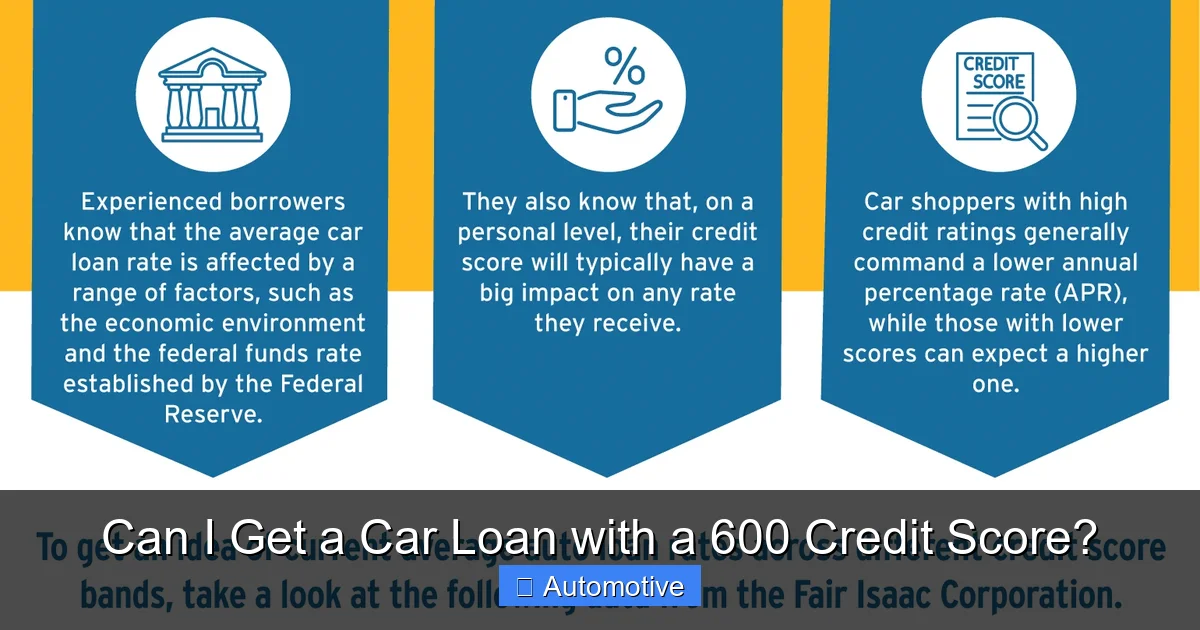
Visual guide about Can I Get a Car Loan with a 600 Credit Score?
Image source: loanry.com
Before diving into loan options, it’s important to understand what a 600 credit score actually means. Credit scores typically range from 300 to 850, and they’re calculated based on factors like payment history, credit utilization, length of credit history, types of credit, and recent credit inquiries. A score of 600 is considered “fair” by most scoring models, including FICO and VantageScore.
Lenders use your credit score to assess how likely you are to repay a loan on time. A higher score signals lower risk, while a lower score suggests you may have had financial difficulties in the past—like late payments, collections, or high credit card balances. With a 600 score, lenders may worry that you could miss payments or default on the loan, which is why they often charge higher interest rates to offset that risk.
It’s also worth noting that a 600 score isn’t the same across all lenders. Some may view it as borderline acceptable, while others might consider it too risky. This is why shopping around is so important. One lender might reject your application, while another could approve it with manageable terms. Understanding your credit profile—and how it’s perceived—can help you target the right lenders and avoid unnecessary rejections.
How Lenders View a 600 Credit Score
When you apply for a car loan with a 600 credit score, lenders will look at more than just the number. They’ll review your full credit report, income, employment history, debt-to-income ratio (DTI), and the size of your down payment. A strong income and stable job can sometimes outweigh a lower credit score, especially if you’re applying with a lender that specializes in subprime auto loans.
Some lenders have specific credit score thresholds. For example, traditional banks and credit unions might prefer borrowers with scores above 660, while online lenders and buy-here-pay-here dealerships may accept scores as low as 500. However, the lower your score, the more scrutiny your application will face. You may be asked to provide additional documentation, such as proof of income or residence, to prove you can afford the monthly payments.
It’s also common for lenders to charge higher interest rates to borrowers with fair credit. For instance, someone with a 720 score might qualify for an APR of 5%, while someone with a 600 score could be offered 12% or higher. Over the life of a $20,000, 60-month loan, that difference could cost you thousands of dollars in extra interest. That’s why it’s crucial to understand the full cost of your loan—not just the monthly payment.
Why Your Credit Score Matters for Car Loans
Your credit score plays a major role in determining not only whether you’ll be approved for a car loan but also how much you’ll pay for it. Lenders use your score to set the interest rate, which directly affects your monthly payment and the total amount you’ll repay over time. A higher score means lower rates and more savings.
For example, let’s say you’re financing a $25,000 car with a 60-month term. With a 600 credit score, you might qualify for an APR of 14%. That would result in monthly payments of about $580 and total interest paid of over $9,800. In contrast, someone with a 720 score might get an APR of 6%, leading to monthly payments of $483 and total interest of just $3,980. That’s a difference of nearly $6,000—money that could go toward insurance, maintenance, or even a better car.
Beyond interest rates, your credit score can also affect other loan terms. Some lenders may require a larger down payment or shorter loan term for borrowers with lower scores. Others might limit the types of vehicles you can finance—such as only allowing used cars under a certain age or mileage. Understanding these potential restrictions can help you set realistic expectations and avoid surprises during the application process.
How to Improve Your Chances of Approval
Visual guide about Can I Get a Car Loan with a 600 Credit Score?
Image source: s.yimg.com
Even with a 600 credit score, there are several steps you can take to improve your chances of getting approved for a car loan. The key is to make your application as strong as possible by addressing potential red flags and demonstrating financial responsibility. Here are some proven strategies to boost your approval odds.
Save for a Larger Down Payment
One of the most effective ways to strengthen your loan application is to save for a larger down payment. Putting down 10% to 20% of the car’s purchase price reduces the amount you need to finance, which lowers the lender’s risk. It also shows that you’re financially committed and capable of saving money—qualities that lenders appreciate.
For example, if you’re buying a $20,000 car, a $4,000 down payment (20%) means you only need to borrow $16,000. This smaller loan amount is easier to approve and may qualify you for better terms. Plus, a larger down payment can reduce your monthly payments, making the loan more affordable and less likely to strain your budget.
If you’re not able to save 20%, even a smaller down payment—like $1,000 or $2,000—can still make a difference. It signals to the lender that you’re serious about the purchase and willing to invest your own money. Just be sure to keep some savings aside for emergencies, so you don’t end up financially stretched after buying the car.
Shop Around for the Right Lender
Not all lenders are created equal, especially when it comes to working with borrowers who have fair credit. Some specialize in subprime auto loans and are more willing to approve applicants with lower scores. Others may offer competitive rates even to those with less-than-perfect credit, especially if you have strong income or a co-signer.
Start by checking with local credit unions, which often have more flexible lending standards than big banks. Credit unions are member-owned and may be more willing to work with you if you have a good relationship with them. Online lenders like LightStream, Capital One, or myAutoloan also offer pre-qualification tools that let you compare rates without affecting your credit score.
Avoid applying to too many lenders at once, as each application can trigger a hard credit inquiry that temporarily lowers your score. Instead, use pre-qualification tools to narrow down your options, then submit formal applications to your top 2–3 choices. This approach helps you find the best deal while minimizing the impact on your credit.
Consider a Co-Signer
If you’re struggling to get approved on your own, adding a co-signer with good credit can significantly improve your chances. A co-signer agrees to take responsibility for the loan if you can’t make payments, which reduces the lender’s risk and increases the likelihood of approval.
Keep in mind that co-signing is a big responsibility. If you miss payments, it can damage your co-signer’s credit and strain your relationship. Make sure you choose someone you trust—and who trusts you—and only apply for a loan amount you’re confident you can afford. Once you’ve built up your credit, you may be able to refinance the loan in your name alone, removing the co-signer from the agreement.
Improve Your Credit Before Applying
If you have a few weeks or months before you need a car, consider taking steps to improve your credit score. Even a small increase—say, from 600 to 620—can open up better loan options and lower interest rates.
Start by checking your credit report for errors. You’re entitled to a free report from each of the three major bureaus (Equifax, Experian, and TransUnion) once a year at AnnualCreditReport.com. Look for inaccuracies like late payments that were actually on time, accounts that aren’t yours, or incorrect balances. Dispute any errors you find—they could be dragging your score down.
Next, focus on paying down high credit card balances. Credit utilization—the percentage of your available credit that you’re using—accounts for about 30% of your FICO score. Keeping your utilization below 30%, and ideally below 10%, can give your score a quick boost. For example, if you have a $5,000 credit limit, try to keep your balance under $1,500.
Finally, make all your payments on time. Payment history is the largest factor in your credit score, so even one late payment can hurt. Set up automatic payments or reminders to ensure you never miss a due date. Over time, consistent on-time payments will help rebuild your credit and improve your loan prospects.
Types of Lenders That Accept 600 Credit Scores

Visual guide about Can I Get a Car Loan with a 600 Credit Score?
Image source: trybeem.com
When you have a 600 credit score, your best bet is to target lenders who are known for working with borrowers in the fair credit range. These lenders understand that people make financial mistakes and are often more flexible with their approval criteria. Here are the main types of lenders to consider.
Credit Unions
Credit unions are often the most borrower-friendly option for people with fair credit. Because they’re not-for-profit organizations, they tend to offer lower interest rates and more personalized service than traditional banks. Many credit unions also have programs specifically designed to help members rebuild their credit.
To join a credit union, you typically need to meet certain eligibility requirements, such as living in a specific area, working for a particular employer, or belonging to a certain group. Once you’re a member, you can apply for a car loan with more confidence, knowing that the lender is invested in your success.
Online Lenders
Online lenders have become increasingly popular for auto financing, especially for borrowers with less-than-perfect credit. Companies like LightStream, Upstart, and myAutoloan offer pre-qualification tools that let you see potential rates and terms without a hard credit check. This makes it easy to compare offers and find the best deal.
Many online lenders also have faster approval processes and more flexible requirements than traditional banks. Some even allow you to use your loan to buy a car from a private seller, which can expand your options. Just be sure to read the fine print and watch out for hidden fees or prepayment penalties.
Buy-Here-Pay-Here Dealerships
Buy-here-pay-here (BHPH) dealerships are another option, though they come with significant drawbacks. These dealerships finance the cars they sell directly, often without checking your credit. While this can be helpful if you’ve been turned down elsewhere, the trade-offs are usually steep.
BHPH loans typically come with very high interest rates—sometimes 20% or more—and require weekly or biweekly payments. The cars are often older, high-mileage models with limited warranties. Additionally, many BHPH dealers don’t report your payments to the credit bureaus, so you won’t build credit even if you pay on time.
If you do consider a BHPH dealership, proceed with caution. Read the contract carefully, ask about the total cost of the loan, and make sure the car has been inspected. It’s often better to save a little longer and qualify for a traditional loan than to get stuck in a high-cost BHPH agreement.
Tips for Getting the Best Loan Terms
Once you’ve found a lender that’s willing to work with your 600 credit score, the next step is to secure the best possible loan terms. Even small improvements in your rate or down payment can save you hundreds or thousands of dollars over the life of the loan. Here’s how to get the most value for your money.
Negotiate the Purchase Price First
Before discussing financing, negotiate the price of the car itself. The lower the purchase price, the less you’ll need to borrow—and the easier it will be to get approved. Use tools like Kelley Blue Book or Edmunds to research the fair market value of the vehicle you want, then use that information to negotiate with the dealer.
Once you’ve agreed on a price, then talk about financing. This prevents the dealer from inflating the loan amount to cover their profit margin. It also gives you more control over the terms and helps you avoid being pressured into a bad deal.
Choose a Shorter Loan Term
While longer loan terms (like 72 or 84 months) can lower your monthly payment, they often result in higher total interest costs. With a 600 credit score, you’re already facing higher rates, so adding more time to the loan can make it even more expensive.
Opting for a shorter term—like 48 or 60 months—can save you money in the long run, even if it means a slightly higher monthly payment. It also helps you build equity in the car faster and pay it off sooner. Just make sure the payment fits comfortably within your budget.
Make Extra Payments When Possible
If your loan doesn’t have a prepayment penalty, consider making extra payments whenever you can. Even an extra $20 or $50 per month can reduce your principal balance faster and save you hundreds in interest.
For example, on a $20,000 loan at 14% APR over 60 months, paying an extra $50 per month could save you over $1,200 in interest and pay off the loan nearly a year early. Use a loan calculator to see how extra payments affect your payoff timeline and total cost.
Conclusion
So, can you get a car loan with a 600 credit score? Absolutely. While it may require more effort and come with higher costs, millions of people with fair credit successfully finance vehicles every year. The key is to be proactive, do your research, and take steps to strengthen your application.
Start by understanding your credit profile and targeting lenders who work with borrowers like you. Save for a down payment, consider a co-signer, and shop around for the best rates. If possible, improve your credit before applying to open up even more options. And once you’re approved, choose a loan term and payment plan that fits your budget.
Remember, a car loan isn’t just about getting from point A to point B—it’s also an opportunity to rebuild your credit. By making on-time payments and managing your finances responsibly, you can improve your score over time and qualify for better loans in the future. With the right approach, a 600 credit score doesn’t have to stand in the way of car ownership.
Frequently Asked Questions
Can I get a car loan with a 600 credit score?
Yes, you can get a car loan with a 600 credit score. Many lenders, including credit unions and online lenders, work with borrowers who have fair credit. However, you may face higher interest rates and stricter terms.
What interest rate can I expect with a 600 credit score?
With a 600 credit score, you can expect interest rates between 10% and 18%, depending on the lender and your financial profile. Rates may be higher for longer loan terms or if you have a high debt-to-income ratio.
Do I need a co-signer for a car loan with a 600 credit score?
A co-signer isn’t required, but it can improve your chances of approval and help you qualify for lower rates. A co-signer with good credit takes responsibility for the loan if you can’t make payments.
Can I buy a new car with a 600 credit score?
Yes, but it may be more difficult. Some lenders prefer to finance used cars for borrowers with lower credit scores. You may also need a larger down payment or shorter loan term to qualify for a new vehicle.
Will applying for a car loan hurt my credit score?
Applying for a loan triggers a hard credit inquiry, which can lower your score by a few points temporarily. However, shopping around with pre-qualification tools (which use soft inquiries) can help you compare offers without affecting your credit.
How can I improve my credit before applying for a car loan?
Pay down credit card balances, correct errors on your credit report, and make all payments on time. Even small improvements—like raising your score from 600 to 620—can lead to better loan terms.
