
Should I Buy an Extended Warranty on a Used Car

Deciding whether to buy an extended warranty on a used car isn’t always straightforward. While it can offer peace of mind and financial protection against unexpected repairs, it’s not always the best value—especially if the car is reliable or already covered by a manufacturer warranty. Understanding your vehicle’s condition, repair costs, and warranty terms is key to making a smart choice.
Buying a used car can be a smart financial move—you avoid the steep depreciation that hits new vehicles in their first few years, and you often get more car for your money. But with that savings comes a trade-off: used cars come with more uncertainty. You don’t always know how well the previous owner maintained it, and mechanical issues can pop up when you least expect them. That’s where the idea of an extended warranty comes in. It sounds reassuring: pay a little extra now to avoid a big repair bill later. But is it really worth it?
The answer isn’t a simple yes or no. Whether you should buy an extended warranty on a used car depends on several factors—your budget, the car’s make and model, how long you plan to keep it, and even your tolerance for risk. Some people sleep better knowing they’re covered no matter what. Others prefer to save the money and set aside a repair fund instead. In this guide, we’ll walk you through everything you need to know to make an informed decision. We’ll break down what extended warranties actually cover, how much they cost, and when they make financial sense. By the end, you’ll have the tools to decide if an extended warranty is a smart investment—or just an expensive safety net you don’t really need.
Key Takeaways
- Extended warranties can reduce stress over costly repairs: They cover major components like the engine and transmission, which can save you thousands if something breaks down.
- Not all used cars benefit from an extended warranty: Reliable models with low repair rates may not need one, especially if they’re still under the original factory warranty.
- Read the fine print carefully: Coverage varies widely—some plans exclude common issues or require expensive maintenance to stay valid.
- Shop around for the best deal: Dealerships often markup warranty prices; third-party providers may offer better rates and more flexible terms.
- Consider your driving habits and budget: If you plan to keep the car long-term or drive a lot, a warranty might make more sense than for short-term use.
- Get a pre-purchase inspection first: Knowing the car’s true condition helps you assess whether a warranty is necessary.
- Weigh the cost vs. potential repair expenses: If the warranty costs more than the average annual repair bill for that model, it may not be worth it.
📑 Table of Contents
What Is an Extended Warranty on a Used Car?
An extended warranty—also called a vehicle service contract—is essentially insurance for your car’s mechanical systems. It kicks in after the manufacturer’s original warranty expires and covers the cost of repairs for specific parts and systems. Think of it like health insurance for your vehicle: you pay a premium (the cost of the warranty), and in return, the provider agrees to pay for certain repairs if something goes wrong.
These warranties are typically sold by dealerships, but they’re often administered by third-party companies. They’re not the same as a manufacturer’s warranty, which comes directly from the automaker and is included when you buy a new car. Extended warranties are optional add-ons, and they can vary widely in terms of coverage, duration, and cost.
How Is It Different from a Manufacturer Warranty?
The main difference between an extended warranty and a manufacturer warranty is who provides it and when it applies. A manufacturer warranty is included with a new car and usually covers repairs for a set period—like 3 years or 36,000 miles. It’s backed by the automaker and often includes perks like roadside assistance and rental car reimbursement.
An extended warranty, on the other hand, is purchased separately and starts after the factory warranty ends. It’s not backed by the carmaker (unless it’s a certified pre-owned program), but by a third-party insurer. Because of this, the terms can be more restrictive, and the coverage may not be as comprehensive.
What Does an Extended Warranty Typically Cover?
Coverage depends on the type of plan you choose. Most extended warranties fall into one of three categories:
– **Powertrain Coverage:** This is the most basic level. It covers the engine, transmission, and drivetrain—the core components that make the car move. It’s usually the cheapest option but offers the least protection.
– **Bumper-to-Bumper Coverage:** This is more comprehensive and covers nearly everything except wear-and-tear items like brakes, tires, and wiper blades. It’s similar to a new car warranty but often has more exclusions.
– **Named Component Coverage:** This falls in between. It covers a list of specific parts—like the air conditioning, electrical system, or suspension—but not everything.
Some plans also offer additional benefits like trip interruption coverage (if your car breaks down far from home), rental car reimbursement, and 24/7 roadside assistance. Always read the contract to see exactly what’s included—and what’s not.
Pros and Cons of Buying an Extended Warranty
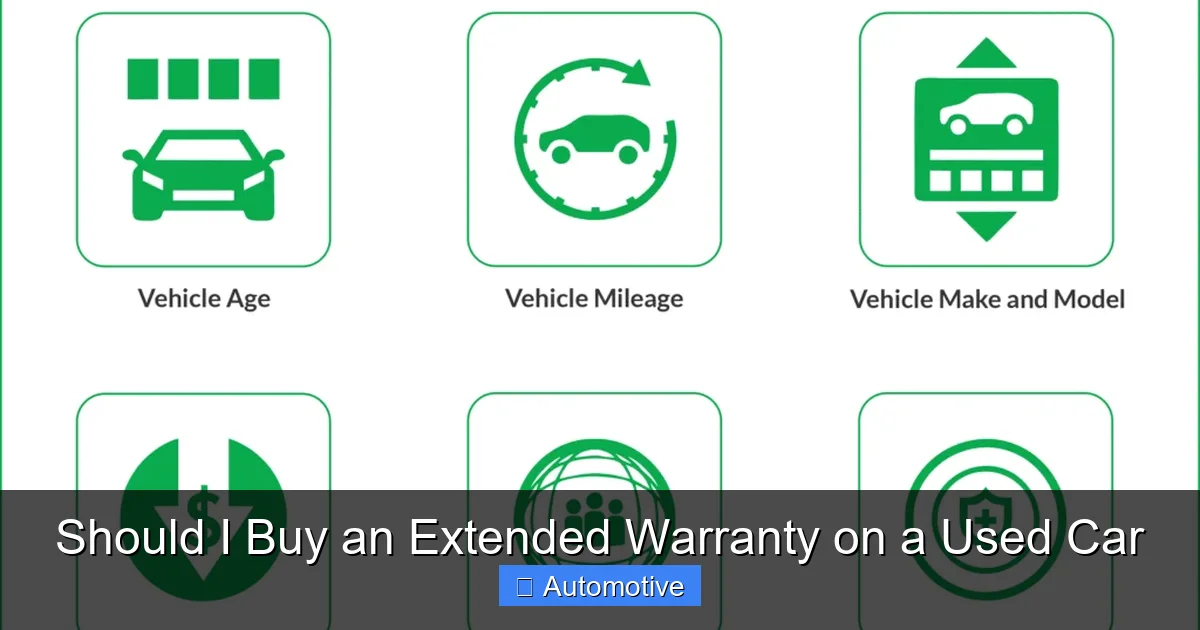
Visual guide about Should I Buy an Extended Warranty on a Used Car
Image source: d1fpslrlhpinmq.cloudfront.net
Like any financial decision, buying an extended warranty has both advantages and drawbacks. Let’s look at the key pros and cons so you can weigh them against your personal situation.
The Pros: Peace of Mind and Financial Protection
One of the biggest benefits of an extended warranty is peace of mind. If you’re not mechanically inclined or don’t have a trusted mechanic on speed dial, the idea of a major repair can be stressful. An extended warranty can ease that anxiety by ensuring you won’t be stuck with a $3,000 transmission bill out of the blue.
It can also be a smart move if you’re buying an older or high-mileage car. These vehicles are more likely to need repairs, and the cost of fixing major components can easily exceed the price of the warranty. For example, replacing a transmission can cost $4,000 or more—far more than most extended warranties cost.
Another advantage is predictability. With a warranty, you know exactly how much you’re paying upfront. Without one, repair costs can vary wildly. If you’re on a tight budget, that predictability can be valuable.
The Cons: Cost, Coverage Gaps, and Overlap
On the flip side, extended warranties can be expensive. Prices typically range from $1,000 to $3,000 or more, depending on the car, coverage level, and provider. If the car never needs major repairs, that money could have been saved or used for something else.
There’s also the issue of coverage gaps. Many warranties exclude common problems like electrical issues, sensors, or air conditioning failures. Some require you to follow strict maintenance schedules—like oil changes every 3,000 miles—or the warranty becomes void. If you miss a service appointment or use the wrong type of oil, you could lose coverage.
Another potential downside is overlap. If the car is still under the manufacturer’s warranty, buying an extended warranty right away might be redundant. You’d be paying for coverage you already have.
When Does an Extended Warranty Make Sense?
Visual guide about Should I Buy an Extended Warranty on a Used Car
Image source: shunauto.com
So, when is it actually worth it to buy an extended warranty on a used car? Let’s look at a few scenarios where it might be a smart investment.
You’re Buying a High-Mileage or Older Vehicle
If the car has over 80,000 miles or is more than 8 years old, the risk of mechanical failure increases. In this case, an extended warranty can act as a financial safety net. For example, a 2015 Honda Accord with 120,000 miles might be reliable, but the transmission or engine could fail soon. A warranty could save you from a costly surprise.
The Car Has a History of Expensive Repairs
Some cars are just more prone to problems. Luxury brands like BMW or Mercedes often have higher repair costs, even for minor issues. If you’re buying a used luxury car, an extended warranty might be worth considering—especially if it’s no longer under factory warranty.
Do your research. Check reliability ratings on sites like Consumer Reports or J.D. Power. Look up common issues for that make and model. If the car has a history of expensive repairs, a warranty could pay for itself.
You Plan to Keep the Car for Many Years
If you’re planning to drive the car for 5, 7, or even 10 more years, the odds of needing a major repair go up. An extended warranty can help spread out the risk over time. It’s like paying a little each month to avoid a huge bill later.
For example, if you buy a 2018 Toyota Camry with 60,000 miles and plan to drive it until it hits 150,000, a 5-year extended warranty could be a smart move. You’re covering the high-risk years when major components might fail.
You Don’t Have a Repair Fund
If you don’t have savings set aside for car repairs, an extended warranty can provide a financial cushion. Without one, a $2,000 repair could force you to use a credit card or take out a loan. A warranty ensures you won’t be caught off guard.
That said, if you can build a repair fund—say, $200 a month—you might be better off saving that money instead. Over time, you could accumulate enough to cover most repairs, and you’d avoid the markup and fees that come with warranties.
When Should You Skip the Extended Warranty?
Visual guide about Should I Buy an Extended Warranty on a Used Car
Image source: cdn.abcotvs.com
Not every used car needs an extended warranty. In fact, in many cases, it’s better to skip it. Here’s when you might want to think twice.
The Car Is Still Under Manufacturer Warranty
If the car is still covered by the original factory warranty—especially a powertrain warranty—you may not need an extended one right away. For example, many Hyundai and Kia models come with a 10-year/100,000-mile powertrain warranty. If you’re buying a used 2020 Hyundai Elantra with 40,000 miles, you’ve still got years of coverage left. Paying for an extended warranty now would be redundant.
The Car Is Known for Reliability
Some cars are just built to last. Brands like Toyota, Honda, and Subaru have excellent reputations for reliability. If you’re buying a well-maintained used Corolla or CR-V, the chances of a major breakdown are low. In this case, the cost of the warranty might outweigh the potential benefit.
For example, a 2019 Toyota RAV4 with 50,000 miles is unlikely to need a $3,000 repair in the next few years. Paying $2,000 for a warranty might not be worth it when you could save that money or use it for maintenance.
You’re Buying from a Private Seller
Private sellers usually don’t offer extended warranties, and that’s okay. In fact, it’s often better to buy from a private seller and skip the warranty altogether. You’ll likely pay less for the car, and you can use the savings to build a repair fund or pay for a pre-purchase inspection.
Dealerships often push extended warranties because they make a profit on them—sometimes 50% or more. Buying from a private seller avoids that markup.
You’re Only Keeping the Car for a Few Years
If you plan to sell the car in 2 or 3 years, an extended warranty might not be worth it. Most warranties are transferable, but the buyer may not want to pay extra for it. Plus, the car is less likely to need major repairs in such a short time.
For example, if you’re buying a used car for a college student who will graduate in three years, a warranty might not make sense. The car will likely stay in good condition, and you’ll avoid the upfront cost.
How to Choose the Right Extended Warranty
If you’ve decided an extended warranty makes sense for your situation, the next step is choosing the right one. Not all warranties are created equal, and a bad deal can cost you more than it saves.
Shop Around—Don’t Buy at the Dealership
Dealerships often sell extended warranties at a steep markup. They may pressure you to buy on the spot, but don’t let them rush you. Take the time to compare prices from third-party providers like Endurance, CarShield, or Olive.
These companies often offer lower prices and more flexible terms. You can even buy a warranty online and have it ready before you finalize the car purchase. This gives you leverage to negotiate a better deal at the dealership—or walk away if they won’t match it.
Read the Contract Carefully
This can’t be stressed enough: read the fine print. Look for exclusions, deductibles, claim limits, and maintenance requirements. Some warranties only cover “failure due to normal wear,” which can be interpreted narrowly. Others require you to use specific repair shops or OEM parts.
Ask questions. If something isn’t clear, don’t sign until you understand it. A good provider will explain the terms in plain language.
Check the Provider’s Reputation
Not all warranty companies are trustworthy. Some have been accused of denying valid claims or making it hard to get repairs approved. Check reviews on sites like the Better Business Bureau, Trustpilot, or Reddit.
Look for companies with high ratings and a history of paying claims fairly. Avoid providers that pressure you to buy or make unrealistic promises.
Consider the Deductible
Most extended warranties have a deductible—the amount you pay out of pocket for each repair. This can range from $50 to $200 or more. A lower deductible means less out-of-pocket cost, but it may increase the overall price of the warranty.
Choose a deductible that fits your budget. If you can afford $100 per repair, a $100 deductible might be fine. But if you’re on a tight budget, a $50 deductible could save you money in the long run.
Alternatives to Extended Warranties
An extended warranty isn’t the only way to protect yourself from repair costs. Here are a few alternatives to consider.
Build a Repair Fund
Instead of paying for a warranty, set aside money each month for repairs. Even $100 a month adds up quickly. In a year, you’ll have $1,200—enough to cover most common repairs.
This approach gives you more control. You decide when and where to spend the money, and you don’t have to worry about claim denials or coverage gaps.
Get a Pre-Purchase Inspection
Before buying any used car, have it inspected by a trusted mechanic. This typically costs $100 to $200 but can save you thousands by revealing hidden problems.
If the inspection shows the car is in good condition, you might feel more confident skipping the warranty. If it reveals issues, you can negotiate a lower price or walk away.
Choose a Certified Pre-Owned (CPO) Vehicle
Certified pre-owned cars come with extended manufacturer warranties and have been inspected and refurbished by the dealer. While they cost more than non-CPO cars, the added protection can be worth it.
For example, a CPO Honda comes with a 7-year/100,000-mile powertrain warranty and a 12-month/12,000-mile bumper-to-bumper warranty. That’s often better than a third-party extended warranty.
Final Thoughts: Is It Worth It?
So, should you buy an extended warranty on a used car? The answer depends on your individual circumstances. If you’re buying a high-mileage car, a model with a history of expensive repairs, or you plan to keep the vehicle for many years, a warranty can be a smart investment. It offers peace of mind and financial protection against unexpected breakdowns.
But if the car is still under warranty, is known for reliability, or you’re only keeping it for a short time, you might be better off skipping it. The cost could outweigh the benefit, and you’d be better served by building a repair fund or choosing a CPO vehicle.
The key is to do your homework. Research the car’s reliability, compare warranty options, and read the contract carefully. Don’t let a salesperson pressure you into a decision. Take your time, ask questions, and choose what’s best for your budget and lifestyle.
At the end of the day, an extended warranty is just one tool in your car-buying toolkit. Used wisely, it can save you money and stress. Used poorly, it can be a waste of cash. Make the choice that gives you confidence—not just coverage.
Frequently Asked Questions
Is an extended warranty the same as car insurance?
No, an extended warranty is not the same as car insurance. Car insurance covers accidents, theft, and liability, while an extended warranty covers mechanical repairs after the factory warranty expires. They serve different purposes and are not interchangeable.
Can I cancel an extended warranty?
Yes, many extended warranties can be canceled, but the process and refund depend on the provider and contract terms. Some offer a full refund within a short window (like 30 days), while others may charge a cancellation fee or prorate the refund.
Do extended warranties cover routine maintenance?
Generally, no. Extended warranties cover unexpected mechanical failures, not routine maintenance like oil changes, tire rotations, or brake pads. Some plans may require regular maintenance to stay valid, but they don’t pay for it.
Are extended warranties transferable?
Many are, but it depends on the provider. Transferable warranties can increase the resale value of your car, as the new owner gets continued coverage. Check the contract to see if transfer fees apply.
Can I use any repair shop with an extended warranty?
It depends on the plan. Some require you to use approved repair facilities, while others allow any licensed mechanic. Make sure you understand the rules before signing, as using an unauthorized shop could void coverage.
Do extended warranties cover pre-existing conditions?
No, most extended warranties do not cover problems that existed before the purchase. That’s why a pre-purchase inspection is so important—it helps ensure the car is in good condition before you buy the warranty.