
My Car Starts Sometimes and Sometimes It Doesn’t

When your car starts sometimes and sometimes it doesn’t, it’s often a sign of an underlying electrical or mechanical issue. This frustrating problem can stem from a weak battery, faulty starter, or fuel delivery issues—but don’t panic. With the right diagnosis and troubleshooting steps, you can get your vehicle back to reliable performance.
Key Takeaways
- Battery issues are the most common cause: A weak or dying battery may provide just enough power to start the engine occasionally, especially in cold weather.
- Faulty starter motor or solenoid: If the starter clicks but doesn’t turn the engine, it could be failing intermittently due to worn components.
- Fuel pump or filter problems: Inconsistent fuel pressure can prevent the engine from starting, particularly after the car has been sitting.
- Ignition switch or key fob malfunctions: Worn ignition switches or low key fob battery can disrupt the signal needed to start the car.
- Bad ground connections or corroded terminals: Poor electrical connections can cause sporadic starting issues, even if the battery tests fine.
- Crankshaft position sensor failure: This sensor tells the engine when to fire; if it fails intermittently, the car may not start at all.
- Professional diagnosis is key: Intermittent problems are hard to replicate, so a mechanic with the right tools can pinpoint the root cause faster.
📑 Table of Contents
Why Does My Car Start Sometimes and Sometimes It Doesn’t?
You’re running late for work, you hop in the car, turn the key—and nothing. No crank, no engine turnover. You try again. Nothing. You wait a few minutes, try once more… and suddenly, the engine roars to life like nothing happened. Sound familiar? If your car starts sometimes and sometimes it doesn’t, you’re not alone. This frustrating, unpredictable behavior is one of the most common—and confusing—car problems drivers face.
Unlike a car that won’t start at all, an intermittent starting issue can be tricky to diagnose. It doesn’t happen every time, which makes it harder to pinpoint the exact cause. But here’s the good news: most of these problems are fixable, and many don’t require a full engine overhaul. The key is understanding what’s happening under the hood—and knowing where to look first.
In this guide, we’ll walk you through the most likely reasons your car starts inconsistently, how to identify them, and what you can do about it. Whether you’re a DIY enthusiast or prefer to leave it to the pros, this article will give you the knowledge to take control of the situation. Let’s dive in.
Common Causes of Intermittent Car Starting Problems
Visual guide about My Car Starts Sometimes and Sometimes It Doesn’t
Image source: car-us.com
When your car starts sometimes and sometimes it doesn’t, it’s usually due to one of several underlying issues. These problems can range from simple fixes—like a loose battery cable—to more complex electrical faults. The key is to approach the diagnosis methodically. Start with the most common causes and work your way down.
Let’s break down the top culprits behind this frustrating behavior.
Battery Issues: The #1 Suspect
The battery is the heart of your car’s electrical system. It provides the initial surge of power needed to crank the engine and start the combustion process. If your battery is weak, old, or damaged, it may not deliver enough voltage consistently—leading to those hit-or-miss starts.
A healthy car battery should read around 12.6 volts when the engine is off. If it drops below 12.4 volts, it’s considered low. But here’s the catch: a weak battery might still show 12.2 volts on a multimeter, which seems okay—until you try to start the car. During cranking, the voltage can dip dramatically, especially if the battery is nearing the end of its life (typically 3–5 years).
Signs of a bad battery include:
– Slow cranking (the engine turns over sluggishly)
– Dim headlights when the car is off
– Clicking sound when turning the key
– Needing a jump start after the car sits overnight
What you can do: Test your battery with a multimeter or have it checked at an auto parts store (many offer free testing). If it’s more than four years old, consider replacing it—even if it seems to work sometimes.
Starter Motor and Solenoid Problems
The starter motor is responsible for physically turning the engine over when you turn the key. It’s activated by the starter solenoid, which acts like a relay, sending a burst of electricity to the motor. If either component is failing, your car may start one day and not the next.
A common symptom is a single loud click when you turn the key—but no engine turnover. This usually means the solenoid is engaging, but the motor isn’t spinning. Over time, internal brushes or contacts in the starter can wear out, causing intermittent operation.
Other signs include:
– Grinding noise during startup
– Starter stays engaged after the engine starts (rare but dangerous)
– Engine cranks slowly or not at all, especially when hot
What you can do: Tap the starter gently with a hammer while someone tries to start the car. If it starts, the starter is likely failing. This is a temporary fix—replace the starter as soon as possible.
Fuel Delivery Issues
Your engine needs fuel to run. If the fuel pump, fuel filter, or fuel injectors aren’t working properly, the engine may not get the right amount of fuel—especially when it’s cold or after sitting.
The fuel pump sits inside the gas tank and pressurizes the fuel system. Over time, it can wear out or get clogged with debris. A failing fuel pump often works intermittently—starting fine one day, then struggling the next.
Signs of fuel delivery problems:
– Engine cranks but won’t start
– Sputtering or stalling shortly after starting
– Long crank times (engine turns over for several seconds before firing)
– Reduced fuel pressure (can be tested with a fuel pressure gauge)
What you can do: Listen for the fuel pump priming when you turn the key to “on” (before starting). You should hear a faint hum from the rear of the car for a few seconds. If you don’t hear it, the pump may be failing. Also, replace your fuel filter every 30,000–60,000 miles as recommended.
Ignition Switch and Key Fob Troubles
Modern cars rely heavily on electronic ignition systems. The ignition switch sends power to the starter and other systems when you turn the key. If the switch is worn or damaged, it may not make consistent contact—leading to random no-starts.
Similarly, if your car uses a key fob or push-button start, a low battery in the fob can prevent the car from recognizing the key. Some cars will still start if you hold the fob near the start button, but it’s a sign the fob needs a new battery.
Signs of ignition issues:
– Dashboard lights flicker or don’t come on
– Car starts only when the key is jiggled
– Push-button start doesn’t respond unless the fob is held close
– Electrical accessories (radio, windows) don’t work
What you can do: Try using a spare key or replacing the fob battery. If the problem persists, have the ignition switch inspected by a mechanic.
Electrical Connections and Grounds
Even if your battery and starter are fine, poor electrical connections can cause intermittent starting problems. Corroded battery terminals, loose cables, or bad ground connections can disrupt the flow of electricity.
The ground cable connects the battery’s negative terminal to the engine block or chassis. If this connection is loose or corroded, the starter may not get enough power to turn the engine.
Signs of bad connections:
– Visible corrosion (white or green powder) on battery terminals
– Loose or wobbly battery cables
– Intermittent electrical issues (lights flickering, radio cutting out)
What you can do: Clean the battery terminals with a wire brush and baking soda solution. Tighten all connections securely. Check the ground cable where it connects to the engine—clean and tighten it if needed.
Less Common but Important Causes
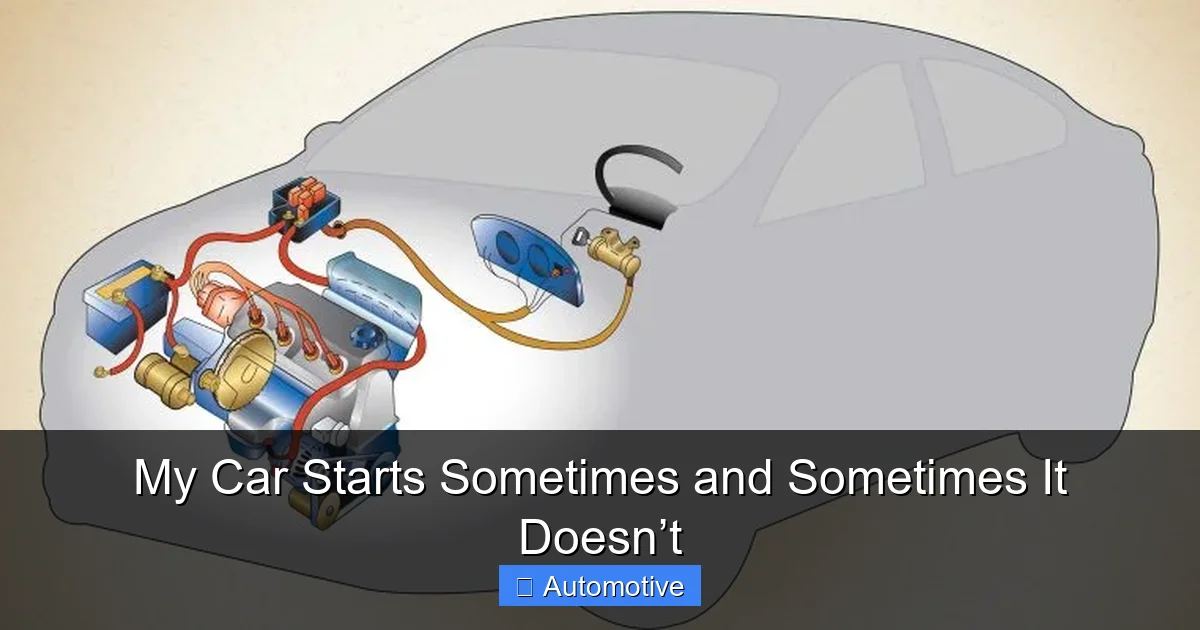
Visual guide about My Car Starts Sometimes and Sometimes It Doesn’t
Image source: carglassadvisor.com
While the issues above cover most cases, there are a few less common—but still important—causes of intermittent starting problems. These often require more advanced diagnostics.
Crankshaft Position Sensor Failure
The crankshaft position sensor (CKP) monitors the rotation of the crankshaft and tells the engine control unit (ECU) when to fire the spark plugs. If this sensor fails intermittently, the ECU may not receive the signal to start the engine—even if everything else is working.
This sensor is critical for engine operation. When it fails completely, the car won’t start at all. But when it’s failing intermittently, you might experience random no-starts, especially when the engine is hot.
Signs of a bad CKP sensor:
– Engine cranks but doesn’t start
– Stalling shortly after starting
– Check Engine Light with codes like P0335 or P0336
– Intermittent misfires
What you can do: Use an OBD2 scanner to check for diagnostic trouble codes. If the CKP sensor is suspected, have it tested or replaced by a professional.
Camshaft Position Sensor Issues
Similar to the crankshaft sensor, the camshaft position sensor (CMP) helps the ECU determine the correct timing for fuel injection and spark. While less common than CKP failure, a faulty CMP sensor can also cause intermittent starting problems.
Signs include:
– Long crank times
– Rough idle after starting
– Check Engine Light with codes like P0340
What you can do: Again, use an OBD2 scanner to check for codes. Replacement is usually straightforward but may require timing alignment on some engines.
Faulty Engine Control Unit (ECU)
The ECU is the brain of your car’s engine management system. While rare, a failing ECU can cause all sorts of electrical gremlins—including intermittent starting issues.
Signs of ECU problems:
– Multiple unrelated electrical issues
– Random stalling or no-starts
– Check Engine Light with no clear cause
What you can do: This is a complex issue best handled by a professional mechanic with advanced diagnostic tools. ECU replacement is expensive, so ruling out other causes first is essential.
How to Diagnose the Problem Yourself
Visual guide about My Car Starts Sometimes and Sometimes It Doesn’t
Image source: bryansgarage.com
If your car starts sometimes and sometimes it doesn’t, you don’t always need to rush to the mechanic. With a few tools and some patience, you can narrow down the cause yourself.
Step 1: Check the Battery and Connections
Start with the basics. Pop the hood and inspect the battery terminals. Are they clean and tight? Look for corrosion—white or green buildup around the posts. If you see any, clean it off with a wire brush and a mixture of baking soda and water.
Next, test the battery voltage with a multimeter. With the engine off, a healthy battery should read 12.4–12.7 volts. If it’s below 12.2 volts, charge it and test again. If it won’t hold a charge, it’s time for a replacement.
Step 2: Listen for the Fuel Pump
Turn the key to the “on” position (but don’t start the engine). Listen near the fuel tank (usually under the rear seat or trunk). You should hear a faint humming sound for 2–3 seconds—this is the fuel pump priming the system.
If you don’t hear it, the pump may be failing. You can also check fuel pressure with a gauge, but this requires some mechanical skill.
Step 3: Test the Starter
If the battery and fuel pump seem fine, the starter might be the issue. Have someone turn the key while you listen under the hood. A single loud click usually points to a faulty starter or solenoid.
You can also try tapping the starter gently with a hammer while someone tries to start the car. If it starts, the starter is likely bad.
Step 4: Scan for Error Codes
Even if the Check Engine Light isn’t on, there may be stored trouble codes. Use an OBD2 scanner (available for under $50) to check for codes related to the crankshaft sensor, camshaft sensor, or fuel system.
Common codes include:
– P0335: Crankshaft Position Sensor “A” Circuit
– P0340: Camshaft Position Sensor “A” Circuit
– P0230: Fuel Pump Primary Circuit
These codes can help pinpoint the issue.
Step 5: Check Ground Connections
Locate the ground cable (usually a thick black wire from the battery’s negative terminal to the engine block). Make sure it’s tight and free of corrosion. A bad ground can cause all sorts of electrical problems.
When to Call a Mechanic
While many intermittent starting issues can be diagnosed at home, some problems require professional tools and expertise. Here’s when it’s time to call a mechanic:
– The problem happens randomly and you can’t replicate it
– You’ve checked the battery, starter, and fuel pump—but the issue persists
– You’re getting complex error codes you can’t interpret
– The car stalls after starting or runs rough
– You suspect an ECU or sensor issue
A professional mechanic has access to advanced diagnostic equipment, including oscilloscopes and pressure testers, that can detect intermittent faults more accurately.
Preventing Future Starting Problems
Once you’ve fixed the issue, take steps to prevent it from happening again.
Maintain Your Battery
– Clean terminals regularly
– Check voltage every few months
– Replace the battery every 4–5 years
Replace Fuel Filter on Schedule
– Follow your owner’s manual recommendations
– Typically every 30,000–60,000 miles
Use Quality Fuel and Additives
– Avoid cheap gas stations
– Use fuel injector cleaner every 5,000 miles
Keep the Ignition System in Good Shape
– Replace spark plugs as recommended
– Inspect ignition coils if you have a misfire
Store Your Car Properly
– If you don’t drive often, use a battery maintainer
– Start the car weekly and let it run for 15–20 minutes
Conclusion
Dealing with a car that starts sometimes and sometimes it doesn’t is frustrating, but it’s rarely a sign of a major breakdown. Most of the time, the cause is something simple—like a weak battery, loose connection, or failing starter. By following a systematic approach to diagnosis, you can often identify and fix the problem yourself.
Start with the battery and work your way through the fuel system, starter, and sensors. Use tools like a multimeter and OBD2 scanner to gather data. And don’t hesitate to call a mechanic if the issue persists or seems complex.
Remember, intermittent problems are often the hardest to diagnose—but they’re also the most rewarding to solve. With the right knowledge and a little patience, you can get your car back to reliable, everyday performance.
Frequently Asked Questions
Why does my car start sometimes and sometimes it doesn’t?
This is usually due to an intermittent electrical or mechanical issue, such as a weak battery, faulty starter, or fuel pump problem. These components may work occasionally but fail under certain conditions like heat or cold.
Can a bad battery cause intermittent starting?
Yes, a weak or aging battery may provide just enough power to start the car sometimes, especially after it’s been sitting. Voltage drops during cranking can prevent startup, even if the battery tests okay at rest.
How do I know if it’s the starter or the battery?
If you hear a single loud click but the engine doesn’t turn over, it’s likely the starter. If the engine cranks slowly or the lights dim when starting, the battery is more likely the culprit.
Can a bad fuel pump cause random no-starts?
Absolutely. A failing fuel pump may work intermittently, especially when cold. Listen for the pump priming when you turn the key to “on”—if you don’t hear it, the pump may be failing.
Should I replace the crankshaft sensor if my car won’t start sometimes?
Only if diagnostic codes point to it. Use an OBD2 scanner to check for codes like P0335. Intermittent CKP sensor failure can cause no-starts, but it’s less common than battery or starter issues.
Can a bad ground connection cause starting problems?
Yes. A loose or corroded ground cable can disrupt the electrical circuit, preventing the starter from getting enough power. Check the ground connection from the battery to the engine block.
