
Do I Need Insurance to Rent a Car from Enterprise

You don’t always need to buy insurance from Enterprise to rent a car, but you do need coverage. Your personal auto insurance, credit card benefits, or other policies may already protect you—understanding your options can save you money and stress.
Key Takeaways
- You must have liability coverage: Every state requires minimum liability insurance when driving, so you’ll need proof of coverage to rent a car from Enterprise.
- Your personal auto policy may extend to rentals: If you own a car and have full coverage, it often covers rental cars for the same perils (like collision or theft).
- Credit cards can offer rental protection: Many premium credit cards provide secondary or primary rental car insurance when you pay for the rental with that card.
- Enterprise offers multiple insurance products: You can purchase Collision Damage Waiver (CDW), Liability Insurance, Personal Accident Insurance (PAI), and Personal Effects Coverage (PEC) at the counter.
- Declining coverage isn’t always risk-free: If you decline Enterprise’s insurance without verifying your own coverage, you could be on the hook for thousands in damages or injuries.
- International renters have different rules: Visitors from outside the U.S. may not have U.S.-recognized insurance and often must buy coverage from Enterprise or a third party.
- Always read the fine print: Coverage limits, exclusions, and claim processes vary widely—don’t assume you’re protected until you confirm details.
📑 Table of Contents
- Do I Need Insurance to Rent a Car from Enterprise?
- What Insurance Is Required to Rent a Car?
- What Insurance Does Enterprise Offer?
- Does Your Personal Auto Insurance Cover Rental Cars?
- Can Credit Cards Cover Rental Car Insurance?
- Special Considerations for International Renters
- How to Decide What Coverage You Need
- Final Tips for a Smooth Rental Experience
Do I Need Insurance to Rent a Car from Enterprise?
So, you’ve booked a trip, packed your bags, and now you’re standing at the Enterprise counter ready to pick up your rental car. The agent smiles and asks, “Would you like to add insurance?” Your heart skips a beat. Do you really need it? Can’t you just use your own policy? What if something goes wrong?
This is one of the most common—and confusing—questions people face when renting a car. And honestly, it’s a smart question to ask. Car rental insurance isn’t just a sales pitch; it’s about protecting yourself financially in case of an accident, theft, or damage. But you don’t always have to pay extra for it. In fact, you might already be covered.
Enterprise, like most major rental companies, requires that every driver has valid liability insurance before they can drive off the lot. However, that doesn’t mean you must buy their insurance. You may already have coverage through your personal auto insurance policy, a credit card benefit, or even a travel insurance plan. The key is understanding what you already have—and what gaps might exist.
In this guide, we’ll walk you through everything you need to know about insurance when renting a car from Enterprise. We’ll break down what coverage is required, what options Enterprise offers, how your existing policies might apply, and how to make the smartest, most cost-effective decision. Whether you’re a frequent traveler or renting for the first time, this information will help you avoid surprises and drive with confidence.
What Insurance Is Required to Rent a Car?
Visual guide about Do I Need Insurance to Rent a Car from Enterprise
Image source: shopperchecked.com
Before you even get behind the wheel of an Enterprise rental, you must meet your state’s minimum liability insurance requirements. This is non-negotiable. Every U.S. state mandates that drivers carry liability coverage to pay for bodily injury and property damage they cause to others in an accident. Without it, you cannot legally drive—and Enterprise won’t let you rent.
But here’s the good news: you don’t have to buy this coverage from Enterprise. If you already have an active auto insurance policy, it likely includes liability coverage that extends to rental cars. Most standard policies in the U.S. cover rentals under the same terms as your personal vehicle, as long as the rental is for personal use (not business or commercial purposes).
For example, let’s say you live in California, where the minimum liability coverage is 15/30/5 (meaning $15,000 per person for bodily injury, $30,000 per accident, and $5,000 for property damage). If your personal policy meets or exceeds these limits, you’re legally covered to rent a car in California—even if you don’t buy anything from Enterprise.
However, there’s a catch: not all policies are created equal. Some older or basic policies may have low liability limits that don’t meet state requirements. Others might exclude rentals altogether (though this is rare). That’s why it’s crucial to check your policy details before you rent.
What If You Don’t Own a Car?
If you don’t own a vehicle and don’t have your own auto insurance, you’re in a different situation. You still need liability coverage to rent a car, but you won’t have a personal policy to fall back on. In this case, you have a few options:
– Purchase liability insurance directly from Enterprise.
– Use a non-owner car insurance policy (a specialized policy for people who don’t own cars but occasionally drive).
– Rely on a credit card that offers primary rental coverage (more on that below).
Enterprise offers a Liability Insurance Supplement (LIS) that meets state minimums. It typically costs around $10–$15 per day, depending on location and vehicle type. While it’s an added expense, it’s often cheaper than buying a full non-owner policy just for one rental.
What Insurance Does Enterprise Offer?
Visual guide about Do I Need Insurance to Rent a Car from Enterprise
Image source: i0.wp.com
Enterprise provides several optional insurance and protection products at the time of rental. These aren’t required, but they can give you peace of mind—especially if you’re unsure about your existing coverage. Let’s break down each one so you know exactly what you’re getting (and what you’re paying for).
Collision Damage Waiver (CDW)
This is probably the most well-known—and most misunderstood—option. The Collision Damage Waiver (CDW) isn’t actually insurance. Instead, it’s a waiver that limits your financial responsibility if the rental car is damaged or stolen.
With CDW, Enterprise agrees not to charge you for damage to the vehicle (up to its full value) in most cases. However, there are important limitations:
– It doesn’t cover injuries to people or damage to other vehicles (that’s liability insurance).
– It usually excludes damage from reckless driving, driving under the influence, or using the car off-road.
– You may still be responsible for a deductible (often $500–$2,500), depending on the vehicle and location.
CDW typically costs $15–$30 per day. While it can be expensive over a long rental, it’s often worth considering if you don’t have comprehensive and collision coverage on your personal policy—or if your deductible is high.
Loss Damage Waiver (LDW)
Wait—didn’t we just talk about CDW? Yes, but LDW is essentially the same thing with a different name. Enterprise uses “LDW” in some regions instead of “CDW.” The terms, coverage, and cost are identical. Don’t let the name confuse you—it’s the same product.
Liability Insurance Supplement (LIS)
As mentioned earlier, LIS covers bodily injury and property damage you cause to others. It meets state minimum requirements and costs about $10–$15 per day. If you don’t have your own liability coverage (or if your policy doesn’t extend to rentals), this is a must-buy.
Keep in mind: LIS only covers the minimum required by law. If you cause a serious accident, the damages could far exceed these limits, leaving you personally liable for the difference. For this reason, some renters choose to carry higher liability limits on their personal policies or consider umbrella insurance.
Personal Accident Insurance (PAI)
PAI covers medical expenses for you and your passengers if you’re injured in an accident while driving the rental car. It typically includes:
– Medical payments (up to $5,000–$10,000)
– Accidental death and dismemberment benefits
PAI costs around $5–$10 per day. But before you buy it, ask yourself: do you already have health insurance? Do you have personal injury protection (PIP) or medical payments coverage on your auto policy? Many people do—and those benefits often extend to rental cars.
For example, if your health insurance covers emergency care and your auto policy includes medical payments coverage, PAI may be redundant. However, if you’re traveling internationally or have high deductibles, PAI could provide valuable extra protection.
Personal Effects Coverage (PEC)
PEC protects your personal belongings (like laptops, cameras, or luggage) if they’re stolen from the rental car. Coverage limits are usually around $1,000–$2,000, and it costs about $3–$7 per day.
But again, check your homeowner’s or renter’s insurance policy first. Most include off-premises coverage for personal items, even when traveling. If your policy covers theft of belongings from a vehicle, you may not need PEC.
Roadside Assistance Protection
This optional add-on covers towing, jump-starts, tire changes, and lockout services. It costs around $5–$10 per day. While Enterprise rentals come with basic roadside assistance, this upgrade provides faster response times and broader coverage.
If you’re traveling in a remote area or driving an unfamiliar vehicle, this can be a smart investment. But if you’re sticking to city driving and have a reliable car, you might skip it.
Does Your Personal Auto Insurance Cover Rental Cars?
Visual guide about Do I Need Insurance to Rent a Car from Enterprise
Image source: i0.wp.com
This is where many renters save money—and avoid unnecessary purchases. If you own a car and have an active auto insurance policy, there’s a very good chance it covers rental cars.
Most standard policies in the U.S. extend your existing coverage to rental vehicles used for personal, non-commercial purposes. That means:
– Your liability coverage applies to the rental car.
– Your collision and comprehensive coverage (if you have them) also apply.
– Your deductible remains the same.
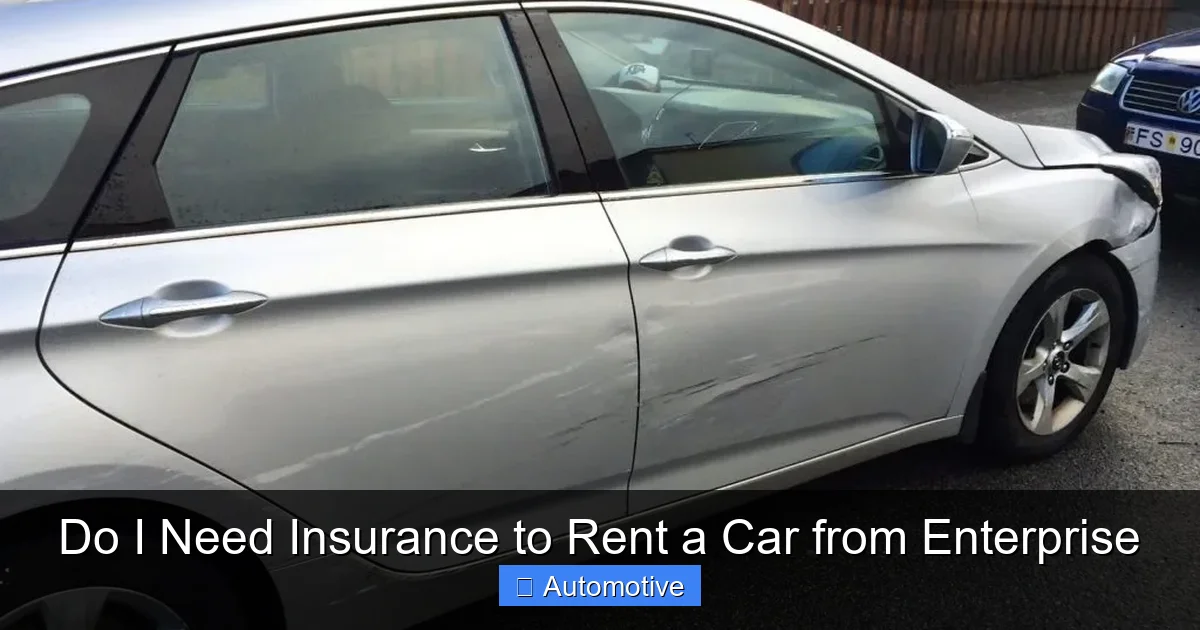
For example, let’s say you have full coverage with a $500 deductible. If you rent a car and get into an accident, your insurer will pay for the damages (minus your $500 deductible), just like with your own car.
But there are exceptions. Some policies exclude rentals, especially if the rental period is longer than 30 days or if the car is used for business. Others may not cover certain types of vehicles (like luxury cars, RVs, or trucks).
That’s why it’s essential to call your insurance agent before you rent. Ask specifically: “Does my policy cover rental cars? Are there any limitations?” Get it in writing if possible.
What If You’re Not the Named Insured?
If you’re renting a car but aren’t the named insured on the policy (for example, you’re a spouse or adult child), coverage may still apply—but it’s not guaranteed. Most policies cover household members, but some require that the driver be listed on the policy.
Again, check with your insurer. If you’re unsure, it’s safer to buy coverage from Enterprise or use a credit card benefit.
Can Credit Cards Cover Rental Car Insurance?
Yes—and this is one of the best-kept secrets in travel. Many premium credit cards offer rental car insurance as a built-in benefit. But there are important rules to follow.
First, you must pay for the entire rental with that credit card. Second, you must decline the rental company’s CDW/LDW. If you accept their waiver, your credit card benefit usually becomes void.
Most credit card rental coverage is “secondary,” meaning it only kicks in after your personal auto insurance pays out. However, some top-tier cards (like the Chase Sapphire Reserve or American Express Platinum) offer “primary” coverage, which pays first—no need to file with your insurer.
Coverage typically includes:
– Collision and theft damage
– Up to $50,000–$75,000 in coverage
– Rental periods up to 31 days (varies by card)
But beware: credit card coverage usually excludes liability, personal injury, and personal effects. So while it can save you from paying for car damage, it won’t cover injuries to others or your belongings.
Also, not all cards offer this benefit. Check your card’s terms and conditions or call customer service to confirm.
Example: Using a Credit Card for Coverage
Let’s say you’re renting a midsize car in Florida for five days. You pay with your Chase Sapphire Preferred card and decline Enterprise’s CDW. If the car is damaged in an accident, your card’s primary coverage will reimburse Enterprise for the repair costs (up to the car’s value), minus any deductible.
But if you cause $20,000 in damage to another vehicle, your credit card won’t cover that—you’d need liability insurance (either from your personal policy or Enterprise’s LIS).
Special Considerations for International Renters
If you’re visiting the U.S. from another country, the rules change. Most foreign auto insurance policies are not recognized in the U.S., and international credit cards rarely offer U.S. rental coverage.
In this case, you’ll almost certainly need to purchase insurance from Enterprise or a third-party provider. Enterprise offers international visitors the same coverage options (CDW, LIS, PAI, etc.), and agents are trained to explain them in multiple languages.
Some travel insurance plans also include rental car coverage, so check your policy if you’ve purchased one for your trip.
How to Decide What Coverage You Need
With so many options, how do you choose? Here’s a simple decision-making framework:
1. **Check your personal auto insurance.** Call your agent and confirm whether it covers rental cars. Ask about liability, collision, and comprehensive coverage.
2. **Review your credit card benefits.** Log into your account or call customer service to see if rental coverage is included.
3. **Assess your risk tolerance.** Are you comfortable assuming financial responsibility for damage or theft? If not, consider buying CDW/LDW.
4. **Consider the rental duration and location.** Longer rentals or trips in high-risk areas (like cities with high theft rates) may warrant extra protection.
5. **Compare costs.** Add up the daily cost of Enterprise’s coverage versus your potential out-of-pocket expense if something goes wrong.
When in doubt, it’s better to be over-covered than under-covered. A few extra dollars per day can prevent a financial disaster.
Final Tips for a Smooth Rental Experience
– **Inspect the car thoroughly** before driving off. Take photos or video of any existing damage and report it to the agent.
– **Keep all rental documents** in a safe place, including the rental agreement and proof of insurance.
– **Know the return policy.** Late returns or refueling charges can add up quickly.
– **Avoid upgrades unless necessary.** Luxury or specialty vehicles often come with higher insurance costs and stricter terms.
Renting a car doesn’t have to be stressful. With the right information, you can make smart choices about insurance and enjoy your trip with confidence.
Frequently Asked Questions
Do I have to buy insurance from Enterprise to rent a car?
No, you don’t have to buy insurance from Enterprise, but you must have valid liability coverage to rent. This can come from your personal auto policy, a credit card, or a non-owner insurance policy.
Will my credit card cover damage to the rental car?
Many premium credit cards offer rental car coverage, but only if you pay for the entire rental with that card and decline the rental company’s collision waiver. Coverage is usually for damage or theft, not liability.
What happens if I decline all insurance and get into an accident?
If you decline coverage and don’t have other protection, you could be personally responsible for thousands of dollars in damages, injuries, or theft. Always verify your existing coverage before declining.
Does Enterprise require proof of insurance?
Yes, Enterprise requires proof of liability insurance at pickup. This can be an insurance card, policy declaration page, or a letter from your insurer confirming coverage.
Can I use my travel insurance for rental car coverage?
Some travel insurance plans include rental car protection, but most focus on trip cancellation or medical emergencies. Check your policy details to see if car damage or liability is covered.
Is rental car insurance the same as the collision damage waiver?
No. The Collision Damage Waiver (CDW) is not insurance—it’s a waiver that limits your financial responsibility for damage to the rental car. True insurance covers liability, injuries, and other risks.