
Can I Keep My Car If I File Chapter 13 Bankruptcy?

Yes, you can keep your car when filing Chapter 13 bankruptcy, provided you continue making payments and the equity falls within your state’s exemption limits. The key is proposing a repayment plan that satisfies your secured debt, allowing you to retain ownership while catching up on missed payments over time.
Key Takeaways
- You can keep your car if you continue making payments under Chapter 13.
- Equity matters—if your car has high equity, it may affect your repayment plan.
- Reaffirming debt isn’t required in Chapter 13 like it is in Chapter 7.
- Stay current on payments to avoid default and potential repossession.
- Your plan must cover arrears if you’re behind on your car loan.
- Consider a cramdown to reduce loan balance if the car is worth less than owed.
📑 Table of Contents
- Can I Keep My Car If I File Chapter 13 Bankruptcy?
- Understanding Chapter 13 Bankruptcy and Car Ownership
- Factors That Determine Whether You Can Keep Your Car
- Options for Keeping Your Car in Chapter 13
- Practical Tips for Keeping Your Car During Bankruptcy
- Real-Life Example: Maria’s Story
- Common Misconceptions About Bankruptcy and Car Ownership
- Data Table: Chapter 13 Car Loan Options at a Glance
- Conclusion
Can I Keep My Car If I File Chapter 13 Bankruptcy?
Filing for bankruptcy is one of the most stressful financial decisions a person can make. It often comes after months—or even years—of struggling with overwhelming debt, missed payments, and constant calls from creditors. In the middle of all that stress, one of the biggest concerns people have is: Can I keep my car if I file Chapter 13 bankruptcy?
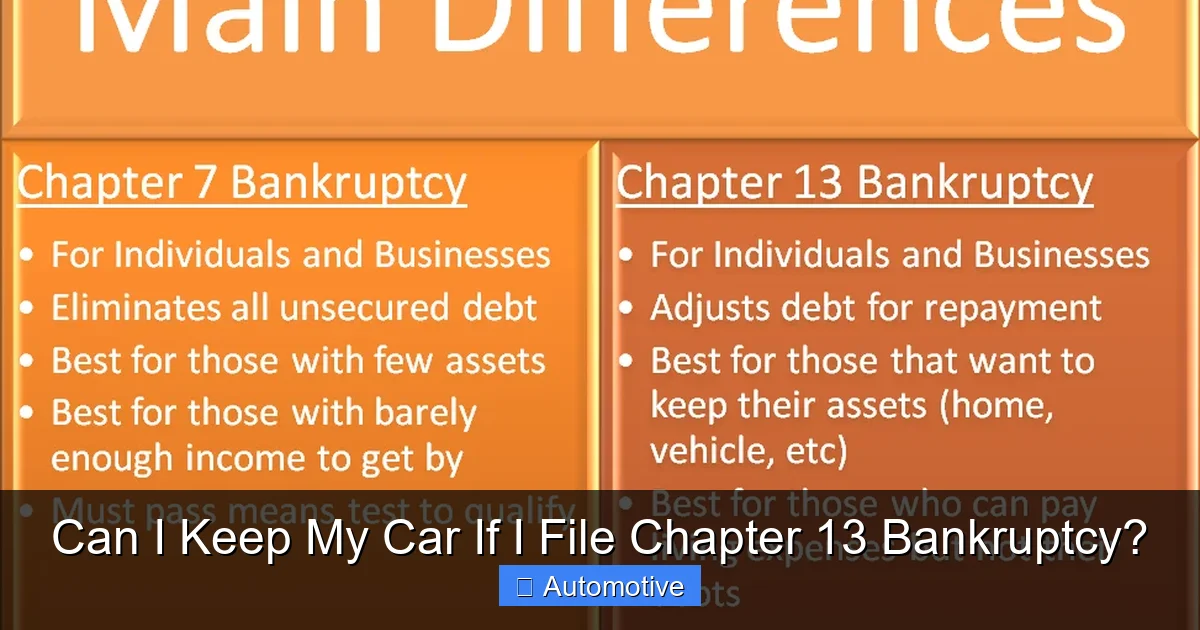
The short answer? Yes, in most cases, you can keep your car—but it depends on several factors, including how much you owe, the value of the vehicle, and whether you’re current on your payments. Chapter 13 bankruptcy, also known as a “reorganization bankruptcy,” is designed to help individuals repay a portion of their debts over a period of three to five years while keeping their assets, including cars. Unlike Chapter 7, which may require you to surrender non-exempt property, Chapter 13 allows you to restructure your debts and keep your vehicle as long as you stick to the court-approved repayment plan.
But it’s not always simple. The process involves careful planning, honest disclosure of your financial situation, and working closely with a bankruptcy attorney. I remember talking to a friend who was terrified he’d lose his car—his only way to get to work and take his kids to school. After filing Chapter 13, he not only kept his car but also reduced his monthly payments. His story isn’t unique, but it highlights how important it is to understand your options before making a decision.
Understanding Chapter 13 Bankruptcy and Car Ownership
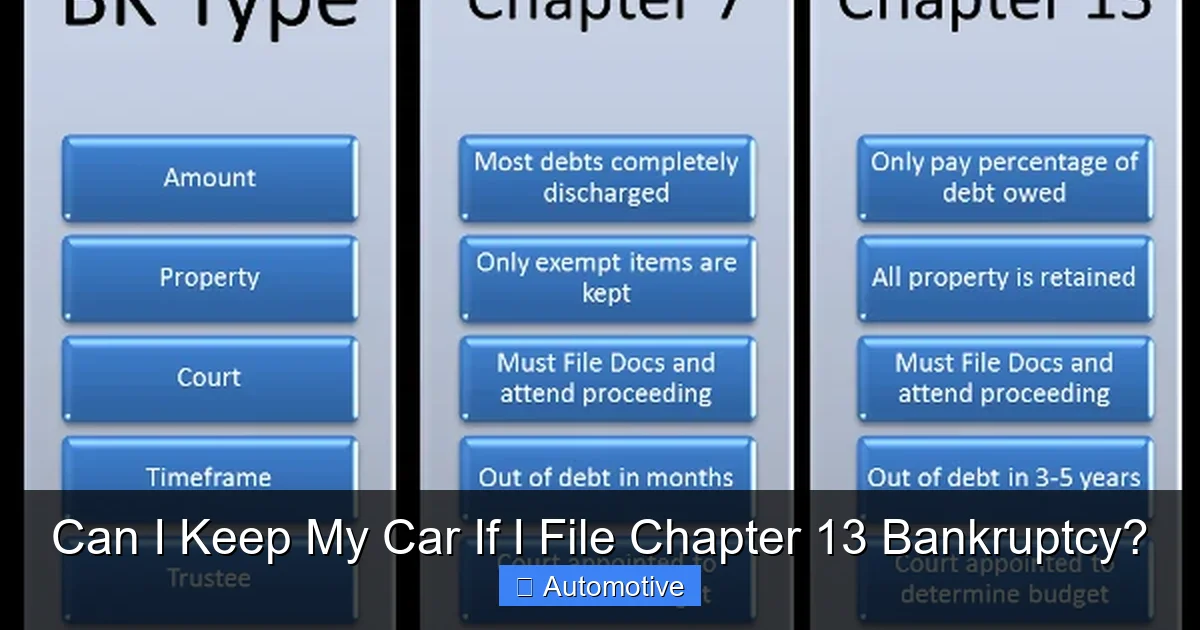
Before diving into whether you can keep your car, it helps to understand what Chapter 13 bankruptcy actually is. Unlike Chapter 7, which liquidates assets to pay off debts, Chapter 13 allows you to create a repayment plan to pay back a portion of your debts over time. This plan typically lasts three to five years, depending on your income and the amount you owe.
Visual guide about Can I Keep My Car If I File Chapter 13 Bankruptcy?
Image source: armlawyers.com
One of the biggest advantages of Chapter 13 is that it stops foreclosure on your home, repossession of your car, and wage garnishment. Once you file, an automatic stay goes into effect, which legally prevents creditors from taking further collection actions. This gives you breathing room to reorganize your finances and catch up on missed payments.
How Chapter 13 Affects Your Car Loan
Your car is considered secured debt in bankruptcy because the lender has a lien on the vehicle. This means they have a legal claim to it until the loan is paid off. In Chapter 13, you have a few options for handling your car loan:
- Reaffirm the debt: You agree to keep making payments and retain ownership of the car.
- Cramdown the loan: If you’ve owned the car for more than 910 days (about 2.5 years), you may be able to reduce the loan balance to the car’s current market value and pay that amount over the life of the plan.
- Surrender the car: If you can’t afford the payments, you can return the car to the lender and discharge the remaining debt.
For most people, the goal is to keep the car. And with Chapter 13, that’s often possible—even if you’re behind on payments. The key is to include your car loan in your repayment plan and stay current on your obligations.
Factors That Determine Whether You Can Keep Your Car
Not everyone who files Chapter 13 gets to keep their car. Several factors influence the outcome, and understanding them can help you make informed decisions before filing.
Visual guide about Can I Keep My Car If I File Chapter 13 Bankruptcy?
Image source: cascadebankruptcy.com
Equity in the Vehicle
Equity is the difference between what your car is worth and what you still owe on it. If your car is worth $10,000 and you owe $8,000, you have $2,000 in equity. In bankruptcy, you’re allowed to protect a certain amount of equity using exemptions. These vary by state, but most states allow you to exempt at least $3,000 to $5,000 in vehicle equity.
If your equity is within the exemption limit, you can usually keep the car. But if it’s significantly higher, the bankruptcy trustee may require you to pay the non-exempt portion to unsecured creditors. For example, if your car is worth $15,000 and you owe $5,000, you have $10,000 in equity. If your state only allows a $4,000 exemption, you might have to pay $6,000 to creditors—either in a lump sum or through your repayment plan.
Loan-to-Value Ratio
This is the amount you owe compared to the car’s current market value. A high loan-to-value ratio (meaning you owe more than the car is worth) can actually work in your favor. If you’ve owned the car for more than 910 days, you may qualify for a “cramdown,” which allows you to reduce the loan balance to the car’s fair market value.
For example, let’s say your car is worth $12,000, but you still owe $18,000. With a cramdown, your repayment plan would only require you to pay $12,000 over three to five years, plus interest. This can significantly lower your monthly payments and make it easier to keep the car.
Current Payment Status
If you’re behind on your car payments, Chapter 13 can help you catch up. The missed payments are added to your repayment plan, and you make one monthly payment to the trustee, who then distributes it to your creditors. As long as you stay current on your plan payments, the lender can’t repossess the car.
However, if you’re already in default and the car has been repossessed, you may still be able to get it back—but only if you act quickly. In some cases, you can redeem the car by paying the full amount owed or negotiating a settlement with the lender.
Options for Keeping Your Car in Chapter 13
There are several strategies you can use to keep your car when filing Chapter 13. The best option depends on your financial situation, how much you owe, and how long you’ve owned the vehicle.
Visual guide about Can I Keep My Car If I File Chapter 13 Bankruptcy?
Image source: tucsonbankruptcy.co
Reaffirming the Debt
Reaffirmation is a legal agreement between you and the lender that states you will continue making payments on the car loan and retain ownership. This is common when you’re current on payments and the loan is fairly new.
To reaffirm, you’ll need to sign a reaffirmation agreement, which must be approved by the bankruptcy court. The judge will review your budget to ensure you can afford the payments. If the court approves, the loan remains active, and you keep the car.
One thing to keep in mind: if you reaffirm the debt and later default, the lender can repossess the car and sue you for the remaining balance. So it’s important to only reaffirm if you’re confident you can make the payments.
Cramming Down the Loan
The cramdown option is a powerful tool for people who owe more than their car is worth. As mentioned earlier, if you’ve owned the car for more than 910 days, you can reduce the loan balance to the vehicle’s current market value.
Here’s how it works: Let’s say your car is worth $10,000, but you owe $15,000. With a cramdown, your repayment plan will only require you to pay $10,000 over the life of the plan, plus interest. The remaining $5,000 is treated as unsecured debt and may be discharged at the end of the plan.
This can save you hundreds of dollars per month and make it much easier to keep your car. However, not all lenders agree to cramdowns, and the process can be complex. That’s why it’s important to work with an experienced bankruptcy attorney.
Reinstating the Loan
If you’re behind on payments but haven’t been repossessed, you can include the past-due amount in your Chapter 13 plan. This is called “reinstating” the loan. The missed payments are paid off over time, and you continue making regular payments directly to the lender.
For example, if you’re three months behind on a $400 monthly payment, that’s $1,200 in arrears. Your repayment plan might include $100 per month toward the arrears, while you continue paying $400 directly to the lender. Over 12 months, the arrears are paid off, and your loan is back on track.
This option is ideal for people who are only slightly behind and want to keep their car without major changes to the loan terms.
Practical Tips for Keeping Your Car During Bankruptcy
Keeping your car during Chapter 13 bankruptcy is possible, but it requires careful planning and discipline. Here are some practical tips to help you succeed:
Work with a Bankruptcy Attorney
Bankruptcy law is complex, and mistakes can be costly. A qualified attorney can help you understand your options, prepare your paperwork, and represent you in court. They can also negotiate with lenders and help you qualify for a cramdown or reaffirmation.
When choosing an attorney, look for someone with experience in Chapter 13 cases and a good track record with car loans. Many offer free consultations, so don’t hesitate to shop around.
Be Honest About Your Finances
Bankruptcy requires full disclosure of your income, expenses, assets, and debts. Hiding information can lead to your case being dismissed or even criminal charges. Be honest about how much you earn, what you spend, and the value of your car.
Use online tools like Kelley Blue Book or Edmunds to get an accurate estimate of your car’s value. This will help you determine your equity and whether a cramdown is possible.
Stick to Your Repayment Plan
Once your plan is approved, it’s crucial to make all payments on time. Missing even one payment can put your case at risk and give the trustee grounds to dismiss it. Set up automatic payments if possible, and keep a close eye on your budget.
If your financial situation changes—such as a job loss or medical emergency—contact your attorney immediately. They may be able to modify your plan or request a hardship discharge.
Consider Refinancing After Bankruptcy
Once you’ve completed your Chapter 13 plan, your credit score will begin to recover. At that point, you may be able to refinance your car loan at a lower interest rate. This can reduce your monthly payments and save you money over the life of the loan.
Even if you can’t refinance right away, keeping your car and making on-time payments will help rebuild your credit. Over time, you’ll qualify for better loan terms and lower insurance rates.
Real-Life Example: Maria’s Story
Maria, a single mother of two, was drowning in debt after losing her job during the pandemic. She had fallen behind on her car payments and was facing repossession. Her car was essential—she needed it to get to work, take her kids to school, and run errands.
After consulting with a bankruptcy attorney, Maria decided to file Chapter 13. Her car was worth $12,000, but she owed $16,000. Because she had owned it for over three years, she qualified for a cramdown. Her repayment plan reduced the loan balance to $12,000, and she paid it off over five years with interest.
Maria also included her past-due payments in the plan, which allowed her to catch up without losing the car. Today, she’s debt-free, her credit is improving, and she still drives the same car. “Filing bankruptcy was scary,” she says, “but it gave me a fresh start. I kept my car, and I kept my dignity.”
Common Misconceptions About Bankruptcy and Car Ownership
There are many myths about bankruptcy that can prevent people from seeking help. Let’s clear up some of the most common misconceptions:
- Myth: You’ll lose all your assets in bankruptcy.
Truth: Chapter 13 allows you to keep your car, home, and other essential assets as long as you follow the repayment plan. - Myth: Bankruptcy ruins your credit forever.
Truth: While bankruptcy does impact your credit score, it’s not permanent. Many people see their scores improve within a year or two, especially if they make on-time payments. - Myth: You can’t get a car loan after bankruptcy.
Truth: It’s possible to get approved for a car loan after bankruptcy, though interest rates may be higher initially. Building good payment history helps. - Myth: Only people who are irresponsible file for bankruptcy.
Truth: Most people file due to circumstances beyond their control—job loss, medical bills, divorce, or unexpected expenses.
Data Table: Chapter 13 Car Loan Options at a Glance
| Option | Best For | Requirements | Pros | Cons |
|---|---|---|---|---|
| Reaffirm Debt | Current on payments, low equity | Court approval, ability to pay | Keep car, maintain credit | Risk of repossession if you default |
| Cramdown Loan | Owe more than car is worth, owned >910 days | Vehicle age, court approval | Lower payments, reduce debt | Not all lenders agree |
| Reinstate Loan | Behind on payments, not repossessed | Include arrears in plan | Catch up over time | Must stay current on future payments |
| Surrender Car | Can’t afford payments | Voluntary return | Eliminate debt, reduce expenses | Lose transportation, may owe deficiency |
Conclusion
So, can you keep your car if you file Chapter 13 bankruptcy? In most cases, the answer is yes—especially if you’re proactive, honest, and work with a qualified attorney. Chapter 13 offers powerful tools like reaffirmation, cramdowns, and loan reinstatement that can help you keep your vehicle while getting your finances back on track.
It’s not a decision to take lightly, but for many people, it’s a lifeline. Like Maria, you can emerge from bankruptcy with your car, your dignity, and a clearer path forward. The key is to understand your options, stay committed to your plan, and use this fresh start wisely.
If you’re struggling with debt and worried about losing your car, don’t wait. Reach out to a bankruptcy attorney today and explore your options. You might be surprised at how much relief Chapter 13 can offer—and how possible it is to keep the car that gets you where you need to go.
Frequently Asked Questions
Can I keep my car if I file Chapter 13 bankruptcy?
Yes, in most cases you can keep your car when filing Chapter 13 bankruptcy, as long as you continue making payments and follow your court-approved repayment plan. The bankruptcy allows you to catch up on missed payments over time while retaining ownership of the vehicle.
What happens to my car loan during Chapter 13 bankruptcy?
Your car loan becomes part of your Chapter 13 repayment plan, and you may be able to reduce the balance through a “cramdown” if the car was purchased more than 910 days before filing. You’ll continue making payments, but the terms may be adjusted to make them more affordable.
Do I have to surrender my car when filing Chapter 13?
No, you typically don’t have to surrender your car in Chapter 13 bankruptcy if you’re current on payments or can include past-due amounts in your repayment plan. The goal of Chapter 13 is to help you keep essential assets like your vehicle while resolving debt.
Can I keep my car if I’m behind on payments and file Chapter 13?
Yes, filing Chapter 13 can help you keep your car even if you’re behind on payments by allowing you to repay the arrears over three to five years. As long as you stick to the plan, the lender cannot repossess the vehicle.
Will my car be repossessed if I file Chapter 13 bankruptcy?
Filing Chapter 13 triggers an automatic stay, which legally stops repossession efforts, giving you time to get current on payments through your plan. As long as you comply with the court-approved terms, your car should remain protected from repossession.
Can I buy a new car while in Chapter 13 bankruptcy?
It’s possible to buy a new car during Chapter 13, but you’ll need court approval first, especially if it involves taking on new debt. Your bankruptcy trustee will review your budget to ensure the new payment won’t jeopardize your repayment plan.