
Why Is My Car Insurance So High with No Accidents?

Even with a clean driving record, your car insurance might still be expensive due to factors like location, credit score, vehicle type, and coverage choices. Understanding these hidden influences can help you take control and find more affordable options without sacrificing protection.
Key Takeaways
- Location matters more than you think: Urban areas with high traffic, theft rates, or severe weather can spike premiums, even for safe drivers.
- Your credit score impacts your rate: In most states, insurers use credit-based insurance scores to predict risk, and lower scores often mean higher premiums.
- The car you drive affects cost: High-performance, luxury, or frequently stolen vehicles typically cost more to insure, regardless of accident history.
- Coverage level and deductibles play a role: Comprehensive and collision coverage, along with low deductibles, increase monthly payments.
- Age and driving experience influence pricing: Younger or newly licensed drivers often pay more due to perceived inexperience, even without accidents.
- Insurance history and claims frequency count: A lapse in coverage or frequent claims (even for minor incidents) can raise your rates over time.
- Shopping around saves money: Comparing quotes from multiple insurers can reveal significant savings—sometimes hundreds per year.
📑 Table of Contents
- Why Is My Car Insurance So High with No Accidents?
- Your Location Is a Major Cost Driver
- Your Credit Score Impacts Your Premium
- The Type of Car You Drive Matters
- Coverage Level and Deductibles Affect Your Rate
- Age, Gender, and Driving Experience
- Insurance History and Lapses in Coverage
- How to Lower Your Car Insurance Premium
- Conclusion
Why Is My Car Insurance So High with No Accidents?
You’ve been a careful driver for years. No tickets, no fender benders, not even a close call. So when you open your latest car insurance bill and see that number—higher than last year—you’re left scratching your head. “Why is my car insurance so high with no accidents?” It’s a question countless drivers ask, and the answer isn’t always obvious.
The truth is, your driving record is just one piece of the puzzle. Insurance companies use a complex algorithm to calculate your premium, and many factors beyond accidents influence how much you pay. From where you live to the type of car you drive, and even your credit score, insurers consider a wide range of data points to assess risk. And while a clean record helps, it doesn’t guarantee the lowest rate.
In this guide, we’ll break down the most common reasons your car insurance might be high—even if you’ve never been in an accident. We’ll also share practical tips to help you understand your policy, reduce your costs, and make smarter decisions when it comes to coverage. Whether you’re a new driver or a seasoned commuter, this information can help you take control of your insurance expenses.
Your Location Is a Major Cost Driver
Visual guide about Why Is My Car Insurance So High with No Accidents?
Image source: innovatecar.com
One of the biggest factors affecting your car insurance premium is your zip code. Yes, where you live can have a huge impact on how much you pay—sometimes more than your driving history.
Urban vs. Rural: The Density Effect
If you live in a city or densely populated area, you’re likely paying more for insurance than someone in a rural town. Why? Because urban environments come with higher risks. More cars on the road mean a greater chance of accidents, even if you’re not the one causing them. Traffic congestion, frequent stop-and-go driving, and higher rates of vandalism or theft all contribute to increased claims in cities.
For example, a driver in downtown Chicago might pay significantly more than someone in a small town in Nebraska—even if both have spotless records. Insurers know that city drivers face more hazards, so they adjust premiums accordingly.
Crime Rates and Theft Risk
Car theft and vandalism are serious concerns in many metropolitan areas. If your neighborhood has a high rate of auto theft, your comprehensive coverage—which protects against non-collision damage—will cost more. Luxury vehicles and popular models (like Honda Civics or Ford F-150s) are often targeted, so owning one in a high-theft area can drive up your premium.
Even if your car hasn’t been stolen, the risk alone affects your rate. Insurers use crime statistics by region to predict future claims, and if your area ranks high, expect to pay more.
Weather and Natural Disasters
Severe weather is another location-based factor. If you live in an area prone to hurricanes, floods, hailstorms, or heavy snow, your risk of vehicle damage increases. Comprehensive coverage will be more expensive because insurers anticipate higher claims from weather-related incidents.
For instance, drivers in Florida or Texas often see higher premiums due to hurricane and flood risks. Similarly, those in the Midwest may pay more during hail season. Even if you’ve never filed a weather-related claim, the potential for future damage influences your rate.
Traffic Density and Accident Statistics
Insurance companies analyze traffic data and accident rates by region. Areas with high traffic volume or frequent accidents—even minor ones—are considered higher risk. This means that even if you drive safely, you’re statistically more likely to be involved in an incident simply because there are more cars on the road.
A study by the Texas A&M Transportation Institute found that urban drivers spend an average of 54 hours per year stuck in traffic. That’s 54 hours of increased exposure to potential accidents. Insurers factor this into their pricing models, which is why city dwellers often face steeper premiums.
Your Credit Score Impacts Your Premium
Visual guide about Why Is My Car Insurance So High with No Accidents?
Image source: goodfellasautotn.com
You might be surprised to learn that your credit score plays a role in your car insurance rate—but in most states, it does. Insurers use a credit-based insurance score, which is different from your regular credit score but closely related, to predict how likely you are to file a claim.
How Credit Scores Affect Insurance Rates
Studies have shown a correlation between lower credit scores and higher claims frequency. People with poor credit are statistically more likely to file insurance claims, so insurers charge them more to offset that risk. This practice is legal in 47 states (except California, Hawaii, and Massachusetts, where it’s restricted or banned).
For example, a driver with an excellent credit score (750+) might pay $1,200 per year for full coverage, while someone with a fair score (600–650) could pay $1,800 or more—for the same coverage and driving record. That’s a $600 difference, just based on credit.
Why Do Insurers Use Credit?
Insurance companies argue that credit history reflects responsibility and financial stability. Someone who manages their bills well is more likely to maintain their vehicle, drive safely, and avoid risky behaviors. While this may seem unfair, it’s a widely accepted practice in the industry.
If your credit score has dropped due to missed payments, high credit utilization, or debt, your insurance premium may have increased—even if your driving hasn’t changed.
How to Improve Your Credit-Based Insurance Score
The good news? You can take steps to improve your credit and, in turn, lower your insurance costs:
– Pay bills on time every month.
– Keep credit card balances low (below 30% of your limit).
– Avoid opening too many new accounts at once.
– Check your credit report annually for errors and dispute inaccuracies.
Improving your credit score by 50–100 points can lead to noticeable savings on your premium over time.
The Type of Car You Drive Matters
Visual guide about Why Is My Car Insurance So High with No Accidents?
Image source: carglassadvisor.com
Your vehicle choice has a direct impact on your insurance rate. Even with a clean record, driving a high-risk car can make your premium skyrocket.
Vehicle Safety and Repair Costs
Insurers consider how safe your car is and how expensive it is to repair or replace. Vehicles with high safety ratings and low repair costs are cheaper to insure. On the other hand, cars with poor crash test scores or expensive parts (like luxury brands) cost more to cover.
For example, a Toyota Corolla is typically cheaper to insure than a BMW 3 Series, even if both drivers have identical records. Why? The BMW has higher repair costs, is more likely to be targeted by thieves, and may have a higher risk of expensive claims.
Theft Rates and Popularity
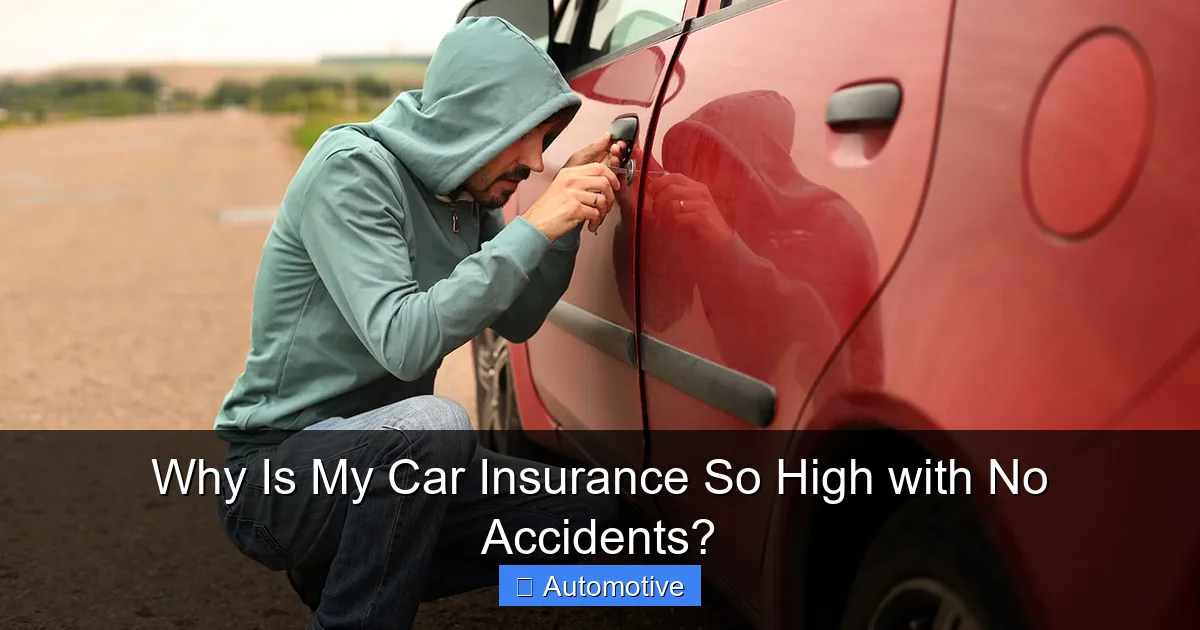
Some cars are just more attractive to thieves. Models like the Honda Accord, Ford Mustang, and Jeep Grand Cherokee are frequently stolen, so insurers charge more to cover them. Even if your car hasn’t been stolen, the statistical risk affects your rate.
Additionally, popular cars often have higher claim frequencies simply because there are more of them on the road. More cars mean more potential for accidents, even if you’re not at fault.
Performance and Engine Power
High-performance vehicles—those with powerful engines, fast acceleration, or sporty designs—are considered higher risk. Insurers assume that drivers of these cars are more likely to speed or engage in risky driving, even if you’re not.
A sports car like a Chevrolet Corvette or a Subaru WRX will almost always cost more to insure than a family sedan, regardless of your driving history. The same goes for large SUVs with high horsepower, which can be more dangerous in collisions.
New vs. Used Cars
New cars are generally more expensive to insure because they have higher replacement values and often come with advanced technology that’s costly to repair. However, some new cars have better safety features (like automatic emergency braking or lane departure warnings), which can lower your premium.
Used cars may be cheaper to insure, but older models without modern safety tech could actually cost more if they’re deemed less safe. It’s a balance—age, safety, and value all play a role.
Coverage Level and Deductibles Affect Your Rate
The type and amount of coverage you choose directly influence your premium. Even with no accidents, opting for comprehensive protection can make your bill higher.
Liability vs. Full Coverage
Liability insurance is the minimum required by law and covers damage or injuries you cause to others. It’s the cheapest option but offers no protection for your own vehicle.
Full coverage includes liability plus collision and comprehensive insurance, which pay for damage to your car from accidents, theft, weather, and more. While this gives you peace of mind, it also increases your premium.
If you’re wondering, “Why is my car insurance so high with no accidents?” it could be because you’re carrying full coverage on a newer or more valuable car. While this is smart financially, it comes at a cost.
Choosing Your Deductible
Your deductible is the amount you pay out of pocket before insurance kicks in. A lower deductible (like $250) means higher monthly premiums, while a higher deductible (like $1,000) reduces your premium but increases your financial responsibility in a claim.
For example, choosing a $500 deductible instead of $250 could save you $100–$200 per year. But if you do get into an accident, you’ll pay $500 instead of $250. It’s a trade-off between monthly cost and out-of-pocket risk.
Optional Add-Ons and Endorsements
Many drivers add extras like roadside assistance, rental car reimbursement, or gap insurance. While these can be helpful, they also increase your premium. If you’re trying to lower your rate, consider dropping non-essential add-ons.
For instance, if you have a reliable car and a good emergency fund, you might not need rental reimbursement. Similarly, gap insurance is only useful if you owe more on your car than it’s worth—once you’re “above water,” you can drop it.
Age, Gender, and Driving Experience
Your personal demographics play a surprising role in your insurance rate—even if you’ve never had an accident.
Young Drivers Pay More
Teenagers and drivers under 25 are considered high-risk due to inexperience and higher accident rates. Even with a clean record, a 19-year-old driver will pay significantly more than a 35-year-old with the same history.
For example, a 17-year-old male with no accidents might pay $3,000 per year for full coverage, while a 30-year-old female with the same record pays $1,400. That’s more than double—just because of age and gender.
Gender Differences
Historically, young male drivers have higher accident rates than young females, so they often pay more. However, this gap narrows with age, and in some states, gender can’t be used in pricing due to regulations.
Still, in most places, a 20-year-old man will pay more than a 20-year-old woman for the same coverage.
Experience and Driving History
The longer you’ve been licensed, the lower your risk in the eyes of insurers. Newly licensed drivers, even in their 30s or 40s, may pay more until they build up a few years of accident-free driving.
Additionally, drivers with a history of violations or claims—even minor ones—may face higher rates for several years. A single speeding ticket can increase your premium by 20–30%, and it can stay on your record for 3–5 years.
Insurance History and Lapses in Coverage
Your relationship with insurance companies also affects your rate. A lapse in coverage—even for a few days—can lead to higher premiums.
The Penalty for Lapses
Insurers view drivers with gaps in coverage as higher risk. Why? Because someone who goes uninsured may be more likely to drive recklessly or avoid maintenance. Even a short lapse—like forgetting to renew your policy—can trigger a rate increase.
For example, if your policy expires and you go two weeks without coverage, your next insurer may classify you as a “high-risk” driver and charge you more. This can cost hundreds of extra dollars per year.
Continuous Coverage Discounts
On the flip side, maintaining continuous coverage can earn you discounts. Many insurers offer “loyalty” or “continuous coverage” discounts for drivers who’ve been insured without lapses for several years.
If you’ve had the same policy for five years with no gaps, you might qualify for a 10–15% discount. That’s real savings just for staying insured.
Switching Insurers and Rate Increases
Sometimes, your rate goes up not because of your behavior, but because your insurer is raising rates across the board. Inflation, increased claims, and rising repair costs can lead to annual hikes—even for safe drivers.
If you notice your premium increasing year after year with no changes on your end, it might be time to shop around. Loyalty doesn’t always pay—sometimes, switching insurers saves you money.
How to Lower Your Car Insurance Premium
Now that you understand why your car insurance might be high, here’s how to bring that number down—without sacrificing protection.
Shop Around Annually
One of the best ways to save is to compare quotes from multiple insurers every year. Rates vary widely between companies, and you could save $500 or more just by switching.
Use online comparison tools or work with an independent agent to get quotes from at least three insurers. Don’t just look at the price—check coverage limits, deductibles, and customer reviews.
Bundle Your Policies
Many insurers offer discounts if you bundle your car insurance with home, renters, or life insurance. A multi-policy discount can save you 10–25% on your premium.
For example, if you pay $1,500 per year for car insurance and $800 for homeowners, bundling could save you $230–$575 annually.
Take Advantage of Discounts
Ask your insurer about available discounts. Common ones include:
– Safe driver discount (for accident-free years)
– Good student discount (for teens with B averages)
– Low mileage discount (if you drive less than 7,500 miles per year)
– Defensive driving course discount
– Anti-theft device discount
Even small discounts add up. A 5% safe driver discount on a $1,500 policy saves $75 per year.
Raise Your Deductible
If you can afford a higher out-of-pocket cost in case of an accident, increasing your deductible is a quick way to lower your premium. Just make sure you have savings to cover the deductible if needed.
Improve Your Credit Score
As we discussed, better credit can lead to lower rates. Focus on paying bills on time, reducing debt, and monitoring your credit report.
Consider Usage-Based Insurance
Some insurers offer programs that track your driving habits via a mobile app or device. If you drive safely—avoiding hard braking, speeding, and late-night trips—you could earn discounts of 10–30%.
These programs are great for low-mileage, cautious drivers who want to prove their safety.
Conclusion
So, why is your car insurance so high with no accidents? The answer lies in a combination of factors beyond your driving record. Your location, credit score, vehicle type, coverage choices, age, and insurance history all play a role in determining your premium.
While you can’t control everything—like where you live or your age—you can take proactive steps to reduce your costs. Shop around, maintain good credit, choose the right coverage, and take advantage of discounts. Even small changes can lead to significant savings over time.
Remember, a clean driving record is valuable, but it’s not the only factor insurers consider. By understanding the full picture, you can make informed decisions and find a policy that offers both protection and affordability. Don’t just accept a high premium—take control and drive smarter.
Frequently Asked Questions
Why is my car insurance so high with no accidents?
Even with a clean record, factors like your location, credit score, vehicle type, and coverage level can drive up your premium. Insurers assess risk using many data points, not just accident history.
Does my credit score really affect my car insurance?
Yes, in most states. Insurers use credit-based insurance scores to predict risk, and lower scores often lead to higher premiums—even for safe drivers.
Can where I live increase my insurance rate?
Absolutely. Urban areas with high traffic, crime, or severe weather typically have higher premiums due to increased risk of accidents, theft, and damage.
Will switching insurers lower my rate?
It might. Rates vary widely between companies, and shopping around can reveal significant savings—sometimes hundreds of dollars per year.
How can I reduce my car insurance cost?
Shop around annually, bundle policies, raise your deductible, improve your credit, and take advantage of discounts like safe driver or low mileage offers.
Do I need full coverage if I have no accidents?
It depends on your car’s value and financial situation. Full coverage protects your vehicle but costs more. If your car is older or paid off, you might opt for liability-only to save money.
