
Can Police Search a Parked Car on Private Property?

Understanding whether police can search a parked car on private property is crucial for protecting your rights. While the Fourth Amendment offers strong protections, there are exceptions—like probable cause, consent, or exigent circumstances—that allow searches under specific conditions.
Key Takeaways
- Fourth Amendment Protections Apply: Your parked car on private property is generally protected from unreasonable searches and seizures, even if it’s not in a public space.
- Consent Overrides Privacy Rights: If you or someone with authority over the vehicle gives police permission to search, they can legally do so without a warrant.
- Probable Cause Opens the Door: Police can search your parked car if they have strong evidence linking it to criminal activity, such as seeing illegal items through the window.
- Exigent Circumstances Allow Immediate Action: In emergencies—like hearing someone screaming inside or smelling burning drugs—officers may search without a warrant.
- Warrant Requirements Vary by Situation: A warrant is usually needed, but not always—especially if the car is mobile or evidence could be destroyed quickly.
- Location Matters: A car parked in your driveway has stronger privacy protections than one parked in a shared or commercial private lot.
- Know Your Rights and Stay Calm: You have the right to refuse a search unless police meet legal criteria—stay polite but firm if you choose to decline.
📑 Table of Contents
Can Police Search a Parked Car on Private Property?
Imagine this: You’re unwinding after a long day, sipping coffee on your porch, when you notice two police officers walking toward your driveway. Your car is parked right there—on your own property—and suddenly, they’re peering into the windows. Your heart races. Can they do that? Can police search a parked car on private property?
This scenario isn’t just a hypothetical—it happens more often than you might think. And while it may feel invasive, the answer isn’t always a simple “no.” The truth lies in a complex mix of constitutional rights, legal precedents, and situational factors. Understanding your rights when your vehicle is parked on private property—whether it’s your driveway, a friend’s garage, or a private parking lot—is essential for protecting yourself from unlawful searches.
The Fourth Amendment to the U.S. Constitution protects citizens from unreasonable searches and seizures. It’s a cornerstone of American civil liberties, designed to prevent government overreach. But how does that apply when your car is parked in your own backyard? The short answer: it depends. While your parked car on private property enjoys strong legal protection, there are notable exceptions. Police can search your vehicle under certain conditions—even without a warrant—if they meet specific legal standards like probable cause, consent, or emergency situations.
In this article, we’ll break down the legal landscape surrounding vehicle searches on private property. We’ll explore when police can legally search your parked car, what your rights are, and how to respond if officers approach you. Whether you’re a daily commuter, a weekend road-tripper, or just someone who values privacy, this guide will help you navigate one of the most common—and confusing—intersections of law and daily life.
Understanding the Fourth Amendment and Vehicle Searches
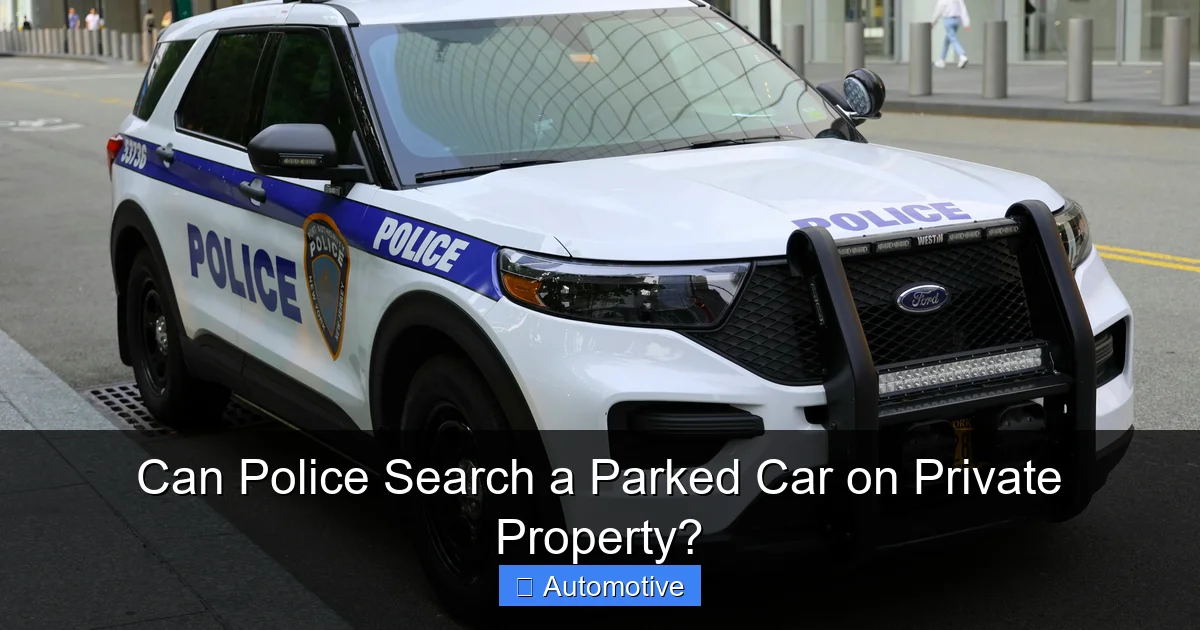
Visual guide about Can Police Search a Parked Car on Private Property?
Image source: images.pexels.com
At the heart of the debate over whether police can search a parked car on private property is the Fourth Amendment. This constitutional provision states that “the right of the people to be secure in their persons, houses, papers, and effects, against unreasonable searches and seizures, shall not be violated.” In simpler terms, the government—including police—can’t just search your stuff without a good reason.
But what counts as “unreasonable”? That’s where the courts come in. Over the years, the U.S. Supreme Court has issued rulings that help define the boundaries of police authority, especially when it comes to vehicles. One key principle is the “automobile exception.” Unlike your home, which requires a warrant for almost any search, cars are considered more mobile and thus subject to different rules. Because vehicles can be moved quickly—potentially destroying evidence—the courts have allowed warrantless searches under certain conditions.
However, this exception doesn’t give police a free pass. They still need either probable cause or another valid legal justification. For example, if an officer sees a bag of what looks like marijuana on your passenger seat through the window, that could constitute probable cause. But if they’re just curious or acting on a hunch, they can’t legally search your car—even if it’s parked in your driveway.
Another important concept is “reasonable expectation of privacy.” The Supreme Court has ruled that people have a higher expectation of privacy in their homes and curtilage (the area immediately surrounding the home, like a driveway or yard) than in public spaces. So, a car parked in your driveway is generally more protected than one parked on a public street. This means police need stronger justification to search a vehicle on private property than they would for one in a public parking lot.
Curtilage vs. Open Fields: Why Location Matters
One of the most critical factors in determining whether police can search your parked car is where exactly it’s located. The legal term “curtilage” refers to the area immediately surrounding your home—think driveway, front yard, backyard, or porch. Courts have consistently ruled that curtilage is protected under the Fourth Amendment, just like the interior of your home.
So, if your car is parked in your driveway, it’s likely within the curtilage and enjoys strong privacy protections. Police can’t just walk up and search it without a warrant or a valid exception. However, if your car is parked in a detached garage a hundred feet from your house, or in a shared private lot (like an apartment complex parking area), the level of protection may decrease. These areas might be considered “open fields” or semi-public spaces, where the expectation of privacy is lower.
For example, in the 1984 case *United States v. Dunn*, the Supreme Court ruled that a barn 50 yards from a home was not part of the curtilage and therefore not protected. Similarly, a car parked in a communal lot may not have the same level of privacy as one in a private driveway. This distinction is crucial—it means that the same vehicle, parked in two different locations on private property, could be subject to different search rules.
The Automobile Exception: When Mobility Changes the Rules
Even with strong privacy protections, vehicles are treated differently than homes under the law. The “automobile exception” allows police to search a vehicle without a warrant if they have probable cause to believe it contains evidence of a crime. This exception is based on the idea that cars are mobile—evidence could be driven away before a warrant is obtained.
But here’s the catch: the exception applies regardless of where the car is parked. So, even if your vehicle is in your driveway, police can search it without a warrant if they have probable cause. For instance, if an officer sees a weapon on the back seat or smells marijuana, they may have enough reason to conduct a search.
However, the automobile exception doesn’t give police unlimited power. They still need probable cause—not just a suspicion. And if the car is immobile and not readily capable of being driven (like if it’s up on blocks or has a flat tire), some courts have ruled that the exception may not apply. In such cases, a warrant might be required.
When Can Police Legally Search Your Parked Car?
Visual guide about Can Police Search a Parked Car on Private Property?
Image source: images.pexels.com
Now that we’ve covered the legal foundation, let’s get practical. Under what specific circumstances can police search your parked car on private property? The answer depends on several key factors, including consent, probable cause, emergencies, and whether a warrant is involved.
Consent: The Simplest Way Police Can Search
One of the most straightforward ways police can legally search your parked car is if you give them permission. Consent overrides the need for a warrant or probable cause. If you say, “Sure, go ahead and look,” officers can search your vehicle—even if it’s in your driveway.
But here’s the important part: you have the right to refuse. You don’t have to consent to a search, and saying “no” doesn’t automatically make you look guilty. In fact, politely declining can protect your rights. For example, you might say, “I’d prefer not to give consent to a search unless you have a warrant.”
Keep in mind that consent must be voluntary. If police threaten you or imply they’ll arrest you unless you agree, the consent may not be valid. Also, only someone with authority over the vehicle can give consent. So, if your friend is driving your car and parks it at their house, they can’t legally allow a search unless they have your permission.
Probable Cause: When Evidence Is in Plain View
Probable cause is a legal standard that means police have reasonable grounds to believe a crime has been committed or that evidence of a crime is present. If officers have probable cause, they can search your parked car—even on private property—without a warrant.
One common way probable cause arises is through the “plain view doctrine.” If an officer is lawfully present (say, they’re responding to a noise complaint at your home) and sees something illegal through your car window—like a gun, drugs, or stolen goods—they can seize it and may expand the search.
For example, imagine police are called to your house because of a loud argument. While speaking with you on the porch, an officer glances into your car and sees a bag of white powder on the dashboard. That could constitute probable cause to search the vehicle for drugs.
But probable cause must be based on observable facts, not assumptions. If an officer sees a backpack in your car and assumes it contains stolen items, that’s not enough. There needs to be a clear, reasonable connection between what they see and criminal activity.
Exigent Circumstances: When Time Is of the Essence
Sometimes, police can search your parked car without a warrant if there’s an emergency—what lawyers call “exigent circumstances.” These are situations where waiting for a warrant could lead to harm, destruction of evidence, or escape of a suspect.
Examples include:
– Hearing someone screaming inside the car (suggesting someone is in danger).
– Smelling burning drugs and fearing evidence will be destroyed.
– Seeing a suspect trying to flee the vehicle.
In these cases, police can act immediately to protect public safety or preserve evidence. For instance, if officers arrive at your home and hear a child crying inside your parked car with the engine running in a closed garage, they may enter to prevent carbon monoxide poisoning—even without a warrant.
However, exigent circumstances must be real and urgent. Police can’t claim an emergency just to avoid getting a warrant. Courts will scrutinize whether the situation truly required immediate action.
Search Incident to Arrest: A Limited Exception
Another exception allows police to search a vehicle if they arrest the driver—even if the car is parked on private property. This is known as a “search incident to arrest.” The rationale is that the arrested person might have weapons or evidence within reach.
However, this exception has limits. In the 2014 case *Arizona v. Gant*, the Supreme Court ruled that police can only search the passenger compartment if the arrestee is within reaching distance of the car or if there’s reason to believe the car contains evidence related to the crime.
So, if you’re arrested in your driveway and your hands are cuffed behind your back, far from the car, officers may not be able to search it under this exception—unless they have other grounds like probable cause.
Your Rights When Police Approach Your Parked Car
Visual guide about Can Police Search a Parked Car on Private Property?
Image source: images.pexels.com
Knowing your rights is the first step to protecting yourself. If police approach your parked car on private property, here’s what you should keep in mind.
You Have the Right to Remain Silent
You don’t have to answer questions beyond identifying yourself (in most states). You can politely say, “I’d prefer not to answer questions without a lawyer present.” This protects you from saying something that could be misinterpreted or used against you.
You Can Refuse a Search
Unless police have a warrant, probable cause, or another valid exception, you can refuse a search. Say something like, “I do not consent to a search of my vehicle.” Stay calm and respectful—arguing or resisting can escalate the situation.
Ask If You’re Free to Leave
If police are questioning you near your parked car, ask, “Am I free to go?” If they say yes, you can leave. If they say no, you may be detained, and your rights change. But remember, being detained doesn’t automatically mean they can search your car.
Document the Interaction
If possible, record the encounter on your phone (check local laws about recording police). Note the officers’ names, badge numbers, and what was said. This can be crucial if your rights are violated.
Real-Life Examples and Practical Tips
Let’s look at a few real-world scenarios to see how these rules play out.
Scenario 1: Police See Something Through the Window
You’re parked in your driveway, and an officer walks by and sees a beer bottle on the floor. They ask to search your car. Can they?
If the bottle is empty and legal, probably not. But if it’s open and you’re visibly intoxicated, that could be probable cause for a DUI investigation—and potentially a vehicle search.
Scenario 2: Neighbor Reports Suspicious Activity
Your neighbor calls police, saying your parked car looks “suspicious.” Officers arrive and ask to search it. Without more, they likely can’t. A vague report isn’t enough for probable cause.
Scenario 3: Emergency Situation
Police respond to a domestic disturbance at your home. While talking to you, they hear a child locked inside your parked car. They can enter to rescue the child—even without a warrant.
Practical Tips
– Keep your car locked and valuables out of sight.
– Know your rights and practice how to assert them calmly.
– If you believe your rights were violated, contact a lawyer.
Conclusion
So, can police search a parked car on private property? The answer is: it depends. While your vehicle enjoys strong Fourth Amendment protections—especially when parked in your driveway—there are legitimate exceptions that allow warrantless searches. Consent, probable cause, exigent circumstances, and searches incident to arrest can all give police the legal right to search your car, even on private property.
The key is understanding when those exceptions apply and knowing how to protect your rights. You have the power to refuse a search, remain silent, and seek legal counsel if needed. By staying informed and calm, you can navigate these encounters with confidence.
Remember, the law is designed to balance public safety with individual privacy. Knowing where that balance lies empowers you to stand up for your rights—without escalating the situation. Whether your car is parked in your garage or on a private lot, being prepared is your best defense.
Frequently Asked Questions
Can police search my car if it’s parked in my driveway?
Generally, police need a warrant, probable cause, or your consent to search a car in your driveway. However, exceptions like exigent circumstances or plain view evidence may allow a search without a warrant.
Do I have to let police search my parked car?
No, you have the right to refuse a search unless police have a warrant, probable cause, or another valid legal exception. Politely say, “I do not consent to a search.”
What if police say they’ll get a warrant?
If police say they’ll get a warrant, they must stop the search until they obtain one—unless an emergency exists. You can wait and see if they return with a valid warrant.
Can police search my car if I’m not the owner?
If you have lawful control of the vehicle (like a rental or borrowed car), you can consent to a search. But only the owner or someone with authority can give valid consent.
What if my car is parked in a private parking lot?
Protection may be lower than in a driveway, especially in shared or commercial lots. Police may have more leeway to search if there’s probable cause or public safety concerns.
Can police search my car during a traffic stop on private property?
If the stop is lawful and they have probable cause or an exception (like arrest), they can search. But random stops on private property without justification may violate your rights.