
Where Is the Audi Q5 Made?

The Audi Q5 is primarily manufactured in Germany, China, and Mexico, with each location tailored to regional demand and supply chain efficiency. While the Ingolstadt plant in Germany remains the flagship production site, Audi strategically produces the Q5 in multiple countries to meet global market needs without compromising on quality or engineering standards.
Have you ever wondered where your Audi Q5 was born? It’s not just a luxury SUV—it’s a product of global engineering, precision manufacturing, and strategic planning. The Audi Q5, one of the brand’s most popular models, combines performance, comfort, and cutting-edge technology in a sleek package. But behind that polished exterior lies a fascinating story of where and how it’s made. From the rolling hills of Bavaria to the bustling factories of China and Mexico, the Q5’s journey from assembly line to driveway spans continents.
Understanding where the Audi Q5 is made isn’t just about geography—it’s about appreciating the blend of tradition and innovation that defines Audi. While many luxury vehicles are stamped “Made in Germany” and left at that, the reality is more nuanced. Audi, like many global automakers, uses a decentralized production model to optimize costs, reduce delivery times, and meet regional demands. This means your Q5 could have rolled off the line in Germany, Mexico, or China, depending on where you live and when you bought it.
In this article, we’ll take you behind the scenes of Audi Q5 production. We’ll explore the main manufacturing plants, discuss how quality is maintained across different countries, and explain what it means for you as a buyer. Whether you’re shopping for a new Q5 or just curious about automotive manufacturing, this guide will give you a clear picture of where this luxury SUV comes from—and why it matters.
Key Takeaways
- Primary production in Germany: The Audi Q5 is built at the Ingolstadt plant in Bavaria, known for high-quality German engineering and precision manufacturing.
- Global manufacturing strategy: Audi produces the Q5 in China (FAW-Volkswagen joint venture) and Mexico (San José Chiapa plant) to serve regional markets efficiently.
- Quality consistency across plants: All Audi Q5 production facilities follow strict global standards to ensure uniform build quality, safety, and performance.
- Made in Mexico for North America: The majority of Q5s sold in the U.S. and Canada are manufactured in Mexico, reducing shipping costs and tariffs.
- Chinese production for local demand: The Q5 L (long-wheelbase version) is produced exclusively in China to cater to the preferences of Chinese consumers.
- Sustainability and innovation: Audi integrates eco-friendly practices and advanced automation in all Q5 production facilities.
- VIN decoding helps identify origin: The vehicle identification number (VIN) reveals the manufacturing country, allowing buyers to trace their Q5’s origin.
📑 Table of Contents
- Audi Q5 Manufacturing: A Global Production Strategy
- The Heart of Q5 Production: Audi’s Ingolstadt Plant in Germany
- Made in Mexico: The San José Chiapa Plant and North American Production
- Audi Q5 in China: The FAW-Volkswagen Joint Venture
- How to Identify Where Your Audi Q5 Was Made
- Quality Control and Consistency Across Global Plants
- Conclusion: The Global Journey of the Audi Q5
Audi Q5 Manufacturing: A Global Production Strategy
Audi’s approach to manufacturing the Q5 is a textbook example of modern global supply chain management. Rather than relying solely on its German roots, the company has strategically expanded production to key markets around the world. This allows Audi to reduce shipping costs, avoid import tariffs, and respond quickly to regional demand fluctuations.
The core philosophy behind this strategy is simple: build vehicles close to where they’re sold. For example, producing the Q5 in Mexico allows Audi to serve the North American market more efficiently. Similarly, manufacturing in China enables the brand to cater to the world’s largest automotive market without the delays and costs associated with long-distance shipping.
This global footprint doesn’t mean a drop in quality. On the contrary, Audi maintains strict oversight across all its production facilities. Each plant follows the same rigorous standards for materials, assembly, and testing. Whether your Q5 is made in Ingolstadt or San José Chiapa, it undergoes the same quality control checks and meets the same safety and performance benchmarks.
One of the key advantages of this model is responsiveness. If demand spikes in the U.S., Audi can ramp up production in Mexico without overburdening its German plants. Likewise, Chinese consumers benefit from faster delivery times and models tailored to local preferences, such as the longer wheelbase of the Q5 L.
In short, Audi’s global production strategy for the Q5 is about balancing efficiency, cost, and quality. It’s a smart move that benefits both the company and its customers, ensuring that the Q5 remains competitive in a crowded luxury SUV market.
The Heart of Q5 Production: Audi’s Ingolstadt Plant in Germany
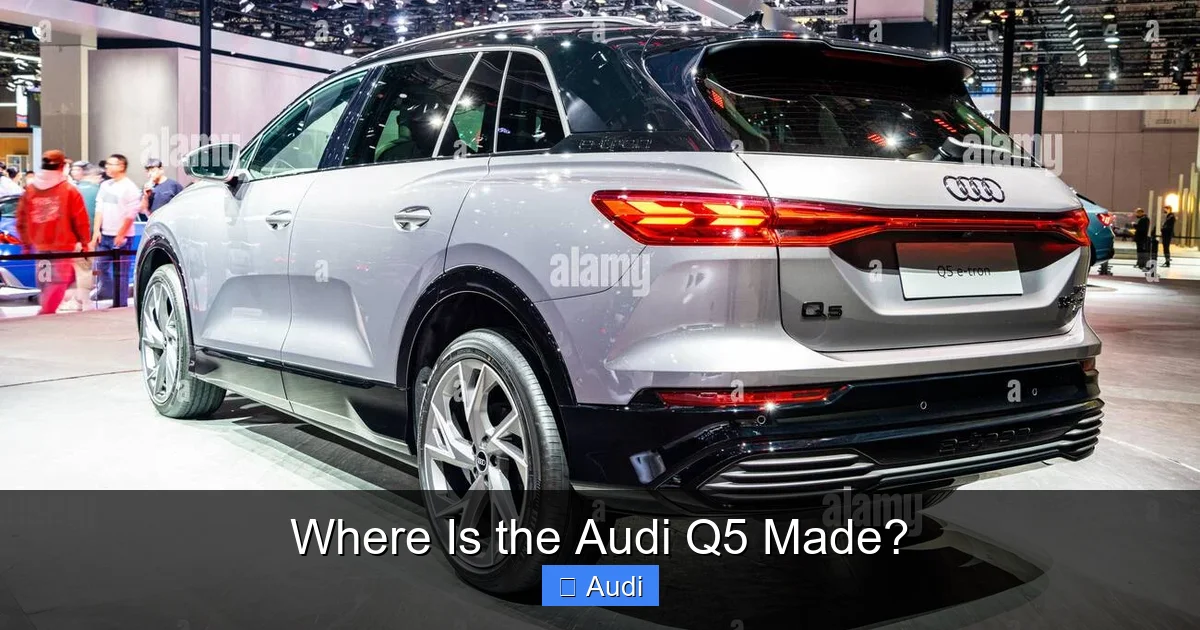
Visual guide about Where Is the Audi Q5 Made?
Image source: c8.alamy.com
When most people think of German engineering, they picture precision, reliability, and attention to detail—and the Audi Q5 is a prime example of these values. The primary production site for the Q5 is Audi’s flagship facility in Ingolstadt, Bavaria. This plant isn’t just a factory; it’s a symbol of Audi’s heritage and commitment to excellence.
Founded in 1949, the Ingolstadt plant has grown into one of the most advanced automotive manufacturing centers in the world. It spans over 2.5 million square meters and employs thousands of skilled workers, engineers, and technicians. The facility produces several Audi models, but the Q5 holds a special place as one of the brand’s best-selling vehicles.
What sets Ingolstadt apart is its integration of cutting-edge technology with traditional craftsmanship. The plant uses highly automated assembly lines, including robotic arms that weld and paint with millimeter precision. Yet, human oversight remains critical—especially in areas like interior finishing, where attention to detail matters most.
For instance, the leather seats in the Q5 are inspected by hand to ensure there are no imperfections. The same goes for wood trim and dashboard assembly. This blend of automation and human expertise ensures that every Q5 that leaves Ingolstadt meets Audi’s high standards.
Another key feature of the Ingolstadt plant is its focus on sustainability. Audi has invested heavily in reducing the environmental impact of its operations. The facility uses renewable energy sources, recycles water, and minimizes waste. In fact, the plant has achieved carbon-neutral production for several years, a milestone that reflects Audi’s broader commitment to environmental responsibility.
While not all Q5s are made in Ingolstadt, the plant remains the benchmark for quality. It’s where new models are first produced, where prototypes are tested, and where innovations are refined before being rolled out globally. For many Audi enthusiasts, a Q5 made in Germany carries a certain prestige—a badge of honor that speaks to its origins.
Made in Mexico: The San José Chiapa Plant and North American Production
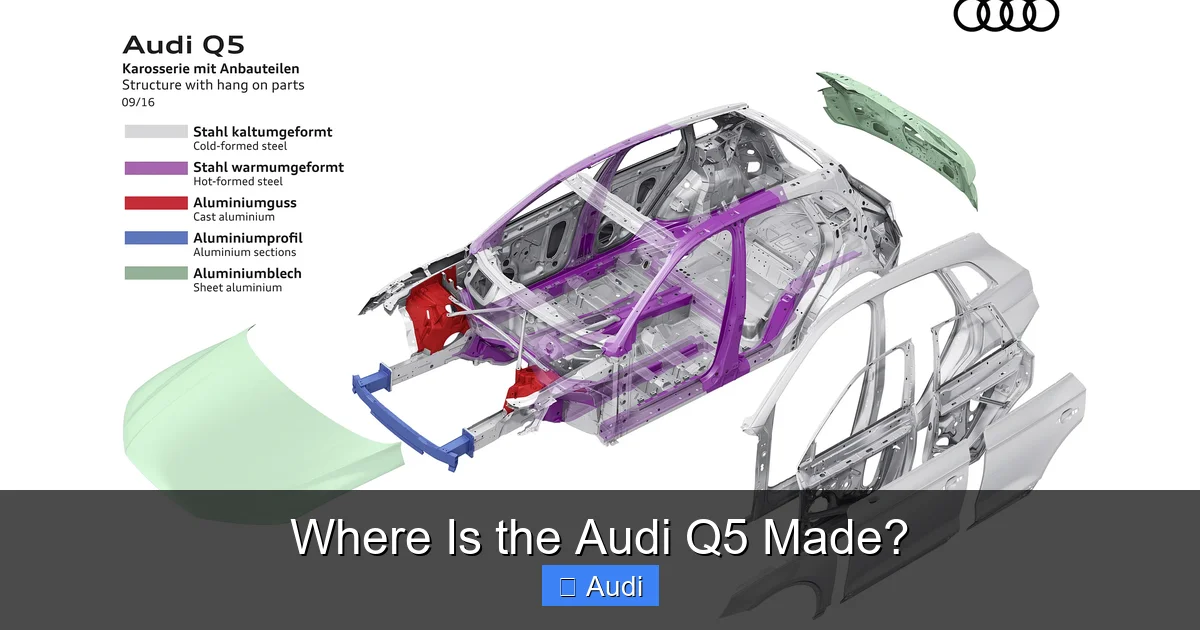
Visual guide about Where Is the Audi Q5 Made?
Image source: images.caricos.com
If you’re buying an Audi Q5 in the United States or Canada, there’s a very good chance it was made in Mexico. Since 2016, Audi has operated a state-of-the-art manufacturing facility in San José Chiapa, Puebla, specifically designed to produce vehicles for the North American market.
This plant was a game-changer for Audi. Before its opening, most Q5s sold in the U.S. were imported from Germany, which meant higher costs and longer delivery times. By building a dedicated factory in Mexico, Audi could streamline production, reduce tariffs, and respond faster to customer demand.
The San José Chiapa plant covers over 1.3 million square meters and was built with a $1.3 billion investment. It’s one of the most modern automotive factories in the world, featuring advanced robotics, real-time quality monitoring, and a highly efficient assembly process. The facility can produce up to 150,000 vehicles per year, with the Q5 being one of its main outputs.
One of the standout features of the Mexican plant is its focus on sustainability. Like Ingolstadt, San José Chiapa is carbon-neutral, powered largely by renewable energy. The factory uses solar panels, rainwater harvesting systems, and waste recycling programs to minimize its environmental footprint.
Quality is just as important here as it is in Germany. Every Q5 produced in Mexico undergoes the same rigorous testing and inspection procedures. Audi’s global quality assurance team ensures that vehicles from all plants meet the same standards. This means a Q5 made in Mexico is just as reliable and well-built as one made in Germany.
For North American buyers, this local production offers several advantages. First, it often results in shorter wait times for new models. Second, it can lead to more competitive pricing, as Audi avoids import duties and shipping costs. Third, it supports local economies—the plant employs thousands of Mexican workers and contributes significantly to the region’s economy.
It’s also worth noting that the Mexican-made Q5 is tailored to North American preferences. This includes features like larger cup holders, enhanced climate control, and specific infotainment setups. While the core engineering remains the same, these small adjustments make the Q5 feel more at home on U.S. and Canadian roads.
Audi Q5 in China: The FAW-Volkswagen Joint Venture

Visual guide about Where Is the Audi Q5 Made?
Image source: carcareportal.com
China is the world’s largest automotive market, and Audi has long recognized the importance of having a strong local presence there. To serve Chinese consumers effectively, Audi partners with FAW Group (First Automobile Works) in a joint venture known as FAW-Volkswagen. This partnership has been producing Audi vehicles in China since the 1980s, and the Q5 is one of its flagship models.
The Q5 produced in China is not identical to the one sold in Europe or North America. Instead, it’s a localized version designed specifically for Chinese drivers. The most notable difference is the Q5 L—a long-wheelbase variant that offers more rear legroom, a feature highly valued by Chinese consumers who often have chauffeurs.
The Q5 L is produced at FAW-Volkswagen’s plant in Changchun, Jilin Province. This facility is one of the most advanced in China, with modern assembly lines, quality control systems, and a strong emphasis on worker training. The plant follows Audi’s global standards, ensuring that every Q5 L meets the same safety, performance, and build quality benchmarks as its international counterparts.
One of the key reasons for local production in China is to avoid high import tariffs. Vehicles manufactured domestically are subject to lower taxes, making them more affordable for Chinese buyers. This has helped Audi maintain a strong market share in a highly competitive segment.
Another advantage is faster delivery. Chinese consumers can get their Q5 L models much quicker than if they were imported from Germany. This responsiveness is crucial in a market where brand loyalty can be influenced by availability and service.
Audi also tailors the Q5 L to local tastes. This includes features like rear-seat entertainment systems, ambient lighting, and premium materials that appeal to Chinese luxury buyers. The infotainment system is often customized with Chinese-language support and local app integrations.
Despite these regional differences, the core engineering and safety standards remain consistent. The Q5 L uses the same platform, engines, and safety technologies as the global model. This ensures that Chinese buyers get the same level of performance and reliability.
The success of the Q5 L in China demonstrates Audi’s ability to adapt its global products to local markets. It’s a strategy that has paid off—Audi remains one of the top luxury brands in China, and the Q5 is a key part of that success.
How to Identify Where Your Audi Q5 Was Made
Curious about where your Audi Q5 was manufactured? The answer is hidden in plain sight—on your vehicle’s VIN (Vehicle Identification Number). This 17-character code contains a wealth of information, including the country of origin, plant location, and production details.
The first character of the VIN indicates the country where the vehicle was made. For example:
– W = Germany (e.g., WAUZZZ8T9KA123456)
– 3 = Mexico (e.g., 3WAZZZ8T9KA123456)
– L = China (e.g., LWAZZZ8T9KA123456)
The second character often identifies the manufacturer (Audi), and the 11th character specifies the assembly plant. By decoding your VIN, you can determine exactly where your Q5 was built.
You can find your VIN on the driver’s side dashboard (visible through the windshield), on the driver’s door jamb, or in your vehicle’s registration documents. Many online VIN decoders can also help you interpret the code.
Knowing your Q5’s origin can be useful for several reasons. It can affect resale value—some buyers prefer German-made models for their perceived prestige. It can also influence warranty service, as regional plants may have different service networks.
Additionally, understanding where your Q5 was made gives you insight into its design and features. For example, a Mexican-made Q5 may have North American-specific options, while a Chinese-made Q5 L will have the extended wheelbase.
In short, your VIN is a window into your vehicle’s history. Take a moment to check it—you might be surprised by what you learn.
Quality Control and Consistency Across Global Plants
One of the biggest concerns for buyers is whether a Q5 made in Mexico or China is as good as one made in Germany. The short answer is yes—Audi maintains strict quality control across all its production facilities.
Audi’s global quality assurance program ensures that every plant follows the same standards. This includes:
– Uniform materials sourcing
– Identical assembly procedures
– Rigorous testing protocols
– Regular audits by central quality teams
For example, every Q5 undergoes a series of tests before it leaves the factory. These include:
– Paint thickness checks
– Engine performance diagnostics
– Brake and suspension inspections
– Interior fit and finish reviews
Audi also uses digital monitoring systems to track every step of the assembly process. If a defect is detected, the vehicle is flagged and corrected before it reaches the customer.
This commitment to consistency is why Audi can confidently sell the same model across different countries. Whether your Q5 is made in Ingolstadt, San José Chiapa, or Changchun, you can expect the same level of quality, safety, and performance.
Conclusion: The Global Journey of the Audi Q5
The Audi Q5 is more than just a luxury SUV—it’s a product of global collaboration, advanced engineering, and strategic planning. From the precision of Germany’s Ingolstadt plant to the efficiency of Mexico’s San José Chiapa facility and the localization efforts in China, the Q5’s production story reflects the realities of modern automotive manufacturing.
Understanding where the Audi Q5 is made helps you appreciate the thought and effort that goes into every vehicle. It also empowers you as a buyer, allowing you to make informed decisions based on origin, features, and value.
No matter where it’s built, the Q5 remains a symbol of Audi’s commitment to quality, innovation, and customer satisfaction. So the next time you get behind the wheel, remember: your Q5’s journey began thousands of miles away, shaped by the hands and minds of engineers and workers around the world.
Frequently Asked Questions
Where is the Audi Q5 primarily manufactured?
The Audi Q5 is primarily manufactured in Germany at the Ingolstadt plant, but it is also produced in Mexico and China to serve regional markets. Each location follows Audi’s global quality standards.
Are Audi Q5s made in Mexico the same quality as those made in Germany?
Yes, Audi Q5s made in Mexico are built to the same high standards as those made in Germany. All plants follow strict global quality control procedures to ensure consistency.
Why does Audi produce the Q5 in multiple countries?
Audi produces the Q5 in multiple countries to reduce shipping costs, avoid import tariffs, and meet regional demand more efficiently. This strategy also allows for faster delivery and localized features.
How can I tell where my Audi Q5 was made?
You can determine where your Audi Q5 was made by checking the first character of your VIN. “W” means Germany, “3” means Mexico, and “L” means China.
Is the Chinese-made Audi Q5 different from the global model?
Yes, the Chinese-made Q5 L has a longer wheelbase and features tailored to Chinese consumers, such as enhanced rear-seat comfort and local infotainment options.
Does the manufacturing location affect the warranty on an Audi Q5?
No, the warranty on an Audi Q5 is valid globally regardless of where it was made. However, service availability may vary by region, so it’s best to check with your local dealer.
