
Can You Transfer a Car Title Online in Pennsylvania?

Yes, Pennsylvania allows online car title transfers for certain situations, but not all transactions qualify. The process is convenient, secure, and saves time—if you meet the requirements. This guide covers everything you need to know to complete your title transfer online or in person.
Key Takeaways
- Online title transfers are available in PA for eligible buyers and sellers. You can use the PennDOT online portal if you have a valid PA driver’s license or ID and the vehicle meets specific criteria.
- Not all vehicles or transactions qualify for online processing. Newly purchased vehicles, out-of-state titles, or those requiring lienholder approval must be done in person or by mail.
- You’ll need key documents like the signed title, bill of sale, and proof of insurance. Missing paperwork is the #1 reason transfers get delayed.
- The online process typically takes 7–10 business days for processing. You’ll receive your new title by mail once approved.
- In-person transfers at a PennDOT center are faster for urgent needs. Walk-in service is available, but appointments are recommended to avoid long waits.
- Fees vary based on vehicle type and county. Expect to pay between $52 and $72 for most passenger vehicles, plus any local fees.
- Always verify your information before submitting. Errors in names, addresses, or VINs can cause rejections or legal issues down the road.
📑 Table of Contents
- Can You Transfer a Car Title Online in Pennsylvania?
- How the Online Car Title Transfer Works in PA
- Eligibility Requirements for Online Title Transfers
- Required Documents for a Smooth Transfer
- Fees and Payment Options
- Alternatives to Online Title Transfers
- Tips for a Successful Title Transfer
- Conclusion
Can You Transfer a Car Title Online in Pennsylvania?
If you’ve recently bought or sold a car in Pennsylvania, one of the first things on your to-do list is transferring the vehicle title. It’s a critical step that legally establishes ownership and ensures you can register the car, get license plates, and drive it safely on the road. But here’s the good news: in many cases, you can now complete this process online—saving you a trip to the DMV and hours of waiting in line.
Pennsylvania’s Department of Transportation (PennDOT) has made significant strides in digitizing vehicle services, and online title transfers are now a reality for eligible transactions. Whether you’re buying from a private seller, inheriting a vehicle, or transferring ownership between family members, the online option offers a fast, secure, and user-friendly way to handle the paperwork. However, it’s not a one-size-fits-all solution. Certain conditions must be met, and not every type of transfer qualifies.
In this guide, we’ll walk you through everything you need to know about transferring a car title online in Pennsylvania. From eligibility requirements and step-by-step instructions to common pitfalls and alternatives, we’ve got you covered. By the end, you’ll know exactly whether you can skip the DMV and complete your transfer from the comfort of your home.
How the Online Car Title Transfer Works in PA
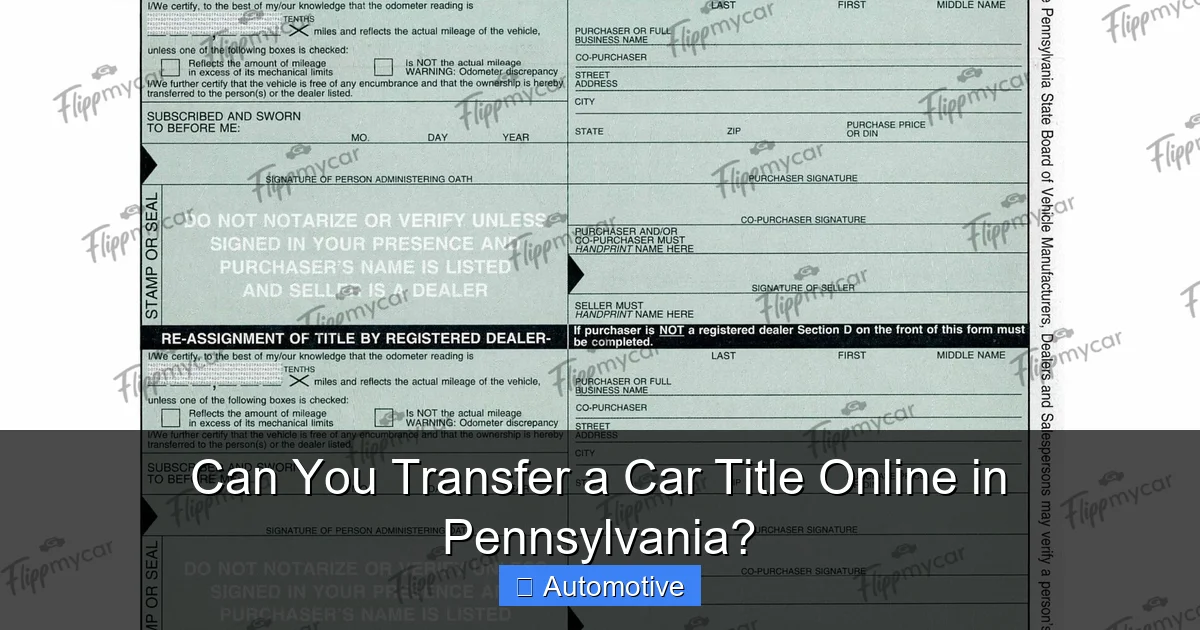
Visual guide about Can You Transfer a Car Title Online in Pennsylvania?
Image source: flippmycar.com
The online car title transfer process in Pennsylvania is designed to be simple, efficient, and accessible. It’s part of PennDOT’s broader effort to modernize vehicle services and reduce in-person visits. The system allows eligible buyers to submit their title transfer application electronically through the official PennDOT website.
To use the online service, you’ll need to create or log in to your PennDOT Online Services account. This secure portal is where you’ll upload required documents, enter vehicle and owner information, and pay applicable fees. Once submitted, your application is reviewed by PennDOT staff. If everything checks out, your new title will be printed and mailed to your address on file within 7–10 business days.
One of the biggest advantages of the online process is convenience. You can complete it anytime, day or night, without needing to take time off work or stand in line. It’s also more accurate—since the system guides you step by step, there’s less room for errors compared to filling out paper forms by hand.
However, it’s important to note that the online system is not a real-time transfer. Unlike some states where titles are issued instantly, Pennsylvania still processes applications manually. This means you won’t receive your physical title immediately, but you will get a temporary registration permit that allows you to drive the vehicle legally while you wait.
Step-by-Step Guide to Online Title Transfer
Here’s how to transfer your car title online in Pennsylvania:
1. **Gather Required Documents**
Before starting, make sure you have:
– The original vehicle title, signed by the seller
– A completed Bill of Sale (Form MV-4ST)
– Proof of valid Pennsylvania auto insurance
– Your valid PA driver’s license or state ID
– Vehicle Identification Number (VIN)
– Odometer reading (if applicable)
2. **Visit the PennDOT Online Services Portal**
Go to the official PennDOT website and navigate to the “Vehicle Services” section. Select “Title Transfer” from the menu.
3. **Log In or Create an Account**
If you already have a PennDOT online account, sign in. If not, create one using your driver’s license number, date of birth, and Social Security number.
4. **Enter Vehicle and Owner Information**
Input the VIN, current title number, seller’s information, and your details as the new owner. Double-check all entries for accuracy.
5. **Upload Required Documents**
Scan or take clear photos of the signed title, bill of sale, and insurance card. Upload them through the secure portal.
6. **Pay the Required Fees**
The standard title transfer fee is $52 for most passenger vehicles. Additional fees may apply for local taxes or special plates. Payment is made via credit or debit card.
7. **Submit and Confirm**
Review your application one last time, then submit. You’ll receive a confirmation number and a temporary registration permit via email.
8. **Wait for Your New Title**
PennDOT will process your application and mail your new title to your registered address within 7–10 business days.
What You’ll Receive After Submission
After submitting your online title transfer, you’ll receive two important things:
– **Temporary Registration Permit**: This is emailed to you immediately and allows you to legally drive the vehicle for up to 30 days. Print it out and keep it in your car.
– **New Physical Title**: This will arrive by mail within 7–10 business days. It will list you as the legal owner and include the vehicle’s current registration details.
Keep in mind that the temporary permit is not a substitute for registration. You’ll still need to register the vehicle and get license plates, but the title transfer must be completed first.
Eligibility Requirements for Online Title Transfers
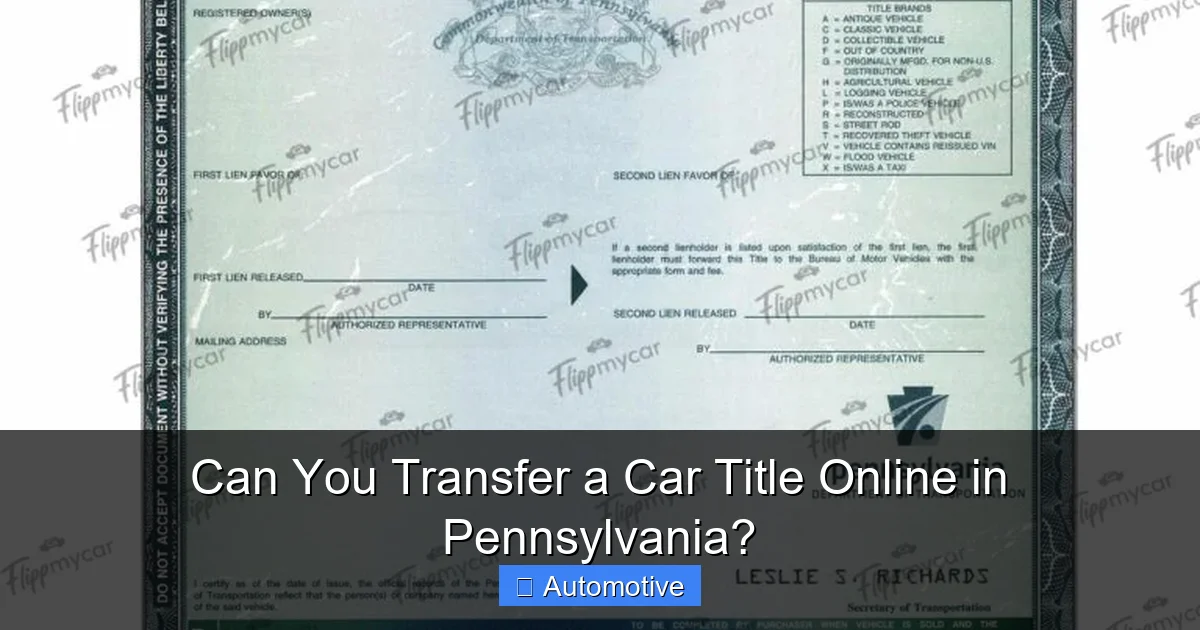
Visual guide about Can You Transfer a Car Title Online in Pennsylvania?
Image source: flippmycar.com
Not every car title transfer in Pennsylvania can be done online. PennDOT has set specific eligibility criteria to ensure the system is used appropriately and securely. If your situation doesn’t meet these requirements, you’ll need to complete the transfer in person or by mail.
Who Can Use the Online Service?
You are eligible for an online title transfer if:
– You are a Pennsylvania resident with a valid PA driver’s license or state ID.
– The vehicle is titled in Pennsylvania.
– The title is not branded (e.g., salvage, rebuilt, or flood-damaged).
– There is no active lien on the vehicle (or the lien has been satisfied and released).
– The vehicle is not a commercial vehicle over 10,000 pounds.
– The transfer is between private parties (not a dealership).
– The seller has signed the title correctly, including the odometer disclosure (if required).
Situations That Require In-Person or Mail-In Processing
You cannot use the online system if:
– The vehicle was purchased from a dealership (dealers must handle title transfers).
– The title is from out of state.
– The vehicle has a lien that hasn’t been released.
– The title is lost, damaged, or missing.
– The vehicle is a salvage or rebuilt title.
– You are transferring ownership due to inheritance or estate settlement.
– The buyer or seller is not a Pennsylvania resident.
– The vehicle is a motorcycle, trailer, or motorhome (some exceptions apply).
For these cases, you’ll need to visit a PennDOT Full-Service Center or mail your application with the required documents and fees.
Special Cases: Gifts, Inheritances, and Family Transfers
Transferring a car title as a gift or due to inheritance has different rules. While some family transfers may qualify for online processing, others—especially those involving estates or probate—require additional documentation and in-person processing.
For example, if a parent gifts a car to a child, and both have PA licenses, the transfer may be eligible online. But if the car is part of a deceased person’s estate, you’ll likely need a court order or affidavit of inheritance, which must be submitted in person.
Always check with PennDOT or consult a legal professional if you’re unsure about your specific situation.
Required Documents for a Smooth Transfer
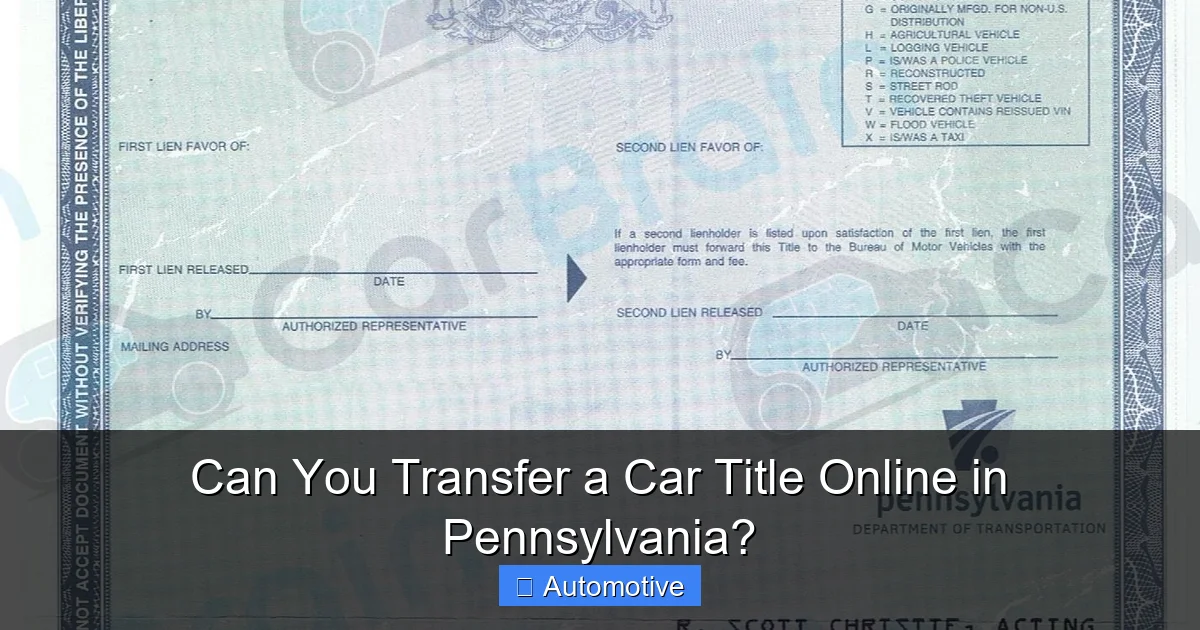
Visual guide about Can You Transfer a Car Title Online in Pennsylvania?
Image source: carbrain.com
Having the right documents is crucial for a successful title transfer—whether online or in person. Missing or incorrect paperwork is the most common reason applications get delayed or rejected.
Essential Documents You’ll Need
Here’s a checklist of what you’ll need for an online title transfer:
– **Signed Vehicle Title**: The original title must be signed by the seller in the designated area. Make sure the signature matches the name on the title.
– **Bill of Sale (Form MV-4ST)**: This form confirms the sale and includes details like sale price, date, and both parties’ information. It’s required even for gifts.
– **Proof of Insurance**: A valid Pennsylvania auto insurance policy in the buyer’s name. The insurance card must show the vehicle’s VIN and effective dates.
– **Valid PA Driver’s License or ID**: Both buyer and seller must have current Pennsylvania identification.
– **Odometer Disclosure**: Required for vehicles under 10 years old. The seller must record the current mileage on the title.
– **Lien Release (if applicable)**: If the vehicle had a loan, the lienholder must sign off on the title release.
Tips for Document Preparation
– **Scan or photograph documents clearly**: Blurry or incomplete images can cause delays. Use good lighting and a flat surface.
– **Double-check names and addresses**: Even small typos can lead to rejections. Ensure all information matches your ID and insurance.
– **Keep copies for your records**: Save digital and physical copies of all submitted documents.
– **Verify the VIN**: Make sure the VIN on the title, vehicle, and insurance all match.
Common Mistakes to Avoid
– Forgetting to sign the title
– Submitting a photocopy instead of the original
– Using an expired insurance card
– Entering the wrong VIN or odometer reading
– Not including the bill of sale
Taking a few extra minutes to review your documents can save you weeks of frustration.
Fees and Payment Options
Understanding the costs involved in a title transfer helps you budget and avoid surprises. Pennsylvania charges a standard fee for most title transfers, but additional costs may apply depending on your situation.
Standard Title Transfer Fee
The base fee for transferring a car title in Pennsylvania is **$52**. This applies to most passenger vehicles, including sedans, SUVs, and light trucks.
Additional Fees You Might Pay
– **Local Fee**: Some counties charge an additional $10–$20 local fee. This is added to the state fee and varies by location.
– **Special Plate Fees**: If you’re transferring personalized or specialty plates, there may be extra charges.
– **Late Fees**: If you transfer the title more than 20 days after purchase, you may be charged a late penalty.
– **Duplicate Title Fee**: If the original title is lost, you’ll pay $22 for a replacement before transferring.
How to Pay
For online transfers, payment is made via credit or debit card through the PennDOT portal. Accepted cards include Visa, Mastercard, and Discover. Personal checks and cash are not accepted for online transactions.
If you’re transferring in person, you can pay with cash, check, or money order at a PennDOT center.
Fee Waivers and Exceptions
Certain transfers may qualify for fee reductions or waivers, such as:
– Transfers between spouses
– Gifts to immediate family members (in some cases)
– Vehicles transferred due to death (with proper documentation)
Check with PennDOT or your local county office to see if you qualify.
Alternatives to Online Title Transfers
While the online option is convenient, it’s not always the best choice. Depending on your situation, you may need or prefer to complete the transfer in person or by mail.
In-Person Title Transfers
Visiting a PennDOT Full-Service Center is the fastest way to get your title processed—especially if you need it the same day. You’ll receive your new title on the spot, and staff can help resolve any issues immediately.
To transfer in person:
– Bring all required documents
– Pay fees with cash, check, or money order
– Complete Form MV-4ST (if not already done)
Appointments are highly recommended, as walk-in wait times can be long. You can schedule one online through the PennDOT website.
Mail-In Title Transfers
If you can’t visit a center and don’t qualify for online processing, you can mail your application. Send the completed forms, required documents, and payment to the address listed on the PennDOT website.
Processing times for mail-in applications are typically 4–6 weeks, so this option is best if you’re not in a hurry.
Using a Third-Party Service
Some people choose to use a licensed title service or notary to handle the transfer. These services can save time and reduce stress, especially for complex cases. However, they charge a fee—usually $50–$100—so weigh the cost against the convenience.
Tips for a Successful Title Transfer
To ensure your title transfer goes smoothly—whether online or in person—follow these practical tips:
– **Start early**: Don’t wait until the last minute. Begin the process as soon as the sale is complete.
– **Verify eligibility**: Check PennDOT’s website to confirm your transfer qualifies for online processing.
– **Use the correct forms**: Download forms directly from the PennDOT website to avoid outdated versions.
– **Keep communication open**: If buying from a private seller, stay in touch to ensure they sign the title promptly.
– **Check your email**: PennDOT will send updates and your temporary permit via email—monitor your inbox (and spam folder).
– **Follow up if needed**: If you don’t receive your title within 10 business days, contact PennDOT customer service.
Conclusion
Yes, you can transfer a car title online in Pennsylvania—but only if your situation meets PennDOT’s eligibility requirements. For many private buyers and sellers, the online process is a fast, secure, and convenient option that saves time and hassle. Just make sure you have all the necessary documents, enter your information accurately, and pay the correct fees.
However, not all transfers qualify for online processing. If your vehicle has a lien, is from out of state, or involves inheritance, you’ll likely need to visit a PennDOT center or submit your application by mail. In those cases, planning ahead and gathering the right paperwork is key.
No matter which method you choose, transferring a car title is a critical step in vehicle ownership. Doing it correctly ensures you’re legally protected, can register your car, and avoid fines or penalties down the road. With the right preparation and knowledge, the process doesn’t have to be stressful—even if you’re doing it for the first time.
So, the next time someone asks, “Can you transfer a car title online in Pennsylvania?” you’ll know the answer: yes, often you can—and now you know exactly how to do it.
Frequently Asked Questions
Can I transfer a car title online in Pennsylvania if I bought it from a dealership?
No, purchases from dealerships cannot be processed online. Dealers are required to handle title transfers directly with PennDOT. You’ll receive your title in the mail after the dealer submits the paperwork.
How long does it take to get my title after an online transfer?
It typically takes 7–10 business days for PennDOT to process your application and mail your new title. You’ll receive a temporary registration permit immediately after submission.
What if I lost the original title?
You cannot transfer a title online if the original is lost. You must first apply for a duplicate title in person or by mail, then proceed with the transfer.
Can I transfer a title online if the car has a lien?
No, vehicles with active liens cannot be transferred online. The lien must be satisfied and released before the transfer can proceed, usually in person.
Do I need a bill of sale for an online title transfer?
Yes, a completed Bill of Sale (Form MV-4ST) is required for all title transfers in Pennsylvania, including online ones. It verifies the sale details and protects both parties.
Can out-of-state residents transfer a PA title online?
No, only Pennsylvania residents with a valid PA driver’s license or ID can use the online title transfer service. Out-of-state buyers must complete the process in person or through their home state’s DMV.
