
Can You Register a Car Without a Title in Massachusetts?

Yes, you can register a car without a title in Massachusetts under specific circumstances, but it’s not straightforward. The state allows alternative documentation for lost, damaged, or missing titles, but you’ll need to follow strict procedures and provide supporting evidence to the RMV.
Key Takeaways
- Massachusetts generally requires a title to register a vehicle, but exceptions exist for lost, destroyed, or unavailable titles.
- You can use a “Duplicate Title Application” (Form TRC-100) if your original title is lost or damaged, which serves as proof of ownership.
- Inherited vehicles or those from out-of-state sellers without titles may qualify for registration using affidavits and other legal documents.
- Salvage or rebuilt vehicles require additional inspections and documentation before registration, even without a traditional title.
- Power of attorney or court orders can substitute for a title in cases involving estates, divorces, or legal disputes.
- Always contact your local RMV or visit Mass.gov/RMV for the most current forms and requirements, as policies can change.
- Fraud prevention is a top priority, so the RMV scrutinizes title-less registrations closely—be prepared for delays and extra paperwork.
📑 Table of Contents
Can You Register a Car Without a Title in Massachusetts?
So, you’ve found the perfect used car—great price, low mileage, and it runs like a dream. But there’s one problem: the seller doesn’t have the title. Or maybe you inherited a vehicle from a relative, and the title was lost years ago. Or perhaps you bought a car from out of state, and the title never arrived. Now you’re wondering: Can you even register a car without a title in Massachusetts?
The short answer is: yes, but it’s complicated. Massachusetts law generally requires a valid title to register a vehicle, but the state does offer pathways for people who don’t have one—especially if the title is lost, destroyed, or simply unavailable. The key is understanding the exceptions, gathering the right documents, and being prepared for a potentially longer process at the Registry of Motor Vehicles (RMV).
This guide will walk you through everything you need to know about registering a car without a title in Massachusetts. We’ll cover the legal requirements, alternative documentation options, step-by-step procedures, and real-life scenarios where this might come up. Whether you’re dealing with an inherited vehicle, a salvage title situation, or just a misplaced piece of paper, we’ve got you covered.
Why the Title Matters in Massachusetts
Visual guide about Can You Register a Car Without a Title in Massachusetts?
Image source: autohitch.com
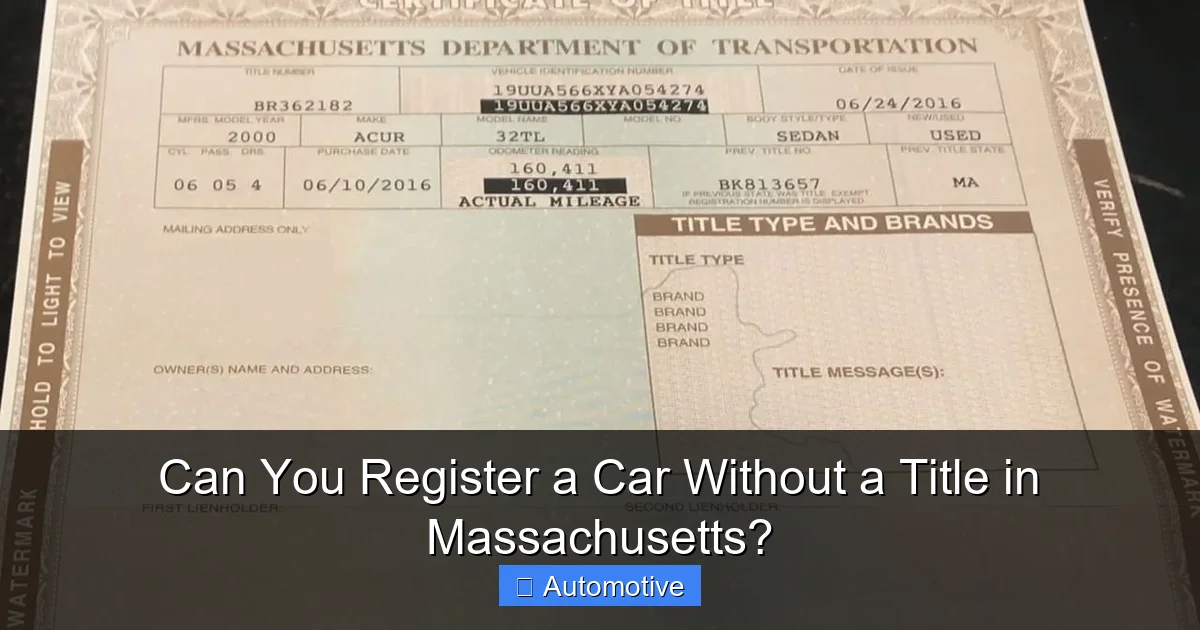
Before diving into workarounds, it’s important to understand why the title is such a big deal in the first place. In Massachusetts, the vehicle title is the official proof of ownership. It’s issued by the RMV and contains critical information like the vehicle identification number (VIN), make, model, year, and the names of the current and previous owners.
When you register a car, the RMV uses the title to verify that you’re legally allowed to operate and insure the vehicle. Without it, they can’t confirm ownership, which opens the door to fraud, theft, or disputes. That’s why the RMV is cautious—and rightfully so.
The Role of the Title in Vehicle Registration
The registration process in Massachusetts involves several steps: paying taxes and fees, providing proof of insurance, passing a safety inspection, and—most importantly—proving you own the car. The title is the cornerstone of that proof.
For most people, the process looks like this:
– You buy a car from a dealership or private seller.
– The seller signs over the title to you.
– You bring the signed title, along with other documents, to the RMV.
– You pay the registration fee, excise tax, and get your plates and registration certificate.
But what happens when that title is missing? The RMV doesn’t just shrug and say, “Oh well, we’ll take your word for it.” Instead, they have a set of alternative procedures designed to protect both the buyer and the state.
Common Scenarios Where You Might Not Have a Title
There are several real-world situations where someone might need to register a car without the original title:
– The title was lost or destroyed (e.g., in a fire, flood, or move).
– The seller never received the title from a previous owner or out-of-state transaction.
– You inherited a vehicle from a family member, and the title was never transferred.
– The car was purchased from a private seller who claimed to have lost the title.
– The vehicle has a salvage or rebuilt title and the documentation is incomplete.
– The car was repossessed or involved in a legal dispute, and the title is tied up in court.
In each of these cases, the RMV may allow registration—but only if you can provide sufficient alternative proof of ownership.
How to Register a Car Without a Title in Massachusetts
Visual guide about Can You Register a Car Without a Title in Massachusetts?
Image source: ballisticparts.com
Now that we’ve established that it’s possible (but not simple), let’s break down the actual steps you’ll need to take. The process varies depending on your specific situation, but here are the most common pathways.
Option 1: Apply for a Duplicate Title
If your title is lost, stolen, or damaged, the first and best option is to apply for a duplicate title. This is the closest thing to having the original and is widely accepted by the RMV.
To get a duplicate title in Massachusetts, you’ll need to:
1. Complete Form TRC-100 (Application for Duplicate Title).
2. Provide proof of identity (e.g., driver’s license or state ID).
3. Pay the duplicate title fee (currently $25 as of 2024).
4. Submit the form in person at an RMV Service Center or by mail.
Once you receive the duplicate title, you can proceed with standard registration. This is the smoothest path and should be your first choice if the original title is simply missing.
Option 2: Use an Affidavit of Ownership
If you can’t get a duplicate title—perhaps because the vehicle is too old, was never titled, or the previous owner is unreachable—you may be able to use an Affidavit of Ownership.
This is a sworn statement that you are the legal owner of the vehicle. It’s typically used in cases involving:
– Vehicles over 25 years old (which may not require a title in some states).
– Inherited vehicles where the title was never transferred.
– Cars purchased from out-of-state sellers who didn’t provide a title.
To use an affidavit, you’ll need to:
– Complete the RMV’s Affidavit of Ownership (Form MV-1).
– Have it notarized.
– Provide supporting documents, such as a bill of sale, probate records, or a death certificate (if inherited).
– Submit everything to the RMV along with your registration application.
Keep in mind: the RMV may still require additional verification, and this option is not guaranteed.
Option 3: Inherited or Estate Vehicles
If you’ve inherited a car from a deceased relative, you may not have a title in your name. In these cases, Massachusetts allows registration using estate documents.
You’ll need:
– A copy of the death certificate.
– Probate court documents showing you are the legal heir or executor.
– A signed affidavit stating you are the rightful owner.
– Proof of insurance and identity.
If the estate has already been settled and the vehicle was transferred through probate, you may receive a court-ordered title or a letter authorizing transfer. Bring all of this to the RMV.
Option 4: Out-of-State Vehicles Without Titles
Buying a car from another state can be tricky, especially if the seller doesn’t have a title. Some states (like New Hampshire) don’t require titles for older vehicles, which can cause confusion when registering in Massachusetts.
If you’re bringing an out-of-state vehicle into Massachusetts without a title, you’ll need to:
– Provide a bill of sale from the seller.
– Submit a completed MV-1 form (Application for Registration and Title).
– Include a notarized affidavit explaining why there’s no title.
– Pass a VIN inspection at an RMV Service Center or approved inspection station.
The RMV may also require a vehicle history report (like from Carfax) to verify the car’s background and ensure it’s not stolen.
Option 5: Salvage or Rebuilt Vehicles
Salvage titles are issued when a vehicle has been declared a total loss by an insurance company. If you’ve repaired a salvage vehicle and want to register it, you’ll need more than just a title—you’ll need proof it’s roadworthy.
For salvage or rebuilt vehicles without a title, the process includes:
– A Rebuilt Vehicle Inspection at an RMV-approved facility.
– Documentation showing the vehicle was repaired and is safe to drive.
– A salvage certificate or equivalent from the previous state.
– An affidavit explaining the lack of a standard title.
Once the inspection is passed, the RMV will issue a new title and allow registration.
Required Documents and Forms
Visual guide about Can You Register a Car Without a Title in Massachusetts?
Image source: i.pinimg.com
No matter which path you take, you’ll need to gather several key documents. Here’s a checklist to help you prepare:
Essential Documents for Title-Less Registration
- Proof of Identity: Valid driver’s license, state ID, or passport.
- Proof of Insurance: Massachusetts requires minimum liability coverage. Bring your insurance card or declaration page.
- Bill of Sale: A signed document from the seller showing the purchase price, date, and vehicle details.
- Affidavit of Ownership: A notarized statement declaring you are the legal owner.
- VIN Verification: Completed at an RMV Service Center or approved inspection station.
- Odometer Disclosure: Required for vehicles under 10 years old.
- Payment for Fees: Registration, excise tax, and any title or duplicate fees.
RMV Forms You May Need
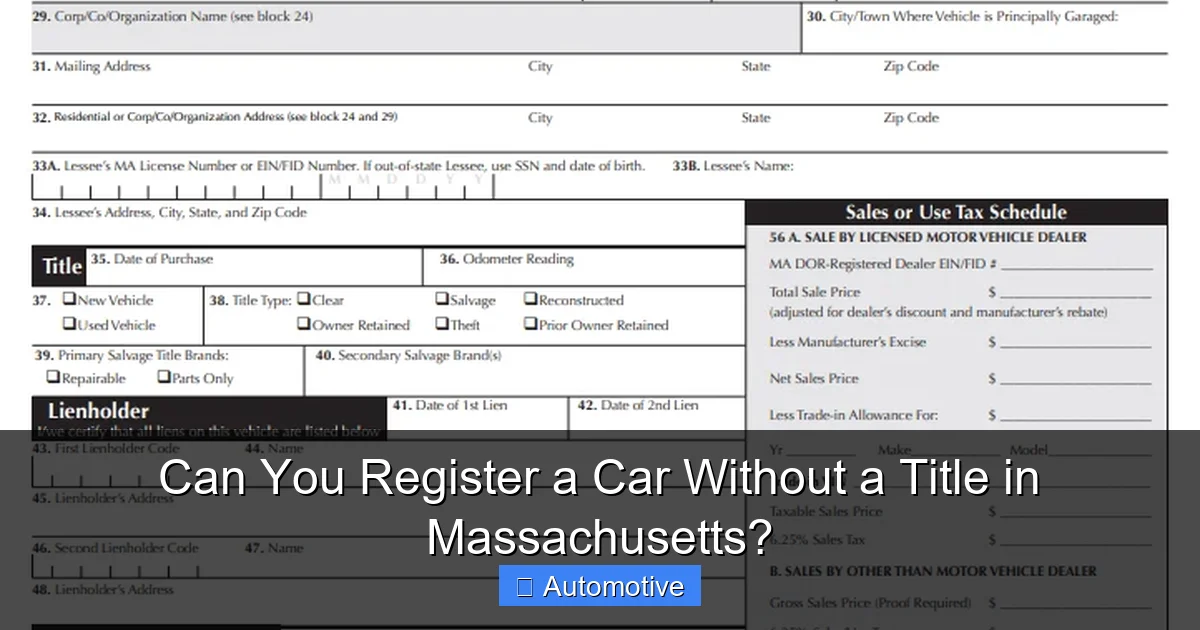
– Form MV-1: Application for Registration and Title (used when no title is available).
– Form TRC-100: Application for Duplicate Title.
– Form MV-7: Affidavit of Ownership (for inherited or untitled vehicles).
– Form MV-8: Odometer Disclosure Statement.
Always download the latest versions from the official RMV website (Mass.gov/RMV) to ensure you’re using the correct forms.
Tips to Avoid Delays and Rejections
Registering a car without a title is already a complex process, so you don’t want to make it harder by making simple mistakes. Here are some practical tips to keep things moving smoothly:
Double-Check All Documents
Mistakes on forms—like incorrect VINs, misspelled names, or missing signatures—can cause your application to be rejected. Take your time and review everything before submitting.
Get Everything Notarized
If your affidavit or bill of sale requires notarization, don’t skip this step. Use a licensed notary public, and make sure the notary signs and stamps the document correctly.
Schedule an Appointment
The RMV can be busy, especially during peak hours. Schedule an appointment online to avoid long waits and ensure you’re seen promptly.
Bring a Copy of Everything
The RMV may not return original documents, so bring photocopies and keep the originals for your records.
Be Honest and Transparent
If you’re unsure about a step or don’t have a required document, ask the RMV staff for guidance. Lying or omitting information can lead to penalties or legal issues.
Prepare for Extra Time
Title-less registrations often take longer than standard ones. The RMV may need to verify information, contact previous owners, or conduct additional inspections. Plan accordingly and don’t wait until the last minute.
Real-Life Examples and Case Studies
Let’s look at a few real-world scenarios to see how this process plays out.
Case 1: Lost Title After a House Fire
Maria bought a used sedan five years ago and kept the title in a fireproof safe. Unfortunately, her house caught fire, and the safe was damaged. The title was partially burned and unreadable.
She visited the RMV with her driver’s license, insurance card, and a copy of the damaged title. She filled out Form TRC-100, paid the $25 fee, and received a duplicate title within two weeks. Once she had the new title, she registered the car without any issues.
Case 2: Inherited a Classic Car
James inherited his grandfather’s 1967 Mustang after his passing. The car had been in the family for decades, but the title was never transferred. There was no probate because the estate was small.
James brought the death certificate, a notarized affidavit stating he was the heir, and a bill of sale from his grandfather’s estate (signed by the executor). He also had the car inspected for safety. The RMV accepted the documents and allowed him to register the vehicle under the “inherited vehicle” exception.
Case 3: Bought a Car from a Private Seller Without a Title
Lisa found a great deal on a 2008 Honda Civic from a private seller in Vermont. The seller claimed the title was lost and offered a bill of sale instead. Lisa was hesitant but decided to take the risk.
When she went to the RMV, she was told she needed more than just a bill of sale. She had to complete Form MV-1, provide a notarized affidavit, and pass a VIN inspection. The RMV also requested a vehicle history report. After two weeks of back-and-forth, she was finally able to register the car—but it took much longer than expected.
Common Mistakes to Avoid
Even with the right documents, people often run into problems. Here are some common pitfalls:
Assuming the RMV Will Accept Any Affidavit
Not all affidavits are created equal. The RMV has specific forms and requirements. Using a generic template from the internet may not be accepted.
Not Getting the VIN Verified
The VIN must be verified in person at an RMV Service Center or approved inspection station. You can’t skip this step, even if you have all other documents.
Forgetting the Odometer Disclosure
For vehicles less than 10 years old, you must disclose the mileage. This is a federal requirement and cannot be overlooked.
Trying to Register a Stolen or Fraudulent Vehicle
If the car has been reported stolen or the ownership is disputed, the RMV will not allow registration. Always verify the vehicle’s history before purchasing.
Conclusion
So, can you register a car without a title in Massachusetts? Yes—but it’s not as simple as walking into the RMV with a bill of sale and expecting instant approval. The state has strict rules in place to prevent fraud and ensure that only legitimate owners can register vehicles.
Your best bet is to apply for a duplicate title if possible. If that’s not an option, use an affidavit, estate documents, or other legal proof of ownership. Be prepared to provide multiple forms of documentation, pass inspections, and possibly wait longer than usual.
The key is to be patient, thorough, and honest. The RMV’s job is to protect consumers and the public, so they’ll ask questions and verify everything. But if you follow the rules and provide the right paperwork, you can successfully register your vehicle—even without the original title.
Always check the latest requirements on the official RMV website or contact your local Service Center for guidance. And remember: when in doubt, ask. It’s better to spend an extra 10 minutes clarifying a step than to waste weeks fixing a rejected application.
With the right preparation, you can get your car on the road legally and safely—title or no title.
Frequently Asked Questions
Can I register a car in Massachusetts if I lost the title?
Yes, you can apply for a duplicate title using Form TRC-100. Once you receive the duplicate, you can proceed with standard registration at the RMV.
What if the seller doesn’t have a title?
If the seller lacks a title, you may still register the vehicle using a notarized affidavit of ownership, bill of sale, and VIN verification. The RMV will review your case carefully.
Can I register an inherited car without a title?
Yes, if you have a death certificate, probate documents, and a notarized affidavit proving you’re the legal heir, the RMV may allow registration without a title.
Do I need a title to register a salvage vehicle in Massachusetts?
Salvage vehicles require a salvage certificate and a rebuilt inspection. If you don’t have a title, you’ll need additional documentation and must pass a rigorous safety inspection.
Can I register a car from out of state without a title?
It’s possible, but you’ll need a bill of sale, affidavit, VIN verification, and possibly a vehicle history report. The RMV will assess your case individually.
How long does it take to register a car without a title in MA?
The process can take several weeks, especially if additional verification or inspections are required. Applying for a duplicate title usually takes 1–2 weeks.