
What Happens If You Wreck a Financed Car Without Insurance?

Wrecking a financed car without insurance can lead to massive debt, legal trouble, and credit damage. You’ll still owe the loan balance, face repossession, and may be sued for the remaining amount. Always maintain coverage to avoid financial disaster.
Key Takeaways
- You still owe the full loan balance: Even if the car is totaled, the lender expects full repayment of the remaining loan amount.
- No insurance means no payout: Without collision or comprehensive coverage, you won’t receive money to replace the car or pay off the loan.
- Risk of repossession: The lender can repossess the vehicle if you default on payments after the accident.
- Legal and financial liability: You may be sued for the difference between the car’s value and the loan balance, known as the “deficiency balance.”
- Credit score damage: Defaulting on the loan will severely hurt your credit, making future borrowing difficult.
- Gap insurance could have helped: This optional coverage pays the difference if the car’s value is less than the loan amount after a total loss.
- State laws require insurance: Driving without insurance is illegal in most states and can result in fines, license suspension, or even jail time.
📑 Table of Contents
- What Happens If You Wreck a Financed Car Without Insurance?
- Understanding How Car Financing Works
- Immediate Consequences of Wrecking an Uninsured Financed Car
- Financial Fallout: Debt, Lawsuits, and Credit Damage
- Legal and Regulatory Risks
- How Gap Insurance Could Have Helped
- What to Do If You’ve Already Wrecked an Uninsured Financed Car
- How to Avoid This Nightmare in the Future
- Conclusion
What Happens If You Wreck a Financed Car Without Insurance?
Imagine this: You’re driving your financed car down the highway, music playing, windows down. Suddenly, a deer darts into the road. You swerve, lose control, and crash into a guardrail. The car is totaled. Your heart sinks—not just because of the shock, but because you realize you haven’t paid your insurance premium in months. You’re driving uninsured.
Now what?
If you wreck a financed car without insurance, the consequences go far beyond a damaged vehicle. You’re not just facing a wrecked car—you’re staring down a financial, legal, and personal storm. From owing tens of thousands of dollars to potential lawsuits and credit ruin, the fallout can last for years.
This article will walk you through exactly what happens when you total a financed car without insurance, why it’s so dangerous, and how you can protect yourself from this nightmare scenario. Whether you’re currently financing a car or thinking about it, understanding these risks is essential.
Understanding How Car Financing Works
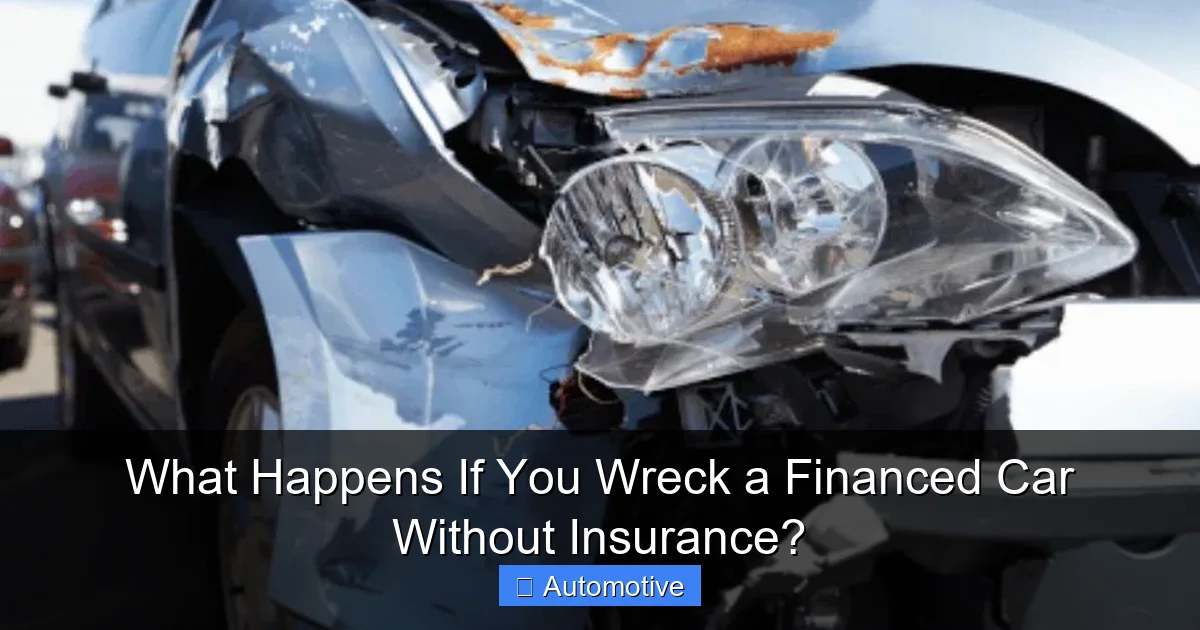
Visual guide about What Happens If You Wreck a Financed Car Without Insurance?
Image source: watcher.guru
Before diving into the aftermath of an uninsured wreck, it’s important to understand how car financing operates. When you finance a car, you’re essentially borrowing money from a lender—usually a bank, credit union, or dealership—to buy the vehicle. You agree to pay back that loan over a set period, typically 3 to 7 years, with interest.
But here’s the catch: the car itself acts as collateral. That means the lender has a legal claim to the vehicle until the loan is fully paid off. If you stop making payments, the lender can repossess the car to recover their money.
Now, most lenders require you to carry full coverage insurance—specifically, collision and comprehensive insurance—as long as you still owe money on the loan. Why? Because they want to protect their investment. If the car is damaged or destroyed, insurance helps ensure the lender gets paid.
But what if you ignore that requirement? What if you let your insurance lapse or never bought it in the first place? That’s when things get dangerous.
The Role of Insurance in a Financed Car
Insurance isn’t just a legal requirement—it’s a financial safety net. For financed vehicles, it’s even more critical. Here’s why:
– Collision coverage pays to repair or replace your car if it’s damaged in an accident, regardless of fault.
– Comprehensive coverage covers non-collision events like theft, fire, vandalism, or natural disasters.
– Liability insurance covers damage or injuries you cause to others, but it doesn’t protect your own vehicle.
When you have full coverage, and your car is totaled, the insurance company pays the car’s actual cash value (ACV) at the time of the accident. That money goes directly to the lender to pay off the loan. If the payout is more than what you owe, you get the difference. If it’s less—common with depreciating cars—you’re responsible for the gap.
But without insurance? You get nothing. The lender still expects full payment. And that’s where the real trouble begins.
Immediate Consequences of Wrecking an Uninsured Financed Car
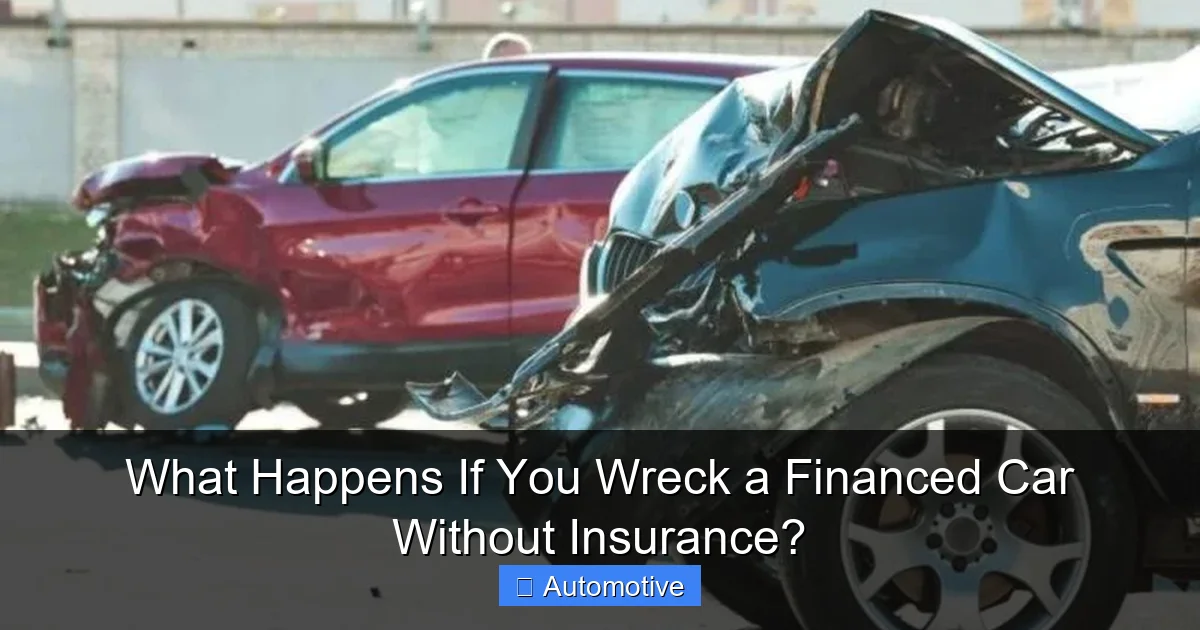
Visual guide about What Happens If You Wreck a Financed Car Without Insurance?
Image source: watcher.guru
The moment your uninsured financed car is wrecked, a chain reaction of negative events kicks in. Let’s break down what happens step by step.
1. No Insurance Payout
This is the most obvious consequence: you won’t receive any money from an insurance company because you don’t have coverage. Even if the accident wasn’t your fault, you can’t file a claim with your own insurer—because you don’t have one.
If the other driver was at fault, you might be able to sue them for damages. But that process is slow, expensive, and uncertain. You’ll need a lawyer, and there’s no guarantee you’ll win or collect enough to cover your losses.
2. You Still Owe the Full Loan Balance
Here’s the harsh truth: wrecking your car doesn’t cancel your loan. The lender lent you money to buy the car, and you’re still on the hook for repayment—even if the car is now a pile of scrap metal.
For example, let’s say you owe $25,000 on your car loan, but the car is only worth $18,000 when it’s totaled. With insurance, the insurer pays $18,000 to the lender, and you’re responsible for the $7,000 difference (unless you have gap insurance).
Without insurance? You owe the full $25,000—plus any late fees or penalties—despite having no car to show for it.
3. The Lender Will Demand Payment
Once the lender learns about the accident—usually through a police report or your attempt to surrender the vehicle—they’ll contact you. They’ll demand payment of the outstanding loan balance. If you can’t pay, they’ll classify your account as delinquent.
From there, the lender may:
– Send your account to collections
– Report the delinquency to credit bureaus
– Initiate legal action to recover the debt
– Repossess any other assets if allowed by state law
In short, the lender won’t just walk away. They’ll pursue every legal avenue to get their money back.
4. Risk of Repossession
Even though the car is destroyed, the lender still has a security interest in it. If you stop making payments—which is likely, since you no longer have a drivable vehicle—the lender can repossess what’s left of the car.
They may sell the salvage at auction to recoup some of their losses. But if the sale doesn’t cover the loan balance, you’re still responsible for the difference.
And yes, they can repossess a wrecked car. It might seem pointless, but legally, they have the right to do so.
Financial Fallout: Debt, Lawsuits, and Credit Damage
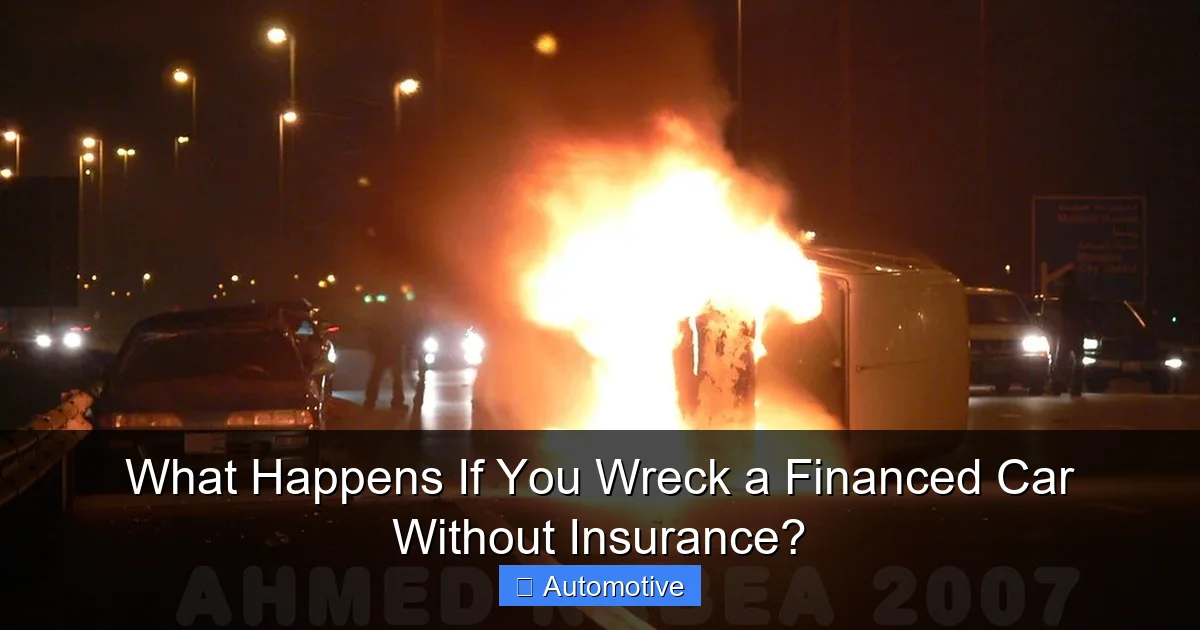
Visual guide about What Happens If You Wreck a Financed Car Without Insurance?
Image source: trafficdave.com
The financial consequences of wrecking an uninsured financed car can be devastating. Let’s look at the long-term impact.
You’re Stuck with a “Deficiency Balance”
When a car is totaled, insurance typically pays its actual cash value (ACV)—what it’s worth on the market, not what you owe. This often leaves a gap between the payout and the loan balance.
For example:
– Loan balance: $22,000
– Car’s ACV: $16,000
– Deficiency balance: $6,000
With insurance, you’d owe that $6,000 out of pocket—or gap insurance would cover it.
Without insurance? You owe the full $22,000. That’s a massive debt with no asset to show for it.
Potential for Lawsuits
If you can’t pay the deficiency balance, the lender may sue you. This is more common with larger loan amounts or when the lender believes you have the ability to pay.
If they win the lawsuit, the court may:
– Garnish your wages
– Place a lien on your property
– Seize bank accounts
Even if you’re unemployed or struggling financially, the debt doesn’t disappear. It can follow you for years.
Severe Credit Damage
Defaulting on a car loan is one of the worst things you can do to your credit score. Payment history makes up 35% of your FICO score, and a single missed payment can drop your score by 100 points or more.
Once the account goes to collections or is charged off, it stays on your credit report for seven years. This makes it extremely difficult to:
– Get approved for credit cards
– Qualify for a mortgage
– Rent an apartment
– Secure a new car loan
Lenders will see you as a high-risk borrower, and if you do get approved, you’ll likely face high interest rates and strict terms.
Example: Real-Life Scenario
Let’s say Maria financed a $30,000 SUV with a 60-month loan. After two years, she still owes $24,000. She lets her insurance lapse to save money.
One rainy night, she hydroplanes and crashes into a tree. The car is declared a total loss. The salvage value is $3,000.
Without insurance:
– She receives $0 from an insurer.
– The lender demands $24,000.
– She can’t pay, so the account goes to collections.
– Her credit score drops from 720 to 580.
– Two years later, she’s still paying off the debt and can’t qualify for a new car.
This isn’t hypothetical. Stories like Maria’s happen every day.
Legal and Regulatory Risks
Beyond the financial fallout, driving without insurance—and then wrecking a financed car—comes with serious legal consequences.
Driving Without Insurance Is Illegal
In 48 states (all except New Hampshire and Virginia, with restrictions), drivers are required by law to carry minimum liability insurance. If you’re caught driving uninsured, you could face:
– Fines ranging from $100 to $1,000+
– License suspension
– Vehicle registration suspension
– Mandatory SR-22 filing (proof of future insurance)
– Jail time in extreme cases
And if you cause an accident while uninsured, the penalties are even harsher. You could be personally liable for all damages and injuries—even if the other party was partially at fault.
Impact on Future Insurance Rates
Even if you eventually get insurance again, having a lapse in coverage will raise your premiums. Insurers see you as a higher risk, and you’ll likely be classified as a “non-standard” driver.
Add a wreck and a lapse, and your rates could double or triple. Some insurers may even refuse to cover you altogether.
State-Specific Laws Matter
Each state handles uninsured accidents differently. In “no-fault” states like Florida or Michigan, your own insurance typically covers your injuries regardless of who caused the crash. But if you’re uninsured, you may lose those benefits.
In “at-fault” states, the driver responsible for the accident pays for damages. But if you’re uninsured and at fault, you’re personally liable for all costs—including medical bills, property damage, and legal fees.
Always check your state’s laws. Ignorance isn’t an excuse.
How Gap Insurance Could Have Helped
One of the most overlooked protections for financed cars is gap insurance. This optional coverage pays the difference between what your car is worth and what you owe on the loan if it’s totaled or stolen.
Let’s revisit Maria’s example:
– Loan balance: $24,000
– Car’s ACV: $16,000
– Gap insurance payout: $8,000
With gap insurance, the insurer pays $16,000 to the lender, and gap coverage pays the remaining $8,000. Maria walks away with no debt.
But without it? She owes $24,000.
Who Should Consider Gap Insurance?
Gap insurance is especially valuable if:
– You made a small down payment (less than 20%)
– You have a long loan term (60+ months)
– You’re financing a car that depreciates quickly (luxury vehicles, EVs)
– You rolled negative equity from a previous loan into the new one
It typically costs $20–$50 per month and can save you thousands in the event of a total loss.
Important Note: Gap Insurance Requires Full Coverage
You can’t buy gap insurance alone. It’s only available if you also carry collision and comprehensive coverage. So if you’re skipping insurance to save money, you’re also disqualifying yourself from gap protection.
What to Do If You’ve Already Wrecked an Uninsured Financed Car
If you’re already in this situation, don’t panic—but act quickly. Here’s what to do:
1. Contact Your Lender Immediately
Be honest. Explain the situation and ask about your options. Some lenders may offer a hardship program or temporary deferment. Others may work with you on a payment plan.
The worst thing you can do is ignore the problem. Communication is key.
2. Explore Legal and Financial Assistance
If you’re facing a lawsuit or wage garnishment, consult a consumer rights attorney. Some offer free consultations and may help you negotiate with the lender.
You can also contact a nonprofit credit counseling agency. They can help you create a budget, negotiate debt, and explore options like debt settlement or bankruptcy (as a last resort).
3. Consider Selling the Salvage
If the car has any salvage value, you might be able to sell it privately or to a junkyard. Use the money to reduce your debt.
Just make sure the lender agrees—they technically own the car until the loan is paid.
4. Rebuild Your Credit
Start rebuilding your credit as soon as possible. Pay all other bills on time, keep credit card balances low, and consider a secured credit card.
It won’t happen overnight, but consistent positive behavior can gradually improve your score.
5. Learn from the Experience
Use this as a wake-up call. Going forward:
– Always maintain full coverage on financed vehicles
– Budget for insurance as a non-negotiable expense
– Consider gap insurance for added protection
– Review your policy annually to ensure adequate coverage
How to Avoid This Nightmare in the Future
The best way to handle this scenario is to prevent it from happening in the first place. Here are practical steps to protect yourself:
1. Never Let Your Insurance Lapse
Set up automatic payments or calendar reminders to renew your policy on time. Even a one-day lapse can leave you exposed.
If you’re struggling to afford premiums, talk to your insurer. They may offer discounts for safe driving, bundling policies, or paying annually.
2. Understand Your Loan Agreement
Read the fine print. Most financing contracts require full coverage insurance. Violating this can be considered default, giving the lender the right to repossess the car.
3. Budget for the Full Cost of Ownership
Many people focus only on the monthly car payment and forget about insurance, maintenance, fuel, and registration. Use a car affordability calculator to ensure you can cover all expenses.
A good rule of thumb: your total car expenses (payment + insurance + gas + maintenance) should not exceed 15–20% of your take-home pay.
4. Consider Refinancing or Trading In
If your loan has a high interest rate or you’re “upside-down” (owing more than the car is worth), consider refinancing or trading in for a less expensive vehicle.
This can lower your monthly payment and reduce the risk of a large deficiency balance.
5. Stay Informed About State Laws
Make sure you understand your state’s insurance requirements and penalties for driving uninsured. Keep your registration and insurance cards in the car at all times.
Conclusion
Wrecking a financed car without insurance isn’t just a minor setback—it’s a financial catastrophe waiting to happen. You’ll still owe the full loan balance, face potential lawsuits, and suffer lasting damage to your credit. The legal penalties can include fines, license suspension, and even jail time.
The good news? This situation is entirely preventable. By maintaining full coverage insurance, understanding your loan terms, and budgeting wisely, you can protect yourself from financial ruin.
Remember: your car is more than just a vehicle—it’s collateral. And when you finance it, you’re not just borrowing money; you’re entering a legal agreement that demands responsibility.
Don’t let a moment of oversight lead to years of debt. Stay insured, stay informed, and drive safely.
Frequently Asked Questions
Can I sue the other driver if they caused the accident and I’m uninsured?
Yes, you can sue the at-fault driver for damages, including the value of your car and any injuries. However, the process is complex, expensive, and not guaranteed to succeed. You’ll likely need a lawyer, and collecting the judgment can be difficult.
Will my credit be ruined forever if I default on a car loan?
No, but it will take time to recover. A default stays on your credit report for seven years, but its impact lessens over time. By paying bills on time and using credit responsibly, you can rebuild your score within a few years.
Can the lender repossess my car if it’s already wrecked?
Yes. The lender has a security interest in the vehicle until the loan is paid. Even if the car is totaled, they can repossess the salvage and sell it to recover part of the debt.
Is gap insurance worth it?
It depends on your situation. If you have a small down payment, a long loan term, or a rapidly depreciating car, gap insurance is usually worth the cost. It can save you thousands if your car is totaled.
What happens if I can’t pay the deficiency balance?
The lender may send your account to collections, sue you, or garnish your wages. In extreme cases, they may place a lien on your property. It’s important to communicate with the lender and explore payment options.
Can I get insurance after wrecking my car?
You can apply for insurance, but most insurers won’t cover a wrecked or non-drivable vehicle. You’ll need to repair or replace the car first. Once you have a drivable vehicle, you can shop for a new policy—though your rates may be higher due to the lapse.