
What Is Active Eco in a Kia Soul?

Active ECO in a Kia Soul is a smart driving mode designed to boost fuel efficiency by optimizing engine and transmission performance. It adjusts throttle response and shift patterns to reduce fuel consumption without sacrificing everyday drivability, making it ideal for city commutes and highway cruising.
If you’ve ever driven a Kia Soul—or even just glanced at the dashboard—you might have noticed a button labeled “ECO.” It’s small, usually green or blue, and sits within easy reach of the driver. But what exactly does it do? And more importantly, should you be using it?
The short answer? Yes—especially if you want to save money at the pump without giving up the fun, practical driving experience the Kia Soul is known for. The feature behind that little button is called **Active ECO**, and it’s one of the most underrated tools in your vehicle’s efficiency toolkit.
Active ECO isn’t some futuristic AI system or a complex hybrid mechanism. It’s a straightforward, driver-friendly technology that tweaks how your Kia Soul responds to your inputs. Think of it as a gentle nudge toward smarter driving. Whether you’re navigating rush-hour traffic, cruising down the highway, or just running errands around town, Active ECO helps your Soul use fuel more wisely.
But how does it actually work? What changes when you press that button? And is it really worth using every day? In this guide, we’ll break down everything you need to know about Active ECO in the Kia Soul—from how it functions under the hood to real-world benefits and tips for getting the most out of it. By the end, you’ll understand not just what Active ECO is, but why it might just become your new favorite driving companion.
Key Takeaways
- Active ECO improves fuel economy: It fine-tunes engine output and transmission behavior to reduce fuel usage, especially in stop-and-go traffic.
- Easy to activate: Simply press the ECO button on the dashboard to engage the mode—no complex setup required.
- Smoother acceleration: The system softens throttle response, promoting gentler driving habits that save gas.
- Works with automatic transmissions: Active ECO shifts gears earlier to keep RPMs low, enhancing efficiency.
- Doesn’t reduce safety or control: The Kia Soul remains fully drivable and responsive, even in ECO mode.
- Great for daily driving: Ideal for commuters, students, and anyone looking to stretch their fuel budget.
- Not a performance mode: While it saves fuel, it’s not designed for sporty or aggressive driving.
📑 Table of Contents
What Is Active ECO in a Kia Soul?
At its core, **Active ECO** is a fuel-saving driving mode built into many modern Kia vehicles, including the Kia Soul. When activated, it modifies the vehicle’s engine and transmission behavior to prioritize efficiency over performance. The goal? To help you get more miles per gallon (MPG) without requiring you to change your driving habits drastically.
So, what does that mean in practice? When you press the ECO button—typically located on the center console or steering column—the Kia Soul’s onboard computer adjusts several key systems. The throttle response becomes less aggressive, meaning the engine doesn’t rev as quickly when you press the accelerator. The transmission shifts into higher gears sooner, keeping engine RPMs lower. And in some models, even the air conditioning system may operate more efficiently to reduce engine load.
It’s important to note that Active ECO isn’t a hybrid or electric system. Your Kia Soul still runs on a conventional gasoline engine. Instead, Active ECO is a software-based optimization that works with your existing powertrain to make it smarter about fuel use.
This feature is especially useful in everyday driving scenarios. For example, if you’re stuck in stop-and-go traffic, Active ECO helps prevent unnecessary acceleration and deceleration, which can waste fuel. On the highway, it encourages smoother cruising by limiting sudden bursts of speed. The result? A more relaxed, fuel-efficient drive that doesn’t feel sluggish or underpowered.
How Active ECO Differs from Other Driving Modes
Many modern cars come with multiple driving modes—like Sport, Normal, and ECO. So how does Active ECO in the Kia Soul compare?
In Sport mode, the throttle becomes more responsive, the transmission holds gears longer, and the steering may feel tighter. It’s designed for performance and excitement. Normal mode strikes a balance between efficiency and responsiveness—ideal for everyday driving.
Active ECO, on the other hand, leans heavily into efficiency. It’s the most fuel-conscious of the three. While it doesn’t eliminate power entirely, it tempers it to reduce fuel consumption. For instance, if you floor the accelerator in ECO mode, the car will still respond—but more gradually. This encourages smoother driving, which not only saves gas but can also reduce wear on your brakes and tires.
One common misconception is that ECO mode makes the car feel “weak” or “slow.” While there is a slight reduction in throttle sensitivity, most drivers find the difference subtle and easy to adapt to. In fact, many report that their Kia Soul still feels peppy and capable, even in ECO mode—especially during normal city driving.
When Should You Use Active ECO?
Active ECO isn’t just for long road trips or fuel-conscious drivers. It’s useful in a wide range of everyday situations. Here are a few scenarios where turning it on can make a real difference:
– **City driving:** Stop signs, traffic lights, and congestion mean frequent acceleration and braking. Active ECO helps smooth out these movements, reducing fuel waste.
– **Highway cruising:** At steady speeds, ECO mode keeps the engine in its most efficient range, improving highway MPG.
– **Commuting:** If you drive the same route daily, using ECO can lead to noticeable fuel savings over time.
– **Eco-challenges or fuel-saving goals:** Some drivers enjoy tracking their MPG and trying to beat their personal best. Active ECO gives you a built-in advantage.
That said, there are times when you might want to turn it off. For example, if you’re driving on a winding mountain road or need quick acceleration to merge onto a busy highway, switching to Normal or Sport mode may feel more natural. But for most daily driving, Active ECO is a smart, low-effort way to boost efficiency.
How Active ECO Works: The Technology Behind the Button
Visual guide about What Is Active Eco in a Kia Soul?
Image source: billeder.bilinfo.net
Now that we know what Active ECO does, let’s dig a little deeper into how it works. Understanding the mechanics can help you appreciate just how clever this feature is—and why it’s more than just a marketing gimmick.
When you press the ECO button in your Kia Soul, you’re sending a signal to the vehicle’s Engine Control Unit (ECU) and Transmission Control Module (TCM). These are the brains of your car’s powertrain. The ECU manages fuel injection, ignition timing, and air-fuel ratios, while the TCM controls when and how the transmission shifts gears.
In Active ECO mode, these systems adjust their behavior to prioritize fuel economy. Here’s a breakdown of the key changes:
Throttle Response Modification
One of the most noticeable effects of Active ECO is the change in throttle response. Normally, when you press the accelerator, the engine responds quickly—especially if you press it hard. This is great for performance, but it can lead to over-acceleration and wasted fuel.
In ECO mode, the throttle becomes “softer.” That means the same amount of pressure on the pedal results in less immediate engine power. It’s not that the car is weaker—it’s that the response is more gradual. This encourages smoother acceleration, which is more fuel-efficient.
For example, imagine you’re at a red light. In Normal mode, you might press the accelerator and feel the car surge forward. In ECO mode, that same press results in a gentler, more controlled start. Over time, this reduces the amount of fuel used during acceleration, especially in traffic.
Transmission Shift Logic
Another major adjustment happens in the transmission. In most automatic Kia Souls, the transmission is programmed to shift gears based on speed, load, and throttle input. In Normal mode, it might wait until higher RPMs to upshift, giving you more power when you need it.
In Active ECO mode, the transmission shifts earlier—often at lower RPMs. This keeps the engine running in its most efficient range, where it uses less fuel. For instance, instead of shifting from 2nd to 3rd gear at 3,000 RPM, it might shift at 2,200 RPM. This reduces engine strain and fuel consumption, especially during steady-speed driving.
This early shifting also helps prevent “lugging” the engine—running it at too low an RPM under load—because the system still monitors driving conditions and adjusts accordingly. So even in ECO mode, your Kia Soul won’t feel like it’s struggling uphill.
Air Conditioning and Auxiliary Systems
In some Kia models, Active ECO also affects non-engine systems like the air conditioning. When ECO is active, the A/C compressor may cycle less frequently or operate at a lower capacity. This reduces the load on the engine, which in turn saves fuel.
Now, you might be wondering: “Will my A/C still keep me cool?” In most cases, yes—especially in moderate weather. The system is designed to maintain comfort while minimizing energy use. On extremely hot days, you might notice a slight reduction in cooling power, but it’s usually negligible.
Additionally, some models may reduce power to other auxiliary systems, like the alternator or power steering pump, during low-load conditions. These small tweaks add up, contributing to overall efficiency.
Real-Time Feedback and Driver Behavior
One of the smartest aspects of Active ECO is that it doesn’t just change the car’s behavior—it encourages better driving habits. By softening throttle response and promoting smoother acceleration, it nudges you toward more efficient driving patterns.
For example, if you tend to “punch” the accelerator when the light turns green, ECO mode will make that less effective. Over time, you’ll naturally learn to accelerate more gently, which not only saves fuel but also reduces wear on your brakes and tires.
Some Kia Souls also include an ECO Coach or fuel economy display that gives real-time feedback on your driving. These features work hand-in-hand with Active ECO, showing you how your actions impact fuel use. It’s like having a personal efficiency trainer in your car.
Benefits of Using Active ECO in Your Kia Soul

Visual guide about What Is Active Eco in a Kia Soul?
Image source: kiamanual.com
So, what’s in it for you? Why should you bother pressing that little ECO button every time you drive? The benefits go beyond just saving a few cents at the pump. Let’s explore the real-world advantages of using Active ECO in your Kia Soul.
Improved Fuel Economy
The most obvious benefit is better fuel economy. While the exact improvement varies depending on driving conditions, most drivers report a 5% to 10% increase in MPG when using Active ECO consistently. That might not sound like much, but over time, it adds up.
For example, if you drive 15,000 miles per year and your Kia Soul gets 30 MPG in Normal mode, you’d use 500 gallons of gas. With a 10% improvement in ECO mode, you’d use about 450 gallons—saving 50 gallons. At $3.50 per gallon, that’s $175 in savings per year. Multiply that over five years, and you’ve saved nearly $900—just by pressing a button.
And that’s not counting the environmental benefit. Less fuel used means fewer emissions, which is better for the planet.
Smoother, More Relaxed Driving
Many drivers find that Active ECO makes their Kia Soul feel calmer and more composed. The softer throttle response reduces jerky movements, making the ride more comfortable—especially for passengers.
This is particularly helpful in city driving, where constant acceleration and braking can be tiring. With ECO mode, you’re less likely to surge forward at green lights or slam on the brakes. The result? A smoother, more predictable drive that reduces stress and fatigue.
Reduced Wear and Tear
Smoother driving doesn’t just save fuel—it also extends the life of your vehicle. Aggressive acceleration and hard braking put extra strain on your engine, transmission, brakes, and tires. By encouraging gentler inputs, Active ECO helps reduce this wear.
For instance, frequent hard braking can wear down brake pads faster. But with ECO mode promoting smoother stops, your brakes last longer. Similarly, less aggressive acceleration reduces stress on the engine and transmission, potentially lowering maintenance costs over time.
Better for the Environment
Every gallon of gas saved means fewer greenhouse gas emissions. While one car might not make a huge difference, millions of drivers using ECO mode can have a significant collective impact.
The Kia Soul is already a relatively efficient vehicle, but adding Active ECO takes it a step further. It’s a simple way to reduce your carbon footprint without sacrificing convenience or comfort.
Easy to Use and No Learning Curve
One of the best things about Active ECO is how user-friendly it is. There’s no app to download, no settings to configure—just press the button and go. It works automatically, adjusting to your driving style and conditions.
And because it doesn’t drastically change how the car feels, there’s no steep learning curve. Most drivers adapt within a few trips and quickly forget they’re even using it.
Tips for Maximizing the Benefits of Active ECO
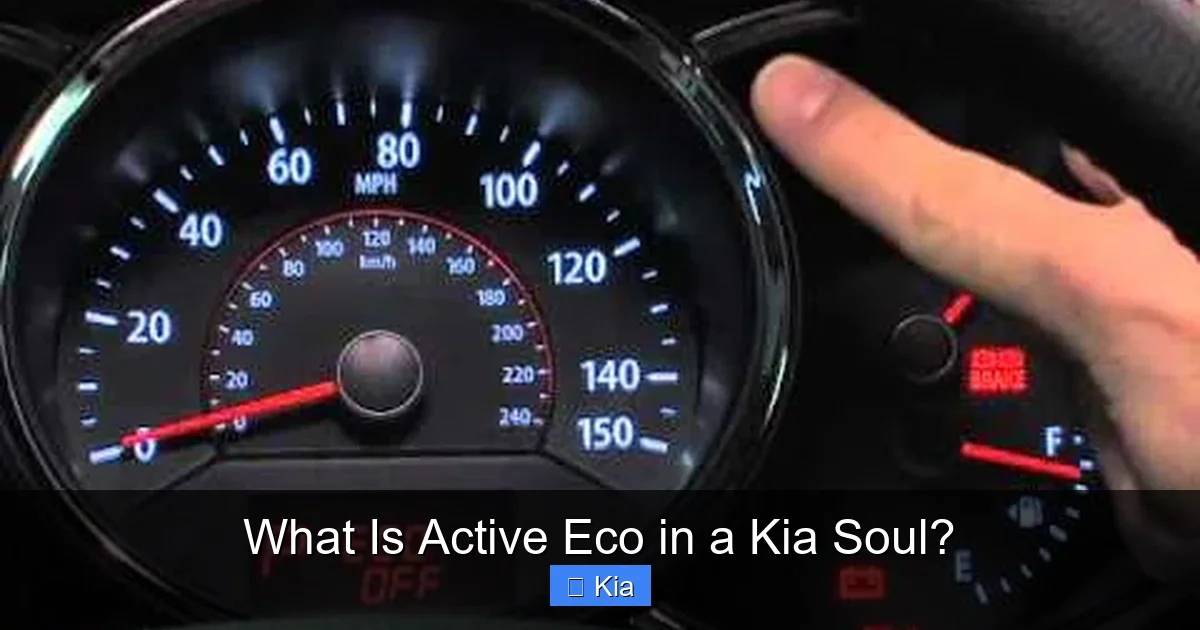
Visual guide about What Is Active Eco in a Kia Soul?
Image source: i.ytimg.com
Using Active ECO is simple, but there are a few tips that can help you get even more out of it. Think of these as best practices for eco-friendly driving.
Use It Consistently
The more you use Active ECO, the greater the fuel savings. Try making it a habit to press the button every time you start your Kia Soul. Over time, it becomes second nature—and so do the fuel-efficient habits it encourages.
Combine with Smart Driving Habits
Active ECO works best when paired with good driving techniques. Here are a few to keep in mind:
– **Anticipate traffic:** Look ahead and ease off the accelerator early instead of braking hard.
– **Maintain steady speeds:** Use cruise control on the highway to avoid unnecessary speed changes.
– **Avoid idling:** Turn off the engine if you’re stopped for more than a minute.
– **Keep tires properly inflated:** Underinflated tires increase rolling resistance, reducing fuel economy.
Monitor Your Fuel Economy
Many Kia Souls have a trip computer that tracks your MPG. Use it to see how Active ECO is performing. You might be surprised by the difference it makes—especially over long trips or daily commutes.
Some drivers even enjoy setting personal fuel economy goals. Challenge yourself to beat your previous best MPG, and use ECO mode as your secret weapon.
Don’t Overthink It
Finally, don’t stress about when to use Active ECO. It’s designed to be used in most everyday driving situations. Unless you’re driving aggressively or need maximum performance, ECO mode is usually the right choice.
And if you ever feel like you need more power—like when merging onto a highway or driving uphill—you can always switch back to Normal mode. The button is right there, and it’s easy to toggle.
Common Misconceptions About Active ECO
Despite its benefits, Active ECO is sometimes misunderstood. Let’s clear up a few common myths so you can use it with confidence.
Myth: ECO Mode Makes the Car Slow or Weak
This is the biggest misconception. While Active ECO does reduce throttle sensitivity, it doesn’t eliminate power. Your Kia Soul can still accelerate when needed—it just does so more gradually.
In real-world driving, most people don’t notice a significant drop in performance. The car still handles hills, merges, and passes with ease. The difference is in the smoothness, not the capability.
Myth: It Only Works on Long Trips
Active ECO is actually most effective in stop-and-go city driving, where frequent acceleration and braking waste fuel. It’s also great for highway cruising, but you’ll see the biggest benefits in mixed driving conditions.
Myth: It’s Only for Hybrid or Electric Cars
Nope! Active ECO works in conventional gasoline-powered vehicles like the Kia Soul. It’s a software-based efficiency tool, not a hybrid system.
Myth: It’s Complicated to Use
Press a button. That’s it. There’s no setup, no calibration, no learning curve. It’s one of the simplest features in your car.
Conclusion: Why Active ECO Is a Smart Choice for Kia Soul Owners
Active ECO in the Kia Soul is more than just a green button on the dashboard—it’s a practical, effective tool for saving fuel, reducing emissions, and enjoying a smoother drive. By optimizing throttle response, transmission shifts, and auxiliary systems, it helps your Soul use fuel more wisely without sacrificing everyday usability.
Whether you’re a daily commuter, a weekend adventurer, or just someone who likes to save money, Active ECO is worth using. It’s easy, effective, and environmentally friendly. And best of all, it’s already built into your car—just waiting for you to press the button.
So the next time you start your Kia Soul, give Active ECO a try. You might just find that a little green button makes a big difference in your driving experience.
Frequently Asked Questions
Does Active ECO reduce the power of my Kia Soul?
No, Active ECO doesn’t reduce the overall power of your Kia Soul. It softens throttle response and shifts gears earlier to improve fuel efficiency, but the engine still delivers enough power for normal driving, merging, and climbing hills.
Can I use Active ECO all the time?
Yes, most drivers can use Active ECO all the time, especially for city and highway driving. It’s designed for everyday use and works well in most conditions. Only switch it off if you need quicker acceleration, like during spirited driving or towing.
Does Active ECO affect the air conditioning?
In some Kia Soul models, Active ECO may reduce the load on the A/C system to save fuel. This usually means slightly less cooling power, but most drivers won’t notice a significant difference in comfort.
Will Active ECO work in cold weather?
Yes, Active ECO works in cold weather. However, the engine may take longer to warm up, and the system may delay full ECO benefits until the engine reaches optimal temperature.
Is Active ECO the same as a hybrid system?
No, Active ECO is not a hybrid system. It’s a fuel-saving driving mode that adjusts engine and transmission behavior in a conventional gasoline-powered Kia Soul.
How much fuel can I save with Active ECO?
Most drivers see a 5% to 10% improvement in fuel economy when using Active ECO consistently. Actual savings depend on driving habits, road conditions, and vehicle maintenance.
