
What Is the Vdc Button on an Infiniti?

The VDC button on an Infiniti controls the Vehicle Dynamic Control system, a vital safety feature that helps maintain traction and stability. It automatically adjusts engine power and applies brakes to individual wheels when slippage is detected, especially in slippery conditions. While it’s usually best to keep VDC on, there are rare situations—like being stuck in snow—where turning it off temporarily can help.
Key Takeaways
- VDC stands for Vehicle Dynamic Control: It’s Infiniti’s version of electronic stability control, designed to prevent skidding and loss of control.
- It works automatically: The system constantly monitors wheel speed, steering angle, and lateral motion to detect instability.
- Use the VDC button to toggle it on or off: Located near the gear shifter or center console, pressing it disables or re-enables the system.
- Keep VDC on for everyday driving: It enhances safety in rain, snow, and during sudden maneuvers.
- Turn it off only in specific situations: Such as when stuck in deep snow, mud, or during track driving where wheel spin is needed.
- VDC is not the same as traction control: While related, VDC includes broader stability management beyond just preventing wheel slip.
- Warning lights indicate system status: A flashing or illuminated VDC light on the dashboard signals activation or a potential issue.
📑 Table of Contents
What Is the VDC Button on an Infiniti?
If you’ve ever driven an Infiniti—whether it’s a sleek Q50 sedan, a rugged QX60 SUV, or a sporty Q60 coupe—you may have noticed a button labeled “VDC” near the gear shifter or center console. At first glance, it might seem like just another mysterious switch in a high-tech dashboard. But this small button plays a big role in your vehicle’s safety and handling. Understanding what the VDC button does can help you drive more confidently, especially in challenging conditions.
The VDC button controls the Vehicle Dynamic Control system, Infiniti’s advanced electronic stability program. Think of it as your car’s digital co-pilot—constantly watching over how your vehicle moves and stepping in when things start to go sideways, literally. Whether you’re navigating a sharp curve on a rainy day or braking suddenly to avoid an obstacle, VDC helps keep your Infiniti stable and on course. It’s one of those features you hope you never need, but you’ll be glad it’s there when you do.
In this guide, we’ll break down everything you need to know about the VDC button: what it does, how it works, when to use it, and why it matters. We’ll also clear up common misconceptions and share practical tips to help you get the most out of this important safety system. Whether you’re a new Infiniti owner or just curious about your car’s features, read on to become a VDC expert.
Understanding Vehicle Dynamic Control (VDC)
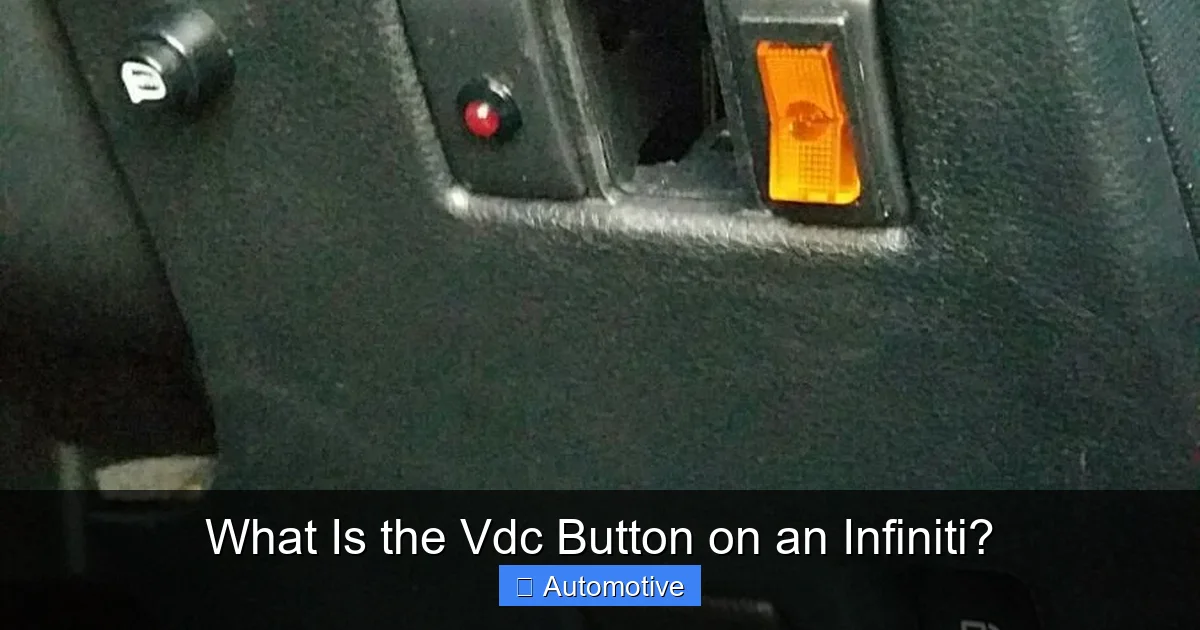
Visual guide about What Is the Vdc Button on an Infiniti?
Image source: 350z-uk.com
So, what exactly is Vehicle Dynamic Control? At its core, VDC is an advanced safety technology designed to help drivers maintain control of their vehicle during unexpected or challenging driving situations. It’s part of a broader family of systems known as electronic stability control (ESC), but Infiniti has branded it as VDC to fit its lineup.
VDC works by using a network of sensors placed throughout the vehicle. These sensors monitor key driving dynamics in real time, including wheel speed, steering angle, lateral (side-to-side) acceleration, and yaw rate (how the car rotates around its vertical axis). When the system detects that the car is not responding as the driver intends—such as when it begins to understeer (plowing forward) or oversteer (fishtailing)—it automatically intervenes.
For example, imagine you’re driving on a wet road and suddenly swerve to avoid a pothole. Your front wheels might start to lose grip, causing the car to push outward instead of turning. VDC detects this mismatch between your steering input and the car’s actual path. In response, it can reduce engine power and apply braking force to specific wheels—often the outer front wheel—to help bring the vehicle back in line.
This isn’t magic—it’s physics and engineering working together. By selectively braking individual wheels and adjusting engine output, VDC helps correct the vehicle’s trajectory without requiring any input from the driver. The result? A smoother, safer driving experience, especially in conditions where traction is limited.
How VDC Differs from Traction Control
It’s easy to confuse VDC with traction control, and for good reason—they’re closely related. Both systems help prevent wheel slip, but they do so in different ways and under different circumstances.
Traction control primarily focuses on preventing the drive wheels from spinning when accelerating, especially on slippery surfaces like ice, snow, or loose gravel. If one wheel starts to spin faster than the others, traction control reduces engine power or applies the brake to that wheel to restore grip.
VDC, on the other hand, goes a step further. While it includes traction control functionality, it also monitors the vehicle’s overall stability. It doesn’t just care about wheel spin—it cares about whether the car is going where you want it to go. If you’re cornering too fast and the rear end starts to swing out, VDC will step in to prevent a spin. If you’re braking hard and the car starts to skid, VDC helps maintain directional control.
In short: traction control keeps your wheels from spinning, while VDC keeps your car from losing control. Think of traction control as a helper during acceleration, and VDC as a full-time stability manager.
The Role of Sensors and Electronics
Behind the scenes, VDC relies on a sophisticated network of sensors and electronic control units (ECUs). These components work together to gather data and make split-second decisions.
Key sensors include:
– Wheel speed sensors: Monitor how fast each wheel is turning.
– Steering angle sensor: Detects how far and how quickly you’re turning the wheel.
– Yaw rate sensor: Measures how the car is rotating around its vertical axis.
– Lateral acceleration sensor: Tracks side-to-side movement.
This data is fed into the VDC control module, which compares the driver’s intended path (based on steering input) with the vehicle’s actual movement. If a discrepancy is detected—say, the car is sliding outward in a turn—the system calculates the necessary corrections and activates the brakes or reduces engine power accordingly.
All of this happens in milliseconds, often before the driver even realizes there’s a problem. It’s a seamless blend of technology and safety that makes modern driving much more secure.
Where Is the VDC Button Located?
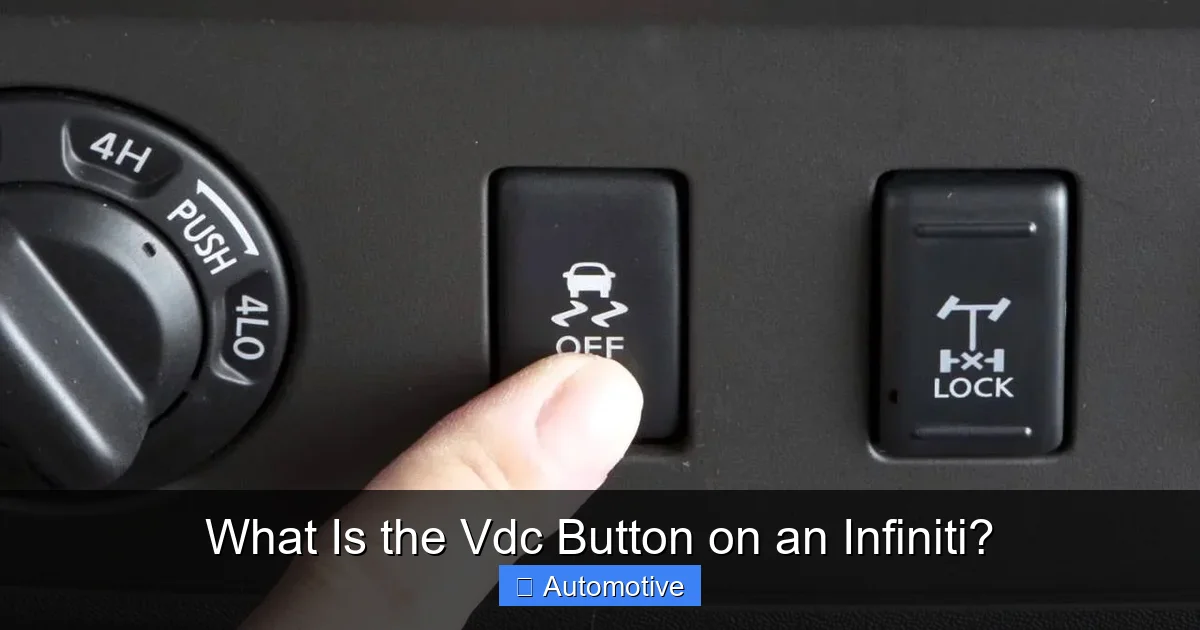
Visual guide about What Is the Vdc Button on an Infiniti?
Image source: vehiclegrip.com
Now that you know what VDC does, you’re probably wondering: where do I find the button? The location of the VDC button can vary slightly depending on your Infiniti model and year, but it’s typically easy to spot once you know what to look for.
In most Infiniti vehicles—such as the Q50, Q60, QX50, and QX60—the VDC button is located on the center console, usually just to the left or right of the gear shifter. It’s often grouped with other driving mode buttons, like “SNOW,” “SPORT,” or “ECO.” The button itself is usually labeled “VDC OFF” or simply “VDC,” and it may have a small icon that looks like a car with wavy lines beneath it, symbolizing stability.
For example, in the Infiniti Q50, the VDC button is positioned near the drive mode selector, within easy reach of the driver’s right hand. In the QX60, it’s located on the lower center stack, just above the climate controls. Some older models, like the G37, may have the button on the dashboard near the steering column.
If you can’t find it, don’t worry—check your owner’s manual. It will have a detailed diagram showing the exact location for your specific model. You can also look for a button with a symbol resembling a car with skid marks or a stability icon.
How to Use the VDC Button
Using the VDC button is simple: press it once to turn the system off, and press it again to turn it back on. When VDC is active (the default setting), the button usually has no light or a green indicator. When you press it to disable VDC, a warning light will typically appear on the dashboard—often labeled “VDC OFF” or showing the same stability icon with a slash through it.
It’s important to note that turning off VDC doesn’t disable all safety systems. Features like anti-lock brakes (ABS) and traction control may still function, depending on the model. However, the full stability management capabilities of VDC will be inactive.
Most of the time, you’ll want to keep VDC on. It’s designed to enhance safety in everyday driving conditions, from wet roads to sudden lane changes. But there are rare situations where turning it off can be helpful—more on that later.
When Should You Turn Off VDC?
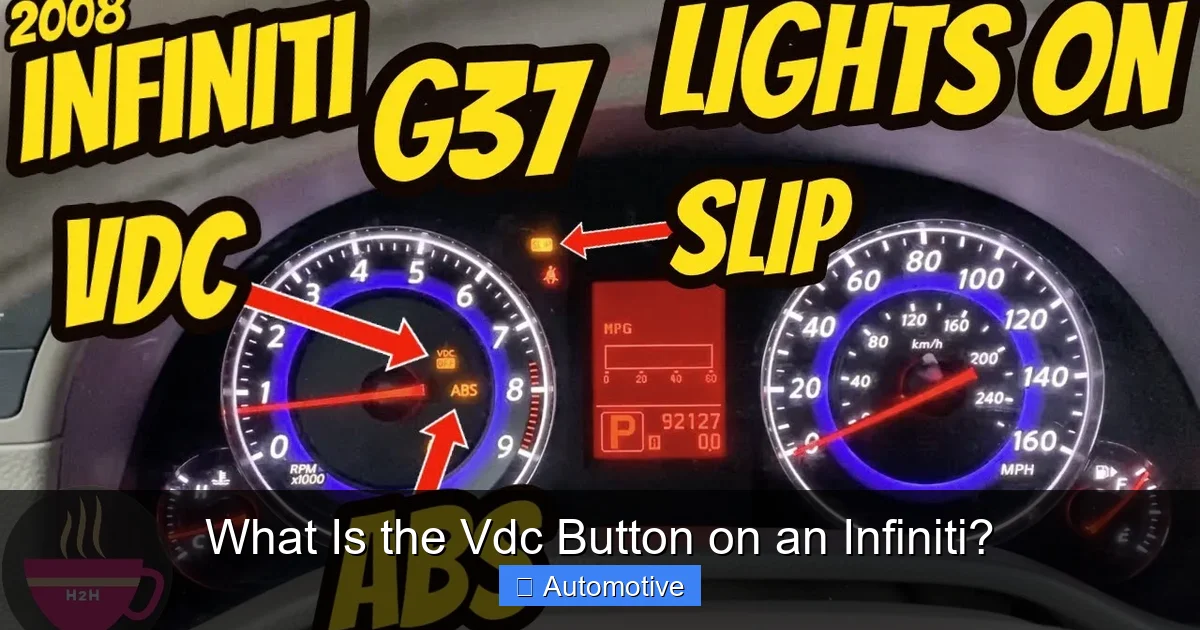
Visual guide about What Is the Vdc Button on an Infiniti?
Image source: i.ytimg.com
While VDC is a valuable safety feature, there are specific scenarios where turning it off might be beneficial. However, these situations are the exception, not the rule. In most cases, you should leave VDC enabled.
Driving in Deep Snow or Mud
One of the most common reasons to disable VDC is when your vehicle is stuck in deep snow, mud, or loose gravel. In these conditions, the system may interpret wheel spin as a loss of control and aggressively reduce engine power or apply the brakes. This can make it harder to get moving.
For example, if you’re stuck in a snowbank and your wheels are spinning, VDC might cut engine power to prevent further slip. But sometimes, a little controlled wheel spin is exactly what you need to gain traction and rock the car free. In this case, turning off VDC allows the wheels to spin more freely, potentially helping you escape.
To do this safely:
1. Come to a complete stop.
2. Press and hold the VDC button for a few seconds (some models require a long press).
3. Confirm that the “VDC OFF” light is illuminated on the dashboard.
4. Try to move forward or backward slowly, using gentle throttle input.
5. Once free, turn VDC back on immediately.
Track Driving or Performance Situations
Enthusiasts who take their Infiniti to the track may choose to disable VDC during high-performance driving. On a racetrack, drivers often use controlled slides and precise throttle inputs to navigate corners. VDC can interfere with these techniques by automatically braking or reducing power, which can slow lap times and reduce driver control.
In sporty models like the Infiniti Q50 Red Sport 400, there may even be a “VDC Sport” mode that reduces intervention while still providing some stability support. This allows for more aggressive driving while maintaining a safety net.
However, unless you’re an experienced driver on a closed course, it’s not recommended to drive with VDC off on public roads. The risks far outweigh the benefits.
Vehicle Maintenance or Diagnostics
Mechanics may temporarily disable VDC during certain repairs or diagnostics. For instance, if a sensor is being replaced or the system is being recalibrated, turning off VDC ensures it doesn’t interfere with the process.
If you’re working on your car and need to disable VDC, make sure to turn it back on once the work is complete. Driving with VDC off for extended periods can compromise safety.
What Happens When VDC Is Activated?
You might not always notice when VDC is working—and that’s a good thing. The system is designed to operate seamlessly in the background, intervening only when necessary. But there are signs that can tip you off.
Dashboard Warning Lights
When VDC activates, you may see a flashing light on the dashboard, usually labeled “VDC” or showing a car with wavy lines. This indicates that the system is actively applying brakes or adjusting engine power to maintain stability. The light will typically flash for a few seconds and then turn off once the situation is resolved.
If the VDC light stays on steadily (not flashing), it could indicate a problem with the system. This might be due to a faulty sensor, low brake fluid, or an issue with the ABS. In this case, it’s best to have your vehicle inspected by a qualified technician.
Physical Sensations
You might also feel VDC at work. When the system applies the brakes to individual wheels, you could notice a slight pulsing in the brake pedal or a vibration through the steering wheel. This is normal and means the system is doing its job.
For example, if you’re driving on a slick road and suddenly swerve, you might feel the car gently correct itself—this is VDC stabilizing the vehicle. It’s subtle, but it can make a big difference in preventing a skid or spin.
Engine Power Reduction
In some cases, VDC may reduce engine power to help regain control. You might notice a brief drop in acceleration or a slight hesitation when you press the gas. This is especially common during hard cornering or when one wheel loses traction.
While it might feel like a performance limitation, it’s actually a safety measure. By reducing power, VDC helps prevent oversteer or understeer, keeping the car balanced and predictable.
Common Misconceptions About VDC
Despite its importance, there are several myths and misunderstandings about VDC. Let’s clear up a few of the most common ones.
“VDC Prevents All Accidents”
No safety system can prevent all accidents. VDC helps maintain control, but it can’t overcome the laws of physics. If you’re driving too fast for conditions, VDC can only do so much. It’s not a substitute for safe driving practices like slowing down in rain or snow, maintaining a safe following distance, and avoiding distractions.
“Turning Off VDC Improves Performance”
While disabling VDC might allow for more wheel spin or aggressive driving, it doesn’t necessarily improve performance—especially on public roads. In fact, it can increase the risk of losing control. On a track, experienced drivers may benefit from reduced intervention, but for everyday driving, VDC enhances both safety and drivability.
“VDC Is the Same as 4WD or AWD”
VDC is not a drivetrain system. It works with both front-wheel drive (FWD), rear-wheel drive (RWD), and all-wheel drive (AWD) vehicles. While AWD can improve traction by sending power to all four wheels, VDC manages stability regardless of how power is distributed. They complement each other but serve different purposes.
“VDC Only Works at High Speeds”
VDC is active at all speeds, from parking lot maneuvers to highway cruising. It can help during low-speed turns, sudden stops, or even when driving over uneven surfaces. The system is always monitoring, even when you’re going slow.
Maintaining Your VDC System
Like any automotive system, VDC requires proper maintenance to function correctly. While it’s largely self-monitoring, there are a few things you can do to keep it in top shape.
Regular Inspections
During routine service visits, ask your technician to check the VDC system. This includes inspecting sensors, wiring, and the control module. They can also scan for any diagnostic trouble codes (DTCs) that might indicate a problem.
Brake and Tire Maintenance
Since VDC relies on the braking system and wheel speed sensors, keeping your brakes and tires in good condition is essential. Worn brake pads, low brake fluid, or uneven tire wear can affect VDC performance. Make sure your tires have adequate tread and are properly inflated.
Address Warning Lights Promptly
If the VDC warning light comes on and stays on, don’t ignore it. While it might be a minor issue, it could also signal a serious problem that affects safety. Have your vehicle diagnosed as soon as possible.
Conclusion
The VDC button on your Infiniti is more than just a mysterious switch—it’s a gateway to one of the most important safety systems in your vehicle. Vehicle Dynamic Control helps keep you stable, in control, and safe, especially when road conditions get tough. By understanding how it works, when to use it, and how to maintain it, you can drive with greater confidence and peace of mind.
Remember: keep VDC on for everyday driving. Only turn it off in rare situations like being stuck in snow or during track use. And if you ever see a warning light, don’t hesitate to get it checked out.
Your Infiniti is packed with advanced technology designed to protect you and enhance your driving experience. The VDC system is a perfect example of that commitment to safety. So the next time you’re behind the wheel, take a moment to appreciate the silent guardian working tirelessly to keep you on the right path.
Frequently Asked Questions
What does VDC stand for in an Infiniti?
VDC stands for Vehicle Dynamic Control. It’s Infiniti’s electronic stability control system designed to help maintain vehicle stability and prevent skidding or loss of control.
Can I drive with VDC turned off?
Yes, you can drive with VDC off, but it’s not recommended for everyday use. Disabling VDC reduces stability assistance, increasing the risk of skidding, especially in wet or slippery conditions.
Why is my VDC light on?
A flashing VDC light means the system is actively working to stabilize the vehicle. A steady light may indicate a malfunction—such as a faulty sensor or low brake fluid—and should be checked by a technician.
Does VDC affect fuel economy?
VDC itself doesn’t directly impact fuel economy. However, if the system frequently reduces engine power due to wheel slip, it could indirectly affect efficiency. Proper tire inflation and driving habits have a much greater impact on fuel use.
Is VDC the same as ABS?
No, VDC and ABS are different systems. ABS prevents wheel lockup during hard braking, while VDC manages overall vehicle stability. However, VDC often works with ABS and uses some of the same sensors and components.
Can I disable VDC permanently?
Most Infiniti models do not allow permanent disabling of VDC. The system typically resets to “on” each time you start the car, ensuring it’s active for safety. Some performance models may offer a “VDC Sport” mode for reduced intervention.
