
Is It Worth Buying a Used Mercedes-benz?

Buying a used Mercedes-Benz can be a smart move if you do your homework. These luxury vehicles offer premium comfort, advanced tech, and strong resale value—but maintenance and repair costs can be steep. With proper research and a trusted mechanic, a pre-owned Mercedes can deliver years of reliable, upscale driving.
Key Takeaways
- Depreciation works in your favor: New Mercedes-Benz cars lose value quickly, so buying used means you avoid the steepest depreciation hit.
- Maintenance and repairs can be costly: Luxury parts and specialized labor mean higher service bills compared to mainstream brands.
- Reliability varies by model and year: Some older models have known issues, while newer ones benefit from improved engineering and longer warranties.
- Certified Pre-Owned (CPO) programs add value: CPO vehicles come with extended warranties, inspections, and peace of mind—worth the extra cost for many buyers.
- Fuel efficiency and running costs matter: High-performance engines and premium fuel requirements can increase long-term expenses.
- Technology and features age quickly: Older infotainment systems may feel outdated, so check for software updates or upgrade options.
- A thorough inspection is non-negotiable: Always get a pre-purchase inspection by a qualified mechanic familiar with Mercedes-Benz vehicles.
📑 Table of Contents
Is It Worth Buying a Used Mercedes-Benz?
So, you’re thinking about buying a used Mercedes-Benz. Maybe you’ve always admired the sleek design, the quiet cabin, or the prestige that comes with the three-pointed star. Or perhaps you’re just looking for a reliable, comfortable car that won’t break the bank—but still feels luxurious. Whatever your reason, you’re not alone. Thousands of car buyers each year consider a pre-owned Mercedes, drawn by the brand’s reputation for quality, innovation, and style.
But here’s the real question: Is it actually worth it?
The short answer? It can be—but only if you go in with your eyes wide open. A used Mercedes-Benz isn’t just another used car. It’s a complex machine with high-end engineering, advanced electronics, and a maintenance profile that’s very different from, say, a Toyota or Honda. You’ll get a lot of car for your money, especially compared to buying new, but you’ll also need to be prepared for higher upkeep costs and potential surprises down the road.
In this guide, we’ll walk you through everything you need to know before buying a used Mercedes-Benz. From understanding depreciation and reliability to choosing the right model and avoiding common pitfalls, we’ll help you decide whether a pre-owned luxury ride is the right choice for you.
Why Buy a Used Mercedes-Benz?
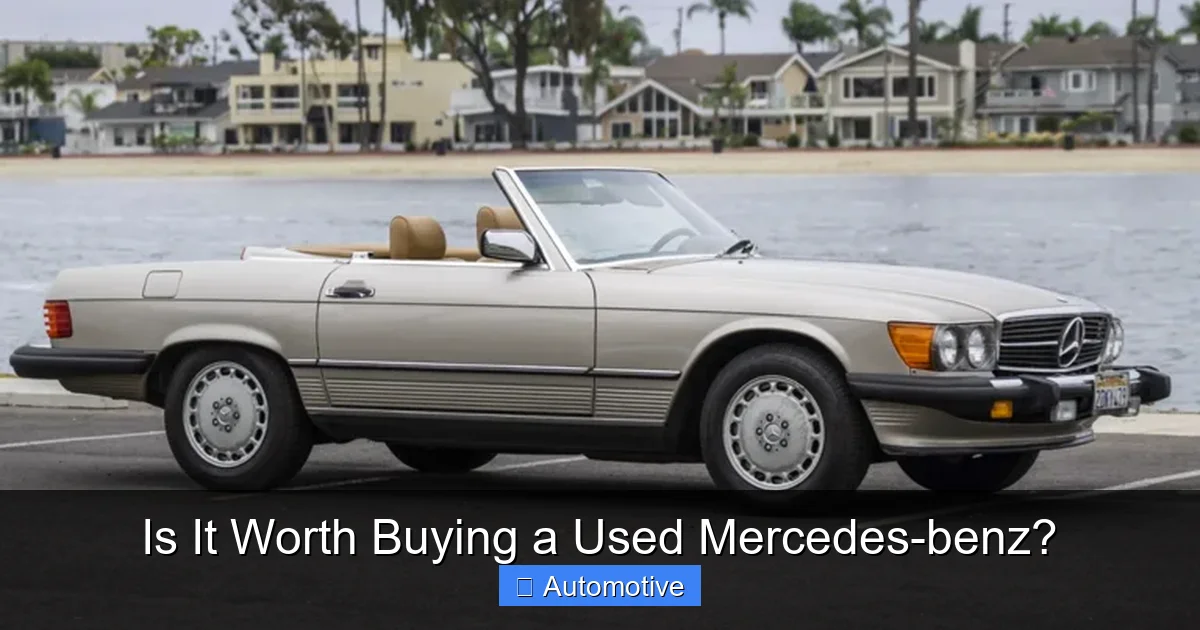
Visual guide about Is It Worth Buying a Used Mercedes-benz?
Image source: img-s-msn-com.akamaized.net
Let’s start with the good news. There are several compelling reasons why a used Mercedes-Benz might be a great investment.
First, there’s the depreciation factor. New cars lose value the moment they’re driven off the lot—often 10–20% in the first year and up to 50% over three years. Mercedes-Benz vehicles are no exception. But that means when you buy used, you’re essentially getting a luxury car at a fraction of its original price. A three-year-old C-Class might cost 40% less than a brand-new one, yet still offer nearly all the same features and performance.
Second, Mercedes-Benz has a strong reputation for build quality. Even older models are often well-engineered, with solid interiors, smooth rides, and attention to detail that many mainstream brands can’t match. If you’re looking for a car that feels premium—with soft-touch materials, quiet cabins, and responsive handling—a used Mercedes can deliver that experience without the new-car price tag.
Third, many used Mercedes-Benz models come with advanced technology and safety features that were considered cutting-edge just a few years ago. Think adaptive cruise control, lane-keeping assist, premium sound systems, and intuitive infotainment setups. While newer models may have even more advanced tech, older ones still offer a level of sophistication that’s hard to find in non-luxury vehicles.
And let’s not forget the emotional appeal. Driving a Mercedes-Benz isn’t just about getting from point A to point B—it’s about the experience. The smooth acceleration, the refined suspension, the sense of confidence behind the wheel. For many buyers, that feeling is worth the extra cost.
The Depreciation Advantage
One of the biggest advantages of buying a used Mercedes-Benz is the depreciation curve. As mentioned, new luxury cars lose value fast. A brand-new S-Class might cost $110,000, but after three years, it could be worth closer to $60,000—even if it’s in excellent condition. That’s a $50,000 loss for the original owner. But if you buy that same car used, you’re not the one taking that hit. You get a nearly new car at a much lower price.
This depreciation benefit applies across the Mercedes lineup. Whether you’re looking at a compact A-Class, a midsize E-Class, or a full-size GLE SUV, buying used means you’re getting more car for your money. And because Mercedes-Benz holds its value relatively well compared to some other luxury brands, you’re also likely to resell it later without taking a massive loss.
Access to Higher Trim Levels and Features
Another perk of buying used? You can afford a higher trim level or a more powerful engine than you might with a new car. For example, a used Mercedes-AMG C 43 might cost less than a new base C 300, yet offer a turbocharged V6, sport-tuned suspension, and performance upgrades. Or you might find a used GLC with the optional air suspension and premium interior packages—features that would add thousands to a new model’s price.
This means you can enjoy the full luxury experience without stretching your budget. Want massaging seats, a panoramic sunroof, or a Burmester sound system? A used Mercedes might be the only way to get those features at a price you can afford.
Potential Downsides: What to Watch Out For

Visual guide about Is It Worth Buying a Used Mercedes-benz?
Image source: img-s-msn-com.akamaized.net
Of course, no decision is perfect. While a used Mercedes-Benz can be a great buy, there are some real downsides to consider.
The biggest concern? Maintenance and repair costs. Mercedes-Benz vehicles are complex machines with specialized parts and systems. That means labor rates at dealerships are high, and even independent mechanics may charge more for Mercedes-specific work. A simple oil change can cost $150 or more, and major repairs—like replacing a transmission or fixing electrical issues—can run into the thousands.
And then there’s the issue of reliability. While newer Mercedes models have improved significantly, some older ones have known problems. For example, certain V6 and V8 engines from the mid-2000s had issues with timing chains, balance shafts, or oil leaks. The 7G-Tronic automatic transmission, used in many models from 2003 to 2010, was prone to failure if not properly maintained. And the M272 and M273 engines had a reputation for balance shaft wear, which could lead to expensive repairs.
High Maintenance and Repair Costs
Let’s talk numbers. According to repair cost data from sources like RepairPal, the average annual maintenance cost for a Mercedes-Benz is around $908—nearly double the $652 average for all vehicles. That includes routine services like oil changes, brake pads, and tire rotations, as well as unexpected repairs.
Why so high? Several factors:
– **Specialized labor:** Mercedes-Benz requires trained technicians who understand the brand’s complex systems. Dealerships charge premium rates, and even independent shops with Mercedes expertise may not be cheap.
– **Expensive parts:** OEM (original equipment manufacturer) parts are costly. A new alternator might cost $800, and a set of brake rotors could run $400 or more.
– **Complex electronics:** Modern Mercedes vehicles are packed with sensors, modules, and software. Diagnosing and fixing electrical issues can be time-consuming and expensive.
And don’t forget about wear-and-tear items. Mercedes-Benz recommends using premium fuel, which costs more than regular gas. Tires for performance models can be pricey, and suspension components like air struts (on models with air suspension) can fail and cost $1,000+ per corner to replace.
Reliability Concerns by Model and Year
Not all used Mercedes-Benz models are created equal. Some are known for their durability, while others have a history of problems. Here are a few examples:
– **Mercedes-Benz C-Class (2007–2014):** The W204 generation had some issues with the 7G-Tronic transmission and the M272 engine’s balance shaft. However, many of these problems were resolved with updated parts and proper maintenance.
– **Mercedes-Benz E-Class (2003–2009):** The W211 and W212 models were generally reliable, but some owners reported electrical gremlins, suspension wear, and rust issues, especially in snowy climates.
– **Mercedes-Benz ML/GLE (2006–2011):** The W164 platform had strong engines but was known for air suspension failures and costly repairs.
– **Mercedes-Benz S-Class (2007–2013):** The W221 was a technological marvel but came with complex systems that could be expensive to maintain. Air suspension, adaptive cruise control, and the COMAND infotainment system all had their quirks.
Newer models (2015 and later) tend to be more reliable, thanks to improved engineering and better quality control. But even then, no car is immune to issues. That’s why it’s crucial to research the specific model and year you’re considering.
Certified Pre-Owned (CPO) vs. Private Sale: Which Is Better?
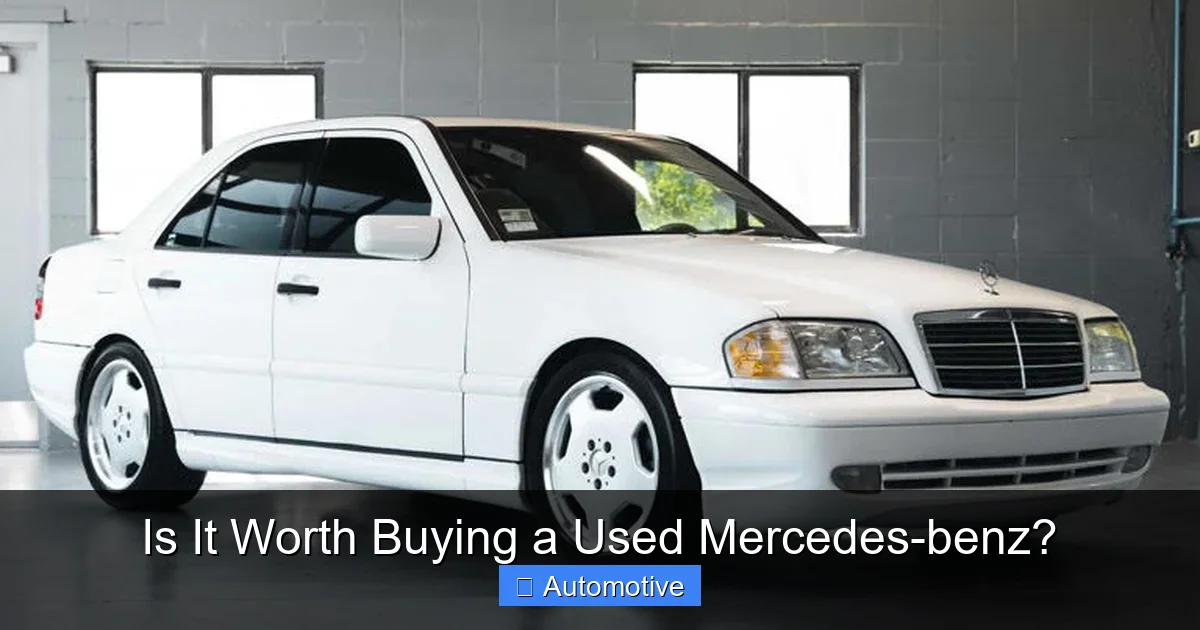
Visual guide about Is It Worth Buying a Used Mercedes-benz?
Image source: img-s-msn-com.akamaized.net
When shopping for a used Mercedes-Benz, you’ll likely come across two main options: Certified Pre-Owned (CPO) vehicles from dealerships and private sales from individual owners. Each has its pros and cons.
Certified Pre-Owned (CPO) Mercedes-Benz
A CPO Mercedes-Benz is a used car that has been inspected, reconditioned, and certified by a Mercedes-Benz dealership. These vehicles typically come with:
– A comprehensive multi-point inspection (often 160+ points)
– A limited warranty (usually 1–2 years, with optional extensions)
– Roadside assistance
– A clean vehicle history report
– Sometimes, free maintenance for a limited time
The biggest advantage of CPO is peace of mind. You know the car has been checked by experts, and if something goes wrong, you’re covered by warranty. This is especially valuable for older or high-mileage vehicles.
However, CPO cars are more expensive than private sales—often 10–15% higher. And the warranty may not cover everything, especially wear-and-tear items or pre-existing conditions.
Private Sale: Lower Price, Higher Risk
Buying from a private seller can save you money. You’ll avoid dealer markups and fees, and you might find a well-maintained car at a great price. But you’re also taking on more risk.
Private sellers aren’t required to disclose all issues, and there’s no warranty. If the transmission fails a month after purchase, you’re on the hook for the repair bill.
That said, a private sale can be a smart move—if you do your due diligence. Always get a pre-purchase inspection (PPI) by a qualified mechanic, preferably one who specializes in Mercedes-Benz. Check the vehicle history report (using services like Carfax or AutoCheck) for accidents, title issues, or service records. And don’t be afraid to walk away if something feels off.
How to Choose the Right Used Mercedes-Benz
With so many models and years to choose from, picking the right used Mercedes-Benz can feel overwhelming. Here’s how to narrow it down.
Determine Your Budget—Including Hidden Costs
Start by setting a realistic budget. Don’t just think about the purchase price. Factor in:
– Insurance (luxury cars often cost more to insure)
– Fuel (premium gas is required)
– Maintenance and repairs
– Tires and brakes
– Potential upgrades or modifications
A good rule of thumb: Set aside 10–15% of the car’s value each year for maintenance and repairs. So if you buy a $30,000 used Mercedes, plan to spend $3,000–$4,500 annually on upkeep.
Pick the Right Model for Your Needs
Mercedes-Benz offers a wide range of vehicles, from compact sedans to full-size SUVs. Consider your lifestyle:
– **C-Class:** Great for city driving, fuel-efficient, and stylish. Ideal for singles or couples.
– **E-Class:** A midsize luxury sedan with more space and comfort. Perfect for families or long commutes.
– **S-Class:** The flagship sedan—luxurious, tech-packed, and smooth. Best for those who want the ultimate driving experience.
– **GLC/GLE:** Compact and midsize SUVs with good cargo space and optional all-wheel drive. Great for families or outdoor enthusiasts.
– **AMG Models:** High-performance variants with turbocharged engines and sport-tuned suspensions. Fun to drive, but higher fuel and maintenance costs.
Also, consider fuel economy. A used C 300 might get 25–30 mpg, while a GLE 550 could struggle to hit 18 mpg. If you drive a lot, fuel costs can add up quickly.
Check the Vehicle History and Get a Pre-Purchase Inspection
Never skip this step. A vehicle history report can reveal accidents, flood damage, or odometer rollback. But it won’t tell you about mechanical issues.
That’s why a pre-purchase inspection (PPI) is essential. Have a qualified mechanic—preferably one with Mercedes experience—check the engine, transmission, suspension, brakes, electrical systems, and undercarriage. They can spot red flags like oil leaks, worn suspension components, or signs of poor maintenance.
If the seller refuses a PPI, walk away. It’s a major red flag.
Tips for Maintaining Your Used Mercedes-Benz
Once you’ve bought your used Mercedes, the key to long-term satisfaction is proper maintenance.
Follow the Maintenance Schedule
Mercedes-Benz publishes a detailed maintenance schedule for each model. Stick to it. Regular oil changes, brake inspections, and fluid top-offs can prevent costly repairs down the road.
Use only high-quality synthetic oil and genuine or OEM-equivalent parts. Cutting corners on maintenance can lead to bigger problems later.
Address Issues Early
Don’t ignore warning lights or strange noises. A small issue—like a failing sensor or a minor leak—can escalate into a major repair if left unchecked. Address problems as soon as they arise.
Find a Trusted Mechanic
While dealerships offer expertise, they’re not always the most affordable option. Look for independent shops that specialize in European or luxury vehicles. Many offer competitive rates and excellent service.
Keep Records
Maintain a log of all services and repairs. This helps track maintenance, increases resale value, and can be useful if you need to file a warranty claim.
Final Verdict: Is It Worth It?
So, is it worth buying a used Mercedes-Benz?
The answer depends on your priorities, budget, and willingness to invest in maintenance.
If you value luxury, performance, and prestige—and you’re prepared for higher upkeep costs—a used Mercedes-Benz can be an excellent choice. You’ll get a high-quality vehicle with advanced features, strong resale value, and a driving experience that’s hard to match.
But if you’re looking for a low-maintenance, budget-friendly car, a mainstream brand might be a better fit. Luxury comes at a price, and that price includes more than just the sticker.
Ultimately, the key to a successful used Mercedes-Benz purchase is research, preparation, and realistic expectations. Do your homework, choose the right model, get a thorough inspection, and maintain it properly. If you do, you could enjoy years of smooth, stylish, and satisfying driving.
Frequently Asked Questions
How much does it cost to maintain a used Mercedes-Benz?
The average annual maintenance cost for a used Mercedes-Benz is around $908, nearly double the national average. This includes routine services and unexpected repairs, with labor and parts typically more expensive than mainstream brands.
Are older Mercedes-Benz models reliable?
Reliability varies by model and year. Some older models, like the W204 C-Class or W164 ML, had known issues with transmissions or engines. Newer models (2015+) are generally more reliable, but proper maintenance is still crucial.
Should I buy a CPO or a private sale Mercedes-Benz?
CPO offers peace of mind with inspections and warranties but costs more. Private sales are cheaper but riskier. Always get a pre-purchase inspection, regardless of the source.
What’s the best used Mercedes-Benz to buy?
The best model depends on your needs. The C-Class is great for efficiency and style, while the E-Class offers more space. For SUVs, the GLC is a solid choice. Avoid models with known mechanical issues.
Do I need to use premium gas in a used Mercedes-Benz?
Yes, Mercedes-Benz recommends premium fuel (91 octane or higher) for optimal performance and engine longevity. Using regular gas can reduce power and potentially damage the engine over time.
Can I extend the warranty on a used Mercedes-Benz?
Yes, many dealerships offer extended warranty plans for used vehicles, including CPO programs. Third-party providers also offer coverage, but read the fine print to understand what’s included.
