
Iron 883 Vs Sportster 883: What’s the Difference?

The Harley-Davidson Iron 883 and Sportster 883 may sound similar, but they cater to different riders. While both share the same 883cc Evolution engine, the Iron 883 offers a more modern, aggressive stance with upgraded features, whereas the base Sportster 883 leans into classic minimalism. Understanding their differences helps you choose the right ride for your lifestyle and riding goals.
Key Takeaways
- Same Engine, Different Identity: Both bikes use the 883cc air-cooled Evolution V-twin engine, but the Iron 883 is tuned and styled for a more performance-oriented experience.
- Design and Aesthetics: The Iron 883 features blacked-out components, a chopped rear fender, and a muscular look, while the Sportster 883 has a cleaner, more traditional appearance.
- Comfort and Ergonomics: The Iron 883 has a lower seat height and slightly more aggressive riding position, making it better for shorter riders or those who prefer a sportier feel.
- Suspension and Handling: The Iron 883 includes improved rear suspension and better front forks, offering a smoother ride over bumps and corners.
- Features and Technology: The Iron 883 comes with modern touches like LED lighting and a digital speedometer, while the base Sportster 883 sticks to analog gauges and halogen lights.
- Price and Value: The Iron 883 is typically more expensive, but the added features and styling justify the cost for many riders.
- Target Audience: The Iron 883 appeals to younger riders and urban commuters, while the Sportster 883 suits those who want a no-frills, classic Harley experience.
📑 Table of Contents
- Introduction: Two Names, One Legendary Engine
- Engine and Performance: Same Heart, Different Soul
- Design and Styling: Dark vs. Classic
- Comfort and Ergonomics: Ride Position Matters
- Technology and Features: Modern vs. Minimalist
- Price and Value: What Are You Paying For?
- Who Should Ride Which Bike?
- Conclusion: Two Paths, One Passion
Introduction: Two Names, One Legendary Engine
If you’ve ever wandered into a Harley-Davidson dealership or browsed their website, you’ve probably seen the names “Iron 883” and “Sportster 883” pop up—sometimes even side by side. At first glance, they might seem like the same bike with a different paint job. But dig a little deeper, and you’ll find that these two models, while sharing a family name and a legendary engine, are built for different kinds of riders.
The Harley-Davidson Sportster line has been a staple of American motorcycling since the 1950s. Known for its compact size, torquey engine, and unmistakable rumble, the Sportster has evolved over decades but always stayed true to its roots. The 883cc version, in particular, has become a favorite among new riders, city commuters, and anyone who wants a lightweight Harley with classic charm.
Enter the Iron 883—a modern reinterpretation of the Sportster 883. Launched as part of Harley’s effort to attract younger riders and urban enthusiasts, the Iron 883 takes the same 883cc engine and wraps it in a darker, more aggressive package. It’s not just a cosmetic upgrade; it’s a bike designed to stand out in traffic, handle city streets with confidence, and deliver a ride that feels more connected to the road.
So, what’s the real difference? Is the Iron 883 just a dressed-up Sportster, or is it a completely different beast? In this guide, we’ll break down every aspect—from engine performance and design to comfort, technology, and value—so you can decide which bike fits your riding style.
Engine and Performance: Same Heart, Different Soul

Visual guide about Iron 883 Vs Sportster 883: What’s the Difference?
Image source: motorbikeinsider.com
At the core of both the Iron 883 and the Sportster 883 is the same 883cc air-cooled Evolution V-twin engine. This engine has been a workhorse for Harley-Davidson for decades, known for its reliability, low-end torque, and that signature Harley rumble. But while the engine displacement is identical, how each bike uses that power tells a different story.
Power Delivery and Tuning
The 883cc engine in both models produces around 50 horsepower and 55 lb-ft of torque. That might not sound like a lot compared to bigger Harleys or sport bikes, but it’s more than enough for city riding, highway cruising, and weekend joyrides. The key difference lies in how that power is delivered.
The Iron 883 is tuned for a slightly more responsive throttle and quicker acceleration off the line. This makes it feel more agile in stop-and-go traffic, where quick bursts of speed are essential. The Sportster 883, on the other hand, has a smoother, more linear power delivery. It’s not slow by any means, but it doesn’t have that same punchy feel that the Iron offers.
For example, if you’re merging onto a highway or trying to pass a slow-moving truck, the Iron 883 will feel more eager to respond. The Sportster 883 will get the job done, but it won’t feel as eager to jump.
Exhaust and Sound
One of the most noticeable differences is the exhaust note. The Iron 883 comes with a blacked-out, shorty exhaust system that gives it a deeper, more aggressive growl. It’s the kind of sound that turns heads at stoplights and makes pedestrians glance over. The Sportster 883, especially in its base trim, often comes with a more subdued exhaust that’s quieter and less attention-grabbing.
This isn’t just about aesthetics—sound affects the riding experience. The Iron 883’s exhaust enhances the feeling of power and presence, making you feel more connected to the bike. The Sportster 883’s quieter tone might appeal to riders who prefer a more understated ride, especially in residential areas or during early morning commutes.
Fuel Efficiency and Range
Both bikes are relatively fuel-efficient for their class, averaging around 45–50 miles per gallon depending on riding conditions. The Iron 883 might edge out slightly better mileage in city riding due to its more responsive engine tuning, but the difference is minimal. Both have a 3.3-gallon fuel tank, giving them a range of about 150–165 miles per tank.
For daily commuters, this means you’ll be filling up once or twice a week, depending on your mileage. If you’re planning longer weekend trips, you might want to plan fuel stops, but neither bike is designed for ultra-long-distance touring.
Design and Styling: Dark vs. Classic
Visual guide about Iron 883 Vs Sportster 883: What’s the Difference?
Image source: motorbikeinsider.com
If you’re choosing between the Iron 883 and Sportster 883, design is likely one of your top considerations. After all, a motorcycle is as much about how it looks as how it rides. And here, the two models take very different approaches.
The Iron 883: Aggressive and Modern
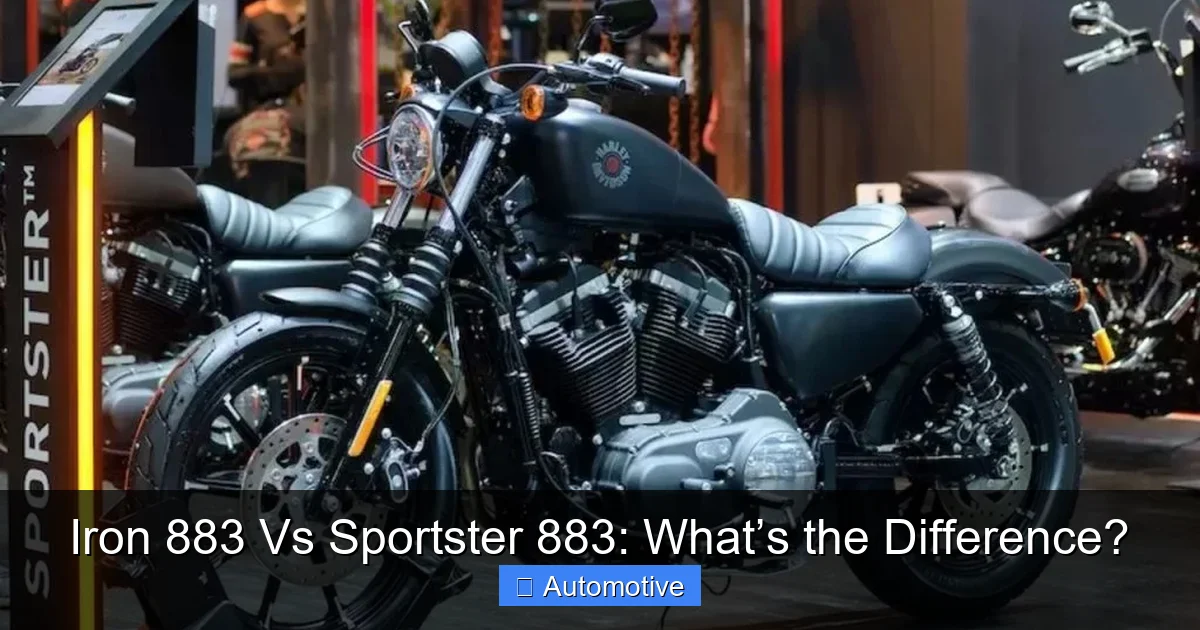
The Iron 883 is all about attitude. From the moment you see it, you know it means business. The bike features a fully blacked-out aesthetic—black engine, black exhaust, black wheels, and even blacked-out handlebars and mirrors. The fuel tank is sleek and angular, with minimal chrome and bold “IRON 883” branding.
The rear fender is chopped short, giving the bike a muscular, stripped-down look. The headlight is round but housed in a blacked-out casing, and the taillight is integrated into the rear fender for a clean, modern appearance. Even the seat is black with contrasting stitching, adding to the sporty vibe.
This design isn’t just for show—it’s functional. The blacked-out components reduce glare and give the bike a lower profile, making it easier to handle in tight spaces. The aggressive stance also improves aerodynamics slightly, though at the speeds these bikes typically travel, the difference is minor.
The Sportster 883: Clean and Traditional
In contrast, the base Sportster 883 leans into Harley’s classic design language. It features more chrome accents—polished engine covers, chrome exhaust tips, and chrome handlebars. The fuel tank is rounded and simple, with minimal graphics. The rear fender is full-length, giving the bike a more traditional look.
The headlight is also round, but it’s often chrome or polished, adding a touch of elegance. The taillight is separate from the fender, mounted on a small bracket. The seat is typically black or brown leather, with a classic stitched pattern.
This design appeals to riders who appreciate the timeless look of a Harley. It’s not flashy, but it’s dignified. It says, “I ride a Harley,” without needing to shout about it.
Color Options and Customization
Both bikes come in a variety of colors, but the Iron 883 tends to favor darker, more dramatic shades—like Vivid Black, Midnight Blue, or Industrial Gray. The Sportster 883 offers brighter options like Billiard Red, Stone Washed Denim, or Chrome Yellow.
Customization is a big part of the Harley experience, and both models are highly customizable. However, the Iron 883’s blacked-out base makes it easier to add aftermarket parts like black handlebars, custom seats, or performance exhausts without clashing with the factory look. The Sportster 883’s chrome accents can sometimes clash with darker aftermarket parts, requiring more planning.
Comfort and Ergonomics: Ride Position Matters

Visual guide about Iron 883 Vs Sportster 883: What’s the Difference?
Image source: motorbikeinsider.com
How a bike feels when you’re riding it for an hour—or five—can make or break your experience. Comfort isn’t just about the seat; it’s about the entire riding position, including handlebar reach, footpeg placement, and suspension.
Seat Height and Rider Position
The Iron 883 has a lower seat height—around 25.7 inches—compared to the Sportster 883’s 26.5 inches. That might not sound like much, but for shorter riders, it can make a big difference. Being able to flat-foot the ground at stoplights increases confidence, especially for new riders.
The riding position on the Iron 883 is slightly more aggressive. The handlebars are lower and farther forward, encouraging a forward-leaning posture. This is great for city riding and quick maneuvers, but it can feel tiring on longer rides. The Sportster 883 has a more upright position, with higher handlebars and a more relaxed reach. This makes it more comfortable for longer distances or riders with back issues.
Suspension and Ride Quality
The Iron 883 comes with improved suspension components. The rear shocks are longer and offer better damping, which helps absorb bumps and potholes more effectively. The front forks are also stiffer, providing better stability during cornering.
The Sportster 883 uses a more basic suspension setup. It’s adequate for smooth roads and light commuting, but it can feel harsh on rough pavement or when carrying a passenger. If you plan to ride on uneven roads or take weekend trips, the Iron 883’s suspension gives it a clear advantage.
Passenger Comfort
Neither bike is designed for long-distance two-up riding, but if you occasionally carry a passenger, the Iron 883 offers slightly better support. The rear seat is more contoured, and the footpegs are positioned to give the passenger more legroom. The Sportster 883’s passenger seat is flatter and less supportive, and the footpegs are closer to the rider, which can be cramped for taller passengers.
Technology and Features: Modern vs. Minimalist
Technology might not be the first thing you think of with a Harley, but it plays a bigger role than you might expect—especially when comparing the Iron 883 and Sportster 883.
Instrumentation and Controls
The Iron 883 features a digital speedometer with an analog tachometer. This gives you quick, easy-to-read information at a glance. It also includes a gear indicator, fuel gauge, and odometer. The controls are backlit, making them easy to see at night.
The Sportster 883, in its base form, uses a fully analog speedometer with a small digital display for the odometer and fuel gauge. It’s functional, but it feels dated compared to the Iron’s setup. There’s no gear indicator, which can be a minor inconvenience when shifting.
Lighting
The Iron 883 comes with LED lighting—headlight, taillight, and turn signals. LEDs are brighter, last longer, and use less power than traditional halogen bulbs. They also give the bike a modern, high-tech look.
The Sportster 883 typically uses halogen bulbs. They’re cheaper to produce, but they’re dimmer and burn out faster. Upgrading to LED lights is possible, but it’s an extra cost.
Security and Accessories
Both bikes come with a basic key ignition, but the Iron 883 is more compatible with Harley’s security systems, like the optional Harley-Davidson Smart Security System. This includes a motion sensor and alarm, which can be a big plus if you park in urban areas.
The Iron 883 also has more mounting points for accessories like phone mounts, saddlebags, or windshields. The Sportster 883 can be fitted with these too, but it requires more aftermarket modifications.
Price and Value: What Are You Paying For?
Price is always a factor when buying a motorcycle, and the difference between the Iron 883 and Sportster 883 reflects their feature sets.
Base Price Comparison
As of recent model years, the Iron 883 typically starts around $9,500–$10,000, while the base Sportster 883 starts around $8,500–$9,000. That’s a difference of about $1,000.
Is it worth it? For many riders, yes. The Iron 883 includes upgraded suspension, LED lighting, a digital speedometer, and a more aggressive design—features that would cost extra on the base Sportster.
Resale Value
Harley-Davidson motorcycles generally hold their value well, but the Iron 883 tends to have slightly better resale value due to its popularity among younger riders and urban commuters. The Sportster 883, while still desirable, appeals to a narrower audience.
Insurance and Maintenance
Insurance costs are similar for both bikes, though the Iron 883 might be slightly more expensive due to its higher value and sportier image. Maintenance is nearly identical—both use the same engine and require the same basic service intervals. Parts are widely available and relatively affordable.
Who Should Ride Which Bike?
Choosing between the Iron 883 and Sportster 883 ultimately comes down to your riding style, preferences, and budget.
Choose the Iron 883 If:
- You want a modern, aggressive look with blacked-out styling.
- You ride mostly in the city and value quick acceleration and responsive handling.
- You’re a shorter rider who appreciates a lower seat height.
- You want modern features like LED lights and a digital speedometer.
- You plan to customize your bike with aftermarket parts.
Choose the Sportster 883 If:
- You prefer a classic, clean Harley look with chrome accents.
- You want a more upright, relaxed riding position.
- You’re on a tighter budget and want the lowest possible entry point into Harley ownership.
- You don’t mind analog gauges and halogen lights.
- You value simplicity and don’t need extra features.
Conclusion: Two Paths, One Passion
The Harley-Davidson Iron 883 and Sportster 883 are more than just two models with similar names—they represent two different approaches to the Harley experience. The Iron 883 is for the rider who wants attitude, modern features, and a bike that stands out in a crowd. The Sportster 883 is for those who appreciate tradition, simplicity, and the timeless appeal of a classic Harley.
Both bikes share the same legendary 883cc engine, but they use it in different ways. The Iron 883 is tuned for performance and style, while the Sportster 883 focuses on comfort and value. Your choice depends on what matters most to you: a bold, urban-ready machine or a no-frills, reliable ride.
No matter which one you choose, you’re getting a piece of motorcycle history. And that’s something worth riding for.
Frequently Asked Questions
Is the Iron 883 faster than the Sportster 883?
Not significantly. Both bikes have the same 883cc engine and similar power output. The Iron 883 may feel quicker due to its more responsive throttle tuning, but top speed and acceleration are nearly identical.
Can I upgrade a Sportster 883 to look like an Iron 883?
Yes, many riders do. You can add blacked-out parts, a chopped fender, LED lights, and a custom seat. However, it may cost nearly as much as buying the Iron 883 outright.
Which bike is better for beginners?
The Iron 883’s lower seat height and lighter feel make it slightly more beginner-friendly. However, both bikes are manageable for new riders with proper training.
Do both bikes have the same maintenance schedule?
Yes. Both use the same engine and require similar oil changes, valve adjustments, and inspections every 5,000 miles or so.
Can I ride long distances on either bike?
Yes, but neither is designed for long touring. The Sportster 883 is more comfortable for longer rides due to its upright position, while the Iron 883 is better suited for city and weekend trips.
Are the Iron 883 and Sportster 883 still in production?
As of recent years, Harley-Davidson has discontinued the Sportster line in some markets, but the Iron 883 remains available in many regions. Check with your local dealer for current availability.
