
Can Bad Spark Plugs Cause Overheating

Yes, bad spark plugs can cause engine overheating. When spark plugs fail to ignite the air-fuel mixture properly, it leads to incomplete combustion, increased engine strain, and excess heat buildup. Ignoring this issue can result in serious engine damage over time.
Key Takeaways
- Bad spark plugs disrupt combustion: Faulty spark plugs fail to ignite fuel efficiently, causing incomplete burns that generate excess heat.
- Overheating results from engine strain: Misfiring engines work harder, increasing internal temperatures and stressing cooling systems.
- Fuel efficiency drops significantly: Poor ignition leads to wasted fuel, reduced mileage, and higher emissions.
- Check engine light may illuminate: Modern vehicles detect misfires and often trigger warning lights when spark plugs underperform.
- Regular maintenance prevents issues: Replacing spark plugs at recommended intervals helps maintain optimal engine temperature and performance.
- Other symptoms accompany overheating: Look for rough idling, hesitation during acceleration, and unusual engine noises.
- Professional diagnosis is key: If you suspect spark plug issues, have a mechanic inspect both plugs and ignition system components.
📑 Table of Contents
- Can Bad Spark Plugs Cause Overheating? Understanding the Connection
- How Spark Plugs Work and Why They Matter
- The Domino Effect: How Bad Spark Plugs Lead to Overheating
- Real-World Examples and Case Studies
- Preventing Overheating Through Spark Plug Maintenance
- Other Causes of Overheating to Rule Out
- When to See a Mechanic
- Conclusion: Small Part, Big Impact
Can Bad Spark Plugs Cause Overheating? Understanding the Connection
You’re driving down the highway, enjoying the breeze through your open window, when suddenly you notice the temperature gauge creeping into the red zone. Your heart skips a beat—your engine is overheating. You pull over, pop the hood, and wonder: What went wrong? Could something as small as a spark plug really be the culprit?
It might sound surprising, but yes—bad spark plugs can indeed cause engine overheating. While most people associate overheating with coolant leaks, radiator problems, or thermostat failures, the ignition system plays a more critical role than many realize. Spark plugs are the unsung heroes of your engine’s combustion process. They deliver the electric spark needed to ignite the air-fuel mixture in each cylinder. When they fail, the entire combustion cycle gets disrupted, leading to a cascade of problems—including excessive heat buildup.
Think of your engine like a well-choreographed dance. Every piston, valve, and spark plug must move in perfect sync. If one dancer stumbles—say, a spark plug that’s worn out or fouled—the whole performance falls apart. The result? Incomplete combustion, wasted fuel, increased friction, and ultimately, an engine that runs hotter than it should. Over time, this extra heat can damage internal components, warp cylinder heads, or even cause a blown head gasket.
How Spark Plugs Work and Why They Matter
Visual guide about Can Bad Spark Plugs Cause Overheating
Image source: i.ytimg.com
To understand how bad spark plugs can lead to overheating, it helps to know what spark plugs actually do. At the most basic level, spark plugs create a tiny but powerful spark that ignites the compressed air-fuel mixture inside each engine cylinder. This controlled explosion pushes the piston down, turning the crankshaft and ultimately powering your vehicle.
Each spark plug consists of a central electrode, an insulator, and a ground electrode. When the ignition coil sends a high-voltage current to the plug, it jumps the gap between the electrodes, creating the spark. This happens hundreds of times per minute, even at idle. For this process to work efficiently, the spark must be strong, consistent, and timed precisely.
Now, imagine one or more spark plugs aren’t firing correctly. Maybe the electrode is worn down, the gap is too wide, or carbon buildup is insulating the tip. In any of these cases, the spark becomes weak or fails entirely. This leads to what’s known as a “misfire”—a condition where the air-fuel mixture doesn’t ignite properly in one or more cylinders.
The Science Behind Combustion and Heat
Combustion is a chemical reaction that releases energy in the form of heat and pressure. In an ideal scenario, the spark plug ignites the mixture at just the right moment, creating a smooth, powerful expansion that drives the piston. But when combustion is incomplete—due to a weak spark—the fuel doesn’t burn fully. Some of it may ignite late, or not at all, leaving unburned fuel in the combustion chamber.
This unburned fuel can then ignite unpredictably, causing knocking or pinging sounds. It can also pass into the exhaust system, where it may ignite there, creating backpressure and additional heat. The engine, trying to compensate for the loss of power, may run richer (more fuel, less air), which further increases exhaust temperatures.
All this extra heat has to go somewhere. Some of it is absorbed by the engine block and cylinder head, raising their temperature. If the cooling system can’t keep up—because it’s already working hard or is compromised—the engine begins to overheat.
Signs Your Spark Plugs Are Failing
So how do you know if your spark plugs are the problem? While overheating is a red flag, it’s often accompanied by other symptoms. Here are some common signs that your spark plugs may be going bad:
– Rough idling: Your engine may shake or vibrate when stopped at a traffic light.
– Hesitation or jerking during acceleration: The car feels sluggish or stumbles when you press the gas.
– Reduced fuel economy: You’re filling up more often without changing your driving habits.
– Difficulty starting the engine: Especially in cold weather, a weak spark can make ignition harder.
– Check engine light: Modern vehicles have sensors that detect misfires and will often trigger the warning light.
If you notice any of these issues—especially in combination with rising engine temperatures—it’s time to inspect your spark plugs.
The Domino Effect: How Bad Spark Plugs Lead to Overheating

Visual guide about Can Bad Spark Plugs Cause Overheating
Image source: ik.imagekit.io
Now that we understand the basics, let’s dive deeper into the chain reaction that connects bad spark plugs to engine overheating. It’s not just one thing—it’s a series of events that build on each other, each adding more stress to your engine.
Misfires and Incomplete Combustion
The first domino to fall is the misfire. When a spark plug fails to ignite the air-fuel mixture, that cylinder doesn’t produce power. The engine now has to work harder with fewer cylinders firing. This imbalance causes vibrations, reduces efficiency, and increases the load on the remaining cylinders.
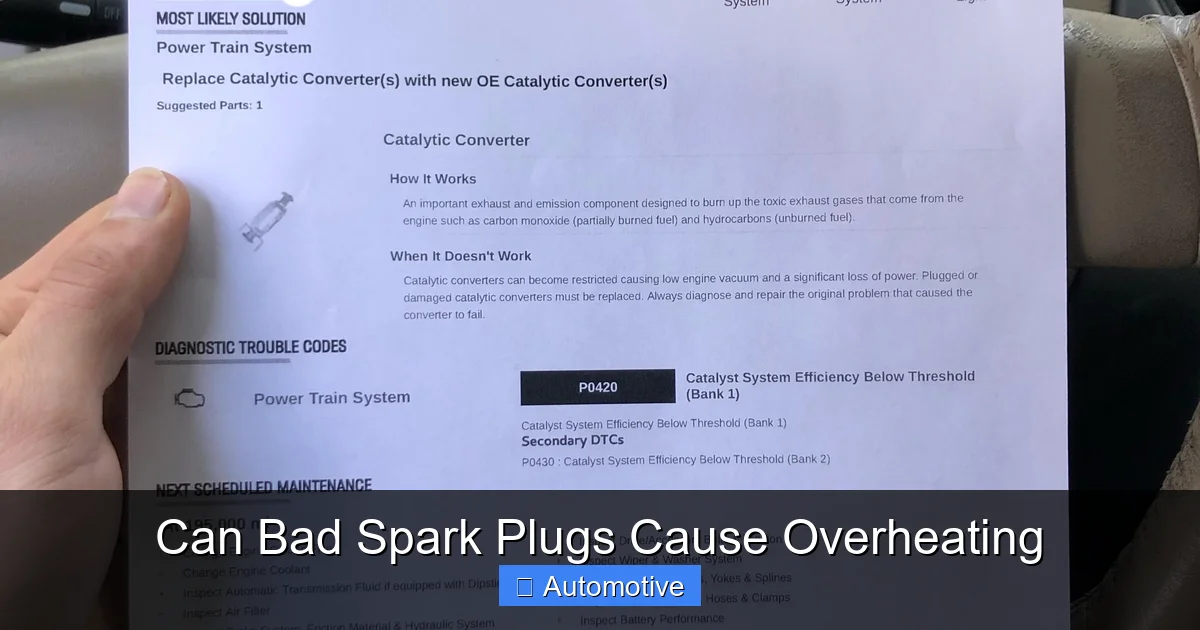
But the real problem starts with incomplete combustion. Instead of a clean, controlled burn, you get a partial burn or delayed ignition. This means some fuel remains unburned or burns at the wrong time. Unburned fuel can ignite in the exhaust manifold or catalytic converter, causing them to overheat. In extreme cases, this can melt the catalytic converter—a costly repair.
Increased Engine Load and Friction
With fewer cylinders contributing power, the engine compensates by drawing more fuel and working harder. This increases internal friction and mechanical stress. Piston rings, bearings, and valves all experience more wear and generate more heat.
Additionally, the engine control unit (ECU) may detect the misfire and adjust the fuel mixture to compensate. Often, it enriches the mixture—adding more fuel—to try to stabilize combustion. While this might mask the misfire temporarily, it leads to higher exhaust gas temperatures and more heat radiating from the engine.
Cooling System Overload
Your engine’s cooling system—radiator, water pump, thermostat, and coolant—is designed to handle a certain amount of heat under normal conditions. But when the engine is running hotter than usual due to poor combustion, the cooling system has to work overtime.
If the system is already aging or low on coolant, it may not be able to keep up. The result? Rising temperatures, steam from under the hood, and potentially a blown head gasket if the cylinder head warps from excessive heat.
Exhaust System Stress
Another often-overlooked consequence of bad spark plugs is stress on the exhaust system. As mentioned earlier, unburned fuel can enter the exhaust and ignite there. This causes the exhaust manifold, oxygen sensors, and catalytic converter to run much hotter than intended.
The catalytic converter, in particular, is sensitive to high temperatures. If it overheats repeatedly, it can melt internally, clogging the exhaust and reducing engine performance. This backpressure forces the engine to work even harder, creating a vicious cycle of heat and strain.
Real-World Examples and Case Studies
Visual guide about Can Bad Spark Plugs Cause Overheating
Image source: i.redd.it
To make this more relatable, let’s look at a few real-world scenarios where bad spark plugs led to overheating.
Case Study 1: The Daily Commuter
Sarah, a 35-year-old teacher, drove a 2012 Honda Civic with 120,000 miles on the odometer. She followed her maintenance schedule but hadn’t replaced the spark plugs since the car was new. One summer afternoon, while stuck in traffic, she noticed her temperature gauge rising. She pulled over and called a tow truck.
At the shop, the mechanic found that three of the four spark plugs were severely worn, with wide electrode gaps and carbon buildup. One plug wasn’t firing at all. The engine was misfiring, running rich, and overheating due to increased combustion temperatures. After replacing the plugs and performing a coolant flush, the car ran smoothly again—and the temperature stayed normal.
Case Study 2: The Weekend Off-Roader
Mike loved taking his 2008 Jeep Wrangler on rugged trails. After a particularly muddy adventure, he noticed his engine was running rough and the check engine light came on. He ignored it for a week, thinking it was just dirt in the air filter.
Eventually, the engine started overheating on the highway. He pulled over and discovered the coolant was boiling over. A diagnostic scan revealed multiple misfires in cylinders 2 and 4. Upon inspection, the spark plugs were fouled with oil and carbon—likely due to worn piston rings and poor combustion. The mechanic replaced the plugs, but also recommended a compression test, which revealed internal engine wear. The overheating had accelerated the damage.
These examples show that ignoring spark plug issues doesn’t just affect performance—it can lead to serious, expensive problems down the road.
Preventing Overheating Through Spark Plug Maintenance
The good news? Preventing spark plug-related overheating is relatively simple—and affordable. Regular maintenance is the key to keeping your engine running cool and efficient.
Follow the Manufacturer’s Schedule
Every vehicle has a recommended spark plug replacement interval, usually listed in the owner’s manual. For most cars, this is between 30,000 and 100,000 miles, depending on the type of plugs used.
– Copper spark plugs: Typically last 30,000–40,000 miles.
– Platinum and iridium plugs: Can last 60,000–100,000 miles or more.
If you’re unsure, check your manual or ask a trusted mechanic. Replacing plugs on time prevents wear-related misfires and keeps combustion efficient.
Inspect During Routine Service
Even if you’re not due for a replacement, have your spark plugs inspected during oil changes or tune-ups. A mechanic can check for signs of wear, fouling, or incorrect gap spacing. Catching a problem early can save you from overheating and engine damage.
Use Quality Parts
Not all spark plugs are created equal. Cheap or incorrect plugs may not provide a strong, consistent spark. Always use OEM (original equipment manufacturer) or high-quality aftermarket plugs recommended for your vehicle. This ensures proper fit, performance, and longevity.
Watch for Warning Signs
Don’t wait for the temperature gauge to spike. Pay attention to how your car feels and sounds. If you notice rough idling, hesitation, or reduced fuel economy, have your spark plugs checked. Early detection prevents bigger issues.
Maintain the Entire Ignition System
Spark plugs don’t work in isolation. They rely on ignition coils, wires (in older vehicles), and the ECU. If one component fails, it can affect the entire system. Regularly inspect and maintain these parts to ensure reliable spark delivery.
Other Causes of Overheating to Rule Out
While bad spark plugs can cause overheating, they’re not the only culprit. It’s important to rule out other common causes before assuming the spark plugs are to blame.
Coolant System Issues
Low coolant levels, a faulty thermostat, a clogged radiator, or a failing water pump are frequent causes of overheating. Always check the coolant reservoir and radiator first. Look for leaks, discoloration, or sludge.
Radiator and Fan Problems
If the radiator is blocked by debris or the cooling fan isn’t working, heat can’t dissipate properly. Listen for the fan kicking on when the engine is hot. If it doesn’t, there may be an electrical issue or a bad fan motor.
Head Gasket Failure
A blown head gasket can allow coolant to leak into the combustion chamber or oil passages, causing overheating and white smoke from the exhaust. This is a serious issue that requires immediate attention.
Oil Levels and Quality
Engine oil helps lubricate and cool internal components. Low oil levels or degraded oil can increase friction and heat. Check your oil regularly and change it on schedule.
Airflow Obstructions
Dirt, leaves, or bugs blocking the radiator or condenser can restrict airflow, especially at low speeds. Keep the front of your vehicle clean to ensure proper cooling.
By systematically checking these areas, you can pinpoint the true cause of overheating and avoid unnecessary repairs.
When to See a Mechanic
If your engine is overheating, don’t try to diagnose it yourself unless you have experience. Overheating can cause irreversible damage in minutes. Pull over safely, turn off the engine, and let it cool before checking coolant levels.
If you suspect spark plug issues—especially if you’re experiencing misfires, rough running, or poor fuel economy—schedule a diagnostic appointment. A professional can perform a compression test, inspect the plugs, and check the ignition system.
Don’t ignore the check engine light. Modern vehicles store trouble codes that can pinpoint the exact cylinder misfiring. This makes diagnosis faster and more accurate.
Conclusion: Small Part, Big Impact
So, can bad spark plugs cause overheating? The answer is a resounding yes. While they may seem like a minor component, spark plugs play a vital role in maintaining proper combustion, engine efficiency, and temperature control. When they fail, the effects ripple through the entire engine, increasing heat, stress, and the risk of serious damage.
The good news is that spark plug maintenance is simple, affordable, and highly effective. By replacing them on schedule, using quality parts, and staying alert to warning signs, you can keep your engine running cool and smooth for years to come.
Remember: a small spark can make a big difference. Don’t let a tiny plug turn into a major problem. Take care of your ignition system, and it will take care of you—mile after mile.
Frequently Asked Questions
Can a single bad spark plug cause overheating?
Yes, even one faulty spark plug can cause a misfire, leading to incomplete combustion and increased engine heat. While the engine may still run, the imbalance can strain the cooling system and lead to overheating over time.
How often should I replace my spark plugs?
Most vehicles require spark plug replacement every 30,000 to 100,000 miles, depending on the type. Check your owner’s manual for the recommended interval and use high-quality plugs for best results.
Will replacing spark plugs fix overheating?
It can, if the overheating is caused by misfires or poor combustion. However, if the issue is due to coolant leaks, radiator problems, or a blown head gasket, spark plug replacement won’t solve the problem. A proper diagnosis is essential.
Can bad spark plugs damage the catalytic converter?
Yes. Unburned fuel from misfiring spark plugs can ignite in the exhaust system, overheating and potentially melting the catalytic converter. This can lead to costly repairs if not addressed early.
Do spark plugs affect fuel economy?
Absolutely. Worn or faulty spark plugs cause incomplete combustion, wasting fuel and reducing mileage. Replacing them can restore fuel efficiency and lower emissions.
Can I drive with a bad spark plug?
It’s not recommended. Driving with a bad spark plug can cause engine damage, overheating, and increased emissions. If you notice symptoms like rough idling or hesitation, have the plugs inspected and replaced as soon as possible.
