
What Is Haval’s Fuel Consumption?

Haval’s fuel consumption varies by model and engine type, but most SUVs offer competitive efficiency for their class. With advanced turbocharged engines and smart transmission systems, Haval vehicles balance power and economy—especially in city and highway driving conditions.
Key Takeaways
- Haval models typically achieve 7–10 L/100km (24–35 MPG) depending on driving conditions and engine choice.
- The Haval H6 and Jolion are among the most fuel-efficient in the lineup, thanks to lightweight design and efficient turbo engines.
- Real-world fuel consumption often differs from official ratings due to driving style, terrain, and load.
- Eco-driving habits like smooth acceleration and proper tire pressure can improve fuel economy by up to 20%.
- Hybrid versions like the Haval H6 GT Hybrid offer significantly better efficiency, with consumption as low as 5.5 L/100km.
- Regular maintenance—such as oil changes and air filter replacements—plays a key role in maintaining optimal fuel efficiency.
- Fuel type and quality also impact consumption; using the recommended octane rating ensures peak engine performance.
📑 Table of Contents
- What Is Haval’s Fuel Consumption? A Complete Guide
- Understanding Fuel Consumption: What the Numbers Mean
- Haval’s Most Popular Models and Their Fuel Efficiency
- Factors That Influence Haval’s Fuel Consumption
- How to Improve Your Haval’s Fuel Efficiency
- Comparing Haval to Competitors
- Conclusion: Making the Most of Your Haval’s Fuel Economy
What Is Haval’s Fuel Consumption? A Complete Guide
When shopping for a new SUV, fuel consumption is one of the top concerns for most buyers. It directly affects your monthly budget, environmental footprint, and overall driving experience. If you’re considering a Haval—a fast-growing Chinese automaker known for affordable, feature-packed SUVs—you’re probably wondering: What is Haval’s fuel consumption? The answer isn’t one-size-fits-all. It depends on the model, engine type, driving conditions, and even how you drive.
Haval has made significant strides in improving fuel efficiency across its lineup. From compact crossovers like the Jolion to midsize favorites like the H6, the brand uses modern engineering to deliver a balance of power and economy. Whether you’re commuting in the city, cruising on the highway, or tackling weekend road trips, understanding your Haval’s fuel consumption helps you make smarter decisions—both at the pump and on the road.
In this guide, we’ll break down everything you need to know about Haval’s fuel consumption. We’ll explore official ratings, real-world performance, tips to improve efficiency, and how different models compare. By the end, you’ll have a clear picture of what to expect and how to get the most miles out of every liter.
Understanding Fuel Consumption: What the Numbers Mean
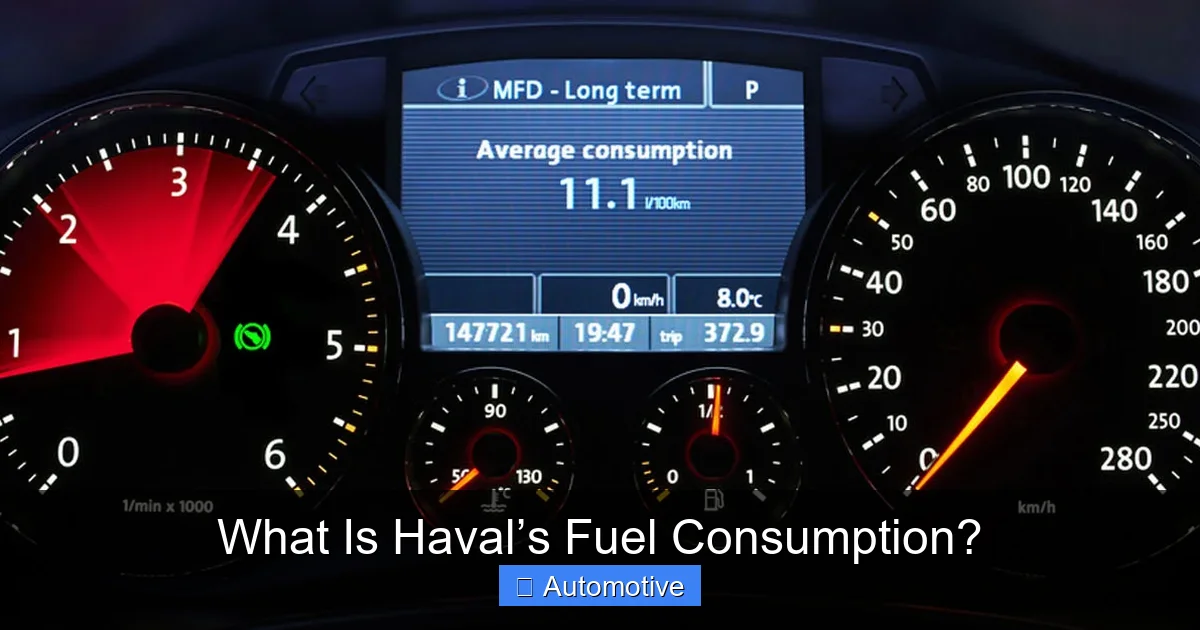
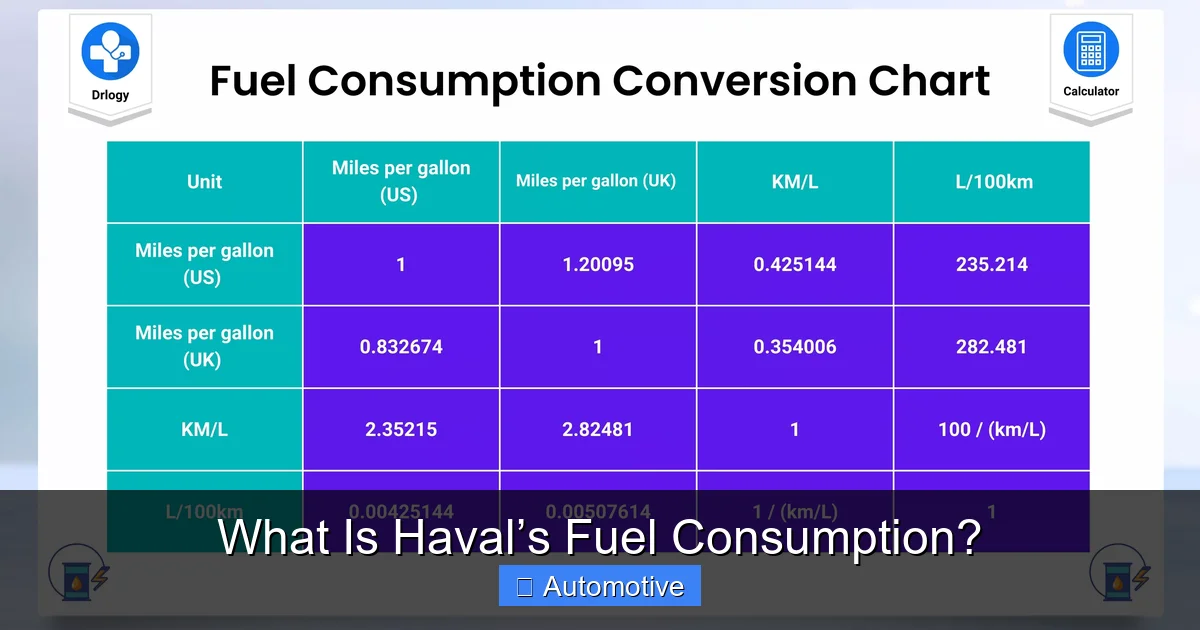
Before diving into specific Haval models, it’s important to understand what fuel consumption actually means. In simple terms, it’s the amount of fuel your vehicle uses to travel a certain distance. In most countries, this is measured in liters per 100 kilometers (L/100km). In the U.S. and a few other regions, it’s expressed as miles per gallon (MPG). The lower the number, the more efficient the vehicle.
Visual guide about What Is Haval’s Fuel Consumption?
Image source: d2hucwwplm5rxi.cloudfront.net
For example, a car that uses 7 L/100km is more fuel-efficient than one that uses 10 L/100km. That might not seem like a big difference, but over 20,000 kilometers a year, it can save you hundreds of liters—and dollars—at the pump. Haval’s official fuel consumption figures are determined through standardized testing procedures, such as the WLTP (Worldwide Harmonized Light Vehicles Test Procedure) or NEDC (New European Driving Cycle). These tests simulate city, highway, and combined driving to give an average estimate.
Why Real-World Consumption Differs from Official Ratings
Here’s the catch: real-world fuel consumption often doesn’t match the numbers on the window sticker. Why? Because test conditions are idealized. They assume smooth driving, no air conditioning, no heavy loads, and perfect weather. In reality, traffic jams, aggressive acceleration, hilly terrain, and even the time of year can affect how much fuel your Haval uses.
For instance, a Haval H6 might be rated at 7.2 L/100km combined, but in heavy city traffic with frequent stops, you could see 9–10 L/100km. On the flip side, steady highway driving at 90–100 km/h might drop consumption down to 6.5 L/100km. This variation is normal and expected. The key is understanding your typical driving patterns and choosing a model that fits your lifestyle.
Haval’s Most Popular Models and Their Fuel Efficiency
Haval offers a range of SUVs, each with different engine options and fuel consumption profiles. Let’s take a closer look at some of the brand’s most popular models and how they perform at the pump.
Visual guide about What Is Haval’s Fuel Consumption?
Image source: images.drlogy.com
Haval Jolion: Compact Efficiency
The Haval Jolion is one of the brand’s smallest and most fuel-efficient SUVs. It’s designed for urban drivers who want style, space, and savings. Powered by a 1.5-liter turbocharged four-cylinder engine, the Jolion delivers around 110–120 horsepower, which is plenty for city driving and light highway use.
Official fuel consumption for the Jolion is approximately 7.0–7.5 L/100km (33–35 MPG) in combined driving. In real-world conditions, most owners report 7.5–8.5 L/100km, especially in stop-and-go traffic. The Jolion’s lightweight build and efficient transmission help keep fuel use low. It also comes with an Eco driving mode that adjusts throttle response and climate control to maximize efficiency.
If you’re looking for a daily driver that won’t break the bank at the fuel station, the Jolion is a strong contender. It’s also one of the most affordable models in the Haval lineup, making it a great entry point for new buyers.
Haval H6: The Balanced Performer
The Haval H6 is the brand’s best-selling model and a favorite among families and long-distance drivers. It offers a larger cabin, more cargo space, and a more powerful engine than the Jolion. Most H6 models come with a 1.5L or 2.0L turbocharged engine, producing between 150 and 190 horsepower.
Fuel consumption for the 1.5L H6 is around 7.2–7.8 L/100km (32–34 MPG), while the 2.0L version is slightly thirstier at 8.0–8.8 L/100km (28–30 MPG). The H6 also features a 7-speed dual-clutch transmission (DCT) that helps optimize gear shifts for better fuel economy. In real-world driving, many owners report 8.0–9.0 L/100km, especially when carrying passengers or luggage.
One standout feature is the H6’s adaptive cruise control and lane-keeping assist, which promote smoother, more efficient driving on highways. These systems reduce unnecessary acceleration and braking, helping you save fuel without even thinking about it.
Haval H6 GT Hybrid: Efficiency Meets Performance
For drivers who want both power and efficiency, the Haval H6 GT Hybrid is a game-changer. This plug-in hybrid (PHEV) version combines a 1.5L turbo engine with an electric motor, delivering over 240 horsepower while using far less fuel.
Official fuel consumption for the H6 GT Hybrid is as low as 5.5 L/100km (43 MPG), and that’s including electric-only driving. In pure electric mode, it can travel up to 100 kilometers (62 miles) on a full charge—perfect for daily commutes. When the battery depletes, the gasoline engine kicks in seamlessly, maintaining efficiency without range anxiety.
Real-world results vary based on charging habits. If you charge regularly and drive mostly in the city, you could see consumption drop below 6.0 L/100km. On longer trips with minimal charging, it might rise to 7.0–7.5 L/100km. Still, it’s one of the most efficient SUVs in its class, offering a compelling alternative to traditional gasoline models.
Haval Dargo: Rugged and Ready
The Haval Dargo is a larger, more rugged SUV aimed at off-road enthusiasts and families who need extra space. It comes with a 2.0L turbo engine and all-wheel drive (AWD), which adds weight and reduces fuel efficiency compared to smaller models.
Official fuel consumption for the Dargo is around 8.5–9.2 L/100km (25–28 MPG). In real-world driving—especially with AWD engaged and off-road use—consumption can climb to 10–11 L/100km. However, for a vehicle of its size and capability, these numbers are reasonable. The Dargo’s advanced 4WD system and terrain management modes help optimize performance, but they do come at a fuel cost.
If you prioritize capability over economy, the Dargo is a solid choice. But if fuel savings are a top priority, you might want to consider a smaller model or the hybrid H6.
Factors That Influence Haval’s Fuel Consumption
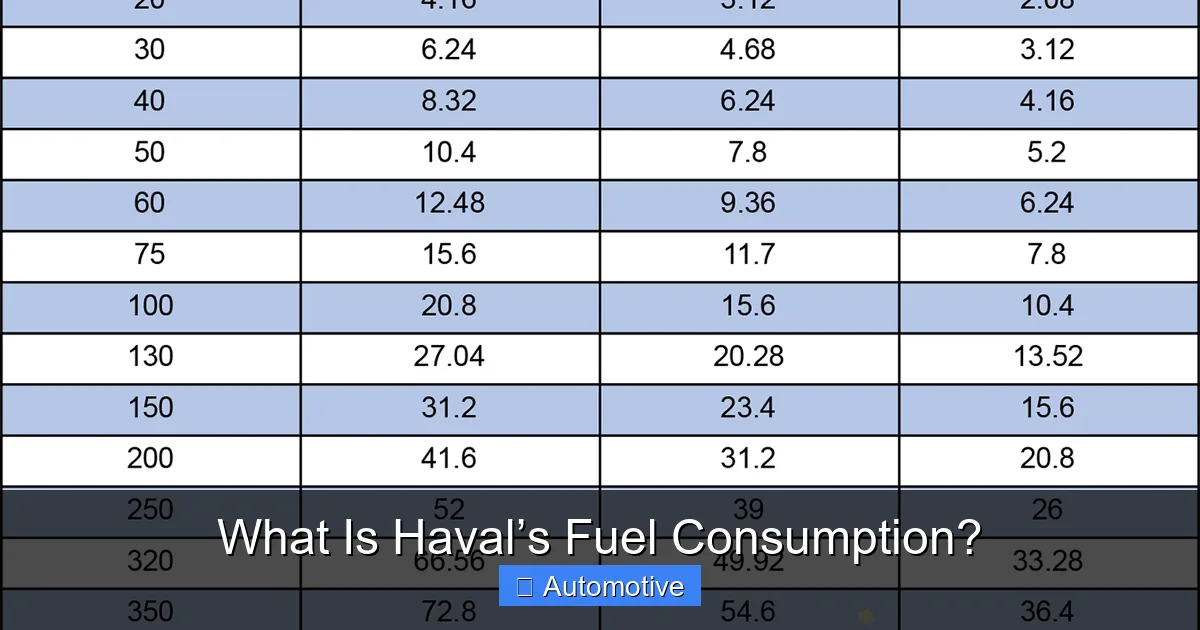
Fuel consumption isn’t just about the car—it’s also about how and where you drive. Several factors can significantly impact how much fuel your Haval uses, sometimes more than the engine or model itself.
Visual guide about What Is Haval’s Fuel Consumption?
Image source: bluedm.com.au
Driving Style and Habits
How you drive has a huge effect on fuel economy. Aggressive acceleration, hard braking, and speeding can increase consumption by 15–30%. For example, flooring the accelerator from a stoplight might feel exciting, but it burns more fuel than a smooth, gradual start.
To improve efficiency, try these tips:
- Accelerate gently and maintain a steady speed.
- Use cruise control on highways to avoid unnecessary speed changes.
- Anticipate traffic lights and slow down early instead of braking hard.
- Avoid idling for long periods—turn off the engine if you’re stopped for more than a minute.
These small changes can add up to big savings over time.
Vehicle Load and Cargo
The more weight your Haval carries, the more fuel it uses. Every extra 50 kilograms (110 lbs) can increase consumption by 2–5%. That means packing heavy luggage, roof racks, or towing a trailer will reduce efficiency.
To minimize the impact:
- Remove unnecessary items from the trunk or back seat.
- Use a roof box only when needed—they create drag and increase fuel use by up to 20% at highway speeds.
- Distribute weight evenly to maintain balance and handling.
If you frequently carry heavy loads, consider a model with a more powerful engine to avoid straining the motor.
Weather and Climate
Weather plays a surprising role in fuel consumption. Cold temperatures reduce engine efficiency and increase warm-up time, leading to higher fuel use in winter. Using the heater, defroster, and seat warmers also draws power from the engine.
In summer, air conditioning can increase fuel consumption by 10–20%, especially in stop-and-go traffic. To reduce the impact:
- Pre-cool your car while it’s still plugged in (for hybrids).
- Use the AC sparingly and roll down windows at low speeds.
- Park in the shade to keep the interior cooler.
These habits help keep your Haval running efficiently year-round.
Tire Pressure and Maintenance
Underinflated tires create more rolling resistance, which forces the engine to work harder and burn more fuel. Even a small drop in tire pressure—say, 5–10 psi below the recommended level—can increase consumption by 3–5%.
Check your tire pressure at least once a month and before long trips. Use the recommended PSI listed on the driver’s door jamb or in the owner’s manual. Also, ensure your tires are properly aligned and balanced to reduce wear and improve efficiency.
Regular maintenance is equally important. A dirty air filter, old spark plugs, or low-quality engine oil can reduce fuel economy. Follow Haval’s service schedule for oil changes, filter replacements, and tune-ups to keep your engine running smoothly.
How to Improve Your Haval’s Fuel Efficiency
Even if you’re driving a model with higher fuel consumption, there are plenty of ways to improve efficiency and save money. Here are some proven strategies:
Use Eco Mode and Smart Features
Most Haval models come with an Eco driving mode that adjusts engine performance, throttle response, and climate control to maximize fuel savings. When activated, it limits power output and encourages smoother driving.
Other smart features like start-stop technology (which shuts off the engine at red lights) and regenerative braking (in hybrids) also help reduce fuel use. Make sure these systems are enabled and functioning properly.
Plan Your Routes and Avoid Traffic
Stop-and-go traffic is the enemy of fuel efficiency. If possible, use navigation apps to find the fastest, least congested routes. Avoid peak hours and consider carpooling or public transport for regular commutes.
Combining errands into one trip also helps. A cold engine uses more fuel, so multiple short trips can be less efficient than one longer journey.
Choose the Right Fuel
Always use the fuel grade recommended by Haval. Most models run on 91–95 RON (regular unleaded), but some high-performance versions may require premium. Using a lower octane than recommended can cause knocking and reduce efficiency.
Avoid “fuel-saving” additives unless approved by the manufacturer. Most modern engines don’t need them, and some can even damage fuel systems.
Drive at Optimal Speeds
Fuel efficiency peaks at moderate speeds—usually between 50–80 km/h (30–50 mph). Driving faster increases air resistance, which dramatically raises fuel consumption. For example, driving at 120 km/h instead of 100 km/h can increase fuel use by 20–25%.
On highways, maintain a steady speed and use cruise control. This reduces unnecessary acceleration and helps you stay within the most efficient range.
Comparing Haval to Competitors
How does Haval’s fuel consumption stack up against rivals like Toyota, Hyundai, and Mazda? Overall, Haval holds its own—especially in the compact and midsize SUV segments.
For example, the Haval Jolion’s 7.0–7.5 L/100km is comparable to the Toyota Corolla Cross (6.8–7.4 L/100km) and Hyundai Kona (7.0–7.6 L/100km). The Haval H6’s 7.2–8.8 L/100km is similar to the Mazda CX-5 (7.0–8.5 L/100km) and slightly higher than the Toyota RAV4 Hybrid (5.8–6.2 L/100km).
Where Haval stands out is value. You often get more features, space, and tech for the price—even if fuel economy is slightly behind the leaders. The H6 GT Hybrid, in particular, offers hybrid efficiency at a lower price point than many competitors.
Ultimately, fuel consumption is just one factor to consider. Reliability, safety, comfort, and cost of ownership all play a role in your decision.
Conclusion: Making the Most of Your Haval’s Fuel Economy
So, what is Haval’s fuel consumption? The answer depends on the model, engine, and how you drive—but most Haval SUVs offer competitive efficiency for their class. From the city-friendly Jolion to the hybrid-powered H6 GT, there’s a Haval for every lifestyle and budget.
While official ratings give you a baseline, real-world performance is what matters most. By adopting smart driving habits, maintaining your vehicle, and choosing the right model, you can maximize fuel economy and reduce your environmental impact. Whether you’re commuting daily or exploring the countryside, a little awareness goes a long way.
Haval continues to innovate with more efficient engines, hybrid technology, and intelligent features. As the brand expands globally, it’s clear that fuel economy will remain a key focus. For drivers who want a capable, feature-rich SUV without sacrificing efficiency, Haval is a brand worth considering.
Frequently Asked Questions
What is the average fuel consumption of a Haval SUV?
The average fuel consumption for most Haval SUVs ranges from 7.0 to 9.0 L/100km (24–35 MPG), depending on the model and engine. Compact models like the Jolion are more efficient, while larger SUVs like the Dargo use more fuel.
Is the Haval H6 fuel-efficient?
Yes, the Haval H6 is relatively fuel-efficient for a midsize SUV. The 1.5L version averages 7.2–7.8 L/100km, while the 2.0L model uses 8.0–8.8 L/100km. Real-world consumption may be slightly higher in city driving.
Does the Haval Jolion have good fuel economy?
Absolutely. The Haval Jolion is one of the most fuel-efficient models in the lineup, with official consumption of 7.0–7.5 L/100km. It’s ideal for city driving and daily commutes.
Can driving habits really affect fuel consumption?
Yes, driving style has a major impact. Smooth acceleration, steady speeds, and avoiding hard braking can improve fuel economy by up to 20%. Using Eco mode and cruise control also helps.
How does the Haval H6 GT Hybrid compare in fuel use?
The Haval H6 GT Hybrid is significantly more efficient, with consumption as low as 5.5 L/100km. It combines a gasoline engine with an electric motor, allowing for electric-only driving on short trips.
What maintenance tips help improve fuel efficiency?
Regular oil changes, clean air filters, proper tire pressure, and timely tune-ups all help maintain optimal fuel economy. Also, avoid carrying unnecessary weight and use the recommended fuel grade.
