
What the Mercedes-benz Me Control Unit Does

The Mercedes-Benz ME Control Unit is the brain behind your car’s engine, managing fuel, ignition, emissions, and performance in real time. It ensures smooth operation, efficiency, and compliance with environmental standards while enabling advanced diagnostics and over-the-air updates.
If you’ve ever wondered what keeps your Mercedes-Benz running smoothly—whether it’s the quiet purr of the engine at idle, the instant throttle response when you hit the gas, or the way it adapts to different driving conditions—you’ve got the Mercedes-Benz ME Control Unit to thank. Often referred to as the “engine control unit” or “ECU,” this small but mighty computer is the central nervous system of your vehicle’s powertrain. It’s not just a box under the hood; it’s a sophisticated piece of engineering that manages everything from fuel delivery to emissions, ensuring your car performs at its best while staying efficient and clean.
Think of the ME Control Unit as the conductor of an orchestra. While each instrument—fuel injectors, spark plugs, oxygen sensors, turbochargers—plays its own role, the conductor ensures they all work in perfect harmony. Without it, the engine would be chaotic, inefficient, and unreliable. In modern Mercedes-Benz vehicles, especially those with advanced turbocharged engines or hybrid systems, the ME Control Unit does far more than just keep the engine running. It actively learns your driving style, adjusts to environmental conditions, and even communicates with other vehicle systems to deliver a seamless, high-performance driving experience.
Key Takeaways
- Engine Management: The ME Control Unit continuously monitors and adjusts engine functions like fuel injection, ignition timing, and air-fuel ratio for optimal performance.
- Emissions Control: It regulates exhaust systems and monitors emissions to meet strict environmental standards like Euro 6.
- Diagnostic Capabilities: The unit detects faults early and stores error codes, enabling faster repairs and reducing downtime.
- Integration with Vehicle Systems: It communicates with other control modules (e.g., transmission, ABS) for seamless vehicle operation.
- Over-the-Air Updates: Modern ME units support software updates via Mercedes-Benz’s connected services, improving functionality without a dealership visit.
- Performance Optimization: Adaptive learning allows the unit to adjust to driving habits and conditions for better fuel economy and responsiveness.
- Security and Protection: It includes safeguards against tampering and unauthorized access, protecting both the engine and vehicle data.
📑 Table of Contents
- What Is the Mercedes-Benz ME Control Unit?
- How the ME Control Unit Manages Engine Performance
- Emissions Control and Environmental Compliance
- Integration with Other Vehicle Systems
- Diagnostic and Maintenance Features
- Common Issues and Troubleshooting Tips
- Future Developments and Innovations
- Conclusion
What Is the Mercedes-Benz ME Control Unit?
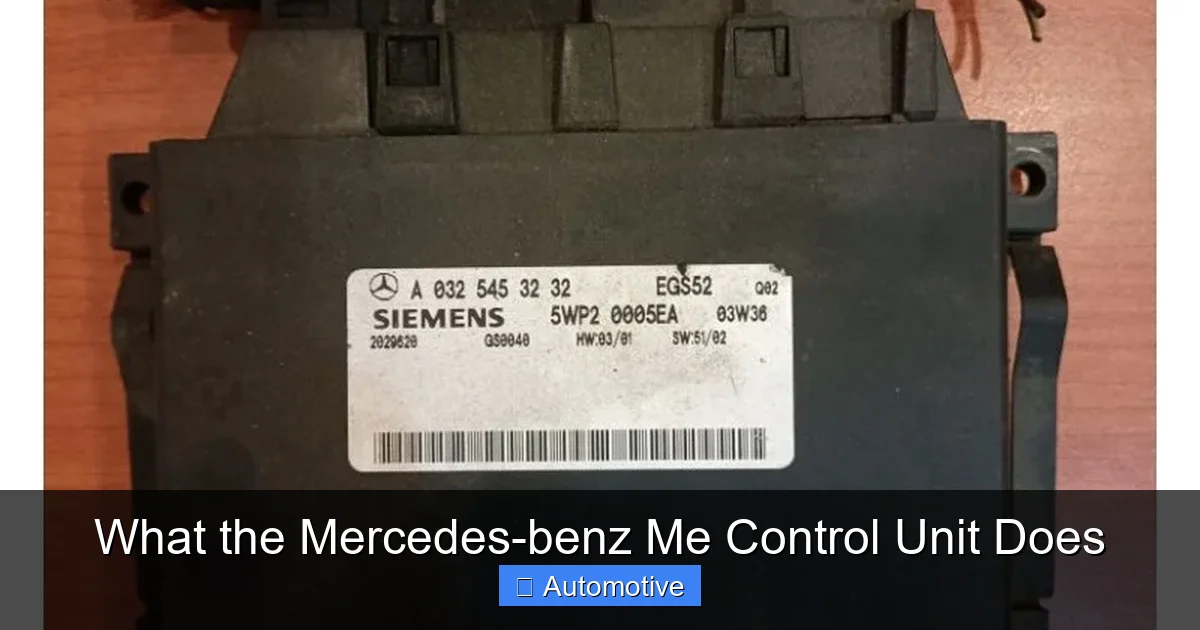
At its core, the Mercedes-Benz ME Control Unit is an electronic control module (ECM) specifically designed and programmed for Mercedes-Benz engines. The “ME” stands for “Motor Elektronik,” which translates to “Engine Electronics” in German. This naming reflects its primary function: to manage all electronic aspects of the engine’s operation. Unlike generic ECUs used in many vehicles, the ME unit is tailored to the precise engineering standards of Mercedes-Benz, ensuring optimal performance, durability, and integration with the brand’s luxury features.
The ME Control Unit is typically housed in a protective casing near the engine bay, often behind the glove compartment or under the dashboard, depending on the model. It’s built to withstand extreme temperatures, vibrations, and electromagnetic interference—conditions common in automotive environments. Inside, it contains a powerful microprocessor, memory chips, input/output circuits, and communication ports that allow it to interface with sensors and actuators throughout the vehicle.
One of the key features that sets the ME unit apart is its real-time processing capability. It receives data from dozens of sensors—such as the mass airflow sensor, throttle position sensor, crankshaft position sensor, and oxygen sensors—up to thousands of times per second. Based on this input, it calculates the ideal fuel mixture, ignition timing, and valve timing, then sends commands to actuators like fuel injectors and ignition coils. This constant feedback loop ensures the engine runs efficiently under all conditions, from cold starts to high-speed highway driving.
How the ME Control Unit Manages Engine Performance
Visual guide about What the Mercedes-benz Me Control Unit Does
Image source: down-my.img.susercontent.com
The primary role of the Mercedes-Benz ME Control Unit is to manage engine performance with precision and adaptability. This involves a complex interplay of fuel delivery, ignition timing, air intake, and exhaust management—all happening in milliseconds. Let’s break down how it accomplishes this.
Fuel Injection Control
One of the most critical functions of the ME unit is controlling fuel injection. In modern Mercedes-Benz engines, fuel is delivered via direct injection systems, where fuel is sprayed directly into the combustion chamber under high pressure. The ME Control Unit determines the exact amount of fuel needed based on engine load, RPM, throttle position, and air density. It then signals the fuel injectors to open for a precise duration—sometimes as little as a few milliseconds—to deliver the right amount of fuel.
For example, during acceleration, the ME unit increases fuel delivery to match the driver’s demand. Conversely, during deceleration or idle, it reduces fuel flow to improve efficiency. This dynamic adjustment not only enhances performance but also reduces fuel consumption and emissions. In turbocharged engines like the M276 or M256, the ME unit also coordinates with the turbocharger’s wastegate and boost pressure sensors to prevent over-boosting and ensure smooth power delivery.
Ignition Timing and Spark Control
Another vital function is managing ignition timing—the moment when the spark plug fires to ignite the air-fuel mixture. If the spark occurs too early or too late, the engine can experience knocking, reduced power, or increased emissions. The ME Control Unit uses data from the crankshaft and camshaft position sensors to calculate the optimal ignition point for each cylinder.
In high-performance models like the AMG variants, the ME unit can advance or retard ignition timing dynamically to maximize power output while protecting the engine from damage. It also adjusts timing based on fuel quality, altitude, and engine temperature. For instance, at high altitudes where air is thinner, the unit may retard timing slightly to prevent pre-ignition.
Air-Fuel Ratio Optimization
The ME Control Unit constantly monitors the air-fuel ratio using oxygen (O2) sensors in the exhaust system. The ideal ratio for complete combustion is approximately 14.7:1 (air to fuel), known as stoichiometric. However, under certain conditions—like wide-open throttle—the unit may enrich the mixture (more fuel) to cool the combustion chamber and prevent engine knock.
Conversely, during light-load cruising, it may lean the mixture slightly to improve fuel economy. This adaptive strategy, known as closed-loop fuel control, ensures the engine operates efficiently across all driving scenarios. The ME unit also works with the catalytic converter and exhaust gas recirculation (EGR) system to minimize harmful emissions.
Emissions Control and Environmental Compliance
Visual guide about What the Mercedes-benz Me Control Unit Does
Image source: assignmenthelp.net
Mercedes-Benz has long been a leader in automotive innovation, and environmental responsibility is a core part of that legacy. The ME Control Unit plays a crucial role in helping Mercedes vehicles meet stringent emissions standards such as Euro 6 and U.S. Tier 3 regulations. It does this by actively managing the exhaust system and monitoring pollutant levels in real time.
Exhaust Gas Recirculation (EGR) Management
One way the ME unit reduces nitrogen oxide (NOx) emissions is by controlling the Exhaust Gas Recirculation (EGR) system. The EGR valve redirects a portion of exhaust gases back into the intake manifold, lowering combustion temperatures and reducing NOx formation. The ME Control Unit determines when and how much exhaust gas to recirculate based on engine load, temperature, and speed.
For example, during low-speed city driving, the unit may increase EGR flow to keep emissions low. At high speeds or under heavy load, it may reduce or disable EGR to maintain performance. This intelligent management ensures compliance without sacrificing drivability.
Catalytic Converter and Oxygen Sensor Monitoring
The ME unit continuously monitors the efficiency of the catalytic converter using upstream and downstream oxygen sensors. If the converter is not functioning properly—due to age, contamination, or damage—the unit detects the drop in efficiency and triggers a warning light on the dashboard. This early detection helps prevent further damage and ensures the vehicle remains emissions-compliant.
In some models, the ME unit also controls secondary air injection systems, which pump fresh air into the exhaust stream during cold starts to help the catalytic converter reach operating temperature faster. This reduces cold-start emissions, which are typically the highest.
Onboard Diagnostics (OBD-II)
The ME Control Unit is fully compliant with OBD-II (Onboard Diagnostics II) standards, which require vehicles to monitor emissions-related systems and report faults. When a problem is detected—such as a faulty oxygen sensor or a leak in the evaporative emissions system—the unit stores a diagnostic trouble code (DTC) and illuminates the check engine light.
Mechanics can then use a scan tool to read these codes and pinpoint the issue quickly. This not only speeds up repairs but also helps maintain the vehicle’s environmental performance over time.
Integration with Other Vehicle Systems
Visual guide about What the Mercedes-benz Me Control Unit Does
Image source: pictures.dealer.com
The Mercedes-Benz ME Control Unit doesn’t operate in isolation. It’s part of a vast network of electronic control modules that communicate via high-speed data buses like CAN (Controller Area Network). This integration allows the ME unit to work seamlessly with other systems to enhance safety, comfort, and performance.
Transmission Coordination
In vehicles with automatic or dual-clutch transmissions, the ME unit communicates with the transmission control module (TCM) to optimize gear shifts. For example, during aggressive acceleration, the ME unit may signal the TCM to hold lower gears longer for maximum power. Conversely, during highway cruising, it may encourage early upshifts to improve fuel economy.
This coordination is especially important in Mercedes-Benz’s 9G-Tronic and 7G-Tronic transmissions, where smooth, responsive shifting is a hallmark of the driving experience.
Brake and Stability Systems
The ME unit also interfaces with the ABS (Anti-lock Braking System) and ESP (Electronic Stability Program) modules. During hard braking or slippery conditions, it may reduce engine torque to prevent wheel spin and help the stability system maintain control. This is particularly useful in all-wheel-drive models like the GLE or GLC, where traction management is critical.
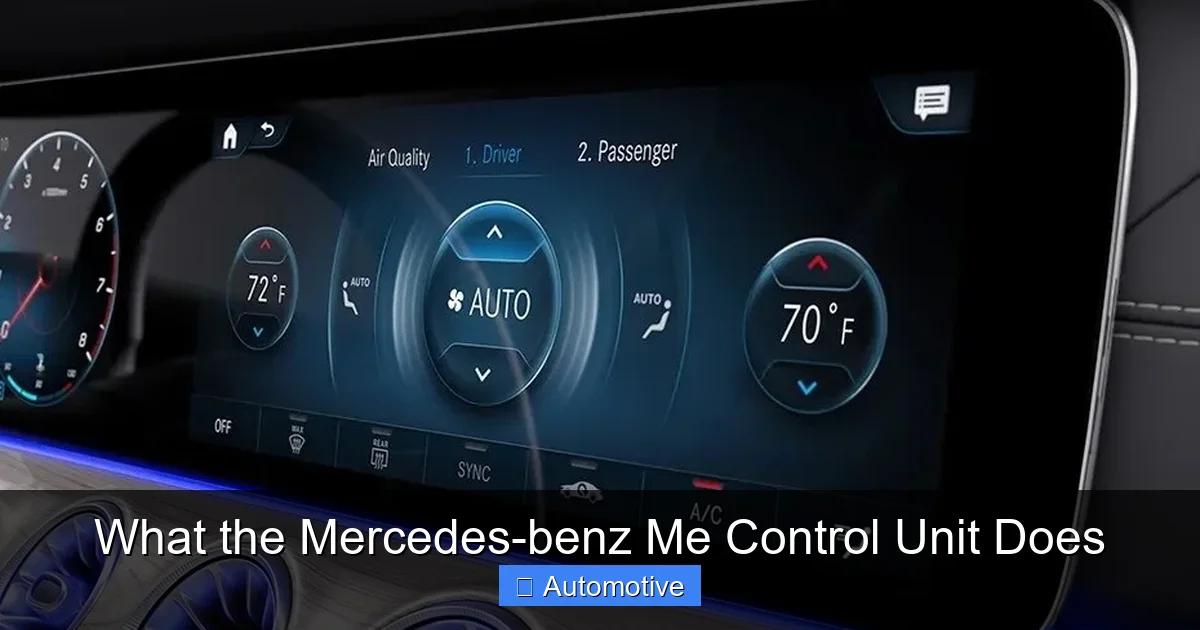
Climate Control and Auxiliary Systems
Even non-engine systems benefit from ME unit integration. For instance, the unit can adjust engine idle speed when the air conditioning compressor engages, ensuring smooth operation. It also communicates with the battery management system in hybrid models like the S 580 e, coordinating power delivery between the engine and electric motor.
Diagnostic and Maintenance Features
One of the most valuable aspects of the ME Control Unit is its built-in diagnostic capabilities. It acts as a watchdog for the engine, constantly checking sensor readings, actuator responses, and system performance. When something goes wrong, it doesn’t just shut down the engine—it provides detailed information to help technicians fix the problem quickly.
Fault Detection and Error Codes
The ME unit can detect a wide range of issues, from a loose gas cap to a failing fuel pump. When a fault is detected, it stores a specific DTC (Diagnostic Trouble Code) in its memory. These codes follow a standardized format (e.g., P0171 for a lean fuel mixture) and can be read using an OBD-II scanner.
For example, if the mass airflow sensor reports inconsistent readings, the ME unit may trigger code P0101 and reduce engine performance to prevent damage. A technician can then inspect the sensor, clean or replace it, and clear the code.
Adaptive Learning and Self-Calibration
Modern ME units feature adaptive learning, meaning they can adjust their parameters based on long-term driving patterns. For instance, if a driver frequently accelerates aggressively, the unit may slightly enrich the fuel mixture to protect the engine. Over time, it “learns” the vehicle’s condition—such as fuel system wear or sensor drift—and compensates accordingly.
This self-calibration reduces the need for frequent manual adjustments and helps maintain optimal performance throughout the vehicle’s life.
Over-the-Air (OTA) Updates
One of the most advanced features of newer ME Control Units is support for over-the-air (OTA) software updates. Through Mercedes-Benz’s connected services like Mercedes me connect, owners can receive updates that improve engine performance, fix bugs, or add new features—all without visiting a dealership.
For example, a software update might refine throttle response, improve cold-start emissions, or enhance hybrid system efficiency. This capability ensures your vehicle stays up-to-date with the latest engineering advancements.
Common Issues and Troubleshooting Tips
While the ME Control Unit is highly reliable, it’s not immune to problems. Common issues include electrical faults, sensor failures, and software glitches. Here are some practical tips for diagnosing and addressing ME unit-related problems.
Symptoms of a Faulty ME Unit
Signs that the ME unit may be malfunctioning include:
– Check engine light illuminated
– Poor fuel economy
– Rough idling or stalling
– Reduced engine power (limp mode)
– Difficulty starting the engine
If you notice any of these symptoms, it’s important to have the vehicle scanned for error codes as soon as possible.
DIY Checks and Precautions
Before assuming the ME unit is faulty, check simpler causes:
– Ensure the battery is fully charged and terminals are clean.
– Inspect fuses related to the engine control system.
– Verify that all sensors and connectors are secure and free of corrosion.
Avoid using low-quality fuel or aftermarket performance chips, as these can confuse the ME unit and trigger false errors.
Professional Diagnosis and Repair
Because the ME unit is a complex electronic component, it should only be serviced by qualified technicians with the right tools. Attempting to repair or replace it without proper training can cause further damage or void your warranty.
If the unit itself is faulty, it may need to be reprogrammed or replaced. In some cases, a software reset or update can resolve the issue.
Future Developments and Innovations
As automotive technology evolves, so does the Mercedes-Benz ME Control Unit. Future developments are likely to focus on greater integration with autonomous driving systems, enhanced cybersecurity, and even more precise engine control.
For example, upcoming ME units may incorporate AI algorithms to predict maintenance needs or optimize performance based on real-time traffic and weather data. They may also support vehicle-to-everything (V2X) communication, allowing the engine to adjust based on signals from traffic lights or other vehicles.
In electric and hybrid models, the ME unit will continue to play a key role in managing power distribution, regenerative braking, and thermal management—ensuring that Mercedes-Benz remains at the forefront of automotive innovation.
Conclusion
The Mercedes-Benz ME Control Unit is far more than just a computer under the hood—it’s the intelligent heart of your vehicle’s engine. From managing fuel and ignition to controlling emissions and integrating with other systems, it ensures your Mercedes-Benz delivers the performance, efficiency, and reliability you expect. With features like adaptive learning, OTA updates, and advanced diagnostics, the ME unit represents the perfect blend of engineering excellence and cutting-edge technology.
Whether you’re cruising down the highway in a C-Class or pushing the limits in an AMG GT, you can trust that the ME Control Unit is working tirelessly behind the scenes to make every drive smooth, safe, and enjoyable. Understanding its role not only deepens your appreciation for your vehicle but also helps you maintain it better and address issues before they become serious.
As Mercedes-Benz continues to innovate, the ME Control Unit will remain a cornerstone of their engineering philosophy—proving that even in an age of electrification and autonomy, the internal combustion engine still has a vital role to play, guided by smart, responsive, and reliable electronics.
Frequently Asked Questions
What does the ME Control Unit stand for?
The ME Control Unit stands for “Motor Elektronik,” which means “Engine Electronics” in German. It’s the central computer that manages all electronic functions of the Mercedes-Benz engine.
Can the ME Control Unit be repaired or replaced?
Yes, the ME Control Unit can be repaired or replaced, but it should only be done by a qualified technician using specialized diagnostic tools. Attempting DIY repairs can cause further damage.
How do I know if my ME Control Unit is faulty?
Common signs include the check engine light, poor fuel economy, rough idling, or reduced engine power. A diagnostic scan can confirm if the ME unit or a related component is causing the issue.
Does the ME Control Unit support software updates?
Yes, modern ME units support over-the-air (OTA) updates through Mercedes me connect, allowing for performance improvements and bug fixes without a dealership visit.
Can a faulty sensor affect the ME Control Unit?
Yes, faulty sensors can send incorrect data to the ME unit, causing it to make wrong adjustments. This can lead to poor performance, increased emissions, or engine damage if not addressed.
Is the ME Control Unit the same as the ECU?
Yes, the ME Control Unit is a type of engine control unit (ECU) specifically designed for Mercedes-Benz vehicles. It performs the same core functions but with brand-specific programming and integration.
