
Coleman Mach Air Conditioner Troubleshooting

Is your Coleman Mach air conditioner acting up? Don’t sweat it—this guide covers the most common problems, from poor cooling to strange noises, and how to fix them fast. Whether you’re a weekend camper or a full-time RVer, you’ll find step-by-step troubleshooting tips to get your AC back in top shape without calling a technician.
Key Takeaways
- Check the thermostat settings first: Many cooling issues stem from incorrect thermostat settings or a dead remote battery—simple fixes that save time and money.
- Clean or replace air filters regularly: Clogged filters restrict airflow and reduce efficiency; inspect them monthly during heavy use.
- Inspect the condenser coils for dirt and debris: Dirty coils prevent proper heat exchange—clean them with a soft brush or coil cleaner.
- Listen for unusual noises: Grinding, squealing, or clicking sounds may indicate motor or fan problems that need prompt attention.
- Ensure proper ventilation around the unit: Blocked vents or low roof clearance can cause overheating and system shutdowns.
- Test the capacitor if the unit won’t start: A failed capacitor is a common cause of startup failure and can often be replaced DIY.
- Schedule annual professional maintenance: Prevent major breakdowns by having a technician inspect refrigerant levels, electrical connections, and seals each year.
📑 Table of Contents
Introduction: Why Your Coleman Mach AC Matters
If you’ve ever spent a summer weekend in an RV, you know how quickly comfort can turn to frustration when the air conditioner stops working. The Coleman Mach air conditioner is one of the most trusted names in recreational vehicle cooling, known for its durability, efficiency, and quiet operation. Whether you’re parked at a national park, cruising down the highway, or dry camping off-grid, a reliable AC unit isn’t just a luxury—it’s a necessity.
But even the best systems can run into trouble. From weak airflow to complete shutdowns, issues with your Coleman Mach AC can ruin an otherwise perfect trip. The good news? Many of these problems are preventable—or at least fixable—with a little know-how. You don’t need to be a certified HVAC technician to troubleshoot common issues. With the right guidance, tools, and a bit of patience, you can often resolve problems on your own, saving both time and money.
Understanding Your Coleman Mach Air Conditioner
Visual guide about Coleman Mach Air Conditioner Troubleshooting
Image source: appliancesissue.com
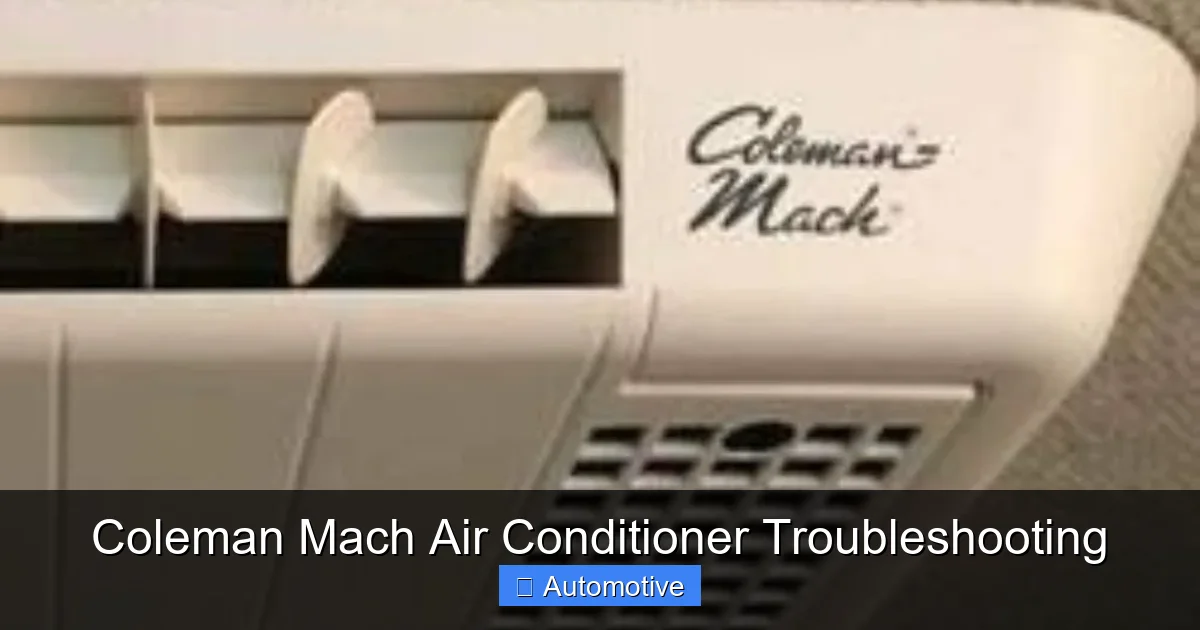
Before diving into troubleshooting, it helps to understand how your Coleman Mach AC works. These units are rooftop-mounted systems designed specifically for RVs, travel trailers, and motorhomes. They use a refrigeration cycle to pull heat from inside your vehicle and release it outside, keeping the interior cool and comfortable.
The main components include the compressor, condenser coils, evaporator coils, fan motor, thermostat, and control board. Most modern Coleman Mach models also feature digital thermostats, remote controls, and energy-efficient modes like “quiet cool” or “low amp start.” Knowing where these parts are located—and how they interact—can help you pinpoint problems faster.
For example, if your AC runs but doesn’t cool, the issue might be with the refrigerant level or clogged coils. If it won’t turn on at all, the problem could be electrical—like a tripped breaker or faulty capacitor. Understanding these basics empowers you to diagnose issues logically instead of guessing.
Common Features of Coleman Mach Units
Most Coleman Mach air conditioners come with features designed to enhance performance and user convenience. These include:
– Digital thermostat with remote control: Allows you to adjust temperature from inside the RV without climbing onto the roof.
– High-efficiency compressor: Reduces energy consumption while maintaining strong cooling power.
– Quiet operation mode: Minimizes fan noise for better sleep and relaxation.
– Auto-restart function: Resumes cooling after a power outage without manual intervention.
– LED status indicators: Help identify error codes or operational issues at a glance.
Familiarizing yourself with these features can help you use your AC more effectively and recognize when something isn’t working as expected.
Common Coleman Mach AC Problems and How to Fix Them
Visual guide about Coleman Mach Air Conditioner Troubleshooting
Image source: appliancesissue.com
Even the most reliable systems can develop issues over time. The key is knowing what to look for—and what you can safely fix yourself. Below are the most frequent problems reported by Coleman Mach users, along with practical solutions.
Problem 1: AC Won’t Turn On
One of the most frustrating issues is when your air conditioner refuses to start. You flip the switch, press the remote button, and… nothing. Before panicking, check these common causes:
– Power supply: Make sure your RV is connected to a reliable power source. If you’re on shore power, verify the outlet is working. If using a generator, ensure it’s producing enough wattage (most Coleman Mach units require at least 30 amps).
– Tripped breaker or blown fuse: Check the breaker panel inside your RV and the external power pedestal. Reset any tripped breakers or replace blown fuses.
– Dead remote battery: If your unit uses a wireless remote, a dead battery can prevent the AC from responding. Replace the battery and test again.
– Faulty thermostat: If the thermostat isn’t sending a signal, the AC won’t activate. Try setting it to the lowest temperature and ensure it’s in “cool” mode.
If none of these steps work, the issue may be internal—like a failed control board or capacitor. These require more advanced troubleshooting.
Problem 2: Weak or No Cooling
Your AC is running, but the air coming out isn’t cold. This is a common complaint, especially during hot weather. Here’s what to check:
– Dirty air filter: A clogged filter restricts airflow, reducing cooling efficiency. Remove the filter (usually behind a vent inside the RV), clean it with water, or replace it if it’s damaged.
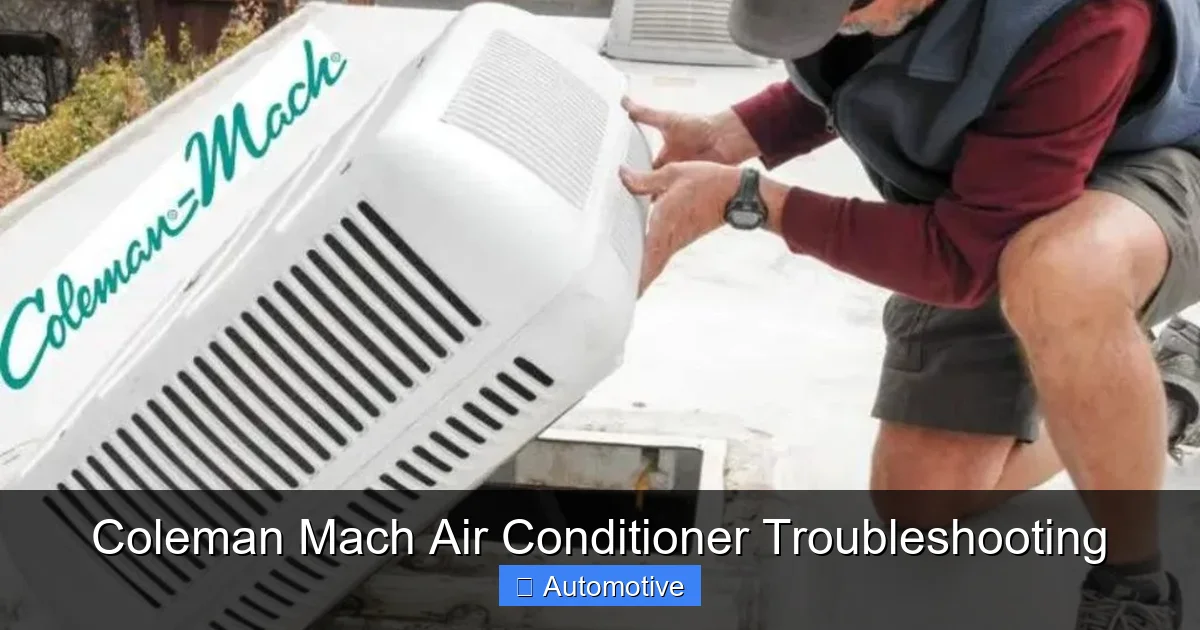
– Blocked condenser coils: The outdoor coils on the roof can collect dirt, leaves, and bugs. Turn off power, remove the outer cover, and gently clean the coils with a soft brush or coil cleaner spray.
– Low refrigerant: If the system is low on Freon (R-22 or R-410A), it won’t cool properly. This requires a professional recharge—don’t attempt to add refrigerant yourself unless certified.
– Frozen evaporator coils: If the coils freeze over, airflow drops and cooling stops. This is often caused by restricted airflow (dirty filter) or low refrigerant. Turn off the AC, let the ice melt, then address the root cause.
Pro tip: Run the fan-only mode for 10–15 minutes after turning off the AC to help dry the coils and prevent mold.
Problem 3: Strange Noises
Unusual sounds from your AC can be alarming—but they’re often clues to underlying issues.
– Rattling or vibrating: Loose panels, screws, or mounting brackets can cause rattling. Turn off the unit, inspect the roof cover, and tighten any loose parts.
– Squealing or screeching: This usually points to a worn fan motor bearing or belt (if applicable). Listen closely to locate the source. If it’s the motor, it may need lubrication or replacement.
– Clicking sounds: Rapid clicking when trying to start could mean a failing capacitor or relay. These components help the compressor and fan motors start. A multimeter can test capacitance—if it’s out of range, replace it.
– Gurgling or hissing: These sounds may indicate a refrigerant leak. If you hear this along with poor cooling, contact a technician immediately.
Never ignore persistent noises—they often signal wear or damage that could lead to bigger failures.
Problem 4: Water Leaks or Dripping
Finding water inside your RV near the AC unit is a red flag. While some condensation is normal, excessive dripping suggests a problem.
– Clogged drain line: The condensate drain can get blocked with algae or debris. Locate the drain hose (usually on the roof or side of the unit), disconnect it, and flush it with water or a mild bleach solution.
– Improper installation or slope: If the unit isn’t level, water may not drain properly. Check that the roof mounting is secure and slightly tilted to allow runoff.
– Damaged seals or gaskets: Over time, rubber seals around the unit can crack or degrade, allowing water to seep in. Inspect and replace if necessary.
Regular maintenance can prevent most leaks. Consider installing a drain pan alarm that alerts you to water buildup.
Problem 5: AC Cycles On and Off Frequently
Short cycling—when the AC turns on and off rapidly—wastes energy and strains the system. Causes include:
– Dirty air filter or coils: Restricted airflow makes the system overheat and shut down prematurely.
– Thermostat placement: If the thermostat is near a vent or in direct sunlight, it may read incorrect temperatures. Relocate it if possible.
– Oversized unit: An AC that’s too powerful for your RV will cool the space too quickly, causing frequent cycling. This is less common but worth considering if the problem started after an upgrade.
Adjusting the thermostat differential (the temperature range between on and off) can sometimes help, though this varies by model.
DIY Troubleshooting Steps You Can Do Today
Visual guide about Coleman Mach Air Conditioner Troubleshooting
Image source: troubleshootinglab.com
You don’t need to wait for a service call to start fixing your Coleman Mach AC. Many issues can be resolved with simple DIY steps. Here’s a quick action plan:
Step 1: Perform a Visual Inspection
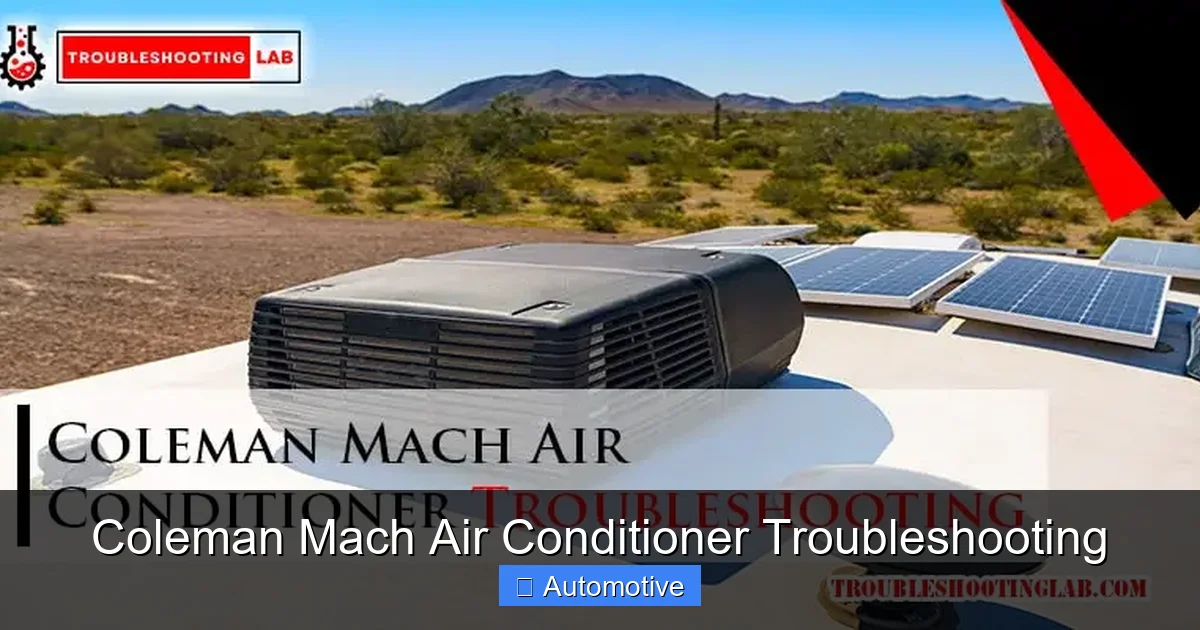
Start by turning off the power at the breaker. Then, climb onto the roof (safely!) and inspect the unit. Look for:
– Cracks or damage to the outer cover
– Loose screws or panels
– Debris like leaves, twigs, or bird nests
– Signs of rust or corrosion
Use a flashlight to check inside the unit if the cover is removable. Never touch internal components while the power is on.
Step 2: Clean the Air Filter and Coils
Remove the interior air filter and rinse it under warm water. Let it dry completely before reinstalling. For the condenser coils, use a soft-bristle brush or a coil cleaner spray. Avoid high-pressure washers, which can bend the delicate fins.
Step 3: Test the Capacitor
The capacitor stores energy to help the compressor and fan motors start. A failed capacitor is a common cause of startup issues. To test it:
1. Turn off power and discharge the capacitor (use an insulated screwdriver to short the terminals).
2. Use a multimeter with a capacitance setting to check the value.
3. Compare the reading to the rating printed on the capacitor (e.g., 45 µF ± 6%).
4. If it’s significantly lower, replace it with an identical model.
Capacitors are inexpensive (usually $10–$20) and widely available online or at hardware stores.
Step 4: Check Electrical Connections
Loose or corroded wires can cause intermittent operation. Open the control panel (if accessible) and inspect connections. Tighten any loose terminals and clean corrosion with a wire brush. Never work on live circuits—always disconnect power first.
Step 5: Reset the System
Sometimes, a simple reset fixes the issue. Turn off the AC at the thermostat and breaker. Wait 5–10 minutes, then turn it back on. This allows the control board to reboot and clear minor glitches.
When to Call a Professional
While many Coleman Mach AC issues are DIY-friendly, some problems require expert help. Don’t hesitate to call a certified RV technician if you encounter:
– Refrigerant leaks (requires EPA certification to handle)
– Compressor failure (expensive and complex to replace)
– Electrical faults in the control board
– Persistent error codes you can’t resolve
– Warranty-covered repairs (DIY work may void coverage)
Professional servicing is also recommended for annual maintenance, especially before peak camping season. A technician can check refrigerant levels, test electrical components, and ensure everything is running efficiently.
Preventative Maintenance Tips
An ounce of prevention is worth a pound of cure—especially when you’re miles from the nearest service center. Follow these tips to keep your Coleman Mach AC in top condition:
– Clean filters monthly: During heavy use, inspect and clean the air filter every 30 days.
– Inspect the roof unit before trips: Check for debris, damage, and secure mounting.
– Use a surge protector: Power surges can damage electronics. Invest in a quality RV surge protector.
– Cover the unit when not in use: A breathable AC cover protects against UV damage and debris during storage.
– Run the fan periodically in winter: This prevents seals from drying out and keeps internal parts lubricated.
Keeping a maintenance log can help you track when filters were changed, coils cleaned, or service performed.
Conclusion: Stay Cool and Confident
Your Coleman Mach air conditioner is a vital part of your RV experience—keeping you comfortable, safe, and relaxed no matter where the road takes you. While problems can happen, most are manageable with a little knowledge and preparation. By understanding how your system works, recognizing common issues, and performing regular maintenance, you can avoid many headaches and extend the life of your unit.
Remember, troubleshooting doesn’t have to be intimidating. Start with the basics: check power, clean filters, listen for noises, and test components. When in doubt, consult your owner’s manual or reach out to Coleman’s customer support. And when the problem is beyond your skill level, don’t hesitate to call a pro.
With the tips in this guide, you’re well-equipped to handle the most common Coleman Mach AC issues. So next time your unit acts up, take a deep breath—you’ve got this. Stay cool, stay safe, and enjoy every mile of your adventure.
Frequently Asked Questions
Why won’t my Coleman Mach AC turn on?
Check the power source, breaker, and remote battery first. If those are fine, the issue could be a faulty thermostat, capacitor, or control board. Test the capacitor with a multimeter or consult a technician.
How often should I clean the air filter?
Clean or replace the air filter every 30 days during heavy use, or at the start and end of each camping season. A dirty filter reduces airflow and cooling efficiency.
Can I recharge the refrigerant myself?
No—adding refrigerant requires EPA certification and specialized equipment. Low refrigerant usually indicates a leak, which must be repaired by a professional before recharging.
What does it mean if my AC is freezing up?
Frozen coils are often caused by restricted airflow (dirty filter) or low refrigerant. Turn off the AC, let it thaw, then clean the filter and check for other issues.
Is it normal for the AC to make noise?
Some fan and compressor noise is normal, but loud grinding, squealing, or clicking sounds may indicate motor or electrical problems. Investigate unusual noises promptly.
How can I improve my AC’s efficiency?
Keep filters and coils clean, ensure proper ventilation, use a surge protector, and avoid running the AC with windows or vents open. Regular maintenance also boosts performance.
