
Do Truck Drivers Still Use Cb Radios

Yes, truck drivers still use CB radios—more than you might think. While modern tech like GPS and smartphones dominate, CB radios remain a trusted, real-time communication tool for sharing road conditions, weather alerts, and police sightings. They also foster a sense of community among long-haul drivers.
Key Takeaways
- CB radios are still widely used by truck drivers for real-time communication about traffic, hazards, and law enforcement.
- They offer instant, no-subscription communication without relying on cellular networks or data plans.
- CB radios help build camaraderie among drivers through casual chats and shared experiences on the road.
- Modern CB radios include advanced features like noise reduction, Bluetooth, and weather alerts.
- They serve as a backup communication method during emergencies when cell service is unavailable.
- Newer technologies complement, rather than replace, CB radios, creating a hybrid communication system for drivers.
- Learning CB lingo and etiquette enhances effectiveness and respect within the trucking community.
📑 Table of Contents
- Do Truck Drivers Still Use CB Radios? The Surprising Truth
- The History of CB Radios in Trucking
- Why CB Radios Are Still Useful for Truck Drivers
- How CB Radios Work in the Modern Trucking World
- The Social Side of CB Radios: More Than Just Alerts
- Modern CB Radios: Features and Upgrades
- Challenges and Limitations of CB Radios
- Tips for New Drivers: Getting Started with CB Radios
- The Future of CB Radios in Trucking
- Conclusion: CB Radios Are Here to Stay
Do Truck Drivers Still Use CB Radios? The Surprising Truth
If you’ve ever driven down a long stretch of highway and spotted a big rig with a shiny antenna on its cab, you might have wondered: do truck drivers still use CB radios? After all, we live in an age of smartphones, GPS navigation, and satellite communication. It’s easy to assume that older technologies like Citizens Band (CB) radios have been phased out. But the truth? CB radios are not only alive—they’re still a vital part of the trucking world.
Despite the rise of digital tools, CB radios continue to play a crucial role in the daily lives of many truck drivers. They offer something that apps and GPS systems can’t: instant, direct communication with other drivers on the road. Whether it’s warning about a speed trap, reporting a blown tire, or just shooting the breeze during a long haul, CB radios provide a sense of connection and safety that’s hard to replicate.
And it’s not just nostalgia keeping CB radios alive. Many drivers rely on them as a backup when cell service drops in remote areas or during severe weather. Plus, the cost is minimal—no monthly fees, no data charges. Just plug in, tune in, and talk. In a profession where time is money and safety is everything, that simplicity is priceless.
The History of CB Radios in Trucking
Visual guide about Do Truck Drivers Still Use Cb Radios
Image source: highlandwireless.com
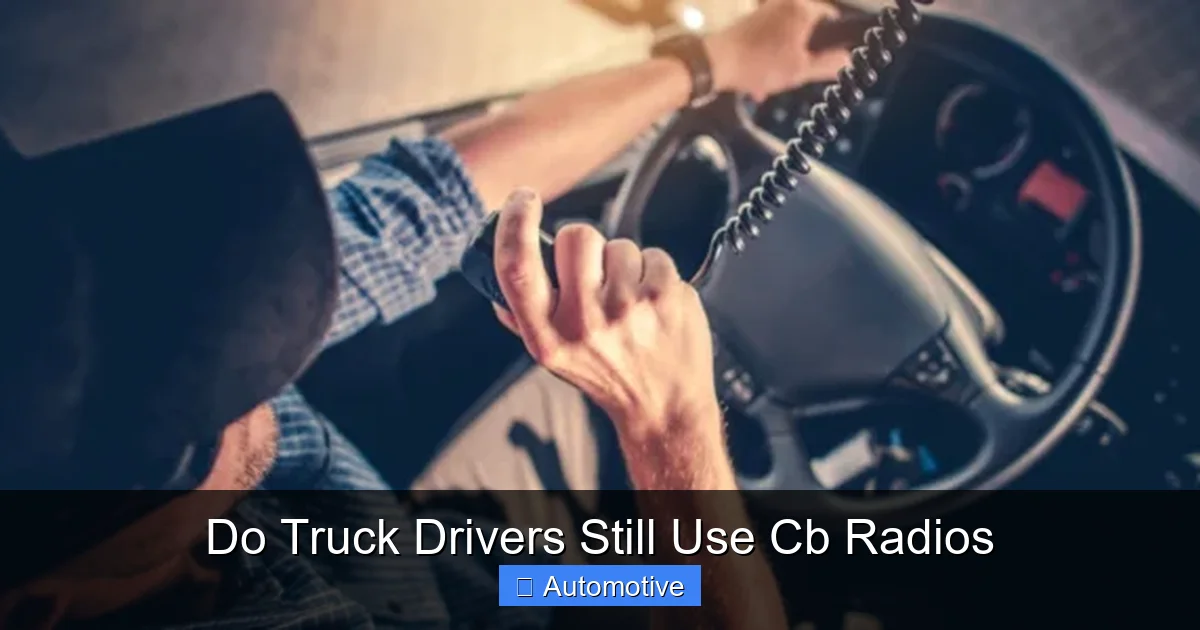
To understand why CB radios are still relevant, it helps to look back at their origins. CB radios were first introduced in the United States in the 1940s, but they didn’t become popular among truck drivers until the 1970s. That’s when the oil crisis and rising fuel prices led to widespread frustration on the highways. Drivers began using CB radios to share information about traffic, police speed traps, and road conditions—helping each other save time and avoid trouble.
The 1970s also saw the rise of CB culture, fueled by movies like *Smokey and the Bandit* and songs like C.W. McCall’s “Convoy.” Suddenly, CB radios weren’t just tools—they were symbols of freedom, rebellion, and the open road. Truckers adopted their own slang, called “10-codes,” and developed a tight-knit community bound by shared experiences and late-night chats.
Even as technology advanced, CB radios remained a staple in truck cabs. While other forms of communication came and went, CB radios proved durable. They didn’t require infrastructure, subscriptions, or complex setups. Just a handheld unit or a mounted radio, an antenna, and a clear channel.
Today, that legacy continues. While the flashy CB culture of the ’70s has faded, the practical value of CB communication remains strong. Many veteran drivers still swear by their radios, and younger drivers are picking them up as they enter the industry.
Why CB Radios Are Still Useful for Truck Drivers
Visual guide about Do Truck Drivers Still Use Cb Radios
Image source: tappinthrulife.com
So, what makes CB radios so valuable in 2024? Let’s break it down.
Instant Communication Without Data or Wi-Fi
One of the biggest advantages of CB radios is that they don’t rely on cellular networks or the internet. That means they work in areas where your phone has no signal—like remote stretches of I-80 through Wyoming or the desert highways of Nevada. For truck drivers who spend hours in these zones, that’s a game-changer.
Imagine you’re driving through a mountain pass and suddenly hit a patch of black ice. With a CB radio, you can immediately alert other drivers behind you. No waiting for a text to send, no hoping your GPS app updates in time. Just flip the mic, say “Ice on the bridge at mile marker 112,” and you’ve potentially prevented an accident.
Real-Time Road Alerts
CB radios are especially useful for sharing real-time information. Drivers use them to report:
– Traffic jams or accidents
– Road construction or lane closures
– Police speed traps or weigh station activity
– Weather hazards like fog, snow, or high winds
– Vehicle breakdowns or debris on the road
This kind of information is often more current than what you’ll find on GPS apps, which can lag by several minutes. And unlike social media or forums, CB communication is immediate and local—exactly what you need when you’re driving 65 mph down a highway.
No Monthly Fees or Subscriptions
Let’s face it—trucking is a business, and every dollar counts. While GPS systems and fleet management tools often come with monthly fees, CB radios are a one-time purchase. Once you’ve bought the radio and antenna, there are no ongoing costs. That makes them an affordable option for independent drivers or small fleets.
Even high-quality CB radios with advanced features typically cost under $200. Compare that to satellite communication systems that can run into the thousands, and it’s easy to see why CB radios remain popular.
Backup During Emergencies
Cell phones are great—until they’re not. During severe weather, natural disasters, or network outages, cellular service can go down. In those moments, a CB radio can be a lifeline.
Many truck drivers keep their CB radios powered and ready, just in case. If they get stranded or need to call for help, they can broadcast a distress signal on Channel 9 (the emergency channel) or reach out to nearby drivers for assistance. It’s a simple but powerful safety net.
How CB Radios Work in the Modern Trucking World
Visual guide about Do Truck Drivers Still Use Cb Radios
Image source: truckerstraining.com
You might be wondering: how do CB radios fit into today’s high-tech trucking environment? After all, modern trucks come equipped with GPS, dash cams, ELDs (Electronic Logging Devices), and even AI-powered route optimization.
The answer is simple: CB radios don’t replace these tools—they complement them.
CB Radios and GPS: A Perfect Pair
Think of GPS as your navigator and CB radio as your co-pilot. GPS tells you the best route, but CB radio tells you what’s actually happening on that route right now. For example, your GPS might direct you to take I-95, but a CB transmission could warn you about a 10-mile backup due to an accident. Armed with that info, you can decide whether to reroute or wait it out.
Many drivers use both systems side by side. They’ll have their GPS running on a tablet or built-in screen, while their CB radio sits within easy reach on the dash. It’s a hybrid approach that combines the best of old and new.
Integration with Other Communication Tools
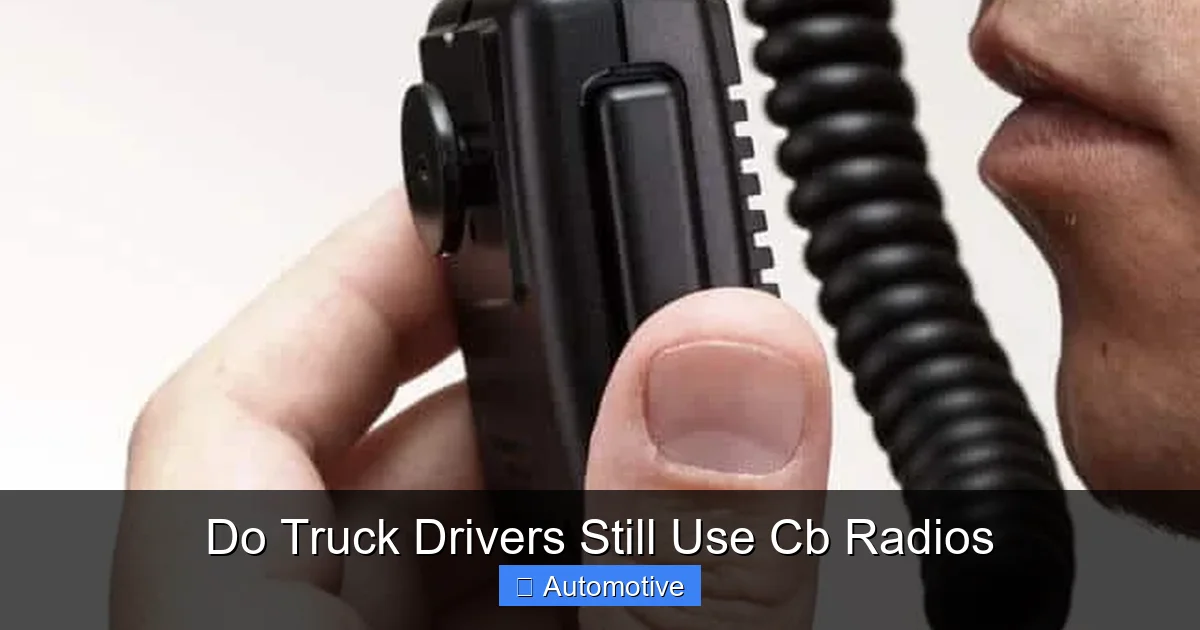
Some modern CB radios now come with Bluetooth capabilities, allowing drivers to connect their phones or headsets. This means you can take a hands-free call while still monitoring CB traffic. Others include built-in weather alert systems that automatically broadcast NOAA warnings when severe weather is detected.
There are even apps that simulate CB radio channels over the internet, letting drivers chat with others globally. While these don’t replace real CB communication, they can be fun for staying in touch with friends or joining online trucking communities.
Use in Fleet Operations
While CB radios are often associated with solo drivers, they’re also used in fleet operations—especially among smaller companies. Fleet managers might use CB radios to stay in touch with drivers when satellite systems are down or too expensive. It’s a low-cost way to maintain communication across a team, especially in rural areas.
Some fleets even assign specific channels for different purposes—like one for dispatch updates and another for casual chatter. This keeps communication organized and efficient.
The Social Side of CB Radios: More Than Just Alerts
Beyond practical uses, CB radios play an important social role in the trucking community. For many drivers, the road can be lonely. Long hours, isolation, and time away from family can take a toll on mental health. CB radios help bridge that gap.
Building Camaraderie on the Road
It’s not uncommon for drivers to strike up conversations over the airwaves. You might hear two truckers chatting about their routes, sharing restaurant recommendations, or even playing “20 questions” to pass the time. These interactions create a sense of belonging and remind drivers that they’re not alone.
Some drivers have regular “check-in” times, where they meet on a specific channel at a certain hour to talk. It’s like a virtual coffee break on wheels.
CB Lingo and Etiquette
Part of the fun—and function—of CB radios is the unique language and etiquette that comes with them. Drivers use “10-codes” to communicate quickly and clearly. For example:
– “10-4” means “message received”
– “10-20” asks for your location
– “Bear” refers to a police officer
– “Smokey” is another term for law enforcement
– “Alligator” means a blown tire on the road
There’s also an unwritten code of conduct. For example, it’s considered rude to interrupt an ongoing conversation, and drivers are expected to keep emergency channels clear. Learning these norms helps new users fit in and communicate effectively.
CB Radio Clubs and Events
Believe it or not, CB radio clubs still exist. These groups organize meetups, charity drives, and even “convoy” events where drivers travel together for fun or fundraising. Some clubs have online forums or social media pages where members share tips, stories, and radio modifications.
These communities keep the spirit of CB culture alive and help pass knowledge from experienced drivers to newcomers.
Modern CB Radios: Features and Upgrades
You might picture CB radios as clunky, analog devices from the ’70s. But today’s models are sleek, powerful, and packed with features.
Noise Reduction and Clarity
One of the biggest improvements in modern CB radios is noise reduction. Older models often picked up static, engine noise, and interference from other electronics. Newer units use advanced filters and noise-canceling microphones to deliver clearer audio.
This is especially important for drivers who spend long hours on the road. Clear communication reduces misunderstandings and makes it easier to hear important alerts.
Weather Alerts and NOAA Integration
Many CB radios now include built-in weather alert systems. When a severe weather warning is issued by the National Oceanic and Atmospheric Administration (NOAA), the radio automatically interrupts normal broadcasts to play the alert. This gives drivers critical time to seek shelter or adjust their route.
Some models even display weather radar images on a small screen, giving drivers a visual heads-up.
Bluetooth and Smartphone Connectivity
Bluetooth-enabled CB radios let drivers connect their phones for hands-free calling. You can answer a call through your radio’s speaker and mic, keeping your hands on the wheel and eyes on the road.
Some models also allow you to stream music or podcasts from your phone through the radio’s speakers—turning your cab into a mobile entertainment system.
SWR Meters and Antenna Tuning
For drivers who want maximum range and performance, many modern CB radios come with built-in SWR (Standing Wave Ratio) meters. These tools help you tune your antenna for optimal signal strength. A well-tuned antenna can dramatically increase your transmission range—sometimes up to 10 miles or more.
This is especially useful for drivers who frequently travel through mountainous or rural areas where signal strength can vary.
Solar-Powered and Portable Options
For off-grid or emergency use, portable CB radios are available. Some are powered by solar panels or rechargeable batteries, making them ideal for roadside emergencies or disaster response.
These compact units can be stored in a glove box or emergency kit and deployed when needed.
Challenges and Limitations of CB Radios
Of course, CB radios aren’t perfect. They do have some limitations that drivers should be aware of.
Limited Range
CB radios typically have a range of 1 to 5 miles under normal conditions. In ideal circumstances—like flat terrain and a well-tuned antenna—you might reach 10 miles. But in cities with tall buildings or mountains, the signal can be blocked or weakened.
This means CB communication is best for nearby drivers, not long-distance coordination.
Channel Congestion
Popular channels like Channel 19 (the most common highway channel) can get crowded, especially during rush hour or in busy trucking corridors. Too many people talking at once can make it hard to hear important messages.
Some drivers switch to less-used channels or use privacy codes (called “squelch” or “tone” codes) to filter out unwanted chatter.
Legal and Regulatory Limits
In the U.S., CB radios operate on 40 channels in the 27 MHz band. It’s illegal to modify a CB radio to transmit on other frequencies or increase power beyond 4 watts (for AM) or 12 watts (for SSB). Doing so can result in fines or equipment seizure.
Drivers should always use factory-approved equipment and avoid illegal modifications.
Not a Replacement for Professional Systems
While CB radios are great for casual communication, they’re not suitable for formal dispatch or fleet management. For that, companies rely on satellite systems, two-way radios, or mobile data networks.
CB radios are best used as a supplement—not a replacement—for professional communication tools.
Tips for New Drivers: Getting Started with CB Radios
If you’re a new truck driver or thinking about adding a CB radio to your rig, here are some practical tips to get started.
Choose the Right Radio
Look for a CB radio with:
– Noise reduction features
– Weather alerts
– Bluetooth capability (optional)
– Easy-to-read display
– Durable construction
Popular brands include Uniden, Cobra, and Midland. A good starter model is the Uniden PRO505XL, which offers solid performance at an affordable price.
Install a Quality Antenna
Your antenna is just as important as the radio itself. A poor antenna can limit your range and clarity. Choose a magnetic mount or permanent mount antenna with a good SWR rating.
Make sure it’s properly grounded and tuned using an SWR meter.
Learn the Lingo
Familiarize yourself with common CB terms and 10-codes. Practice using them in casual conversations to build confidence.
Avoid using offensive language or interrupting ongoing conversations.
Monitor Before You Talk
Always listen for a few minutes before transmitting. This helps you understand the current conversation and avoid stepping on someone else’s message.
Use polite phrases like “Breaker 1-9” to request the floor.
Keep Emergency Channels Clear
Channel 9 is reserved for emergencies. Only use it if you’re in danger or witnessing a serious incident.
Avoid casual chatter on this channel to ensure it’s available when needed.
The Future of CB Radios in Trucking
So, what’s next for CB radios? Will they eventually fade away, or will they adapt and survive?
The truth is, CB radios are unlikely to disappear anytime soon. While newer technologies will continue to evolve, CB radios offer a unique combination of simplicity, reliability, and community that’s hard to replicate.
We may see more integration with digital tools—like apps that sync with CB radios or AI that filters and prioritizes messages. But the core function—real-time, voice-based communication between drivers—will remain valuable.
As long as there are trucks on the road, there will be a need for quick, reliable ways to share information. And for many drivers, that means keeping the CB radio tuned in.
Conclusion: CB Radios Are Here to Stay
Do truck drivers still use CB radios? Absolutely. They’re not just relics of the past—they’re practical, affordable, and deeply embedded in trucking culture.
From sharing real-time road alerts to building friendships on the highway, CB radios continue to serve a vital role. They complement modern technology rather than compete with it, offering a backup when other systems fail and a voice when silence gets too loud.
Whether you’re a seasoned driver or just starting out, consider adding a CB radio to your cab. It might just be the tool that keeps you safe, informed, and connected on your next long haul.
Frequently Asked Questions
Are CB radios still legal to use?
Yes, CB radios are completely legal in the United States and most other countries. They operate on a licensed but unregulated frequency band, meaning anyone can use them without a license as long as they follow FCC rules.
What channel do truck drivers use most?
Channel 19 is the most commonly used channel among truck drivers, especially on highways. It’s the go-to channel for sharing road conditions, traffic updates, and casual conversation.
Can CB radios work without cell service?
Yes, that’s one of their biggest advantages. CB radios use radio waves to communicate and don’t rely on cellular networks, making them ideal for remote areas with no signal.
How far can a CB radio transmit?
Under normal conditions, a CB radio can transmit 1 to 5 miles. With a good antenna and clear terrain, range can extend up to 10 miles or more.
Do I need a license to operate a CB radio?
No, you do not need a license to operate a CB radio in the U.S. The FCC allows anyone to use CB radios as long as they follow power and frequency regulations.
Are CB radios being replaced by smartphones?
While smartphones offer many features, they can’t match the instant, local communication of CB radios. Many drivers use both—smartphones for navigation and CB radios for real-time road alerts.