
Sell Car Without Smog California

Selling a car without a smog certificate in California is possible under specific conditions, but it’s not as simple as skipping the test. Understanding the state’s smog check requirements, exemptions, and legal responsibilities ensures a smooth, compliant sale while protecting both seller and buyer.
Selling a car in California comes with a unique set of rules, and one of the most misunderstood is the smog check requirement. If you’ve ever tried to sell a vehicle in the Golden State, you’ve likely heard about the dreaded smog test — that emissions inspection that can delay a sale or even kill a deal if your car fails. But what if your car hasn’t passed a smog check recently? Or what if it’s too old, too new, or being sold under special circumstances? Can you legally sell a car without a smog certificate in California?
The short answer is: yes, in certain situations. But it’s not as simple as just handing over the keys and walking away. California’s Department of Motor Vehicles (DMV) has strict regulations around vehicle sales and emissions, and skipping the smog check without understanding the rules can lead to legal headaches, fines, or a failed transfer of ownership. Whether you’re selling a classic car, transferring a vehicle to a family member, or dealing with an out-of-state buyer, knowing when and how you can sell without a smog check is essential.
In this guide, we’ll walk you through everything you need to know about selling a car without a smog check in California. We’ll break down the legal requirements, explore valid exemptions, explain your responsibilities as a seller, and offer practical tips to make the process as smooth as possible. By the end, you’ll have a clear understanding of when you can skip the smog test — and when you absolutely cannot.
Key Takeaways
- California law generally requires a smog check before selling a car — but certain vehicles are exempt based on age, type, or transfer circumstances.
- Newer vehicles (less than 8 years old) are exempt from smog checks when sold, making them easier to sell without testing.
- Transferring ownership between family members often bypasses the smog requirement, provided proper documentation is filed.
- Out-of-state buyers may not need a California smog check, but the vehicle must still meet federal emissions standards if registered elsewhere.
- Sellers must disclose the lack of a smog certificate to avoid legal issues or buyer disputes after the sale.
- Using a private party sale form and bill of sale helps formalize the transaction and clarify terms, especially when no smog check is performed.
- Failure to comply with smog rules can result in fines or registration denial, so knowing your obligations is crucial.
📑 Table of Contents
Understanding California’s Smog Check Requirements
Before diving into exceptions, it’s important to understand the standard smog check process in California. The state has some of the strictest emissions laws in the country, thanks to its long-standing efforts to reduce air pollution, especially in densely populated areas like Los Angeles, San Diego, and the Bay Area.
When you sell a car in California, the DMV typically requires a valid smog certificate issued within the last 90 days. This certificate confirms that the vehicle meets state emissions standards. The test is performed at a state-licensed smog check station and checks for pollutants like carbon monoxide, hydrocarbons, and nitrogen oxides. It also verifies that the vehicle’s onboard diagnostics (OBD) system is functioning properly.
The smog check is usually the seller’s responsibility. That means you, as the person selling the car, must get the test done and provide the certificate to the buyer. The buyer then uses this certificate when registering the vehicle with the DMV. Without it, the DMV will not process the registration, and the buyer cannot legally drive the car on public roads.
However, not every vehicle sale requires a smog check. California law includes several exemptions based on vehicle age, type, and the nature of the transfer. These exemptions are designed to reduce unnecessary testing for vehicles that are unlikely to contribute significantly to emissions or are being transferred under special circumstances.
Who Needs a Smog Check When Selling?
In most cases, if you’re selling a gasoline-powered vehicle that is four years old or newer, you do not need a smog check. This is because newer vehicles are equipped with advanced emissions control systems and are generally cleaner. The state assumes they will pass inspection when they eventually need one.
For vehicles that are four years old or older, a smog check is typically required — unless another exemption applies. This includes most passenger cars, light-duty trucks, and SUVs. Diesel-powered vehicles have different rules: those model year 1998 and newer with a gross vehicle weight rating (GVWR) under 14,000 pounds require a smog check, while older diesels may be exempt.
It’s also worth noting that smog checks are required for vehicles registered in certain counties, known as “smog check areas.” These include most urban and suburban regions. If your vehicle is registered in a non-smog county, you may not need a check — but this doesn’t automatically exempt you from the requirement when selling, especially if the buyer plans to register the car in a smog-required area.
Why the Smog Check Matters
The smog check isn’t just a bureaucratic hurdle — it serves an important environmental purpose. California has some of the worst air quality in the nation, and vehicle emissions are a major contributor. By requiring smog checks, the state aims to identify and repair high-emitting vehicles, reducing harmful pollutants that contribute to smog, respiratory issues, and climate change.
For sellers, the smog check also acts as a form of quality assurance. A passing smog certificate can increase buyer confidence, making your car more attractive on the market. Conversely, failing the test can reveal underlying mechanical issues — like a faulty oxygen sensor or catalytic converter — that may need repair before the sale can proceed.
But what if you don’t want to (or can’t) get a smog check? Let’s explore the legal ways to sell a car without one.
When Can You Legally Sell a Car Without a Smog Check?
Visual guide about Sell Car Without Smog California
Image source: legaltemplates.net
While the smog check is a standard part of most car sales in California, there are several legitimate scenarios where you can sell a vehicle without providing a smog certificate. These exemptions are outlined in the California Vehicle Code and DMV regulations, and understanding them can save you time, money, and frustration.
The key is knowing which exemption applies to your situation. Misinterpreting the rules — or assuming an exemption that doesn’t exist — can lead to problems down the line. Let’s break down the most common situations where a smog check is not required.
1. Selling a Vehicle Less Than 8 Years Old
One of the most straightforward exemptions applies to newer vehicles. If the car you’re selling is less than eight years old (based on the model year), you do not need to provide a smog certificate. This rule was updated in recent years to reflect the improved emissions technology in modern vehicles.
For example, if you’re selling a 2020 Honda Civic in 2024, the vehicle is only four years old — well under the eight-year threshold. You can legally sell it without a smog check. The buyer will still need to get a smog inspection when they register the vehicle, but that’s their responsibility, not yours.
This exemption makes selling newer cars much easier. It also benefits buyers, who can be confident that a relatively new vehicle is unlikely to have major emissions issues. However, it’s still a good idea to disclose the vehicle’s condition honestly and provide maintenance records if available.
2. Transferring Ownership Between Family Members
Another common exemption applies when transferring a vehicle between immediate family members. This includes transfers between spouses, parents and children, grandparents and grandchildren, siblings, and in-laws. In these cases, a smog check is not required, even if the vehicle is older than eight years.
To qualify, the transfer must be a gift or inheritance — not a sale for profit. You’ll need to complete a “Family Transfer” section on the vehicle’s title or use a DMV form like REG 256 (Statement of Facts) to document the relationship. The DMV may also require proof of relationship, such as a birth certificate or marriage license.
For example, if your mother passes away and leaves you her 2010 Toyota Camry, you can transfer the title to your name without a smog check. Similarly, if you’re giving your teenage daughter her first car — a 2012 Ford Focus — you can do so without testing, as long as it’s a gift.
This exemption is designed to simplify estate planning and family gifting. However, it only applies to direct family relationships. Selling to a cousin, friend, or extended relative does not qualify.
3. Selling to an Out-of-State Buyer
If you’re selling your car to someone who lives outside California, you may not need a smog check — especially if the buyer plans to register the vehicle in another state. Each state has its own emissions requirements, and California’s smog certificate is not valid elsewhere.
In this case, the buyer is responsible for meeting their home state’s regulations. However, you must still disclose that no smog check was performed. The buyer may request a recent smog certificate as part of their due diligence, but you’re not legally required to provide one unless the vehicle is being registered in California.
For instance, if you’re selling a 2008 Nissan Altima to a buyer in Arizona, and they plan to register it there, you don’t need a California smog check. But if they later decide to move back to California and register the car, they’ll need to pass a smog inspection at that time.
It’s important to note that even if the buyer is out-of-state, the vehicle must still meet federal emissions standards if it’s a newer model. Older vehicles (typically 1995 and earlier) may be exempt from federal rules, but this varies.
4. Selling a Vehicle That Is Exempt by Type
Certain types of vehicles are automatically exempt from smog checks, regardless of age. These include:
– Gasoline-powered vehicles model year 1975 and older (classic cars)
– Diesel-powered vehicles model year 1997 and older with a GVWR under 14,000 pounds
– Electric vehicles (EVs)
– Motorcycles
– Trailers
For example, if you’re selling a 1972 Ford Mustang, you don’t need a smog check — even if it’s in perfect running condition. Similarly, a 2023 Tesla Model 3 is exempt because it produces zero tailpipe emissions.
These exemptions reflect the fact that older vehicles and alternative-fuel vehicles contribute less to modern air quality concerns. However, classic cars may still need to pass a visual inspection for tampering with emissions equipment if they’re being registered in a smog-required area.
5. Selling a Vehicle That Is Not Operational
If the car you’re selling is not in running condition — often referred to as a “parts car” or “junk vehicle” — you may not need a smog check. The DMV typically doesn’t require emissions testing for vehicles that cannot be driven on public roads.
However, you must clearly disclose the vehicle’s condition to the buyer. Selling a non-running car without a smog check is legal, but misleading the buyer about its operability could lead to disputes or legal action.
In such cases, the buyer usually intends to use the car for parts, restoration, or scrap. They may still need to register the vehicle temporarily for transport, but they won’t be required to pass a smog inspection unless they plan to make it roadworthy.
Your Responsibilities as a Seller Without a Smog Check
Visual guide about Sell Car Without Smog California
Image source: thecarhow.com
Even when you’re legally allowed to sell a car without a smog check, you still have important responsibilities. Failing to meet these obligations can result in penalties, registration delays for the buyer, or even legal liability.
Disclose the Lack of a Smog Certificate
Transparency is key. You must inform the buyer that no smog check was performed and explain why. This should be clearly stated in the bill of sale and any written communication. Hiding this information — or implying that a smog check was done when it wasn’t — is considered fraudulent and can lead to serious consequences.
For example, if you’re selling a 2015 Toyota Prius to a family member under the family transfer exemption, you should write on the bill of sale: “No smog check performed — transfer between parent and child.” This protects both parties and ensures the DMV has the correct information.
Complete the Proper Paperwork
Regardless of whether a smog check is required, you must complete the necessary DMV forms to transfer ownership. This includes:
– Signing over the title (or using a transfer form if the title is lost)
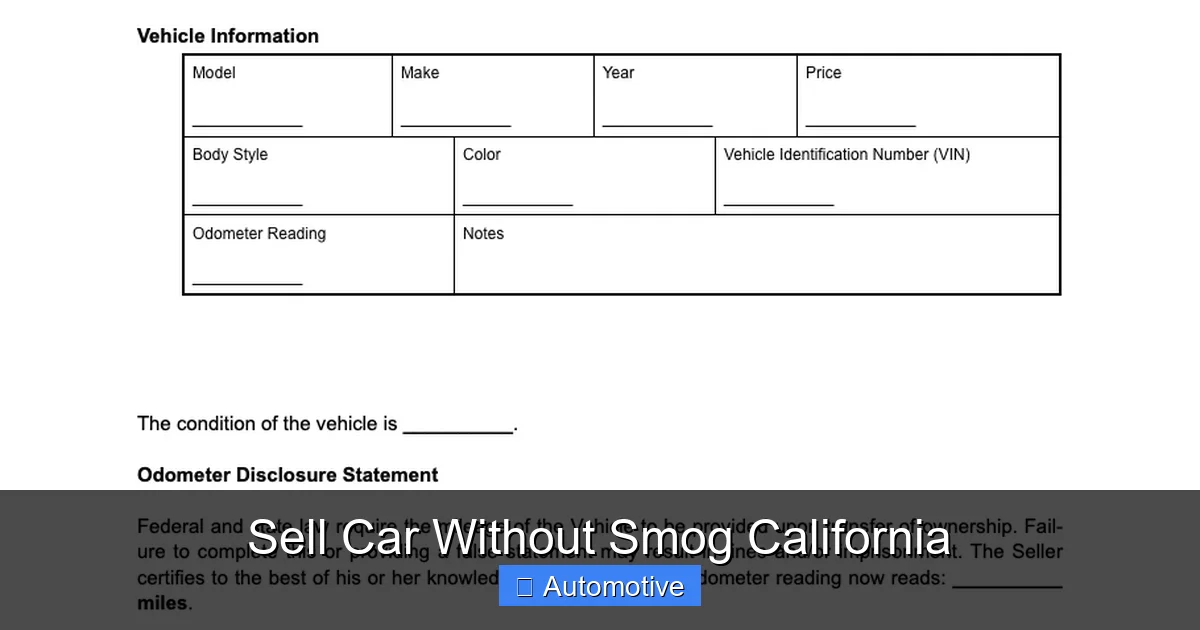
– Completing a Bill of Sale (Form REG 135)
– Filing a Notice of Transfer and Release of Liability (Form REG 138) within 5 days of the sale
The Notice of Transfer is especially important. It tells the DMV that you’re no longer responsible for the vehicle, protecting you from fines, tolls, or parking tickets incurred by the new owner.
If you’re using an exemption — like a family transfer or out-of-state sale — you may need to attach additional documentation, such as a REG 256 form or proof of relationship.
Ensure the Vehicle Is Safe and Legally Transferable
Even without a smog check, the vehicle must be in a condition that allows for legal transfer. This means:
– The title must be clear (no liens or loans)
– The odometer reading must be accurate and disclosed
– The vehicle identification number (VIN) must match the title and registration
If the car has a salvage title or has been declared a total loss by an insurance company, special rules apply. You may need to disclose this status and provide a rebuilt title before the sale.
Tips for a Smooth Sale Without a Smog Check
Visual guide about Sell Car Without Smog California
Image source: motortrend.com
Selling a car without a smog check can be straightforward if you plan ahead and follow best practices. Here are some practical tips to help you navigate the process:
Know Your Exemption Before Listing
Before advertising your car, confirm which exemption applies. Don’t assume — double-check the DMV website or consult a licensed smog station if you’re unsure. Listing a car as “no smog needed” without a valid reason can scare off buyers or lead to disputes.
Be Honest in Your Listing
Clearly state in your online ad or for-sale listing why no smog check is required. For example: “2010 Honda Accord — no smog check needed for family transfer.” This builds trust and attracts the right buyers.
Provide Maintenance Records
Even without a smog check, buyers will appreciate documentation showing the car has been well-maintained. Include records for oil changes, brake service, and emissions-related repairs. This can increase the car’s value and reassure buyers about its condition.
Use a Bill of Sale
A written bill of sale protects both parties. Include the sale price, date, vehicle details, and a statement about the smog exemption. Both you and the buyer should sign it.
Meet in a Safe, Public Location
When meeting potential buyers, choose a well-lit, public place like a DMV office or police station parking lot. This ensures safety and gives both parties peace of mind.
Consider a Pre-Purchase Inspection
Even if a smog check isn’t required, offering a pre-purchase inspection by a trusted mechanic can make your car more appealing. It shows you’re confident in the vehicle’s condition and helps avoid post-sale disputes.
Common Mistakes to Avoid
Selling a car without a smog check can go wrong if you’re not careful. Here are some common pitfalls to avoid:
Assuming All Older Cars Are Exempt
Just because a car is old doesn’t mean it’s exempt. Only vehicles 1975 and older (gasoline) or 1997 and older (diesel) are automatically exempt. A 1980s car may still need a smog check unless another exemption applies.
Failing to File the Notice of Transfer
Many sellers forget to submit Form REG 138. This can leave you liable for the vehicle even after the sale. Always file it within 5 days.
Not Disclosing the Lack of Smog Check
Hiding the fact that no smog check was done is a red flag. Be upfront — it’s better to lose a buyer than face legal trouble.
Selling to a California Buyer Without a Valid Exemption
If the buyer plans to register the car in California and no exemption applies, you must provide a smog certificate. Selling without one in this case is illegal.
Conclusion
Selling a car without a smog check in California is possible — but only under specific, legally defined conditions. Whether you’re transferring a vehicle to a family member, selling a newer car, or dealing with an out-of-state buyer, understanding the rules is essential to avoid fines, registration issues, or legal disputes.
The key is to know your exemption, disclose the lack of a smog certificate clearly, and complete all required paperwork. By being transparent and prepared, you can sell your car smoothly and confidently, even without that official smog sticker.
Remember, the smog check exists for a reason: to protect California’s air quality and ensure vehicles on the road are safe and clean. But when the law allows you to skip it, you can save time and money — as long as you do it the right way.
Whether you’re selling a classic muscle car, a modern EV, or a family hand-me-down, this guide equips you with the knowledge to navigate the process legally and ethically. So go ahead — list that car, find a buyer, and drive away with peace of mind.
Frequently Asked Questions
Can I sell my car in California without a smog check?
Yes, you can sell a car without a smog check in California if the vehicle qualifies for an exemption, such as being less than eight years old, transferred between family members, or sold to an out-of-state buyer. However, you must disclose the lack of a smog certificate to the buyer.
Do I need a smog check to sell a 10-year-old car in California?
Generally, yes — a 10-year-old car requires a smog check unless it falls under another exemption, like a family transfer or being sold out-of-state. The eight-year rule only applies to newer vehicles.
What happens if I sell a car without a smog check when one is required?
If you sell a car without a smog check when one is legally required, the buyer may be unable to register the vehicle. You could also face fines or liability if the DMV determines you violated emissions laws.
Can I sell a non-running car without a smog check in California?
Yes, you can sell a non-running car without a smog check, as long as you clearly disclose its condition. The buyer typically intends to use it for parts or restoration, not immediate road use.
Do electric vehicles need a smog check when sold in California?
No, electric vehicles (EVs) are exempt from smog checks because they produce no tailpipe emissions. You can sell an EV without a smog certificate, regardless of age.
Is a smog check required when transferring a car to my spouse?
No, a smog check is not required when transferring a vehicle between spouses. This qualifies as a family transfer, and you only need to complete the proper DMV forms and disclose the relationship.