
Dave Ramsey Sell Your Car

Dave Ramsey sell your car isn’t just about swapping vehicles—it’s a powerful step toward financial freedom. By following his no-debt, cash-only philosophy, you can eliminate car payments, reduce stress, and redirect money toward building wealth. This guide breaks down exactly how to do it the Ramsey way.
If you’ve ever felt trapped by a car payment, you’re not alone. Millions of Americans are stuck in the cycle of monthly auto loans, watching their hard-earned money disappear into interest charges and depreciation. Enter Dave Ramsey—the straight-talking financial guru who’s helped millions get out of debt and take control of their lives. One of his most controversial yet effective strategies? Dave Ramsey sell your car.
Now, before you panic—no, he’s not telling you to ride a bike to work (unless that’s your thing). What Ramsey is really saying is this: if you’re financing a car, especially a new one, you’re likely overspending. And that overspending is holding you back from true financial freedom. His solution? Sell the car, pay off the loan (or use the equity), and buy a reliable used vehicle with cash. It’s bold. It’s simple. And for many, it’s life-changing.
This isn’t about deprivation—it’s about priorities. Ramsey believes that your car should serve you, not the other way around. When you’re making payments on a depreciating asset, you’re essentially renting your own vehicle. Every dollar you spend on a car payment is a dollar you can’t use to build wealth, pay off debt, or invest for the future. By selling your car and switching to a cash-based approach, you break free from that cycle and take a giant leap toward financial peace.
So, whether you’re driving a brand-new SUV with a $700 monthly payment or a slightly used sedan you’re still financing, this guide will walk you through exactly how to follow Dave Ramsey’s advice. We’ll cover why selling your car is a smart move, how to do it the right way, and what to do next—all while staying true to Ramsey’s no-nonsense, debt-free philosophy.
Key Takeaways
- Eliminate car payments: Dave Ramsey advises selling your car to get out of debt and stop wasting money on interest and depreciation.
- Buy used with cash: Once you sell, use the proceeds to purchase a reliable, affordable used car—no loans allowed.
- Follow the “debt snowball” method: Use the money saved from no car payments to pay off other debts faster.
- Avoid emotional decisions: Ramsey emphasizes logic over lifestyle—don’t let pride or image dictate your car choice.
- Plan for maintenance and emergencies: Set aside money each month for repairs so you’re never caught off guard.
- Use online tools and local listings: Platforms like Facebook Marketplace and Craigslist help you sell quickly and fairly.
- Stay committed to the plan: Selling your car is just the first step—stick to Ramsey’s Baby Steps for long-term success.
📑 Table of Contents
Why Dave Ramsey Says You Should Sell Your Car
Let’s get one thing straight: Dave Ramsey isn’t anti-car. He’s anti-debt. And when it comes to cars, debt is almost always involved—especially with new vehicles. According to Ramsey, the average American spends over $1,000 per month on car-related expenses, including payments, insurance, gas, and maintenance. That’s a huge chunk of change that could be going toward building wealth or paying off debt.
One of the biggest reasons Ramsey advocates for selling your car is depreciation. The moment you drive a new car off the lot, it loses about 20% of its value. Within the first year, that number can climb to 30% or more. So, if you bought a $30,000 car, it’s worth around $21,000 a year later—even if it’s in perfect condition. And you’re still paying interest on that $30,000 loan.
Ramsey calls this “the worst investment you can make.” Why? Because cars are liabilities, not assets. They don’t make you money—they cost you money. Every mile you drive, every oil change, every repair chips away at your net worth. Meanwhile, your car payment is a fixed expense that doesn’t go away, even if you lose your job or face an emergency.
Another reason to sell? Emotional spending. Many people buy cars based on image, status, or impulse—not necessity. Ramsey calls this “lifestyle inflation,” and it’s a major roadblock to financial freedom. You might think you “need” a luxury SUV to impress your neighbors, but in reality, you’re just digging yourself deeper into debt.
By selling your car and buying a reliable used one with cash, you remove the emotional burden of car ownership. You’re no longer tied to a payment schedule or worried about making ends meet. Instead, you’re in control—and that feels amazing.
The True Cost of Car Ownership
Most people only think about the monthly payment when they buy a car. But the real cost goes far beyond that. Let’s break it down:
– **Loan interest:** If you have a 5-year loan at 6% interest on a $25,000 car, you’ll pay over $4,000 in interest alone.
– **Insurance:** Newer, more expensive cars cost more to insure. A luxury vehicle could cost $200–$300 more per month than a basic sedan.
– **Depreciation:** As mentioned, your car loses value fast. That $25,000 car might be worth $15,000 in three years.
– **Maintenance and repairs:** New cars have warranties, but once those expire, repairs can be costly. Older cars need more upkeep.
– **Fuel efficiency:** Bigger, newer cars often guzzle more gas. A fuel-efficient used car could save you hundreds per year.
When you add it all up, the total cost of ownership can easily exceed $15,000 per year. That’s enough to fund a Roth IRA, pay off a credit card, or build an emergency fund. Ramsey’s point? You’re better off selling the car and redirecting that money toward wealth-building.
Breaking the Car Payment Cycle
One of the most powerful aspects of Ramsey’s philosophy is the idea of financial momentum. When you’re making car payments, you’re stuck in neutral. You can’t accelerate toward your goals because a big chunk of your income is already spoken for.
But when you sell your car and eliminate that payment, something magical happens: you gain freedom. That $500 or $700 per month? Now it’s yours to use. Ramsey recommends using that money to pay off other debts (following the debt snowball method) or build savings.
For example, let’s say you sell your $350-per-month car and buy a $5,000 used car with cash. You’ve just freed up $350 every month. Over a year, that’s $4,200. Over five years? Over $21,000. That’s life-changing money.
And it’s not just about the numbers. It’s about peace of mind. No more worrying about missing a payment. No more stress over interest rates. No more feeling trapped by a loan you can’t afford. When you own your car outright, you’re in the driver’s seat—literally and financially.
How to Sell Your Car the Ramsey Way
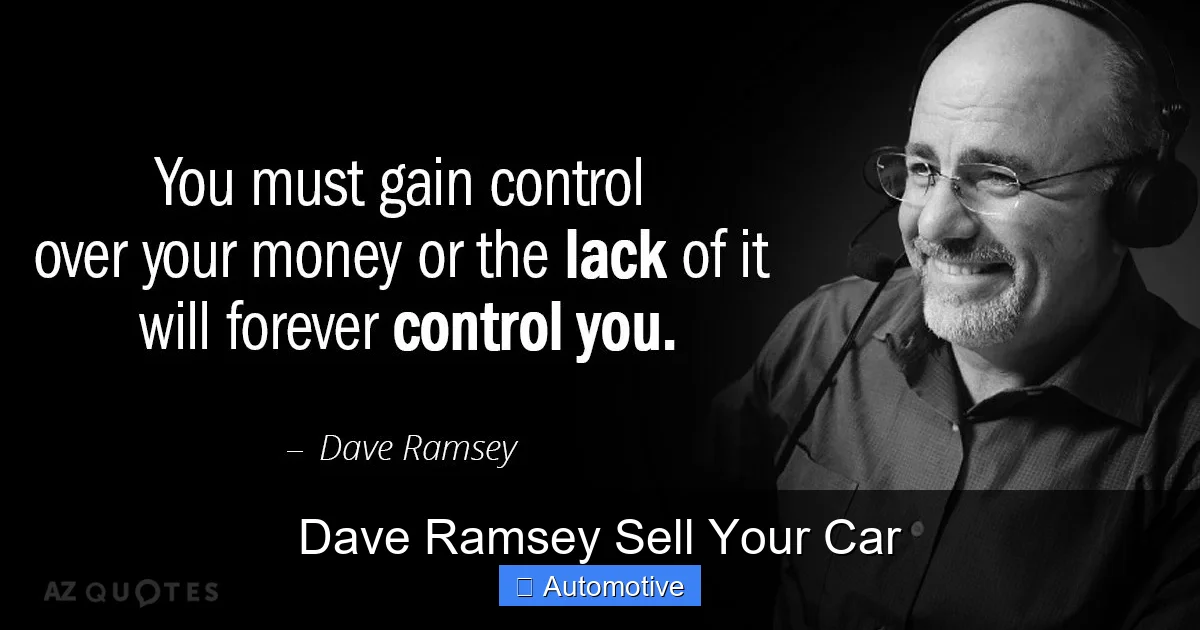
Visual guide about Dave Ramsey Sell Your Car
Image source: i.imgflip.com
So, you’re convinced. You want to follow Dave Ramsey’s advice and sell your car. But how do you actually do it? It’s not as simple as slapping a “For Sale” sign on the windshield and hoping for the best. To get the most value and sell quickly, you need a strategy.
The good news? Selling your car the Ramsey way is straightforward—if you’re willing to be realistic and disciplined. Here’s a step-by-step guide to help you get it done.
Step 1: Determine Your Car’s True Value
Before you list your car, you need to know what it’s worth. Don’t guess. Use trusted resources like Kelley Blue Book (KBB), Edmunds, or NADA Guides. These tools give you a fair market value based on your car’s make, model, year, mileage, condition, and location.
Be honest about your car’s condition. If it has scratches, dents, or mechanical issues, adjust the price accordingly. Ramsey emphasizes transparency—buyers appreciate honesty, and it helps you avoid negotiations that go nowhere.
Pro tip: Check local listings on Facebook Marketplace, Craigslist, and Autotrader. See what similar cars are selling for in your area. This gives you a real-world benchmark.
Step 2: Clean and Prep Your Car
First impressions matter. A clean, well-maintained car sells faster and for more money. Take your car to a professional detailer or spend a weekend deep-cleaning it yourself. Vacuum the interior, wash the exterior, clean the windows, and remove any personal items.
Fix minor issues if you can. A burnt-out lightbulb or a cracked windshield wiper might seem small, but they signal neglect to buyers. If you’re handy, tackle small repairs. If not, consider spending $100–$200 on minor fixes—it could increase your sale price by much more.
Step 3: Take High-Quality Photos
Most buyers start their search online, so your photos are your first (and sometimes only) chance to make a good impression. Take pictures in natural light, preferably during the day. Capture all angles: front, back, sides, interior, trunk, and engine bay.
Avoid cluttered backgrounds. A clean, empty driveway or parking lot works best. Use a smartphone with a good camera—no need for professional gear. Just make sure the images are clear, well-lit, and show the car’s true condition.
Step 4: Write a Compelling Listing
Your listing should be honest, detailed, and easy to read. Include:
– Year, make, model, and mileage
– Condition (excellent, good, fair)
– Key features (backup camera, Bluetooth, sunroof, etc.)
– Recent maintenance or repairs
– Reason for selling
– Asking price
Use bullet points for readability. Avoid exaggerations like “perfect condition” if there are flaws. Buyers will find out—and they’ll walk away.
Example:
“2018 Honda Civic LX – 45,000 miles – Excellent condition – Clean title – Regular oil changes – New tires (2023) – Backup camera, Bluetooth, fuel-efficient – Selling to downsize per Dave Ramsey’s financial advice – $12,500 OBO”
Step 5: Choose the Right Platform
Where you list your car matters. Here are the top options:
– **Facebook Marketplace:** Great for local sales. Free to list, easy to use, and you can message buyers directly.
– **Craigslist:** Still popular, especially for private sales. Be cautious of scams—never accept checks or wire transfers.
– **Autotrader or Cars.com:** Better for higher-priced cars. These sites attract serious buyers but may charge listing fees.
– **Local classifieds or community boards:** Sometimes overlooked, but can yield quick sales.
Ramsey recommends starting with Facebook Marketplace or Craigslist for simplicity and speed.
Step 6: Handle Inquiries and Negotiations
When buyers reach out, respond quickly and politely. Be prepared to answer questions about the car’s history, maintenance, and condition. If they want to see it, schedule a meeting in a public place during daylight hours.
Negotiations are expected—don’t take it personally. Buyers will try to lowball you. Know your bottom line ahead of time. If someone offers $11,000 and your minimum is $12,000, don’t budge unless you’re desperate.
Ramsey advises: “Don’t fall in love with the money. Fall in love with the freedom.” If you need to drop the price a little to sell fast, do it. The goal isn’t to get top dollar—it’s to get out of debt and move on.
Step 7: Complete the Sale Safely
Once you’ve agreed on a price, it’s time to close the deal. Here’s how to do it safely:
– **Meet in a public place:** A police station parking lot is ideal—many departments have “safe exchange zones.”
– **Bring a friend:** Never meet a buyer alone.
– **Accept cash or a cashier’s check:** Avoid personal checks or wire transfers—they can bounce.
– **Sign over the title:** Make sure the buyer signs, too. Keep a bill of sale for your records.
– **Cancel insurance:** Once the car is sold, call your insurer to remove it from your policy.
Congratulations—you’ve just sold your car the Ramsey way!
What to Do After You Sell: Buying a Used Car with Cash
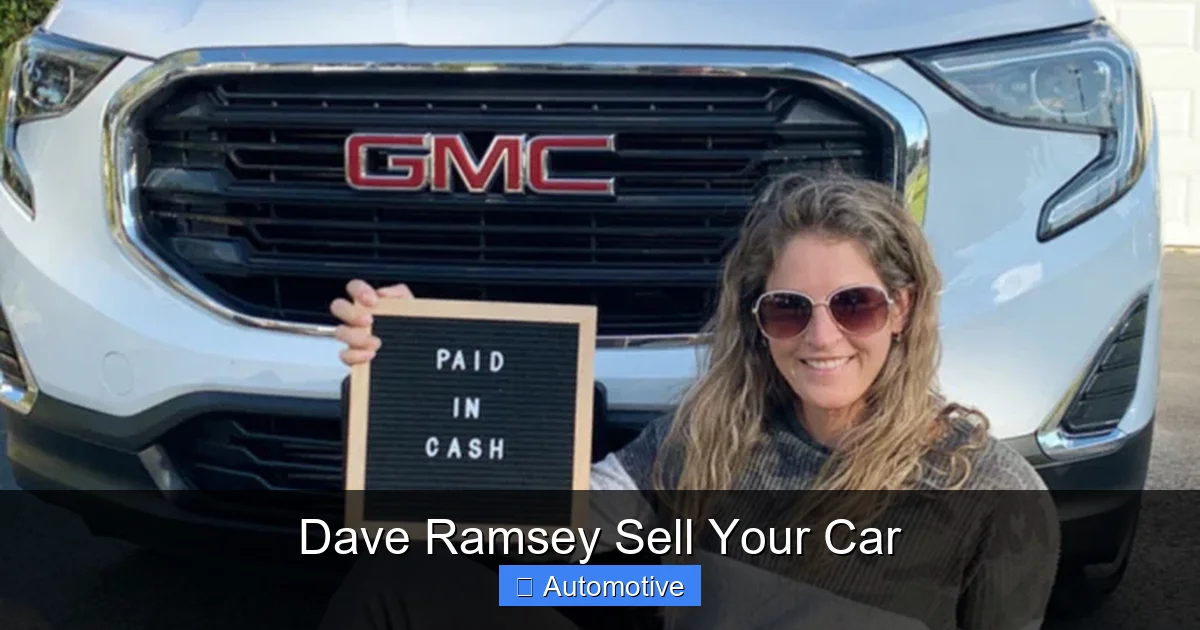
Visual guide about Dave Ramsey Sell Your Car
Image source: i.pinimg.com
Selling your car is only half the battle. The next step—buying a reliable used car with cash—is just as important. Ramsey is clear: no loans. No financing. No exceptions.
Why? Because borrowing for a car means you’re still in debt. And debt is the enemy of financial freedom. By paying cash, you avoid interest, reduce stress, and gain full ownership immediately.
But how do you find a good used car without breaking the bank? Here’s how.
Set a Realistic Budget
Ramsey recommends spending no more than half your annual income on a car. So, if you make $60,000 per year, your max car budget is $30,000. But since you’re buying used, aim much lower.
A good rule of thumb: spend $5,000–$10,000 on a reliable used car. That’s enough to get a solid vehicle without overspending. Remember, the goal isn’t to impress anyone—it’s to get from point A to point B without debt.
Choose the Right Type of Car
Not all used cars are created equal. Ramsey suggests focusing on reliability, fuel efficiency, and low maintenance costs. Some of the best brands for used cars include:
– **Toyota:** Known for longevity and low repair costs.
– **Honda:** Reliable, fuel-efficient, and widely available.
– **Subaru:** Great for all-wheel drive and safety.
– **Hyundai/Kia:** Offer good value and long warranties (even on used models).
Avoid luxury brands like BMW, Mercedes, or Audi unless you’re prepared for high repair costs. Similarly, stay away from sports cars or high-performance vehicles—they’re expensive to insure and maintain.
Get a Pre-Purchase Inspection
Even if a car looks great, it could have hidden problems. Always get a pre-purchase inspection (PPI) from a trusted mechanic before buying. This typically costs $100–$150 but can save you thousands in repairs.
The mechanic will check the engine, transmission, brakes, suspension, and more. If they find issues, you can either walk away or negotiate a lower price.
Buy from a Private Seller or Reputable Dealer
Private sellers often offer better prices than dealerships, but dealerships may provide more security (like a short warranty). Ramsey leans toward private sales for better value, but either can work if you do your homework.
Avoid “buy here, pay here” lots—they often sell unreliable cars at inflated prices. Stick to well-reviewed dealers or private sellers with clean titles and maintenance records.
Pay in Cash—No Exceptions
This is non-negotiable. When you pay cash, you avoid interest, reduce stress, and gain full ownership. If you don’t have the cash yet, Ramsey says to wait. Save up. Cut expenses. Sell other items. But don’t finance.
Remember: the goal isn’t to have the newest car on the block. It’s to be debt-free and financially secure.
Common Challenges and How to Overcome Them

Visual guide about Dave Ramsey Sell Your Car
Image source: whitecoatinvestor.com
Selling your car and switching to a cash-based approach isn’t always easy. You might face resistance from family, friends, or even yourself. Here are some common challenges—and how to handle them.
“But I Need a Reliable Car for Work!”
It’s true—many people rely on their cars for commuting, deliveries, or client meetings. But that doesn’t mean you need a brand-new vehicle. A well-maintained used car can be just as reliable—and much cheaper.
Look for models with high reliability ratings and low repair costs. Toyota Camrys, Honda Accords, and Subaru Outbacks are great options. And if you’re worried about breakdowns, set aside $50–$100 per month for a maintenance fund. That way, you’re prepared for surprises.
“My Family Thinks I’m Being Cheap”
Ramsey calls this “the shame game.” People often equate expensive cars with success. But true success is financial freedom—not status symbols.
When friends or family judge your choice, remind them: “I’m not poor. I’m smart.” You’re choosing long-term security over short-term image. And that’s something to be proud of.
“What If I Can’t Find a Good Used Car?”
The used car market can be competitive, especially in tight markets. But there are always good deals if you’re patient.
Expand your search radius. Look in nearby cities or rural areas where prices may be lower. Use alerts on Facebook Marketplace or Autotrader to get notified when new listings appear. And don’t rush—wait for the right car at the right price.
“I’m Afraid of Breaking Down”
It’s natural to worry about reliability. But modern used cars are built to last. Many have 100,000+ miles and still run great.
To reduce risk, choose a car with a clean maintenance history. Avoid high-mileage vehicles unless they’ve been well cared for. And again, build a maintenance fund so you’re ready for repairs.
Long-Term Benefits of Following Dave Ramsey’s Advice
Selling your car and buying used with cash isn’t just a one-time decision—it’s a lifestyle shift. And the benefits go far beyond saving money.
Financial Freedom
When you’re not making car payments, you have more cash flow. That means you can pay off debt faster, build an emergency fund, or invest for the future. Ramsey calls this “gaining momentum.”
Reduced Stress
Debt is stressful. Car payments, insurance, repairs—it all adds up. When you own your car outright, you eliminate a major source of financial anxiety.
Better Decision-Making
Ramsey’s approach forces you to think logically, not emotionally. You learn to prioritize needs over wants, and that mindset carries over into other areas of life.
Freedom to Pursue Your Goals
With more money and less debt, you’re free to chase your dreams—whether that’s starting a business, traveling, or retiring early.
Conclusion
Dave Ramsey sell your car isn’t just a catchy phrase—it’s a powerful financial strategy. By selling your car, eliminating debt, and buying a reliable used vehicle with cash, you take control of your money and your life.
It’s not about deprivation. It’s about priorities. It’s about choosing freedom over image, security over status, and long-term wealth over short-term comfort.
Yes, it takes courage. Yes, it might feel uncomfortable at first. But the peace of mind that comes from being debt-free? That’s priceless.
So, if you’re ready to break free from the car payment cycle, start today. Determine your car’s value, clean it up, list it online, and sell it. Then, save up and buy a used car with cash. Follow the plan. Stay disciplined. And watch your financial life transform.
Because when you follow Dave Ramsey’s advice, you’re not just selling a car—you’re buying your future.
Frequently Asked Questions
Should I really sell my car if it’s almost paid off?
Even if your car is nearly paid off, Ramsey still recommends evaluating whether it’s worth keeping. If it’s a high-depreciation vehicle or costs a lot to maintain, selling it and buying a cheaper used car could free up cash for other financial goals.
What if I can’t afford a used car right now?
That’s okay. Ramsey says to wait until you can pay cash. In the meantime, use public transit, carpool, or save aggressively. The goal is to avoid debt—not rush into another car payment.
Is it safe to buy a used car from a private seller?
Yes, as long as you take precautions. Always get a pre-purchase inspection, meet in a public place, and verify the title and history. Private sales often offer better value than dealerships.
How do I handle negative equity when selling my car?
If you owe more than the car is worth, you’ll need to pay the difference out of pocket. Ramsey calls this “taking the hit” to get out of debt. It’s painful short-term but freeing long-term.
Can I sell my car if I still have a loan?
Yes, but the sale proceeds must first pay off the loan. Contact your lender to get the payoff amount, then sell the car for at least that much. Any extra goes to you.
What if my job requires a reliable car?
You can still follow Ramsey’s advice by choosing a dependable used car with a good maintenance history. Brands like Toyota and Honda are known for longevity and low repair costs.
