
How to Sell Used Car in Nj

Selling a used car in NJ is straightforward if you prepare properly—start by gathering all necessary documents, including the title, registration, and vehicle history report. Price your car competitively using market research, then choose between selling privately for higher returns or trading in for convenience, and always complete the transaction at a secure location like a DMV or bank to ensure a smooth, legal transfer.
Key Takeaways
- Research your car’s value: Use tools like Kelley Blue Book to price competitively.
- Gather necessary documents: Have title, registration, and maintenance records ready.
- Clean and detail your car: A well-presented vehicle attracts more buyers and higher offers.
- Advertise effectively: Use online platforms like Craigslist or Facebook Marketplace with clear photos.
- Be prepared to negotiate: Set a fair asking price and know your lowest acceptable offer.
- Complete the sale legally: Sign over the title and file a Release of Liability with NJ MVC.
📑 Table of Contents
- How to Sell a Used Car in NJ: A Step-by-Step Guide for Smart Sellers
- 1. Know Your Car’s Value Before You List It
- 2. Prepare Your Car for Sale
- 3. Choose the Right Selling Method
- 4. Complete the Legal and Paperwork Requirements
- 5. Handle the Transaction Safely and Securely
- 6. Avoid Common Pitfalls and Scams
- Data Table: Average Used Car Sale Prices in NJ (2024)
- Final Thoughts: Sell Smart, Stay Safe, and Get Paid
How to Sell a Used Car in NJ: A Step-by-Step Guide for Smart Sellers
So, you’ve decided it’s time to part ways with your trusty old car. Maybe it’s racking up too many repair bills, or perhaps you’re ready to upgrade to something newer, sleeker, or more fuel-efficient. Whatever the reason, selling a used car in New Jersey doesn’t have to be stressful—or confusing. In fact, with the right approach, you can sell your vehicle quickly, legally, and for a fair price.
New Jersey has its own set of rules and procedures when it comes to selling a used car, and understanding them is key to a smooth transaction. From title transfers to safety inspections, there are specific steps every seller must follow. But don’t worry—you don’t need to be a legal expert or a car guru to get it right. This guide will walk you through everything you need to know, from preparing your car for sale to handing over the keys with confidence. Whether you’re selling privately or trading in, we’ve got you covered with practical tips, real-life examples, and insider advice to help you navigate the process like a pro.
1. Know Your Car’s Value Before You List It
Before you even think about posting that “For Sale” sign in your windshield, it’s crucial to know how much your car is actually worth. Pricing it too high can scare off buyers, while pricing it too low means leaving money on the table. In New Jersey’s competitive used car market, getting the price right is half the battle.
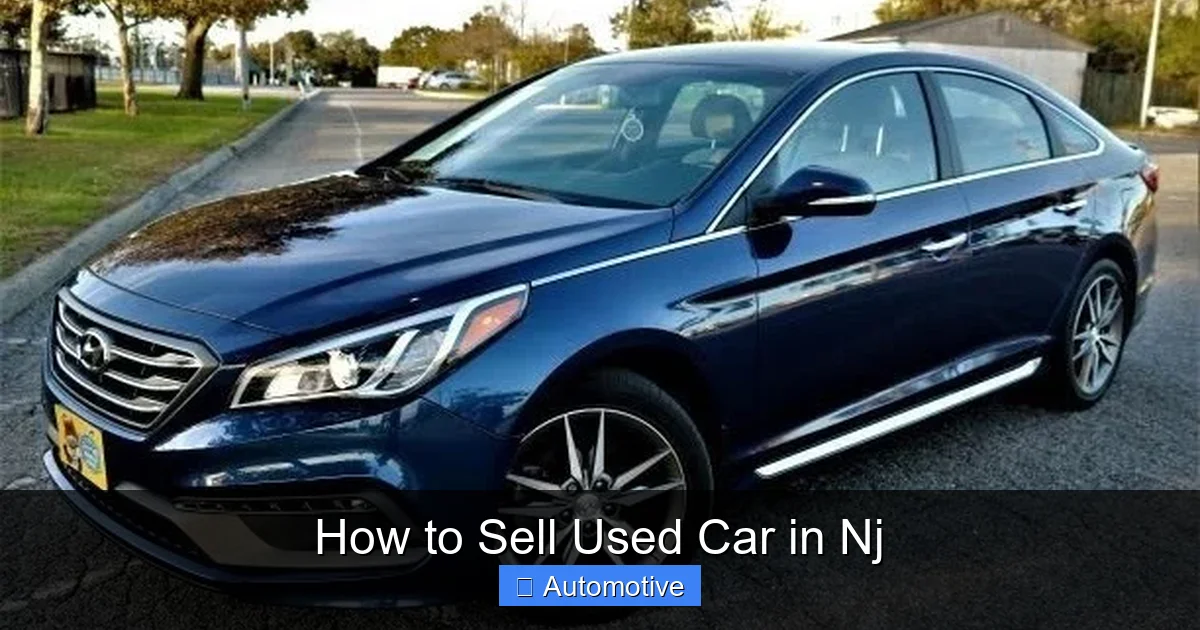
Visual guide about How to Sell Used Car in Nj
Image source: thebusinessminded.com
Use Trusted Valuation Tools
Start by checking your car’s value using reputable online tools like Kelley Blue Book (KBB), Edmunds, or NADA Guides. These platforms ask for details like your car’s make, model, year, mileage, condition, and optional features. They’ll give you a range—typically labeled as “Trade-In Value” and “Private Party Value.” Since you’re likely selling privately, focus on the private party value, which is usually higher than what a dealer would offer.
For example, a 2018 Honda Civic with 60,000 miles in good condition might be valued at around $16,500 privately, but only $14,000 as a trade-in. That’s a $2,500 difference—money you don’t want to lose.
Adjust for Local Market Conditions
New Jersey’s used car market can vary by region. A sedan might sell faster in suburban towns like Princeton or Morristown, while a truck or SUV could be in higher demand in rural areas like Sussex or Warren County. Check local listings on platforms like Craigslist, Facebook Marketplace, or Autotrader to see what similar cars are selling for in your area.
Let’s say you find three similar 2017 Toyota RAV4s listed in Newark for $18,000, $18,500, and $19,000. That tells you the market is active and buyers are willing to pay a premium for well-maintained SUVs. Use this intel to set a competitive price—maybe $18,750 to position yourself in the middle.
Be Honest About Your Car’s Condition
Valuation tools assume your car is in “good” condition, but be realistic. If your car has scratches, dents, a check engine light, or high mileage, you’ll need to adjust the price downward. On the flip side, if it’s exceptionally clean, has low mileage, or includes aftermarket upgrades (like new tires or a premium sound system), you might justify a slight bump.
Pro tip: Take high-quality photos and write a detailed description that highlights your car’s strengths while being upfront about any flaws. Transparency builds trust and reduces the chance of last-minute negotiations or deal breakers.
2. Prepare Your Car for Sale
First impressions matter—especially when selling a car. A clean, well-maintained vehicle not only attracts more buyers but can also command a higher price. Think of this step as your car’s “spa day” before the big sale.
Clean It Inside and Out
Start with a thorough wash and wax. Dirt, grime, and water spots can make even a well-kept car look neglected. Don’t forget the wheels and undercarriage—road salt and brake dust can build up over time, especially in NJ’s winter months.
Inside, vacuum every crevice, wipe down surfaces, and clean the windows. Remove any personal items, trash, or clutter. A cluttered interior can make the car feel smaller and less appealing. If you have pets or kids, consider using an odor eliminator to tackle any lingering smells.
For example, a friend of mine sold her 2016 Subaru Outback after spending $50 on a professional detailing service. She said the car looked “like it just rolled off the showroom floor,” and she ended up selling it $1,200 above her asking price because buyers were impressed by the condition.
Address Minor Repairs
You don’t need to overhaul the engine, but fixing small issues can make a big difference. Replace burnt-out light bulbs, fix cracked windshields (or at least get a quote), and top off fluids. If your tires are bald or unevenly worn, consider replacing them—safety is a major concern for buyers.
Even something as simple as replacing worn wiper blades or fixing a sticky door handle can signal that the car has been well cared for. These small investments often pay off in the final sale price.
Gather Maintenance Records
Buyers love documentation. Collect all your service records, receipts, and warranty information. If you’ve kept up with regular oil changes, brake inspections, or major repairs, let the buyer know. This builds confidence that the car has been maintained properly.
For instance, if you have records showing the timing belt was replaced at 60,000 miles (a common maintenance item for many vehicles), that’s a huge selling point. It tells the buyer they won’t face an expensive repair anytime soon.
3. Choose the Right Selling Method
Once your car is ready, it’s time to decide how you want to sell it. In New Jersey, you have three main options: selling privately, trading in at a dealership, or using an online car-buying service. Each has its pros and cons.
Sell Privately for Maximum Profit
Selling privately typically yields the highest return. You’re dealing directly with the buyer, so there’s no middleman taking a cut. However, it requires more effort—photographing the car, writing a listing, responding to inquiries, and meeting with potential buyers.
Platforms like Facebook Marketplace, Craigslist, and OfferUp are popular in NJ. Be sure to include clear photos, a detailed description, and your asking price. Mention key features like fuel efficiency, safety ratings, and recent maintenance.
Example: A 2015 Ford F-150 in Camden was listed on Facebook Marketplace with photos of the clean interior, new tires, and a recent oil change. The seller included a note: “Always garaged, never smoked in, and all service records available.” It sold within 10 days for $21,000—$3,000 more than the trade-in value.
Trade In for Convenience
If you’re buying a new car, trading in your old one at a dealership can be convenient. You avoid the hassle of advertising and negotiating, and the trade-in value can be applied directly to your new purchase. However, dealerships often offer less than private sale prices because they need to resell the car for a profit.
In NJ, some dealerships may also charge a documentation fee or require a safety inspection before accepting a trade-in. Be sure to get multiple trade-in offers to compare.
Use Online Car-Buying Services
Companies like CarMax, Carvana, and Vroom offer quick, no-hassle sales. You enter your car’s details online, get an instant offer, and schedule a pickup or drop-off. These services are great if you need to sell fast, but their offers are usually lower than private sales.
For example, CarMax might offer $15,000 for your 2017 Hyundai Elantra, while a private buyer could pay $16,500. The trade-off is speed and simplicity.
4. Complete the Legal and Paperwork Requirements
Selling a car in New Jersey isn’t just about handing over the keys—it involves legal steps to protect both you and the buyer. Skipping these can lead to fines, liability issues, or even legal trouble.
Transfer the Title Properly
The title is the most important document. In NJ, you must sign over the title to the buyer and complete the “Assignment of Ownership” section. Make sure all information is accurate, including the sale price and odometer reading.
Important: Never leave the “Buyer” section blank. If the buyer doesn’t fill it out immediately, they could sell the car again without your knowledge, and you might still be liable.
Provide a Bill of Sale
While not legally required in NJ, a bill of sale is highly recommended. It acts as a receipt and includes details like the sale date, price, vehicle identification number (VIN), and both parties’ information. You can find free templates online or use the NJ MVC’s form.
Notify the MVC
Within 10 days of the sale, you must notify the New Jersey Motor Vehicle Commission (MVC) that you’ve sold the vehicle. This can be done online through the MVC’s website. Failure to do so could result in penalties if the buyer gets a ticket or causes an accident in your name.
Cancel Your Insurance
Once the sale is complete, contact your insurance company to cancel or adjust your policy. You don’t want to keep paying for coverage on a car you no longer own. Most insurers require proof of sale, so keep a copy of the bill of sale.
Safety and Emissions Inspection
In New Jersey, most vehicles must pass a safety and emissions inspection every two years. If your car’s inspection is due within 90 days of the sale, you may need to get it inspected before selling. However, if the car is less than four years old, it’s exempt from emissions testing.
Tip: If the inspection is expired, consider getting it done before listing. A valid inspection sticker can increase buyer confidence and speed up the sale.
5. Handle the Transaction Safely and Securely
Meeting strangers to sell your car can feel risky, but with the right precautions, you can stay safe and ensure a smooth transaction.
Meet in a Public Place
Always meet potential buyers in a well-lit, public location—like a police station parking lot, mall, or busy shopping center. Many NJ police departments even have designated “safe exchange zones” with cameras and lighting.
Bring a friend or family member with you, especially if it’s your first time selling a car. There’s safety in numbers.
Verify Payment Before Handing Over the Keys
Cash is the safest payment method, but it’s not always practical for higher-priced cars. If the buyer wants to pay by check, make sure it’s a cashier’s check from a local bank—and verify it’s legitimate before releasing the car.
Never accept personal checks or wire transfers. These can bounce or be fraudulent. If the buyer insists on a non-cash method, meet at their bank to confirm the funds.
Test Drives: Set Ground Rules
If the buyer wants a test drive, go with them. This protects you in case of an accident and allows you to answer questions about the car’s performance. Make sure they have a valid driver’s license and insurance.
Alternatively, ask for a deposit (like $100) to hold the car while they arrange financing or get insurance. This shows serious intent and reduces the risk of no-shows.
6. Avoid Common Pitfalls and Scams
Unfortunately, not everyone has honest intentions. Scammers often target private car sellers with fake checks, phony escrow services, or overpayment schemes. Knowing what to watch for can save you time, money, and stress.
Watch for Overpayment Scams
A common scam involves the buyer sending you a check for more than the agreed price and asking you to refund the difference. The check later bounces, but you’ve already sent the money—leaving you out of pocket.
Example: A seller in Trenton agreed to sell her 2014 Nissan Altima for $12,000. The buyer sent a $15,000 check and asked for $3,000 back. She deposited the check, sent the refund, and later found out the check was fake. She lost $3,000 and the car.
Never refund money unless the check has fully cleared—usually 5–7 business days.
Beware of Fake Escrow Services
Some scammers claim to use a “secure escrow service” to hold payment until the car is delivered. But the service is fake, and you never receive the money. Always research any escrow company online and verify their legitimacy.
Avoid Wire Transfers and Gift Cards
Legitimate buyers won’t ask you to accept payment via wire transfer (like Western Union) or gift cards. These methods are untraceable and commonly used in fraud.
Trust Your Gut
If something feels off—like a buyer who’s overly eager, refuses to meet in person, or pressures you to act quickly—walk away. There are plenty of honest buyers out there.
Data Table: Average Used Car Sale Prices in NJ (2024)
| Make & Model | Year | Mileage | Avg. Private Sale Price | Avg. Trade-In Value |
|---|---|---|---|---|
| Honda Civic | 2018 | 60,000 | $16,500 | $14,000 |
| Toyota RAV4 | 2017 | 75,000 | $18,750 | $16,200 |
| Ford F-150 | 2015 | 90,000 | $21,000 | $18,500 |
| Nissan Altima | 2014 | 110,000 | $12,000 | $9,800 |
| Hyundai Elantra | 2017 | 70,000 | $15,200 | $13,000 |
Final Thoughts: Sell Smart, Stay Safe, and Get Paid
Selling a used car in New Jersey doesn’t have to be a headache. By knowing your car’s value, preparing it properly, choosing the right selling method, and following the legal steps, you can turn your old vehicle into cash—safely and efficiently. Whether you’re upgrading to a newer model or just simplifying your life, this process is your chance to make a smart financial move.
Remember, the key to a successful sale is preparation and caution. Take the time to clean your car, gather your documents, and price it fairly. Meet buyers in safe locations, verify payments, and always notify the MVC after the sale. Avoid scams by trusting your instincts and sticking to secure payment methods.
With over 9 million registered vehicles in New Jersey, the market is active and competitive. That means there’s a buyer out there for your car—whether it’s a compact sedan, a rugged truck, or a family-friendly SUV. So take a deep breath, follow this guide, and get ready to hand over those keys with confidence. Your next chapter—whether it’s a new car, extra cash, or just fewer repair bills—starts with a successful sale.
Frequently Asked Questions
How do I start the process to sell my used car in NJ?
Begin by gathering all necessary documents, including the car’s title, registration, and maintenance records. Research your vehicle’s market value using tools like Kelley Blue Book or Edmunds to set a fair price.
Do I need a bill of sale when selling a used car in New Jersey?
Yes, New Jersey requires a bill of sale for private vehicle transactions. It serves as proof of sale and includes details like the buyer’s and seller’s information, vehicle description, sale price, and date.
Can I sell my used car in NJ without a title?
No, you must have a valid title to sell a used car in New Jersey. If your title is lost, apply for a duplicate through the NJ Motor Vehicle Commission (MVC) before listing the vehicle.
How do I transfer ownership when I sell my used car in NJ?
Complete the title transfer section on the back of the title and sign it over to the buyer. The buyer must then register the vehicle and pay sales tax at an MVC agency within 10 days of purchase.
Should I get a pre-purchase inspection for my used car in NJ?
While not required, offering a recent inspection report can increase buyer confidence and help justify your asking price. It also reduces the chance of post-sale disputes over the car’s condition.
What fees are involved when selling a used car in NJ?
As a seller, you typically pay no sales tax, but you may need to cover costs like a vehicle history report or advertising. The buyer handles registration, sales tax, and MVC transfer fees.
