
How to Sell an Exotic Car

Selling an exotic car isn’t like selling a regular vehicle—it requires strategy, patience, and insider knowledge. This guide walks you through every step, from preparing your car to closing the deal with confidence.
So, you’ve decided it’s time to part ways with your exotic car. Maybe you’re upgrading to something even more thrilling, or perhaps life’s priorities have shifted. Whatever the reason, selling an exotic car—whether it’s a Lamborghini, Ferrari, McLaren, or Porsche 911 GT3—is a unique process that demands more than just posting a listing and waiting for calls.
Unlike selling a used Honda or Toyota, exotic cars come with higher stakes, niche buyers, and a market that fluctuates based on rarity, condition, and global demand. A misstep in pricing, presentation, or negotiation can cost you thousands—or worse, leave your prized possession sitting unsold for months. But with the right approach, you can sell your exotic car quickly, safely, and for top dollar.
This guide will walk you through every step of the process, from understanding your car’s true market value to handing over the keys with confidence. Whether you’re a first-time seller or a seasoned collector, these tips will help you navigate the complexities of the exotic car market like a pro.
Key Takeaways
- Know your car’s true value: Use specialized appraisal tools and market data to price competitively without undervaluing your asset.
- Prepare meticulously: Detail your exotic car inside and out, fix minor flaws, and gather all documentation to build buyer trust.
- Choose the right sales method: Decide between private sale, consignment, auction, or dealer trade-in based on your timeline and profit goals.
- Market strategically: Use high-quality photos, compelling descriptions, and targeted platforms to reach serious exotic car buyers.
- Verify buyer legitimacy: Protect yourself from scams by confirming funds, meeting safely, and using secure payment methods.
- Negotiate with confidence: Stay firm on value but flexible on terms to close the deal smoothly.
- Complete the transfer legally: Handle title, registration, and tax paperwork correctly to avoid future complications.
📑 Table of Contents
Understand Your Car’s True Value
Before you even think about listing your exotic car, you need to know what it’s worth. This isn’t as simple as checking Kelley Blue Book or Edmunds. Those tools are great for mainstream vehicles, but they often undervalue—or completely miss—the nuances of high-end, low-production cars.
Exotic cars are valued based on a combination of factors: make, model, year, mileage, condition, service history, modifications, provenance (like ownership by a celebrity), and current market trends. For example, a 2018 Ferrari 488 GTB with 5,000 miles and full dealer service records will command a much higher price than one with 20,000 miles and spotty maintenance.
Use Specialized Valuation Tools
Start by consulting platforms designed specifically for exotic and collector cars. Websites like Hagerty, Classic.com, and Collector Car Price Guide offer detailed valuations based on recent sales data. These tools consider auction results, private sales, and regional demand.
For instance, Hagerty’s valuation tool allows you to input your car’s specifics and see a range of values—from “fair” to “concours” condition. This helps you set a realistic asking price that reflects your car’s actual market position.
Research Recent Sales
Go beyond valuation tools and look at actual sales. Check completed listings on platforms like Bring a Trailer, Cars & Bids, and Autotrader Classics. Filter by your exact make, model, and year to see what similar cars have sold for in the past 6–12 months.
Pay attention to details: Did the car have original paint? Was it stored in a climate-controlled garage? Were there any performance upgrades? These factors can significantly impact value. For example, a McLaren 720S with a factory track package might sell for 15–20% more than a base model.
Get a Professional Appraisal
If your car is rare, highly modified, or has a unique history, consider hiring a certified appraiser. These professionals specialize in exotic and collector vehicles and can provide a detailed report that justifies your asking price.
An appraisal is especially useful if you plan to sell through consignment or auction, where buyers expect documented proof of value. It also helps during negotiations—when a buyer questions your price, you can respond with data, not emotion.
Prepare Your Exotic Car for Sale
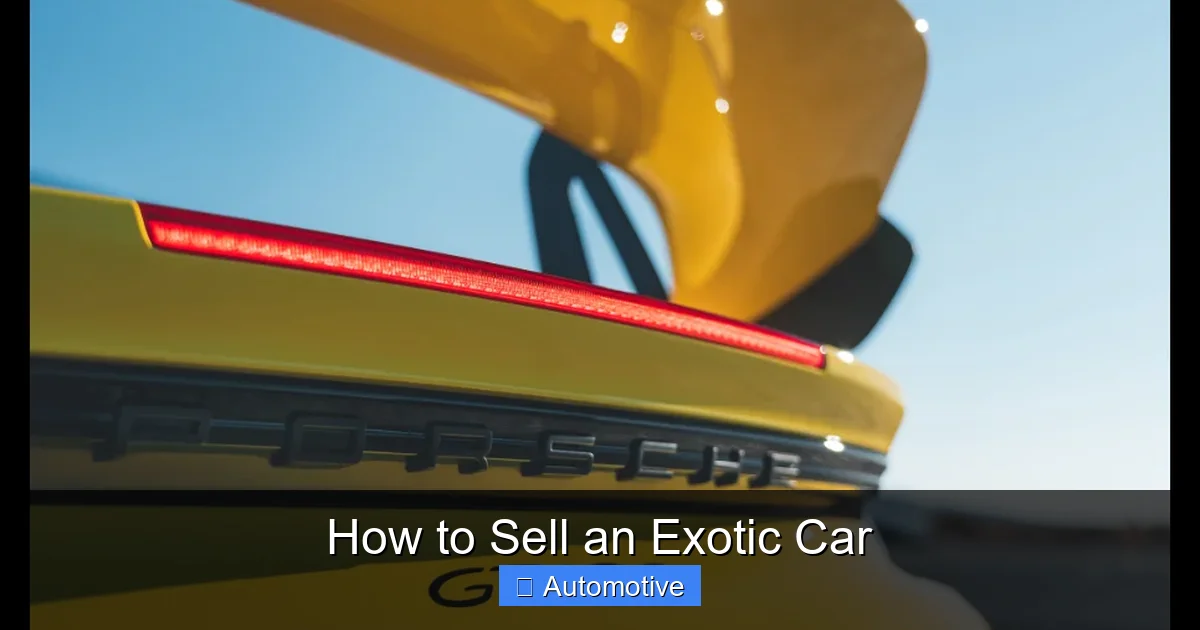
Visual guide about How to Sell an Exotic Car
Image source: exoticauto.com
Once you know your car’s value, it’s time to get it ready for sale. First impressions matter—especially when your buyer is likely a discerning enthusiast who knows exactly what to look for.
Detail Inside and Out
Exotic car buyers expect perfection. A single scratch, stain, or odd smell can kill a deal. Start with a professional detail—both interior and exterior. This isn’t just a wash and wax; it’s a deep clean that includes paint correction, ceramic coating, leather conditioning, and engine bay detailing.
For example, a Lamborghini Huracán with swirl marks on the paint might lose $5,000–$10,000 in perceived value. A professional detail can restore the finish and make the car look nearly new.
Don’t forget the small things: clean the cup holders, vacuum under the seats, and replace any worn floor mats. If your car has carbon fiber trim, use a specialized cleaner to avoid clouding.
Address Mechanical Issues
Even minor mechanical problems can raise red flags. Before listing, have your car inspected by a certified technician who specializes in exotic vehicles. Fix any issues—whether it’s a check engine light, worn brakes, or a sticky throttle.
For instance, a Ferrari with a pending transmission service might scare off buyers who assume the worst. But if you complete the service and provide the receipt, you instantly boost confidence—and value.
Gather All Documentation
Buyers of exotic cars want proof of care and authenticity. Collect and organize:
– Original window sticker (Monroney label)
– Service records (preferably from authorized dealers)
– Owner’s manual and warranty book
– Title and registration
– Any modification receipts or performance records
– Previous appraisals or inspection reports
A well-documented car tells a story of meticulous ownership. It reassures buyers that the car hasn’t been abused, raced excessively, or neglected.
Consider Minor Upgrades
Sometimes, a small investment can yield a big return. For example, replacing worn tires with OEM-spec rubber can add $2,000–$3,000 to your sale price. Upgrading to a high-end battery or installing a new infotainment screen (if compatible) can also enhance appeal.
But avoid major modifications unless they’re highly desirable. A turbo kit on a Porsche 911 might excite some buyers but turn off purists who want originality.
Choose the Right Sales Method
Visual guide about How to Sell an Exotic Car
Image source: assets-global.website-files.com
Now that your car is ready, decide how you want to sell it. Each method has pros and cons, depending on your goals.
Private Sale
Selling privately typically yields the highest profit because you avoid dealer markups or auction fees. You control the price, negotiation, and timing.
However, it requires more effort: creating listings, responding to inquiries, scheduling test drives, and handling paperwork. You’ll also need to vet buyers carefully to avoid scams.
Best for: Sellers who want maximum return and have time to manage the process.
Consignment
With consignment, you partner with a dealer or specialist who sells your car on your behalf. They handle marketing, showings, and negotiations, taking a commission (usually 5–10%) when the car sells.
This is ideal if you lack time or expertise but still want a private sale experience. Choose a reputable dealer with a strong track record in exotic cars.
Best for: Sellers who want convenience and exposure without the hassle.
Auction
Auctions—especially online platforms like Bring a Trailer—can generate excitement and competitive bidding. They’re great for rare or high-demand models.
But auctions come with fees (seller’s premium, listing fees, shipping), and there’s no guarantee of a minimum sale price unless you set a reserve.
Best for: Unique, high-value cars with strong collector appeal.
Trade-In or Sell to a Dealer
Trading in your exotic car at a dealership is the easiest option, but you’ll likely get less than market value. Dealers need to make a profit when they resell.
However, some exotic car specialists (like Ferrari of Atlanta or Lamborghini Newport Beach) may offer fair trade-in values, especially if you’re buying another high-end vehicle.
Best for: Sellers prioritizing speed and simplicity over maximum profit.
Market Your Exotic Car Effectively
Visual guide about How to Sell an Exotic Car
Image source: townsquare.media
No matter which sales method you choose, marketing is crucial. Your goal is to attract serious, qualified buyers—not tire kickers or scammers.
Write a Compelling Listing
Your description should be detailed, honest, and engaging. Start with a strong headline: “2020 McLaren 720S Performance – 3,200 Miles – Full Service History – Clean Title.”
Then, highlight key selling points:
– Low mileage
– Rare color or option
– Recent service or upgrades
– Storage and maintenance routine
– Reason for selling
Avoid vague terms like “mint condition” or “garage kept.” Instead, say: “Stored in a climate-controlled garage, driven only 800 miles per year, and serviced every 3,000 miles at McLaren Beverly Hills.”
Use High-Quality Photos and Videos
Photos are your first impression. Use a DSLR or high-end smartphone in good lighting. Shoot from multiple angles: exterior, interior, engine bay, wheels, undercarriage, and trunk.
Include close-ups of unique features—like carbon ceramic brakes or custom stitching. If possible, shoot a short video showing the engine start, exhaust note, and interior functions.
Pro tip: Take photos during golden hour (early morning or late afternoon) for warm, natural lighting that makes the car pop.
Choose the Right Platforms
List your car on platforms where exotic car buyers spend time:
– Autotrader and Cars.com (use the “Exotic” filter)
– Bring a Trailer and Cars & Bids (auction-style, high engagement)
– Facebook Marketplace and Craigslist (local reach, but higher scam risk)
– Specialized forums like FerrariChat or LamboRegistry
Cross-list to increase visibility, but avoid duplicating identical posts—customize each listing slightly to fit the platform.
Leverage Social Media
Share your listing on Instagram, YouTube, and TikTok. Use hashtags like #ExoticCarForSale, #FerrariLife, or #McLarenMonday. Tag relevant accounts or join exotic car groups.
A well-produced Instagram Reel showing your car driving on a scenic road can generate serious inquiries from enthusiasts.
Screen Buyers and Negotiate Safely
When inquiries start rolling in, not all are legitimate. Protect yourself by vetting buyers carefully.
Ask the Right Questions
Legitimate buyers will ask detailed questions: “What’s the service history?” “Has it been tracked?” “Are the tires original?”
Red flags include:
– Requests to ship the car before payment
– Offers to pay with a cashier’s check or wire transfer from a third party
– Pressure to act quickly
– Vague or evasive answers
Verify Payment Before Handover
Never release the car until payment is fully cleared. For private sales, use:
– Cash (for local deals)
– Bank wire transfer (traceable and secure)
– Cashier’s check (verify with the issuing bank)
Avoid personal checks, PayPal (unless using Goods and Services with protection), or cryptocurrency unless you’re certain of the buyer’s legitimacy.
Meet in a Safe Location
For test drives and inspections, meet at a public place like a dealership, police station, or shopping center. Bring a friend, and never let the buyer drive alone.
Consider using a third-party inspection service like InspectMyRide or CarVertical to provide a pre-purchase inspection report. This builds trust and can speed up the sale.
Negotiate with Confidence
Buyers will try to negotiate—that’s expected. Stay calm and stick to your bottom line. If they lowball, respond with facts: “Similar models sold for $X last month. This car has full service records and new tires.”
Be flexible on terms (like including a spare key or cover) but firm on price. Remember, you’re selling a rare asset, not a used sedan.
Complete the Sale and Transfer Ownership
Once you’ve agreed on a price, it’s time to finalize the deal.
Sign the Title Correctly
Fill out the title with the buyer’s name, sale price, and date. Sign in the presence of a notary if required by your state. Include a bill of sale for extra protection.
Notify the DMV
In most states, you must notify the DMV within a few days of selling your car. This releases you from liability if the buyer gets a ticket or causes an accident.
Cancel Insurance
Once the car is sold, cancel or transfer your insurance policy. Don’t wait—driving uninsured, even for a day, is risky.
Provide a Welcome Packet
Go the extra mile by giving the buyer a folder with:
– Copy of the title and bill of sale
– Service records
– Owner’s manual
– Spare key
– Receipts for recent work
This small gesture builds goodwill and reflects your pride in the car.
Selling an exotic car is both an art and a science. It requires preparation, patience, and a deep understanding of your vehicle’s value and market. But with the right strategy, you can turn your passion into profit—and ensure your car finds a new home where it’ll be cherished just as much as you did.
Whether you’re selling a roaring Lamborghini or a sleek McLaren, remember: the right buyer is out there. Your job is to present your car in the best possible light, protect yourself from risks, and close the deal with confidence.
Frequently Asked Questions
How long does it take to sell an exotic car?
It typically takes 30 to 90 days to sell an exotic car, depending on market demand, pricing, and how well it’s marketed. Rare or highly desirable models may sell faster, while niche or modified cars can take longer.
Should I sell my exotic car privately or through a dealer?
Selling privately usually yields a higher price, but requires more effort. Dealers offer convenience but take a cut. Choose based on your timeline, profit goals, and comfort level with the sales process.
Can I sell my exotic car if it has aftermarket modifications?
Yes, but modifications can limit your buyer pool. Purists prefer stock cars, while enthusiasts may pay more for performance upgrades. Be transparent about all changes and provide documentation.
What documents do I need to sell an exotic car?
You’ll need the title, registration, bill of sale, service records, and any warranty or modification paperwork. Having a clean, complete file builds buyer confidence and speeds up the sale.
How do I avoid scams when selling an exotic car?
Verify buyer identity, use secure payment methods (like bank wires), meet in public places, and avoid deals that seem too good to be true. Never ship the car before payment clears.
Is it worth detailing my exotic car before selling?
Absolutely. A professional detail can increase your car’s perceived value by thousands of dollars. Buyers expect perfection, and a clean, well-maintained car sells faster and for more.
