
Sell Car with Blown Head Gasket

Selling a car with a blown head gasket doesn’t mean you’re stuck with a money pit. With the right approach, you can still get fair value—even if the engine is damaged. This guide walks you through every step, from understanding the problem to closing the deal with confidence.
Key Takeaways
- Know the signs: White smoke, overheating, and milky oil are classic symptoms of a blown head gasket—don’t ignore them.
- Repair vs. sell: Fixing a blown head gasket can cost $1,500–$3,000; selling as-is may be smarter depending on your car’s value.
- Be transparent: Honesty builds trust and avoids legal issues—always disclose the issue upfront to potential buyers.
- Target the right buyers: Mechanics, rebuilders, and junkyards often pay cash for damaged cars they can fix or scrap.
- Price it right: Use Kelley Blue Book or Edmunds to estimate value, then subtract repair costs to set a fair asking price.
- Prepare paperwork: Have your title, maintenance records, and a bill of sale ready to speed up the sale.
- Consider cash offers: Companies like CarMax, Carvana, or local junk buyers may offer instant payment—even for non-running vehicles.
📑 Table of Contents
- Understanding a Blown Head Gasket: What It Means for Your Car
- Should You Repair or Sell Your Car with a Blown Head Gasket?
- How to Price Your Car with a Blown Head Gasket
- Where to Sell Your Car with a Blown Head Gasket
- Preparing Your Car to Sell
- Finalizing the Sale: Paperwork and Payment
- Conclusion: Turning a Problem into Profit
Understanding a Blown Head Gasket: What It Means for Your Car
So, your car’s been acting up—maybe it’s overheating, spewing white smoke from the exhaust, or the oil looks like a milkshake. Chances are, you’re dealing with a blown head gasket. But what exactly does that mean, and how does it affect your ability to sell your vehicle?
The head gasket is a critical seal located between the engine block and the cylinder head. Its job is to keep coolant, oil, and combustion gases separated. When it fails—often due to overheating, age, or poor maintenance—those fluids can mix, leading to serious engine damage. A blown head gasket isn’t just a minor issue; it can cause the engine to overheat rapidly, lose compression, or even seize entirely.
But here’s the good news: just because your car has a blown head gasket doesn’t mean it’s worthless. Many buyers are specifically looking for cars like yours—either to repair, rebuild, or use for parts. The key is knowing how to position your vehicle and who to sell it to. In this guide, we’ll walk you through everything you need to know to sell car with blown head gasket quickly, legally, and for the best possible price.
Common Symptoms of a Blown Head Gasket
Before you decide to sell, it’s important to confirm that your car actually has a blown head gasket. While only a mechanic can diagnose it definitively, there are several telltale signs to watch for:
- Overheating engine: If your temperature gauge spikes frequently—even after adding coolant—it’s a red flag.
- White smoke from the exhaust: This indicates coolant is burning in the combustion chamber, a classic sign of gasket failure.
- Milky or frothy oil: Check your dipstick. If the oil looks creamy or bubbly, coolant is likely mixing with it.
- Coolant loss with no visible leaks: If your coolant reservoir keeps dropping but you don’t see puddles under the car, it may be leaking into the engine.
- Rough idling or misfiring: A compromised seal can cause uneven compression, leading to poor engine performance.
- Bubbles in the radiator or overflow tank: When the engine runs, you might see bubbles forming—this suggests combustion gases are escaping into the cooling system.
If you’re seeing one or more of these symptoms, it’s time to get your car inspected. A compression test or leak-down test can confirm whether the head gasket is the culprit. Once diagnosed, you can make an informed decision: repair or sell?
Should You Repair or Sell Your Car with a Blown Head Gasket?
This is the million-dollar question—well, maybe not a million, but definitely a few thousand. Repairing a blown head gasket is expensive. Labor alone can run $1,000–$2,000, and parts (including the gasket, head bolts, and possibly machining the cylinder head) add another $500–$1,000. In total, you’re looking at $1,500 to $3,000 or more, depending on your vehicle’s make and model.
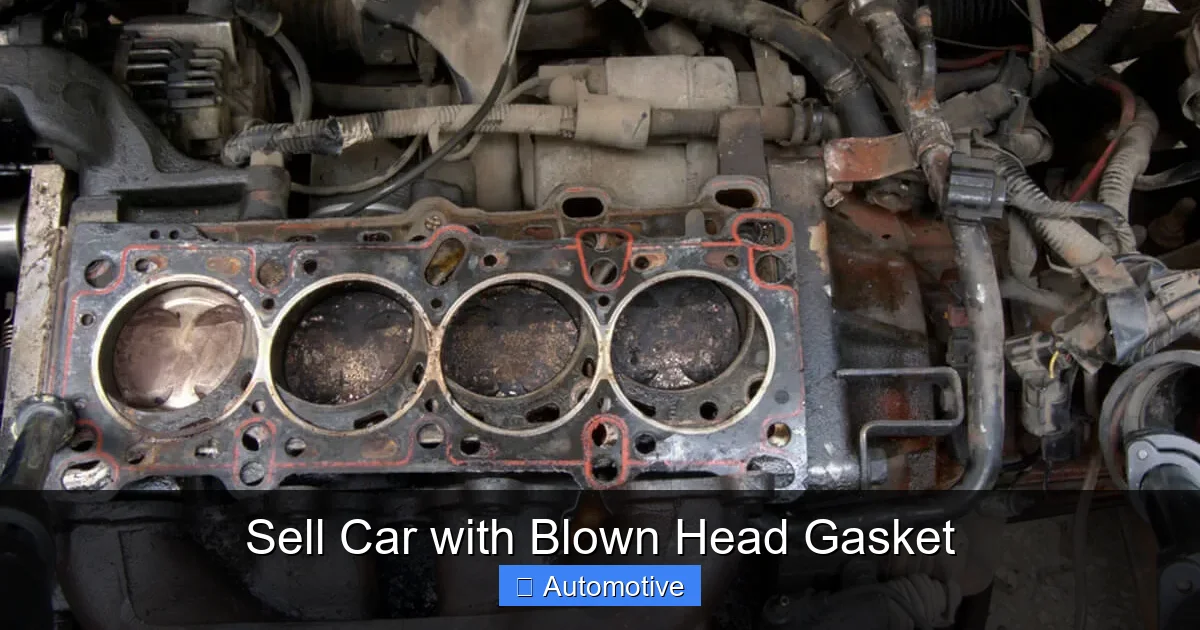
Visual guide about Sell Car with Blown Head Gasket
Image source: towingless.com
So, should you spend that kind of money to fix a car that might not be worth much? It depends on a few factors:
Assess Your Car’s Value
Start by checking your car’s market value using tools like Kelley Blue Book (KBB) or Edmunds. Look up the “fair condition” value for your year, make, model, mileage, and location. Then, subtract the estimated repair cost. If the result is still a positive number—meaning the car is worth more after repair than the repair itself—it might make sense to fix it.
For example, if your 2015 Honda Accord is worth $8,000 in good condition and the repair costs $2,000, you’d net $6,000 after fixing it. But if the same repair costs $2,500 and the car is only worth $3,000, you’re better off selling it as-is and pocketing the difference.
Consider the Car’s Age and Condition
Older cars with high mileage are less likely to be worth repairing. If your vehicle is 10+ years old and has over 150,000 miles, a major engine repair might not be cost-effective. You’d be pouring money into a car that could have other looming issues—transmission problems, suspension wear, electrical faults.
On the other hand, if you drive a relatively new car with low mileage—say, a 2018 Toyota Camry with 60,000 miles—it might be worth fixing. These vehicles often have strong resale value, and a properly repaired engine can last another 100,000 miles or more.
Think About Your Timeline and Needs
Repairs take time. You’ll need to find a trustworthy mechanic, wait for parts, and be without a car for days—or even weeks. If you need transportation immediately, selling might be the faster, more practical option.
Also, consider your long-term plans. Are you planning to keep the car for years? Or do you want to upgrade soon? If you’re ready for a new vehicle anyway, selling the damaged one now could help fund your next purchase.
Weigh the Emotional Factor
Let’s be honest—some cars have sentimental value. Maybe it was your first car, or you’ve driven it across the country. If you’re emotionally attached, you might be willing to invest in repairs despite the cost. But if you’re just ready to move on, selling is a smart financial move.
Ultimately, the decision comes down to math, timing, and personal preference. But if the numbers don’t add up, selling your car with a blown head gasket is not only reasonable—it’s often the best choice.
How to Price Your Car with a Blown Head Gasket
One of the biggest challenges in selling a damaged car is figuring out the right price. You don’t want to overprice it and scare off buyers, but you also don’t want to give it away. Here’s how to find that sweet spot.
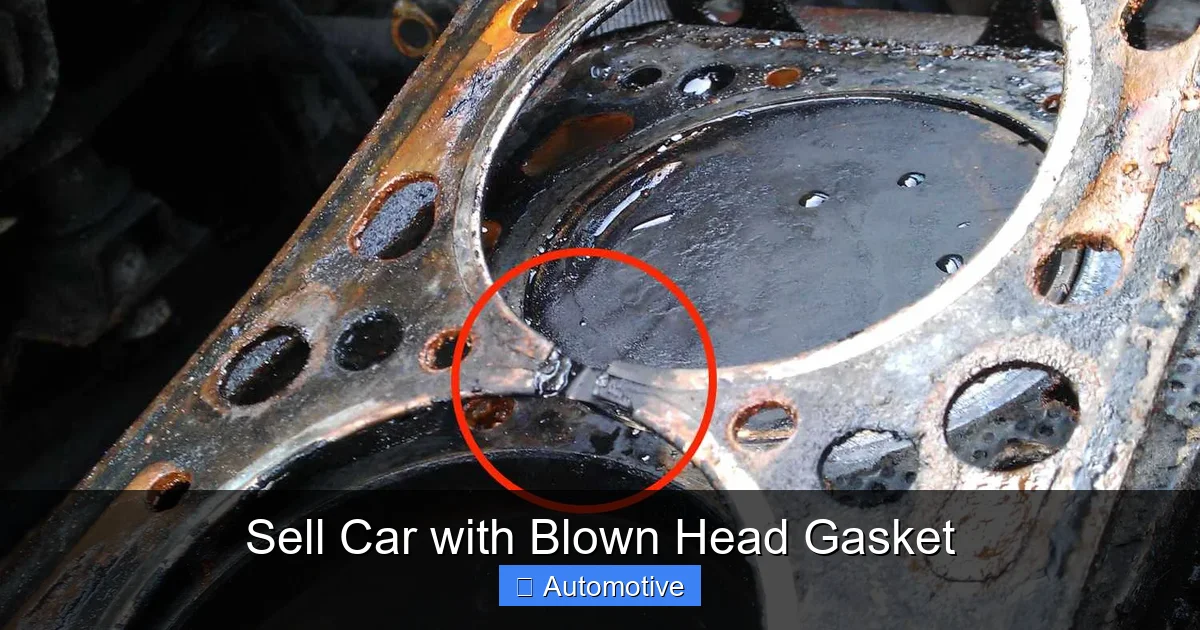
Visual guide about Sell Car with Blown Head Gasket
Image source: liveabout.com
Start with the Market Value
Use KBB, Edmunds, or NADA Guides to find the fair market value of your car in “good” condition. Don’t use the “excellent” or “poor” ratings—stick with “fair” or “good” as your baseline.
For example, a 2016 Ford F-150 with 120,000 miles might be worth $12,000 in good condition. That’s your starting point.
Subtract the Repair Cost
Next, subtract the estimated cost to fix the blown head gasket. If repairs will run $2,200, your adjusted value is $9,800. But remember—buyers know this. They’ll expect a discount not just for the repair, but for the risk and hassle involved.
Most buyers will lowball you, assuming you’re desperate to sell. To account for this, many sellers price their car at 70–80% of the adjusted value. In our example, that’s $6,860 to $7,840.
Factor in the Car’s Overall Condition
A blown head gasket isn’t the only thing that affects value. Consider the car’s exterior, interior, tires, and other mechanical systems. If the paint is faded, the seats are torn, or the transmission is slipping, you’ll need to lower the price further.
Conversely, if the car is otherwise in great shape—clean interior, new tires, recent brakes—you might be able to ask for a bit more.
Research Similar Listings
Check sites like Craigslist, Facebook Marketplace, and Autotrader for similar vehicles with engine problems. See what others are asking for cars with blown head gaskets, seized engines, or other major issues. This gives you a real-world benchmark.
You might find that a 2016 F-150 with a blown head gasket is listed for $7,500, while another seller is asking $6,000. Use this data to fine-tune your price.
Be Realistic—and Flexible
It’s tempting to hold out for top dollar, but damaged cars sell faster when priced competitively. If you’re not in a rush, you can start higher and negotiate down. But if you need cash quickly, pricing it right from the start will attract serious buyers.
Also, be prepared to negotiate. Most buyers will try to talk you down—especially if they’re mechanics or rebuilders looking for a deal. Know your bottom line ahead of time and stick to it.
Where to Sell Your Car with a Blown Head Gasket
Now that you’ve priced your car, it’s time to find a buyer. But not all buyers are created equal. Some will offer cash on the spot, while others might lowball you or waste your time. Here are the best places to sell your damaged vehicle.
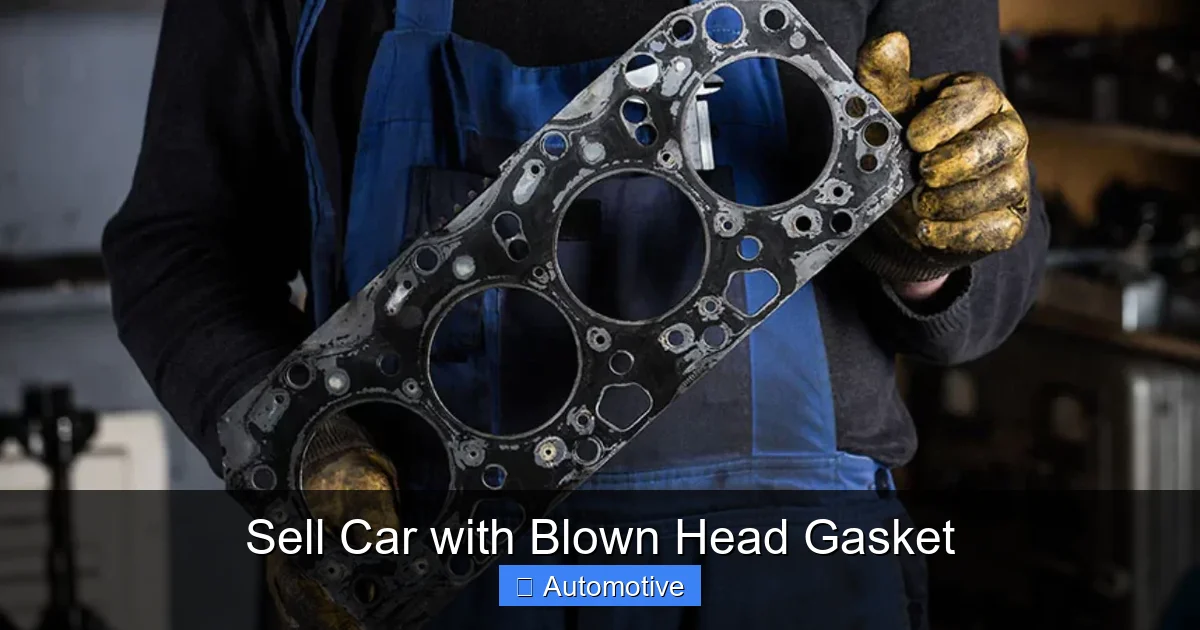
Visual guide about Sell Car with Blown Head Gasket
Image source: partsofacarengine.com
Private Buyers (Craigslist, Facebook Marketplace, OfferUp)
Selling privately often yields the highest return. You cut out the middleman and deal directly with the buyer. Platforms like Craigslist, Facebook Marketplace, and OfferUp are popular for this.
Pros:
- Higher sale price
- Full control over negotiations
- Ability to screen buyers
Cons:
- More time and effort required
- Risk of scams or no-shows
- Need to handle paperwork and test drives
Tips for private sales:
- Take clear photos of the car—both exterior and interior—and mention the blown head gasket in the title.
- Write a detailed description: include make, model, year, mileage, condition, and why you’re selling.
- Be upfront about the issue. Say something like: “Engine has a blown head gasket—needs repair or rebuild. Runs but overheats. Great project car for mechanic or DIYer.”
- Meet in a public place and bring a friend for safety.
- Accept cash or a cashier’s check—avoid personal checks or wire transfers.
Cash for Cars or Junk Car Buyers
If you need a quick sale, companies that buy junk or damaged cars can be a great option. These businesses specialize in purchasing non-running or severely damaged vehicles, often paying cash the same day.
Pros:
- Fast, hassle-free process
- No need to advertise or meet buyers
- They handle towing
Cons:
- Lower offers (they need to make a profit)
- Some companies are unreliable or predatory
To find reputable buyers, search for “cash for cars” in your area and read reviews on Google or Yelp. Avoid companies that pressure you or refuse to give a written quote.
Mechanics and Rebuilders
Many mechanics, engine rebuilders, and auto restoration shops buy damaged cars to fix and resell. They know the value of a good engine block and may pay more than a junkyard.
How to find them:
- Call local repair shops and ask if they buy project cars.
- Check online forums like Reddit’s r/MechanicAdvice or r/projectcar.
- Visit auto salvage yards—some buy whole cars, not just parts.
These buyers often know exactly what they’re getting and may offer a fair price—especially if your car has a desirable engine or low mileage.
Trade-In at a Dealership
Some dealerships will accept a car with a blown head gasket as a trade-in, especially if you’re buying a new vehicle. However, they’ll typically offer much less than a private sale.
For example, a dealer might offer $3,000 for a car you could sell privately for $7,000. But if convenience is your priority, it might be worth the trade-off.
Preparing Your Car to Sell
Even though your car has a major issue, presentation still matters. A clean, well-documented vehicle will attract more buyers and command a higher price.
Clean the Interior and Exterior
Wash the car, vacuum the seats, and wipe down surfaces. Remove personal items and trash. A clean car shows you cared for it—even if the engine is shot.
Gather Documentation
Have these items ready:
- Vehicle title (signed and ready to transfer)
- Maintenance records (oil changes, repairs, inspections)
- Bill of sale (you can find free templates online)
- Odometer disclosure statement (required in most states)
Documentation builds trust and proves the car hasn’t been neglected.
Be Honest—But Strategic
Always disclose the blown head gasket. Hiding it can lead to legal trouble or a failed sale. But you don’t need to lead with it. Instead, mention it clearly in your ad and be ready to explain the symptoms and diagnosis.
Example ad title: “2016 Ford F-150 – Clean Title, Low Miles, Needs Head Gasket Repair”
This attracts the right buyers—those who know what they’re getting into.
Finalizing the Sale: Paperwork and Payment
Once you’ve found a buyer, it’s time to close the deal. Follow these steps to ensure a smooth, legal transaction.
Complete the Bill of Sale
A bill of sale is a legal document that transfers ownership. Include:
- Buyer and seller names and addresses
- Vehicle make, model, year, VIN, and mileage
- Sale price
- Date of sale
- Signatures of both parties
Some states require notarization, so check your local DMV rules.
Transfer the Title
Sign the title over to the buyer. Make sure all fields are filled out correctly—mistakes can delay registration. In some states, you’ll need to submit a release of liability form to the DMV to avoid future responsibility for the vehicle.
Accept Secure Payment
Cash is safest for private sales. For larger amounts, use a cashier’s check from a bank. Never accept personal checks or wire transfers—they can bounce or be fraudulent.
If using a junk car service, ensure payment is made before they tow the vehicle.
Cancel Insurance and Registration
Once the sale is complete, contact your insurance company to cancel coverage. You may also need to return license plates or notify the DMV, depending on your state.
Don’t forget to remove your garage door opener, E-ZPass, or other personal items from the car.
Conclusion: Turning a Problem into Profit
Selling a car with a blown head gasket might seem like a losing battle, but it doesn’t have to be. With the right strategy, you can turn a costly repair into a fair cash payout. The key is understanding your car’s value, pricing it realistically, and targeting the right buyers.
Whether you sell privately to a mechanic, trade it in, or accept a cash offer from a junk buyer, there are options for every situation. The most important thing is to be honest, prepared, and proactive. Don’t let a blown head gasket leave you stuck with a lemon—turn it into an opportunity instead.
Remember: every damaged car has value to someone. Your job is to find that person and make the sale as smooth as possible. With the tips in this guide, you’re well on your way to selling your car with confidence—and walking away with cash in hand.
Frequently Asked Questions
Can I sell my car if it has a blown head gasket?
Yes, you can legally sell a car with a blown head gasket as long as you disclose the issue to the buyer. Most states require sellers to be honest about known mechanical problems.
How much can I get for a car with a blown head gasket?
It depends on the car’s make, model, age, mileage, and overall condition. Typically, you can expect 50–70% of the car’s value in good condition, minus repair costs.
Will a dealership buy a car with a blown head gasket?
Some dealerships may accept it as a trade-in, but they’ll usually offer significantly less than a private sale. It’s best to get quotes from multiple sources.
Do I need to fix the head gasket before selling?
No, you don’t have to repair it before selling. In fact, selling as-is is often more cost-effective unless the car has high resale value.
What paperwork do I need to sell a damaged car?
You’ll need the vehicle title, a bill of sale, odometer disclosure, and possibly a release of liability form. Check your state’s DMV requirements.
Can I sell my car online if it doesn’t run?
Yes, many buyers on platforms like Facebook Marketplace or Craigslist are specifically looking for non-running project cars. Just be clear about the condition in your listing.