
Where to Sell My Car Locally

Selling your car locally doesn’t have to be stressful or time-consuming. Whether you’re upgrading, downsizing, or just ready for a change, knowing where and how to sell can make all the difference in speed, price, and peace of mind.
Key Takeaways
- Online marketplaces like Facebook Marketplace and Craigslist offer wide local reach and low or no listing fees, making them ideal for private sellers.
- Local dealerships and trade-in programs provide quick, hassle-free sales but typically offer lower prices than private sales.
- Selling to a car-buying service such as CarMax, Carvana, or Vroom gives instant offers and fast payment, though you may sacrifice some profit.
- Word-of-mouth and community boards can lead to trusted, no-haggle sales through friends, family, or neighborhood groups.
- Timing and presentation matter—clean your car, fix minor issues, and list during high-demand seasons for better offers.
- Always verify buyer legitimacy to avoid scams, especially when meeting strangers for cash transactions.
- Prepare necessary paperwork like the title, maintenance records, and bill of sale to ensure a smooth, legal transfer.
📑 Table of Contents
- Introduction: Why Selling Your Car Locally Makes Sense
- Top Local Platforms to Sell Your Car
- Selling to Local Dealerships: Fast, But Lower Offers
- Car-Buying Services: Instant Offers, Minimal Hassle
- Word-of-Mouth and Community Sales
- Tips to Maximize Your Sale Price Locally
- Safety and Legal Considerations
- Conclusion: Choose the Right Local Option for You
Introduction: Why Selling Your Car Locally Makes Sense
Selling a car is one of those life tasks that sounds simple—until you actually try it. You’ve probably asked yourself, “Where to sell my car locally?” and felt overwhelmed by the options. The good news? You’re not alone. Thousands of people sell their cars every week, and many of them do it successfully right in their own towns or cities.
Local car sales come with unique advantages. You avoid the complications of shipping or long-distance negotiations. You can meet buyers face-to-face, show them the vehicle in person, and build trust through direct communication. Plus, local sales often mean faster transactions and fewer fees. Whether you’re upgrading to a newer model, switching to an electric vehicle, or simply no longer need a second car, selling locally gives you control, convenience, and often a better return than national platforms or dealerships.
Top Local Platforms to Sell Your Car
When it comes to selling your car locally, the platform you choose can make or break your experience. Some sites are built for speed, others for maximum exposure. Let’s break down the best local options so you can pick the one that fits your needs.
Visual guide about Where to Sell My Car Locally
Image source: medicalcaremedia.com
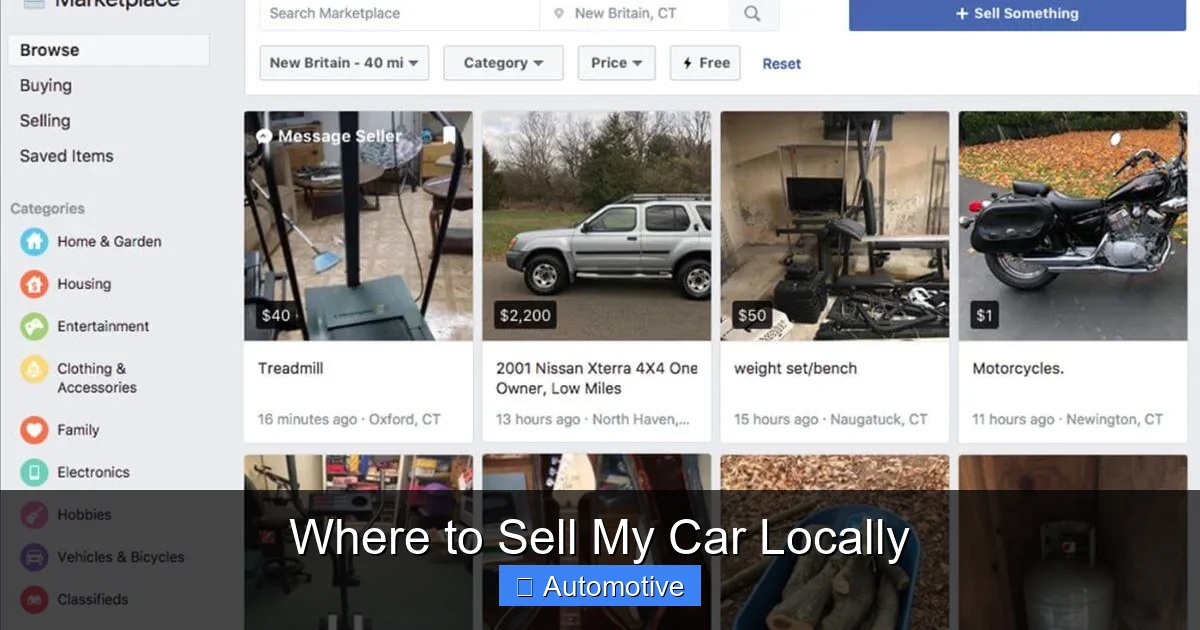
Facebook Marketplace: The Social Seller’s Favorite
Facebook Marketplace has exploded in popularity for local car sales. Why? It’s free, easy to use, and already connected to your social network. When you list your car, it appears not only in Marketplace searches but also in the feeds of friends and local community members. That means your listing could be seen by someone you know—or someone who trusts a mutual connection.
To get started, go to Facebook Marketplace, click “Sell,” and choose “Vehicle.” Upload clear photos, write a detailed description, and set your price. Be sure to include key details like mileage, year, make, model, condition, and any recent repairs or upgrades. One tip: respond quickly to messages. Buyers on Facebook often move fast, and a delayed reply could mean losing a serious buyer.
Example: Sarah from Austin, Texas, sold her 2016 Honda Civic in just three days using Facebook Marketplace. She posted high-quality photos, mentioned the new tires and recent oil change, and priced it slightly below market value to attract quick interest. A neighbor of a friend saw the listing and bought it the same day.
Craigslist: The Classic Local Classifieds
Craigslist has been around for decades, and while it’s not as flashy as newer platforms, it still delivers results—especially in smaller cities and rural areas where digital habits lean toward traditional classifieds. Listing is free in most areas, and you can target your city or region specifically.
The key to success on Craigslist is writing a clear, honest ad. Avoid vague descriptions like “great car, runs good.” Instead, say: “2018 Toyota Camry, 45,000 miles, clean title, no accidents, new brakes installed last month.” Include multiple photos from different angles—front, back, interior, engine bay, and trunk. This builds trust and reduces back-and-forth questions.
One downside? Scams. Be cautious of buyers who want to pay with a cashier’s check or wire transfer. Always meet in a public place, preferably during daylight hours, and bring a friend if possible. Also, never share your VIN or personal info until you’re sure the buyer is legitimate.
Nextdoor: Sell to Your Neighbors
Nextdoor is a hyper-local social network where neighbors share news, events, and items for sale. It’s perfect for selling your car to someone just a few blocks away. Because everyone is verified by address, the community tends to be more trustworthy and engaged.
To sell on Nextdoor, post in your local neighborhood group. Include a friendly message like, “Selling my reliable 2017 Subaru Outback—perfect for families or weekend adventures! Low mileage, well-maintained, and ready for a new home.” Add photos and your asking price. Many sellers report getting offers within hours.
Bonus: You might even find a buyer who knows your mechanic or has seen your car around town. That kind of familiarity can speed up the sale and reduce haggling.
Selling to Local Dealerships: Fast, But Lower Offers
If you’re short on time or don’t want to deal with strangers, selling to a local dealership might be your best bet. Most dealerships will buy used cars outright, even if you’re not trading in for a new one. The process is simple: drive in, get an appraisal, and walk out with a check.

Visual guide about Where to Sell My Car Locally
Image source: socialthink.io
Trade-In vs. Direct Sale
There are two main ways to sell to a dealership: trade-in or direct purchase. A trade-in means you’re applying the value of your car toward a new vehicle. This can be convenient, but dealers often offer less in trade-in value than they would for a cash purchase. Why? Because they want to maximize profit on the new car sale.
A direct sale, on the other hand, means you sell your car to the dealer and walk away with cash or a check. This usually results in a slightly higher offer, though still lower than what you’d get from a private buyer. For example, a 2019 Ford Escape might fetch $18,000 privately but only $16,500 from a dealership.
How to Get the Best Deal
To maximize your offer, do your homework. Check the Kelley Blue Book (KBB) or Edmunds value for your car in “Good” condition. Clean your car inside and out—dealers notice details. Fix minor issues like burnt-out bulbs or worn wiper blades. And don’t be afraid to get appraisals from multiple dealerships. Competition works in your favor.
Example: Mike from Denver visited three local Honda dealers to sell his 2015 Accord. The first offered $12,000, the second $12,300, and the third $12,800. He took the highest offer and had cash in hand within an hour.
Car-Buying Services: Instant Offers, Minimal Hassle
In recent years, online car-buying services have expanded their reach into local markets. Companies like CarMax, Carvana, Vroom, and Shift allow you to get an instant online offer and schedule a local pickup or drop-off. These services are ideal if you want a guaranteed sale with minimal effort.
How It Works
Start by visiting the company’s website and entering your car’s details: year, make, model, mileage, and condition. You’ll upload photos and answer a few questions about accidents, repairs, and features. Within minutes, you’ll receive a no-obligation offer.
If you accept, the company will schedule a time to inspect your car—either at your home, their local hub, or a nearby inspection center. If the car matches your description, they’ll pay you via check or direct deposit the same day. No haggling, no waiting, no strangers knocking on your door.
Pros and Cons
The biggest advantage? Speed and convenience. These services are designed for people who want to sell quickly—maybe because they’re moving, need cash fast, or don’t have time to manage listings and showings.
The downside? You’ll likely get less than a private sale. These companies need to resell your car for a profit, so their offers are typically 10–15% below market value. However, when you factor in the time, effort, and uncertainty of private sales, the trade-off can be worth it.
Example: Lisa from Atlanta used Carvana to sell her 2017 Nissan Altima. She got an online offer of $14,200, had it inspected at a local center two days later, and received payment the same afternoon. “It wasn’t the highest offer I could’ve gotten,” she said, “but it was stress-free and fast.”
Word-of-Mouth and Community Sales
Sometimes, the best way to sell your car locally is the oldest: word of mouth. Telling friends, family, coworkers, and neighbors that you’re selling can lead to a quick, no-hassle sale—often at a fair price.
Leverage Your Network
Start by posting on your personal social media accounts. A simple Facebook or Instagram post saying, “Selling my 2016 Mazda CX-5—excellent condition, low miles, must sell!” can reach hundreds of people in your network. You can also send a group text or email to close contacts.
Don’t forget local community groups. Many neighborhoods have Facebook groups, WhatsApp chats, or email lists where residents share news and items for sale. These groups often have high engagement and strong trust, making them ideal for selling big-ticket items like cars.
Benefits of Personal Sales
When you sell to someone you know or trust, negotiations are smoother. There’s less suspicion, fewer questions, and often a willingness to pay a fair price. Plus, you can skip the paperwork stress—many personal sales are completed with just a signed title and a handshake.
Example: James from Portland told his brother he was selling his 2014 Toyota Prius. His brother mentioned it to a coworker who was looking for a fuel-efficient car. The coworker bought it the next day for $13,500—right at market value—and James avoided listing fees and showings.
Tips to Maximize Your Sale Price Locally
No matter where you sell, a few smart strategies can help you get the best possible price—and sell faster.
Clean and Detail Your Car
First impressions matter. A clean car looks well-maintained and trustworthy. Wash the exterior, vacuum the interior, clean the windows, and remove personal items. Consider a professional detail if your budget allows. A $100 detail can easily add $300–$500 to your sale price.
Fix Minor Issues
You don’t need to rebuild the engine, but small fixes go a long way. Replace burnt-out lights, fix cracked windshields, and address warning lights. A car with a “Check Engine” light on will scare buyers away, even if the issue is minor.
Set the Right Price
Price too high, and no one will call. Price too low, and you leave money on the table. Use KBB, Edmunds, or Autotrader to find the fair market value for your car in your area. Then, price it slightly below that to attract quick interest. For example, if similar cars are listed at $15,000, list yours at $14,700.
Write a Great Ad
Your listing is your sales pitch. Use clear, honest language. Highlight key features like low mileage, recent maintenance, new tires, or premium options. Avoid clichés like “runs great” or “must see.” Instead, say: “Only 38,000 miles, one owner, all service records available, new brakes and battery installed in 2023.”
Be Responsive and Flexible
Answer messages quickly—within a few hours if possible. Be open to scheduling showings on weekends or evenings. The more accessible you are, the faster your car will sell.
Safety and Legal Considerations
Selling a car locally means dealing with strangers, cash, and legal paperwork. Protect yourself by following these essential safety and legal steps.
Meet in Public Places
Always meet potential buyers in well-lit, public areas like police stations, shopping centers, or bank parking lots. Many police departments have designated “safe exchange zones” with cameras and lighting. Never meet at your home or a remote location.
Verify Payment
If the buyer pays in cash, count it in front of them and use a counterfeit detector pen if possible. For larger amounts, consider meeting at a bank so the buyer can withdraw cash in front of you. Avoid personal checks or wire transfers—they can bounce or be fraudulent.
Complete the Paperwork Correctly
You’ll need to transfer the title, provide a bill of sale, and notify your state’s DMV of the sale. Each state has different requirements, so check your local DMV website. In most cases, you’ll sign the title over to the buyer, complete a release of liability form, and keep a copy for your records.
Example: In California, sellers must submit a Notice of Transfer and Release of Liability within five days of the sale. Failure to do so could leave you responsible for parking tickets or accidents involving the car after the sale.
Conclusion: Choose the Right Local Option for You
Selling your car locally doesn’t have to be a headache. With so many options—from online marketplaces and dealerships to word-of-mouth and instant-buy services—you can find a method that fits your timeline, budget, and comfort level. The key is to do your research, prepare your car, and stay safe throughout the process.
Whether you’re aiming for the highest price or the quickest sale, remember: the best place to sell your car locally is the one that gives you confidence, convenience, and control. Take the time to clean your car, price it fairly, and choose a platform that aligns with your goals. And when that “sold” sign goes up, you’ll know it was worth the effort.
Frequently Asked Questions
Where is the best place to sell my car locally?
The best place depends on your priorities. Facebook Marketplace and Craigslist are great for private sales with higher returns, while dealerships and car-buying services offer speed and convenience. Choose based on how quickly you need to sell and how much effort you’re willing to put in.
How much can I expect to get when selling my car locally?
Private sales typically yield 10–20% more than trade-ins or instant offers. For example, a car worth $15,000 privately might fetch $13,500 from a dealer. Use pricing tools like Kelley Blue Book to estimate your car’s value in your area.
Is it safe to sell my car to a stranger locally?
Yes, as long as you take precautions. Meet in public places, verify payment, and avoid sharing personal information. Bringing a friend and using safe exchange zones can further reduce risks.
Do I need to fix my car before selling it locally?
Minor repairs like replacing lights or fixing warning lights can increase your sale price and speed up the process. However, major repairs are usually not worth the investment unless they significantly affect value.
How long does it take to sell a car locally?
It varies. Well-priced, clean cars on popular platforms can sell in days. Others may take weeks. Factors include season, location, demand, and how responsive you are to inquiries.
What paperwork do I need to sell my car locally?
You’ll need the car’s title, a bill of sale, maintenance records (optional but helpful), and a release of liability form. Check your state’s DMV requirements to ensure a legal transfer.