
Sell Your Car San Antonio

Selling your car in San Antonio doesn’t have to be stressful or time-consuming. With the right strategy, you can get a fair price, avoid scams, and close the deal quickly—whether you’re upgrading, downsizing, or just ready for a change.
[FEATURED_IMAGE_PLACEOLDER]
Key Takeaways
- Know your car’s value: Use tools like Kelley Blue Book or Edmunds to research fair market pricing before listing.
- Choose the right selling method: Decide between private sale, dealership trade-in, or selling to a car-buying service based on speed, convenience, and profit.
- Prepare your vehicle: Clean it inside and out, fix minor issues, and gather maintenance records to boost appeal and value.
- Advertise effectively: Use high-quality photos, write a clear description, and list on popular platforms like Facebook Marketplace or Autotrader.
- Stay safe during transactions: Meet in public places, verify buyer identity, and avoid cashier’s checks or wire transfers from strangers.
- Complete paperwork correctly: Transfer the title, sign a bill of sale, and notify the Texas DMV to avoid liability after the sale.
- Time your sale wisely: Spring and summer often bring higher demand, but year-end sales can also attract serious buyers.
📑 Table of Contents
Why Sell Your Car in San Antonio?
San Antonio is more than just the Alamo and Tex-Mex—it’s a bustling city with over 1.5 million residents and a thriving automotive market. Whether you’re upgrading to a newer model, switching to an electric vehicle, or simply need extra cash, selling your car in San Antonio offers plenty of opportunities. The city’s strong economy, growing population, and active online communities make it an ideal place to find a buyer quickly.
But why sell now? For starters, used car values have remained relatively high in recent years due to supply chain disruptions and increased demand. Even older models can fetch a solid price if they’re in good condition. Plus, with gas prices fluctuating and more people working remotely, many San Antonians are reevaluating their transportation needs. That means there’s a steady stream of buyers looking for reliable, affordable vehicles.
Another reason to sell your car in San Antonio is the variety of options available. You can go the traditional route with a private sale, trade it in at a dealership, or use a fast-growing number of online car-buying services. Each method has its pros and cons, and the best choice depends on your priorities—whether that’s maximizing profit, saving time, or ensuring a smooth, secure transaction.
Understanding Your Car’s Value
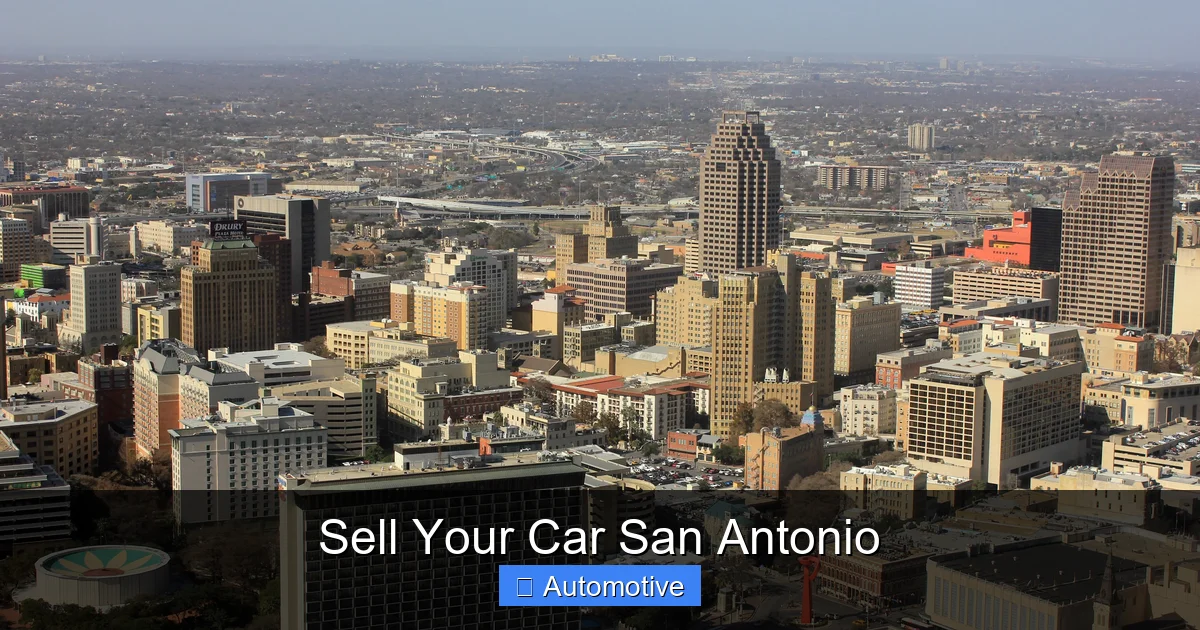
Visual guide about Sell Your Car San Antonio
Image source: goodfreephotos.com
Before you list your car for sale, it’s crucial to know what it’s actually worth. Pricing too high can scare off buyers; pricing too low means leaving money on the table. The key is to research your vehicle’s fair market value using trusted resources.
Start with online valuation tools like Kelley Blue Book (KBB), Edmunds, or NADA Guides. These platforms ask for details like your car’s make, model, year, mileage, trim level, and condition. They also factor in your location—important because demand and pricing can vary by region. For example, a pickup truck might sell for more in San Antonio than in a smaller Texas town due to the city’s strong construction and ranching industries.
Don’t forget to consider your car’s condition. Is it in excellent shape with low mileage and a clean history? Or does it have some wear and tear, minor dents, or high mileage? Be honest with yourself. A car with a clean Carfax report and regular maintenance records will command a higher price than one with hidden issues.
Let’s say you’re selling a 2018 Toyota Camry with 60,000 miles, excellent condition, and a full service history. According to KBB, its private party value in San Antonio might range from $16,000 to $18,500. But if the same car had 90,000 miles and a few cosmetic flaws, the value could drop to $13,500–$15,000. That’s a big difference—and one that highlights why accurate research matters.
Factors That Affect Your Car’s Value
Several factors influence how much you can sell your car for in San Antonio:
- Mileage: Lower mileage generally means higher value. Cars under 12,000 miles per year are considered low-mileage.
- Condition: Exterior and interior cleanliness, mechanical soundness, and paint quality all play a role.
- Service history: Buyers love cars with documented maintenance. Keep receipts and records handy.
- Accident history: A clean title and no major accidents boost value. Salvage titles can reduce it by 20–40%.
- Market demand: Popular models like trucks, SUVs, and fuel-efficient sedans often sell faster and for more.
- Seasonality: Convertibles sell better in spring and summer, while 4WD vehicles may move faster in winter.
For example, a 2020 Ford F-150 with 40,000 miles and a clean record might sell for $32,000 in San Antonio, especially if it has the popular 3.5L EcoBoost engine and towing package. But a similar truck with 80,000 miles and a minor accident on record might only fetch $26,000.
Choosing the Best Way to Sell Your Car
Once you know your car’s value, it’s time to decide how to sell it. In San Antonio, you have three main options: private sale, trade-in at a dealership, or selling to a car-buying service. Each has its own advantages and trade-offs.
Private Sale: Maximum Profit, More Effort
Selling your car privately typically yields the highest return. You’re dealing directly with the buyer, so there’s no middleman taking a cut. This method works best if you’re willing to invest time in advertising, showing the car, and negotiating.
To get started, clean your car thoroughly—both inside and out. A professional detail can cost $100–$200 but can increase your sale price by hundreds. Take high-quality photos in natural light, showing all angles, the interior, engine bay, and any special features. Write a detailed description highlighting key selling points like low mileage, recent repairs, or upgraded features.
List your car on popular platforms like Facebook Marketplace, Craigslist, Autotrader, or Cars.com. Be sure to include your location (San Antonio), price, and contact info. Respond quickly to inquiries and be prepared to answer questions about the vehicle’s history.
One San Antonio seller, Maria, listed her 2016 Honda CR-V on Facebook Marketplace. She included photos, a full service history, and mentioned it had never been in an accident. Within three days, she had five serious inquiries and sold it for $17,200—$1,500 above her asking price.
Trade-In: Convenience Over Cash
Trading in your car at a dealership is the easiest option, but it usually means accepting a lower offer. Dealerships need to make a profit when they resell your vehicle, so they’ll typically offer 10–20% less than private sale value.
However, trade-ins come with perks. You can apply the value toward a new or used car purchase, and in Texas, you only pay sales tax on the difference between the trade-in value and the new car’s price. This can save you hundreds or even thousands in taxes.
For example, if you’re buying a $30,000 car and trading in your old one for $15,000, you’ll only pay 6.25% sales tax on $15,000 ($937.50) instead of the full $30,000 ($1,875). That’s a $937.50 savings.
To get the best trade-in offer, visit multiple dealerships and get written appraisals. Some San Antonio dealers, like World Car Kia and Ancira Chrysler Dodge Jeep Ram, offer online trade-in tools that give instant estimates. Compare these with private sale values to decide if the convenience is worth the lower price.
Sell to a Car-Buying Service: Fast and Secure
If you want a quick sale without the hassle of meeting strangers, consider selling to a car-buying service. Companies like CarMax, Carvana, Vroom, and local buyers like We Buy Cars San Antonio offer instant cash offers and handle all the paperwork.
These services use online tools to assess your car’s value based on photos, mileage, and condition. You can often get an offer within minutes. If you accept, they’ll schedule a pickup or inspection, and pay you the same day—usually via check or bank transfer.
The downside? You’ll likely get less than a private sale. CarMax, for instance, might offer $14,000 for a car you could sell privately for $16,500. But if you value speed and security, it’s a solid option.
One San Antonio resident, James, sold his 2014 Toyota Tacoma to CarMax in under 48 hours. He received $13,800, which was $1,200 below private market value, but he avoided weeks of listing, showing, and negotiating. “It was worth it for the peace of mind,” he said.
Preparing Your Car for Sale
A well-prepared car sells faster and for more money. Think of it like staging a house—first impressions matter. Here’s how to get your vehicle ready for the San Antonio market.
Clean It Inside and Out
Start with a thorough wash and wax. Remove bugs, tar, and road grime from the exterior. Clean the windows inside and out. For the interior, vacuum the seats, carpets, and trunk. Wipe down dashboards, door panels, and cup holders. Use an odor eliminator if there are lingering smells from pets, smoke, or food.
Consider a professional detail if your car is older or has stains. A full detail can cost $150–$300 but can increase your sale price by $500 or more. One seller in San Antonio spent $200 on detailing and sold her 2015 Nissan Altima for $2,000 above her initial asking price.
Fix Minor Issues
You don’t need to rebuild the engine, but small repairs can make a big difference. Replace burnt-out bulbs, fix cracked windshields, and patch small dents or scratches. A $50 headlight replacement might convince a buyer your car is well-maintained.
Check the tires—worn tread can be a red flag. If they’re close to the wear bars, consider replacing them. Even if you don’t, disclose the condition honestly in your listing.
Gather Documentation
Buyers want proof that your car has been cared for. Collect all maintenance records, including oil changes, brake jobs, and tire rotations. If you’ve had major repairs like a transmission replacement or new battery, include those receipts.
Also, get a recent vehicle inspection and emissions test if required. In San Antonio, inspections are mandatory for most vehicles. A clean inspection report adds credibility.
Finally, have your title ready. Make sure it’s signed correctly and free of liens. If you’ve lost the title, apply for a duplicate through the Texas DMV before listing your car.
Advertising and Selling Your Car
Once your car is ready, it’s time to attract buyers. Effective advertising is key to a quick sale.
Write a Compelling Listing
Your listing should be clear, honest, and detailed. Start with a strong headline: “2019 Honda Accord EX-L – Low Miles, Clean Title, San Antonio.” Include key details like mileage, condition, features, and recent maintenance.
Use bullet points to highlight selling points:
- Only 42,000 miles
- One owner, non-smoker
- Backup camera, Apple CarPlay, heated seats
- New tires and brakes in 2023
- Full service history available
Be transparent about any flaws. Saying “minor scratch on rear bumper” builds trust and prevents surprises during inspection.
Take Great Photos
Photos are your first impression. Take at least 10–15 high-resolution pictures:
- Exterior: front, back, both sides, close-ups of wheels and trim
- Interior: dashboard, seats, trunk, back seat
- Engine bay and undercarriage (if clean)
- Any special features or upgrades
Shoot in daylight and avoid shadows. Clean the car and park it in a neutral background—no clutter or distracting objects.
Choose the Right Platforms
List your car on multiple sites to reach more buyers:
- Facebook Marketplace: Free, easy to use, and popular in San Antonio. Great for local buyers.
- Craigslist: Still widely used, but be cautious of scams.
- Autotrader and Cars.com: Attract serious buyers, but may charge listing fees.
- OfferUp and Letgo: Mobile-friendly apps with local reach.
Avoid posting the same ad on too many sites—it can look spammy. Instead, tailor your listing slightly for each platform.
Respond Quickly and Professionally
When buyers message you, reply within a few hours. Answer questions honestly and schedule test drives promptly. Be polite and professional—even if the buyer lowballs you.
For test drives, meet in a public place like a mall parking lot or police station. Bring a friend, and never let the buyer drive alone. Ask for a valid driver’s license and proof of insurance.
Completing the Sale Safely and Legally
Closing the deal requires more than just handing over the keys. You need to protect yourself legally and financially.
Negotiate Fairly
Be prepared to negotiate. Most buyers will try to lower the price. Know your bottom line and stick to it. If a buyer offers $15,000 for your $16,500 car, counter with $16,000 and explain why it’s worth it (e.g., low mileage, recent repairs).
Avoid emotional decisions. If a buyer is pushy or disrespectful, walk away. There are plenty of other interested parties in San Antonio.
Accept Secure Payment
Never accept personal checks, wire transfers, or cashier’s checks from unknown buyers—they can be fake. The safest options are:
- Cash (count it in front of the buyer)
- Bank check (verified at the bank)
- Electronic transfer (Zelle, Venmo, or direct deposit)
If using a service like Carvana or CarMax, payment is handled securely through their system.
Transfer Ownership Properly
In Texas, you must sign over the title to the buyer. Both parties should complete the “Assignment of Title” section. The buyer will need this to register the car.
Provide a bill of sale (available from the Texas DMV website) that includes:
- Vehicle identification number (VIN)
- Sale price
- Date of sale
- Signatures of both parties
After the sale, notify the Texas DMV within 30 days using Form VTR-34. This releases you from liability if the buyer gets a ticket or causes an accident.
Keep a copy of all documents for your records.
Timing Your Sale for Maximum Impact
When you sell your car can affect how quickly it sells and how much you get.
Best Times to Sell
Spring and summer are peak seasons for car sales. Families buy minivans before school starts, and professionals upgrade during vacation months. Demand for convertibles, SUVs, and trucks also rises.
Another good time is right after tax refunds arrive in April. Many buyers use refund money for big purchases.
Avoid selling during major holidays like Christmas or Thanksgiving, when people are busy and less likely to shop.
Consider Market Trends
Keep an eye on local and national trends. For example, if gas prices spike, fuel-efficient cars may sell faster. If a new model is released, demand for older versions might dip.
In San Antonio, trucks and SUVs are always in demand due to the region’s rural areas and construction industry. If you’re selling a Ford F-150 or Toyota 4Runner, you may find buyers quickly—even in off-seasons.
Final Tips for a Smooth Sale
Selling your car doesn’t have to be overwhelming. With the right approach, you can make the process smooth, safe, and profitable.
- Be honest: Disclose all known issues. Honesty builds trust and prevents disputes.
- Stay patient: It may take a week or two to find the right buyer. Don’t rush into a bad deal.
- Use local resources: Check San Antonio car forums, Facebook groups, and dealerships for leads.
- Protect your privacy: Avoid sharing your home address. Use a P.O. box or meet in public.
- Get a pre-sale inspection: Some buyers will pay for one. If it’s clean, it reassures them and can justify a higher price.
Remember, selling your car in San Antonio is not just about money—it’s about making a smart, informed decision. Whether you choose a private sale, trade-in, or instant offer, the key is to do your research, prepare thoroughly, and stay safe.
With over 200 sunny days a year and a strong local economy, San Antonio is a great place to sell your car. Take advantage of the market, follow these tips, and you’ll be driving away with cash in hand—and maybe even a new set of wheels.
Frequently Asked Questions
How much can I sell my car for in San Antonio?
Your car’s value depends on its make, model, year, mileage, condition, and market demand. Use tools like Kelley Blue Book or Edmunds to get an estimate. In San Antonio, popular vehicles like trucks and SUVs often sell for higher prices due to local demand.
Is it better to sell privately or trade in my car?
Selling privately usually gets you more money, but it takes more time and effort. Trading in is faster and more convenient, but you’ll likely receive less. Consider your priorities—profit vs. convenience—before deciding.
Do I need a vehicle inspection to sell my car in San Antonio?
Yes, most vehicles in Texas require a safety inspection before sale. The buyer typically handles this, but having a recent inspection report can make your car more attractive and speed up the sale.
How do I avoid scams when selling my car?
Meet buyers in public places, avoid wire transfers or cashier’s checks from strangers, and never release the car until payment is secure. Verify the buyer’s ID and be wary of overly eager or vague inquiries.
What paperwork do I need to sell my car in Texas?
You’ll need the vehicle title, a completed bill of sale, and possibly a release of liability form. Both you and the buyer must sign the title. After the sale, notify the Texas DMV to avoid future liability.
Can I sell my car if I still owe money on it?
Yes, but the loan must be paid off first. Contact your lender to get the payoff amount. You can use the sale proceeds to pay the loan, or the buyer can pay the lender directly at closing.
