
Can You Sell Your Car on Need for Speed Heat

You cannot directly sell cars in Need for Speed Heat like in real life or other racing games—but you can trade, upgrade, and manage your garage strategically. While there’s no cash-for-car marketplace, understanding how vehicle acquisition, customization, and progression work helps you build the ultimate ride without wasting resources.
If you’ve spent hours tearing up the streets of Palm City in *Need for Speed Heat*, you’ve probably built yourself a sweet collection of rides—from sleek Japanese tuners to roaring American muscle. But as your garage fills up and newer, faster cars catch your eye, a natural question pops up: *Can you sell your car on Need for Speed Heat?* It’s a fair query, especially if you’re used to games like *Forza Horizon* or real-world car trading where flipping vehicles for profit is part of the fun.
The short answer? Not exactly. Unlike some open-world racers that let you auction off or sell your rides for cold, hard credits, *Need for Speed Heat* takes a different approach. There’s no traditional “sell” button in the garage menu, and you won’t find a virtual Craigslist or eBay where you can list your Nissan Skyline GT-R for 500,000 credits. But that doesn’t mean your older cars are useless—or that you’re stuck with them forever. The game offers alternative systems that, while not direct sales, help you manage your fleet intelligently. Understanding these mechanics is crucial if you want to optimize your garage, maximize your credit earnings, and stay competitive in both daytime races and nighttime street battles.
In this guide, we’ll break down exactly how vehicle management works in *Need for Speed Heat*, why selling isn’t an option, and what you *can* do instead to keep your ride lineup fresh, powerful, and tailored to your racing style. Whether you’re a casual weekend racer or a dedicated heat-chaser grinding for that perfect Lamborghini, knowing how to handle your garage will save you time, credits, and frustration.
Key Takeaways
- No Direct Car Selling: Need for Speed Heat does not allow players to sell owned cars for in-game currency.
- Garage Management is Key: You can store up to 12 cars, so choosing which vehicles to keep matters for progression and performance.
- Trade-Ins via New Purchases: When buying a new car, you can “trade in” an old one by selecting it during the purchase process—this removes it from your garage but doesn’t give cash back.
- Focus on Upgrades Over Swaps: Investing in performance parts often yields better results than constantly switching cars.
- Unlock High-Tier Cars Through Progression: Better vehicles become available as you level up and complete events, reducing the need to “sell” older models.
- Use the Auction House Wisely: While you can’t sell cars, you can buy rare or high-performance vehicles from the in-game auction house using credits earned through racing.
- Strategic Garage Curation Enhances Gameplay: Keeping a balanced mix of cars for different race types (street, off-road, drift) improves your overall experience.
📑 Table of Contents
Why You Can’t Sell Cars in Need for Speed Heat
At first glance, the absence of a car-selling feature might seem like an odd design choice—especially in a game so focused on customization and progression. After all, if you can spend thousands of credits tuning your Honda Civic Type R into a drift monster, why can’t you recoup some of that investment when you move on to a Subaru WRX STI? The truth is, *Need for Speed Heat* was built with a specific progression loop in mind: earn credits, buy cars, upgrade them, race more, repeat. Selling cars would disrupt that cycle by allowing players to “cash out” their assets, potentially breaking the economy or reducing the sense of earned progression.
Instead, the game encourages long-term attachment to your vehicles. Every car you own can be fully customized—engine swaps, turbo upgrades, suspension tuning, body kits, liveries, and more. These modifications are tied to the individual vehicle, meaning if you “get rid” of a car, you lose all those upgrades too. This design pushes players to think carefully before parting with a ride. It also aligns with the game’s narrative tone: you’re not a dealership flipping cars for profit—you’re a street racer building a reputation, one tuned machine at a time.
Another reason selling isn’t included? Balance. If players could sell high-end cars they unlocked through events or challenges, it could lead to rapid credit inflation or make the game too easy. By locking cars into your garage (with limited slots), the developers ensure that progression feels meaningful and that players must earn their way into better vehicles through skill and persistence.
How Vehicle Acquisition and Garage Limits Work
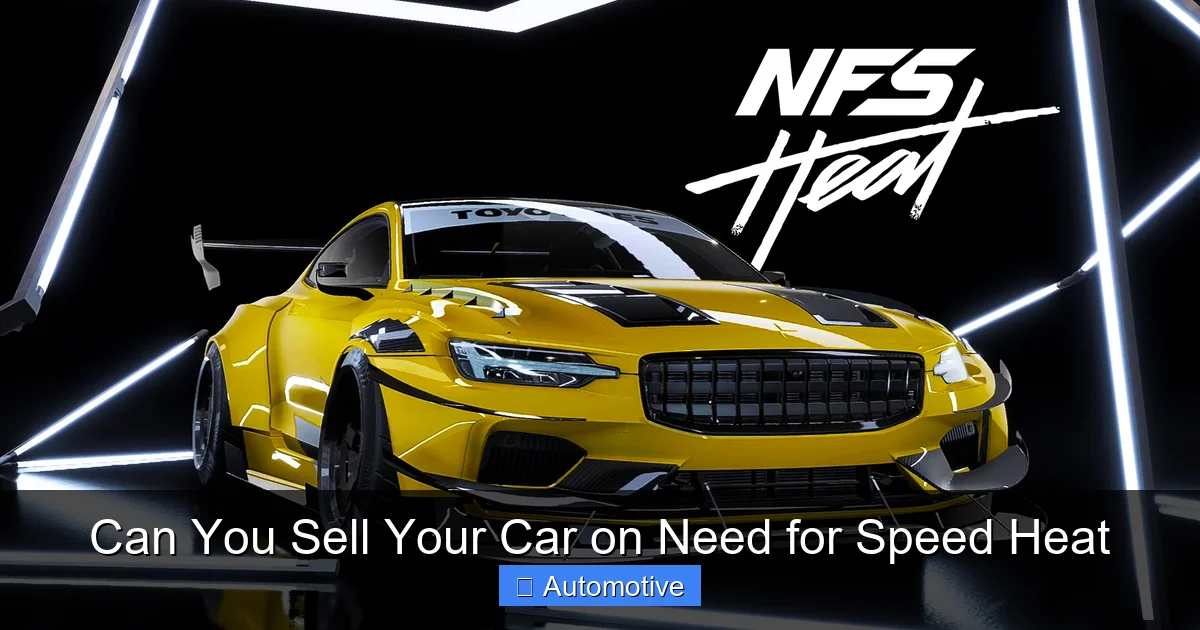
Visual guide about Can You Sell Your Car on Need for Speed Heat
Image source: images.squarespace-cdn.com
So if you can’t sell cars, how do you manage your growing collection? First, let’s talk about garage capacity. In *Need for Speed Heat*, you can own up to **12 cars at once**. This limit applies across all vehicle classes—sports cars, tuners, muscle cars, off-roaders, and hypercars. Once you hit 12, you’ll need to make room before buying or acquiring a new ride.
When you purchase a new car from a dealership or win one in an event, the game gives you the option to **trade in an existing vehicle**. Here’s how it works: during the purchase screen, you’ll see a list of your current cars. Selecting one to “trade in” will remove it from your garage and replace it with the new purchase. Importantly, **you do not receive any credits for the traded car**—it’s essentially a swap, not a sale. The value of your old car is ignored; you only pay the difference (if any) between the new car’s price and any discounts or credits you have.
For example, say you own a Mazda RX-7 worth 180,000 credits and want to buy a Ford Mustang GT priced at 220,000 credits. If you choose to trade in the RX-7, you’ll still need to pay the full 220,000 credits—the game doesn’t deduct the RX-7’s value. This system reinforces the idea that cars are tools for racing, not assets to be liquidated.
Early-Game Garage Strategy
In the early hours of the game, your garage will fill up quickly. You’ll start with a basic car (usually a Honda Civic or similar), then unlock others through story missions, daily races, and police chases. It’s tempting to keep every new ride you get—especially if it’s free—but remember: space is limited. Focus on keeping cars that serve different purposes. For instance:
– A nimble tuner (like the Nissan 350Z) for tight city circuits.
– A high-speed sports car (like the Porsche 911) for highway sprints.
– A durable off-roader (like the Ford F-150 Raptor) for dirt tracks.
Avoid hoarding multiple cars of the same type unless you’re deeply invested in tuning one specific model. Early on, versatility beats specialization.
Mid-to-Late Game Considerations
As you progress, you’ll unlock higher-tier vehicles—think Audi R8s, McLaren 720S, and even the iconic Koenigsegg Jesko. These cars often outclass your earlier rides in both speed and handling. At this point, consider which older cars still have value. Maybe your tuned Subaru BRZ is still a beast in drift events, or your modified Chevrolet Camaro handles well in night races. Keep those. But if you have three similar sports cars and only use one, it might be time to trade in the underused ones.
Remember: trading in doesn’t cost extra credits, but it does free up a slot. Use this to your advantage when a limited-time auction house car appears or when you complete an event that rewards a rare vehicle.
The Role of the Auction House
Visual guide about Can You Sell Your Car on Need for Speed Heat
Image source: gadgets-africa.com
While you can’t sell your own cars, *Need for Speed Heat* features an **Auction House** where players can bid on rare or high-performance vehicles using in-game credits. This is one of the few ways to acquire top-tier cars without waiting for story progression or luck-based drops.
The Auction House refreshes regularly, offering everything from classic JDM legends to modern hypercars. Prices vary widely—some cars sell for under 100,000 credits, while others (like the Lamborghini Sesto Elemento) can go for over 1 million. Bidding is competitive, so having a healthy credit balance is essential.
Tips for Auction House Success
– **Check Daily:** New cars appear frequently. Set a reminder to check the Auction House every 24 hours.
– **Bid Smart:** Don’t jump in with your max bid immediately. Watch the auction for the first few hours to gauge interest.
– **Know Market Value:** Some cars are overpriced due to rarity, not performance. Research stats before bidding.
– **Save for Big Purchases:** If you spot a dream car, hold off on unnecessary upgrades until you’ve saved enough.
The Auction House indirectly supports the “no selling” model. Since you can’t offload your own cars, the only way to get certain vehicles is through bidding—keeping the economy balanced and rewarding active players.
Upgrades vs. New Cars: What’s the Better Investment?
Visual guide about Can You Sell Your Car on Need for Speed Heat
Image source: media.wheelscene.com
One of the biggest decisions racers face is whether to spend credits on upgrading an existing car or buying a new one. In *Need for Speed Heat*, **upgrades often provide better long-term value** than swapping vehicles constantly.
Every car can be upgraded across multiple categories:
– **Engine:** Increases horsepower and acceleration.
– **Turbo/Supercharger:** Boosts top speed and responsiveness.
– **Transmission:** Improves gear shifts and launch control.
– **Suspension:** Enhances handling and cornering.
– **Brakes & Tires:** Critical for control at high speeds.
– **Aero:** Reduces drag and increases downforce.
These upgrades are permanent for that vehicle and can dramatically improve performance. For example, a fully upgraded Honda S2000 can outperform a stock Porsche Cayman in many scenarios. Plus, you keep all your custom liveries, decals, and visual mods.
When to Upgrade
– Your current car is close to its performance ceiling but still competitive.
– You enjoy the handling or aesthetics of your ride.
– You’re specializing in a specific race type (e.g., drift, drag, off-road).
When to Consider a New Car
– Your current car is significantly outclassed in its class.
– You need a vehicle for a race type your garage lacks (e.g., no off-roader for dirt events).
– You’ve unlocked a high-tier car through progression and want to experience it.
A good rule of thumb: if your car is within 10–15% performance of the next tier, upgrading is usually smarter than buying new. But if there’s a huge gap, a new ride might be worth the investment—especially if it opens up new event types or story missions.
Managing Your Garage Like a Pro
With only 12 slots, smart garage management is essential. Think of your garage not as a museum of cool cars, but as a **racing toolkit**. Each vehicle should have a purpose.
Build a Balanced Fleet
Aim for diversity:
– **2–3 Tuners/Sports Cars:** For street races and circuits.
– **1–2 Muscle Cars:** Great for straight-line speed and night races.
– **1 Off-Road Vehicle:** Required for dirt and rally events.
– **1–2 Drift Cars:** Lightweight, rear-wheel drive models ideal for drift challenges.
– **1 Hypercar:** For bragging rights and high-speed events.
– **1–2 Wildcards:** Fun or unique cars you enjoy driving, even if they’re not top-tier.
This balance ensures you’re never stuck without the right tool for the job.
Name Your Cars
A small but helpful tip: rename your cars in the garage menu. Instead of “Nissan GT-R,” call it “Night Racer” or “Drift Beast.” This makes it easier to identify which car to take out for a specific event.
Regularly Audit Your Garage
Every few hours of gameplay, ask yourself:
– Which cars haven’t I driven in the last week?
– Are any duplicates taking up space?
– Do I have a car suited for every event type?
If the answer leans toward “no,” consider trading in underused vehicles—even if it feels sentimental. Progression waits for no one.
The Emotional Side of Letting Go
Let’s be honest: some cars just *feel* special. Maybe it’s the first car you fully tuned, the one that got you through your first five-star heat chase, or the ride you painted in your favorite team’s colors. Letting go of these machines can feel like saying goodbye to an old friend.
But remember: in *Need for Speed Heat*, your legacy isn’t tied to a single car—it’s built on your skills, your reputation, and your ability to adapt. The game rewards versatility and mastery, not attachment. Holding onto a sentimental but underperforming car might slow your progress when a newer, faster option is available.
That said, there’s no shame in keeping one “fun” car just for cruising Palm City at sunset. Just don’t let sentiment clog your garage. One slot for nostalgia? Totally reasonable. Five? Maybe time for a reassessment.
Conclusion: Embrace the System, Don’t Fight It
So, can you sell your car on Need for Speed Heat? The answer remains no—but that doesn’t mean you’re powerless. The game’s garage system, while restrictive, encourages thoughtful progression, smart upgrades, and strategic vehicle choices. Instead of chasing quick profits or constant turnover, you’re rewarded for building a curated, high-performance fleet that reflects your racing style.
By understanding how trading works, leveraging the Auction House, investing in upgrades, and maintaining a balanced garage, you’ll stay competitive from your first street race to your final showdown with the cops. And who knows? Maybe one day EA will add a true car-selling feature—but until then, the thrill isn’t in what you sell, but in what you drive.
Keep racing, keep tuning, and remember: in Palm City, the only thing that really matters is how fast you can get home before the sun comes up.
Frequently Asked Questions
Can you sell your car on Need for Speed Heat for real money?
No, you cannot sell cars in Need for Speed Heat for real money or in-game credits. The game does not support any form of car trading or selling, whether for virtual or real currency.
What happens if my garage is full and I want a new car?
When your garage is full, you must trade in an existing car to make room for a new purchase. You won’t receive credits for the traded vehicle—it simply gets replaced in your garage.
Are there any mods or cheats to sell cars in NFS Heat?
While mods exist for PC versions of the game, using them can result in bans or corrupted saves. Additionally, selling cars is not a native feature, so even mods rarely enable true car sales.
Do I lose all my upgrades if I trade in a car?
Yes. All performance upgrades, visual customizations, and liveries are tied to the specific vehicle. Trading it in permanently removes those modifications from your game.
Can I get a refund if I accidentally trade in the wrong car?
No, trades are final. Always double-check which car you’re selecting before confirming a purchase. There is no undo option in the garage menu.
Is there a way to earn cars without buying them?
Yes! You can earn cars by completing story missions, winning events, achieving high heat levels, and participating in daily challenges. Some rare cars are also available through the Auction House.
