
How to Sell a Used Car in Virginia

Selling a used car in Virginia doesn’t have to be stressful. With the right preparation, pricing, and paperwork, you can sell your vehicle quickly and legally. This guide walks you through every step—from cleaning your car to signing over the title—so you get the best deal with minimal hassle.
Key Takeaways
- Prepare your car for sale: Clean it inside and out, fix minor issues, and gather maintenance records to boost buyer confidence.
- Price it right: Use tools like Kelley Blue Book or Edmunds to research fair market value based on your car’s condition, mileage, and location.
- Complete required paperwork: You’ll need the title, bill of sale, odometer disclosure, and a safety inspection certificate in most cases.
- Advertise effectively: Take high-quality photos, write a detailed description, and list your car on trusted platforms like Craigslist, Facebook Marketplace, or Autotrader.
- Handle test drives safely: Meet in public places, verify the buyer’s license, and consider bringing a friend for added security.
- Transfer ownership properly: Sign the title correctly, submit a Notice of Sale to the DMV, and remove your license plates to avoid liability.
- Avoid scams and fraud: Be wary of overpayment checks, wire transfers, and buyers who refuse to meet in person.
📑 Table of Contents
How to Sell a Used Car in Virginia
Selling a used car in Virginia can feel overwhelming if you’ve never done it before. Between pricing, paperwork, and finding the right buyer, there’s a lot to manage. But with a clear plan and the right information, you can turn your old vehicle into cash—quickly and safely.
Whether you’re upgrading to a newer model, downsizing, or just ready to part ways with your current ride, this guide will walk you through every step of the process. From prepping your car to closing the deal, we’ll cover everything you need to know to sell your used car in Virginia like a pro.
You don’t need to be a car expert or a sales guru. All you need is a little time, attention to detail, and this comprehensive roadmap. Let’s get started.
Step 1: Prepare Your Car for Sale
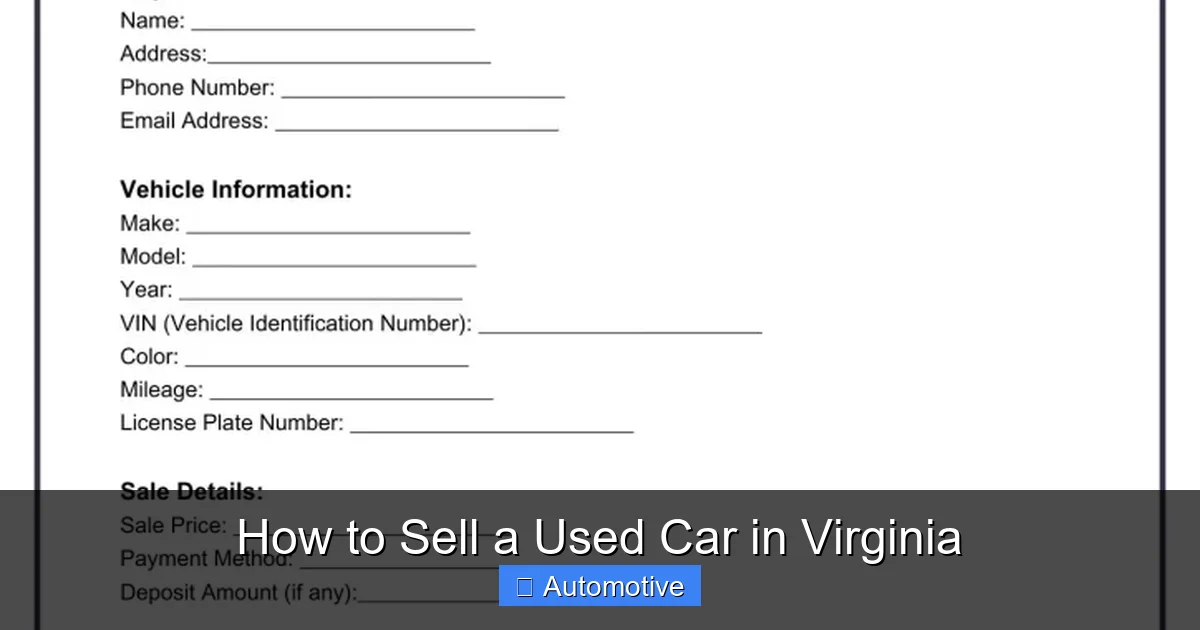
Visual guide about How to Sell a Used Car in Virginia
Image source: billofsaletemplate.us
Before you even think about listing your car, you need to make it as appealing as possible to potential buyers. First impressions matter—especially when someone is considering spending thousands of dollars.
Clean It Inside and Out
Start with a thorough cleaning. Wash the exterior, wax it if possible, and clean the windows inside and out. Don’t forget the wheels and tires—dirty rims can make a car look neglected. For the interior, vacuum every corner, wipe down surfaces, and remove any personal items. A clean car signals that you’ve taken good care of it.
Consider using an odor eliminator if there are lingering smells from pets, smoke, or food. A fresh-smelling car is far more attractive to buyers.
Fix Minor Issues
You don’t need to rebuild the engine, but addressing small problems can increase your car’s value and reduce buyer hesitation. Replace burnt-out bulbs, fix wiper blades, top off fluids, and patch up minor dents or scratches if it’s cost-effective.
If your tires are worn or the brakes are squeaking, consider getting them checked. These are common concerns for buyers and can be deal-breakers if not addressed.
Gather Maintenance Records
Buyers love transparency. Having a folder with service records, receipts for repairs, and oil change logs shows that your car has been well-maintained. If you’ve kept up with regular maintenance, highlight that in your listing.
Even if you don’t have every receipt, try to gather what you can. A history of timely oil changes, brake inspections, or transmission service can give buyers confidence in the vehicle’s reliability.
Get a Pre-Sale Inspection (Optional but Recommended)
While not required in Virginia, a pre-sale inspection from a trusted mechanic can be a powerful selling tool. It gives you an honest assessment of your car’s condition and allows you to fix any issues before listing.
Plus, you can share the inspection report with buyers to prove your car is in good shape. This builds trust and can justify a higher asking price.
Step 2: Determine the Right Price
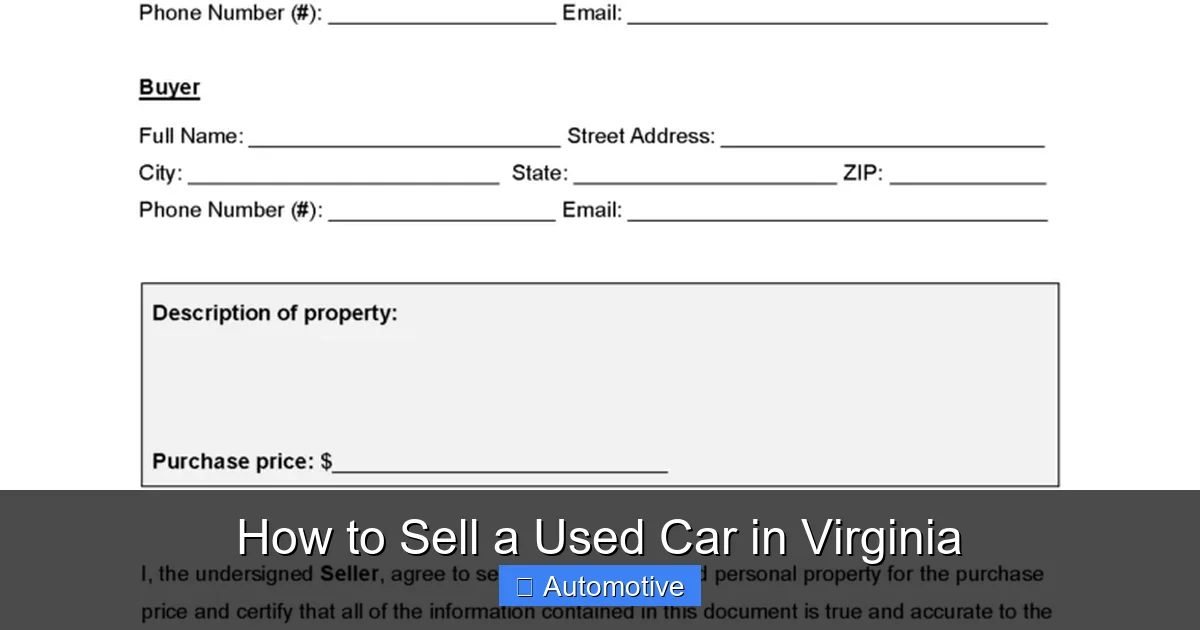
Visual guide about How to Sell a Used Car in Virginia
Image source: esign.com
Pricing your car correctly is one of the most important steps in the selling process. Overprice it, and it may sit on the market for months. Underprice it, and you lose money.
Research Market Value
Use trusted online tools to find the fair market value of your vehicle. Websites like Kelley Blue Book (KBB), Edmunds, and NADA Guides allow you to input your car’s make, model, year, mileage, condition, and location to get an estimated value.
For example, a 2018 Honda Civic with 60,000 miles in good condition might be worth around $16,000 in Virginia, but that can vary based on trim level, features, and local demand.
Compare Similar Listings
Look at active listings for the same or similar cars in your area. Check platforms like Craigslist, Facebook Marketplace, Autotrader, and Cars.com. Note the prices, mileage, condition, and included features.
If similar cars are listed for $15,500–$16,500, pricing yours at $16,000 is reasonable. But if you’re asking $17,000, you’ll need a strong reason—like low mileage or recent upgrades.
Adjust for Condition and Extras
Be honest about your car’s condition. If it has high mileage, cosmetic flaws, or needs repairs, price it accordingly. On the flip side, if it has low mileage, a new transmission, or premium features like leather seats or a sunroof, you can justify a higher price.
Also, consider the season. Convertibles and SUVs may sell faster in spring and summer, while trucks and AWD vehicles are in higher demand in fall and winter.
Set a Competitive Asking Price
Aim to price your car slightly above what you’re willing to accept. This gives you room to negotiate. For instance, if you want $15,500, list it at $16,000. Most buyers will try to negotiate, so starting high helps you land closer to your target.
Avoid pricing too low just to sell fast—unless you’re in a hurry. A fair price attracts serious buyers and reduces the risk of lowball offers.
Step 3: Gather Required Paperwork
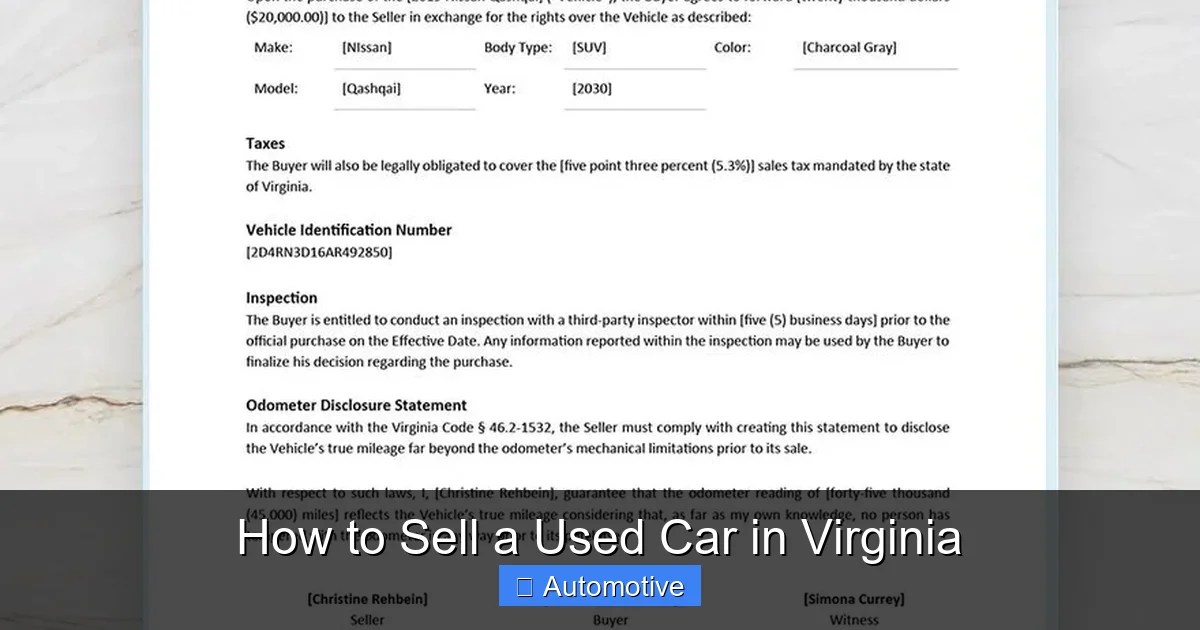
Visual guide about How to Sell a Used Car in Virginia
Image source: images.template.net
In Virginia, selling a car involves more than just handing over the keys. You need the right documents to transfer ownership legally and protect yourself from future liability.
Vehicle Title
The title is the most important document. It proves you own the car and must be signed over to the buyer. Make sure the title is free of liens—if you still owe money on the car, you’ll need to pay it off before selling.
If your title is lost, you can request a duplicate from the Virginia DMV. Fill out Form VSA-15 and pay a small fee. Processing can take a few weeks, so plan ahead.
Bill of Sale
While not always required, a bill of sale is highly recommended. It serves as a legal record of the transaction and includes key details like the sale price, date, and both parties’ information.
You can download a free Virginia bill of sale template from the DMV website or create one using online tools. Both you and the buyer should sign it and keep a copy.
Odometer Disclosure
Federal law requires you to disclose the vehicle’s mileage at the time of sale. This must be included on the title or a separate odometer disclosure statement.
If the odometer is broken or the mileage is unknown, you must state that clearly. Failing to disclose mileage accurately can lead to legal issues.
Safety Inspection Certificate
In Virginia, most vehicles must pass a safety inspection before they can be sold. The inspection checks brakes, lights, tires, steering, and other critical systems.
The inspection must be current—typically within 90 days of the sale. If your car hasn’t been inspected recently, schedule one at a licensed inspection station. The cost is usually around $20.
Note: Vehicles that are over 10 years old or have been inspected within the last 90 days are exempt from this requirement when sold to a private party. However, it’s still a good idea to have a recent inspection to reassure buyers.
Emissions Inspection (If Applicable)
Some areas in Virginia, including Northern Virginia, require emissions testing for vehicles. If your car is registered in Arlington, Fairfax, Loudoun, or Prince William counties, it likely needs an emissions test.
Check with the Virginia DMV or your local inspection station to confirm. If required, get the test done before listing your car.
Release of Liability Form
After the sale, you must notify the DMV that you’re no longer responsible for the vehicle. This is done by submitting a Notice of Sale (Form VSA-15) within 30 days.
This form protects you if the buyer gets a ticket, causes an accident, or fails to register the car. Without it, you could still be held liable.
Step 4: Advertise Your Car Effectively
Once your car is ready and your paperwork is in order, it’s time to find a buyer. Effective advertising increases your chances of a quick and profitable sale.
Choose the Right Platforms
Start with free or low-cost online platforms. Popular options in Virginia include:
– **Craigslist**: Great for local buyers. Post in the “Cars & Trucks” section.
– **Facebook Marketplace**: Easy to use and widely viewed. You can share your listing in local car groups.
– **Autotrader**: Reaches serious buyers but may charge a fee.
– **Cars.com**: Another trusted site with a large audience.
– **OfferUp**: Mobile-friendly and popular in urban areas.
You can also post flyers at local coffee shops, community centers, or workplaces—just be sure to follow local rules.
Write a Compelling Description
Your listing should be clear, honest, and detailed. Include:
– Make, model, year, and trim
– Mileage
– Condition (excellent, good, fair)
– Key features (sunroof, navigation, backup camera, etc.)
– Recent repairs or upgrades
– Reason for selling
– Any known issues
Example:
“Selling my well-maintained 2017 Toyota Camry LE with 58,000 miles. Clean title, no accidents. Just had new tires and brakes installed. Includes Bluetooth, backup camera, and keyless entry. Selling because I’m upgrading to an SUV.”
Avoid vague statements like “runs great” or “needs TLC.” Be specific.
Take High-Quality Photos
Photos are the first thing buyers see. Take pictures in daylight, from multiple angles:
– Front, back, and both sides
– Interior (dashboard, seats, trunk)
– Engine bay
– Tires and wheels
– Any damage or wear (be honest)
Use a clean background and avoid clutter. A well-lit, sharp photo makes your car look cared for.
Respond Promptly to Inquiries
When buyers reach out, reply quickly and professionally. Answer questions honestly and schedule test drives at convenient times.
If someone asks for your VIN or personal info too early, be cautious—this could be a scam.
Step 5: Handle Test Drives and Negotiations
Once you have interested buyers, it’s time to let them see the car in person. Safety and smart negotiation are key.
Meet in a Safe, Public Place
Always meet in a well-lit, public area like a shopping center parking lot or police station. Avoid meeting at your home.
Bring a friend or family member with you, especially if you’re meeting someone alone.
Verify the Buyer’s License
Ask to see the buyer’s driver’s license and verify it’s valid. Make a copy or take a photo for your records.
Never let someone test drive your car without a valid license.
Supervise the Test Drive
You or a trusted friend should accompany the buyer during the test drive. This protects your car and gives you a chance to answer questions.
If the buyer insists on driving alone, it’s a red flag.
Be Prepared to Negotiate
Most buyers will try to negotiate. Know your bottom line and stick to it.
If they offer $15,000 on a $16,000 listing, you can counter with $15,500. Be firm but polite.
If the buyer asks for repairs or extras (like new floor mats), consider whether it’s worth it to close the deal.
Watch Out for Scams
Be wary of:
– Buyers who want to pay with a cashier’s check or wire transfer and ask for a refund.
– People who offer to overpay and ask you to send the difference back.
– Buyers who refuse to meet in person or want to ship the car.
If something feels off, trust your gut and walk away.
Step 6: Complete the Sale and Transfer Ownership
Once you’ve agreed on a price, it’s time to finalize the sale. Do this correctly to avoid legal trouble.
Accept Secure Payment
The safest way to get paid is with cash or a cashier’s check from a local bank. Meet at the bank to verify the check.
Avoid personal checks, wire transfers, or online payments unless you’re certain they’re secure.
Sign the Title Correctly
On the back of the title, fill in the buyer’s name, address, sale price, and date. Sign exactly as your name appears on the front.
If you’re married and the title is in both names, both spouses must sign.
Complete the Bill of Sale
Fill out the bill of sale with all required details. Both you and the buyer should sign it and keep a copy.
Remove License Plates
In Virginia, license plates stay with the seller—not the car. Remove them before handing over the keys.
You can reuse them on your next vehicle or return them to the DMV.
Submit the Notice of Sale
Within 30 days, submit Form VSA-15 (Notice of Sale) to the DMV. You can do this online, by mail, or in person.
This releases you from liability and is required by law.
Cancel Your Insurance
Once the sale is complete, contact your insurance company to cancel or adjust your policy. Don’t cancel too early—wait until the buyer has insured the car.
Final Tips for a Smooth Sale
Selling a car takes effort, but these final tips can make the process smoother:
– Be patient. It may take a few weeks to find the right buyer.
– Be honest. Hiding problems can lead to disputes or legal issues.
– Be safe. Always prioritize your personal safety during meetings and test drives.
– Be organized. Keep all documents in one place for easy access.
With the right approach, selling your used car in Virginia can be a rewarding experience—both financially and personally.
Frequently Asked Questions
Do I need a safety inspection to sell a car in Virginia?
Yes, in most cases. Virginia requires a current safety inspection for vehicles being sold, unless the car is over 10 years old or was inspected within the last 90 days. It’s best to get one to reassure buyers.
Can I sell my car if I still owe money on it?
No, you must pay off the loan first. The lienholder holds the title until the debt is cleared. Once paid, they’ll release the title so you can sell the car.
What happens if I don’t submit the Notice of Sale?
If you fail to submit Form VSA-15 within 30 days, you could remain liable for tickets, accidents, or registration issues involving the car. It’s a legal requirement to protect yourself.
Can I sell my car without a title?
No, you need the title to transfer ownership. If it’s lost, request a duplicate from the Virginia DMV using Form VSA-15. Processing can take a few weeks.
Should I accept a personal check for the sale?
It’s not recommended. Personal checks can bounce. Use cash or a verified cashier’s check from a local bank to ensure the payment is secure.
Can I sell my car to a dealer instead of a private buyer?
Yes, but you’ll likely get less money than selling privately. Dealers need to make a profit, so they’ll offer less. However, it’s faster and requires less effort on your part.