
Does a Car Dealer Have to Sell at Advertised Price

Car dealers are not legally required to sell vehicles at the advertised price in most cases. Advertisements are typically considered invitations to negotiate, not binding offers. However, deceptive pricing practices can violate consumer protection laws, so it’s important to know your rights.
Key Takeaways
- Advertised prices are usually not binding: Most car ads are treated as invitations to negotiate, not firm offers, meaning dealers can refuse to honor them.
- Deceptive advertising is illegal: If a dealer advertises a price but refuses to sell without hidden fees or conditions, it may violate consumer protection laws.
- State laws vary significantly: Some states have “cooling-off” rules or require clear disclosure of fees, so check your local regulations.
- Online ads may have different rules: Digital listings sometimes include disclaimers that allow price changes, but bait-and-switch tactics are still prohibited.
- Negotiation is expected: The advertised price is often a starting point, and buyers should be prepared to haggle or walk away.
- Document everything: Save ads, emails, and quotes to support your case if a dealer refuses to honor a clearly stated price.
- Know when to walk away: If a dealer won’t honor a legitimate advertised price, consider it a red flag and shop elsewhere.
📑 Table of Contents
- Does a Car Dealer Have to Sell at Advertised Price? The Truth Behind Car Ads
- Understanding the Legal Framework: Ads vs. Offers
- State Laws and Consumer Protection Regulations
- Online Ads vs. In-Person Sales: Does It Make a Difference?
- Real-Life Scenarios: When Dealers Refuse Advertised Prices
- How to Protect Yourself When Car Shopping
- When You Might Have a Legal Case
- Conclusion: Be Smart, Be Prepared, Be Protected
Does a Car Dealer Have to Sell at Advertised Price? The Truth Behind Car Ads
You’ve probably seen them: flashy banners, radio spots, and online ads promising a brand-new car for an unbelievably low price. “2024 Sedan – Only $19,999!” or “Zero Down, $199/Month!” It sounds too good to be true—and often, it is. But what happens when you show up at the dealership, excited and ready to buy, only to be told the price has changed? Does a car dealer have to sell at the advertised price?
The short answer? Not necessarily.
While it might feel unfair or even deceptive, most car advertisements are not legally binding offers. Instead, they’re considered “invitations to negotiate.” This means the dealer can legally refuse to sell you the car at the advertised price—unless specific conditions are met. Understanding this distinction is crucial for any car buyer who wants to avoid frustration and protect their wallet.
In this guide, we’ll break down the legal landscape, explain when dealers *must* honor advertised prices, and give you practical tips to navigate the car-buying process with confidence. Whether you’re shopping online, responding to a TV ad, or walking into a dealership, knowing your rights can save you thousands.
Understanding the Legal Framework: Ads vs. Offers
Visual guide about Does a Car Dealer Have to Sell at Advertised Price
Image source: templatenum.com
To understand whether a dealer must sell at an advertised price, we need to start with a basic legal concept: the difference between an advertisement and a formal offer.
In contract law, an advertisement is generally not considered a binding offer. Instead, it’s treated as an “invitation to treat”—a way for the seller to attract potential buyers. Think of it like a store window display. Just because a shirt is priced at $20 in the window doesn’t mean the store has to sell it to you for $20 if they change their mind. The same principle applies to car dealers.
Why Ads Aren’t Usually Binding
Courts have consistently ruled that advertisements are not offers because they’re typically too vague or conditional. For example, a TV ad might say, “Starting at $19,999,” but that price could apply only to a base model with specific financing, trade-in requirements, or limited availability. Without clear terms, the ad doesn’t create a legal obligation.
Additionally, most ads include disclaimers like “Prices subject to change” or “See dealer for details.” These phrases further weaken any claim that the advertised price is a firm offer. They give the dealer flexibility to adjust pricing based on market conditions, inventory, or customer qualifications.
When an Ad Might Become a Binding Offer
There are rare exceptions. If an advertisement is extremely specific—listing a particular vehicle identification number (VIN), exact price, and clear terms like “first come, first served”—it *could* be interpreted as a binding offer. But even then, courts look at the overall context. If the ad includes disclaimers or conditions, the dealer likely still has the right to refuse the sale.
For example, in a 2018 case in California, a customer sued a dealership after being denied a car advertised online for $15,000. The ad included the VIN and said “Price firm.” However, the dealer argued the price was a mistake and had been corrected before the customer arrived. The court sided with the dealer, noting that even specific ads can be retracted if there’s evidence of a genuine error.
State Laws and Consumer Protection Regulations
Visual guide about Does a Car Dealer Have to Sell at Advertised Price
Image source: steamcdn-a.akamaihd.net
While federal law sets general guidelines, state laws play a major role in determining whether a dealer must honor an advertised price. Some states have stronger consumer protection laws that limit how dealers can use pricing tactics.
States with Stronger Protections
In states like New York, Massachusetts, and California, consumer protection agencies actively monitor deceptive advertising. These states often require dealers to clearly disclose all fees, financing terms, and conditions. If a dealer advertises a price but adds hidden charges at the last minute, they may be violating state law.
For instance, in New York, the “Used Car Lemon Law” and broader consumer fraud statutes prohibit bait-and-switch tactics. If a dealer advertises a car at a low price but refuses to sell it unless you agree to expensive add-ons (like extended warranties or paint protection), that could be illegal.
States with Weaker Enforcement
In contrast, some states have minimal regulations, leaving buyers more vulnerable. In these areas, dealers may change prices freely, as long as they don’t engage in outright fraud. This doesn’t mean you have no recourse—just that you’ll need to be more proactive in protecting yourself.
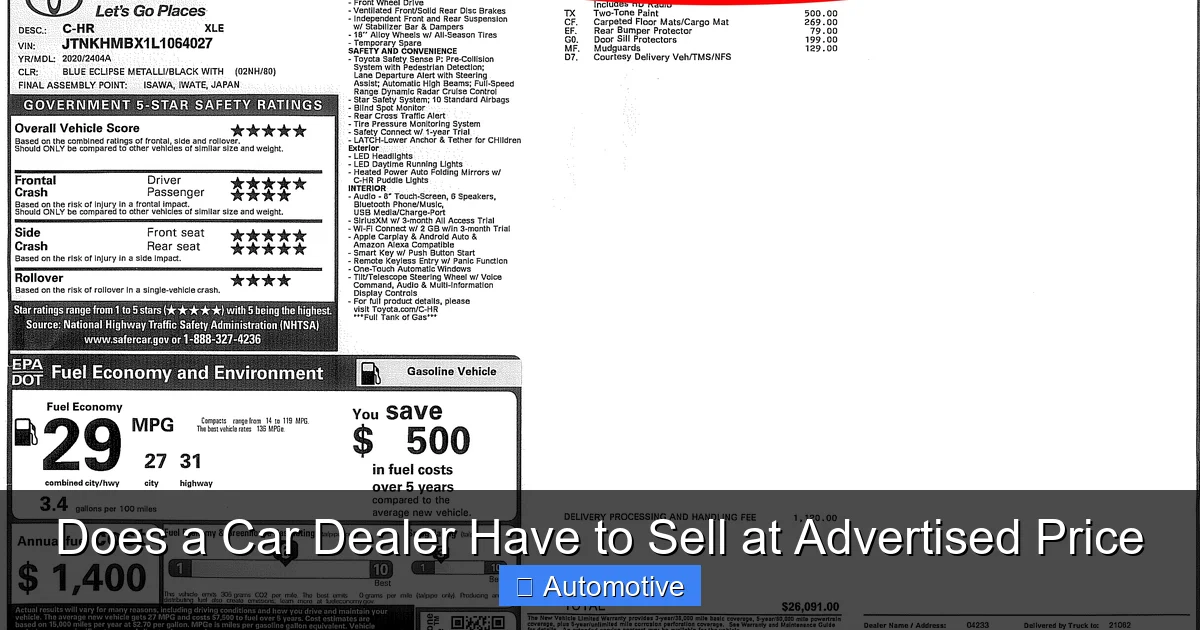
Always check your state’s attorney general website or consumer affairs department for specific rules. Many states also require dealers to post “Monroney stickers” (window stickers) that list the manufacturer’s suggested retail price (MSRP) and all standard features. While this doesn’t guarantee the advertised sale price, it gives you a baseline for negotiation.
Online Ads vs. In-Person Sales: Does It Make a Difference?

Visual guide about Does a Car Dealer Have to Sell at Advertised Price
Image source: costaide.com
With more car shopping happening online, it’s important to understand how digital ads differ from traditional print or TV ads—and whether they carry more legal weight.
Digital Listings and Disclaimers
Most online car listings include disclaimers like “Prices may not include all fees” or “Contact dealer for final pricing.” These are designed to protect the dealer from being held to a specific number. Even if a car is listed at $22,500 on a third-party site like Autotrader or Cars.com, the dealer can still adjust the price when you arrive.
However, some online platforms have policies that require dealers to honor listed prices—at least initially. For example, CarGurus and TrueCar may remove or flag listings if dealers consistently refuse to honor advertised prices. But these are platform rules, not laws, so they don’t guarantee you’ll get the car at the listed price.
Bait-and-Switch: When Online Ads Cross the Line
While most online ads are not binding, bait-and-switch tactics are illegal under both federal and state laws. This occurs when a dealer advertises a low-priced car to lure customers in, only to claim it’s “just sold” and then push a more expensive model.
For example, imagine you see a 2023 SUV advertised online for $24,999. You call, confirm it’s available, and drive two hours to the dealership. When you arrive, the salesperson says, “Oh, that one just sold last night. But we have a similar model for $29,999.” If this happens repeatedly, it could be a bait-and-switch scheme.
The Federal Trade Commission (FTC) prohibits such practices under the FTC Act, which bans “unfair or deceptive acts or practices.” If you suspect bait-and-switch, you can file a complaint with the FTC or your state’s consumer protection agency.
Real-Life Scenarios: When Dealers Refuse Advertised Prices
Let’s look at a few common situations where buyers expect the advertised price—only to be disappointed.
Scenario 1: The “Too Good to Be True” Deal
You see a radio ad: “2024 Hatchback – Only $17,999! Zero down, $149/month!” You arrive at the dealership, but the salesperson says the $17,999 price requires a trade-in worth $5,000 and excellent credit. Without those, the price jumps to $23,000.
This is a classic example of conditional pricing. The ad didn’t lie—it just didn’t disclose all the requirements upfront. While frustrating, it’s usually legal unless the conditions were hidden or misleading.
Scenario 2: The Online Listing That Vanishes
You find a used car on a dealer’s website for $12,500. You email the dealer, who confirms availability and price. But when you arrive, they say the price was a “website error” and the car is now $14,200.
If the dealer can prove it was a genuine mistake—like a typo or outdated listing—they may not be obligated to honor the price. However, if they knew the price was wrong and still used it to attract customers, that could be deceptive.
Scenario 3: The “Add-Ons or No Sale” Tactic
A dealer advertises a car for $20,000 but refuses to sell it unless you purchase $3,000 in add-ons like rustproofing, fabric protection, or a GPS tracker. This is a red flag.
While dealers can suggest add-ons, they cannot make them mandatory. If they refuse to sell the car at the advertised price without extras, it may violate consumer protection laws. You have the right to walk away.
How to Protect Yourself When Car Shopping
Now that you know dealers aren’t always required to honor advertised prices, here’s how to shop smarter and avoid getting taken advantage of.
1. Read the Fine Print
Always check for disclaimers in ads. Look for phrases like “with approved credit,” “after rebates,” or “plus taxes and fees.” These indicate the advertised price isn’t the final number.
2. Get Everything in Writing
If a dealer quotes you a price—whether over the phone, email, or in person—ask for a written quote. This creates a paper trail and increases the chances they’ll honor it.
3. Know the Market Value
Use tools like Kelley Blue Book (KBB), Edmunds, or TrueCar to research fair market prices for the car you want. This helps you spot unrealistic deals and negotiate from a position of strength.
4. Be Wary of “Mandatory” Add-Ons
If a dealer insists on add-ons to get the advertised price, push back. Ask, “Can I buy the car at this price without the extras?” If the answer is no, consider it a warning sign.
5. Don’t Be Afraid to Walk Away
The best leverage you have is your willingness to leave. If a dealer won’t honor a legitimate advertised price, thank them and go to another dealership. There are plenty of honest dealers out there.
6. Report Suspicious Practices
If you believe a dealer engaged in deceptive advertising, file a complaint with the FTC, your state attorney general, or the Better Business Bureau (BBB). Your report could help protect other buyers.
When You Might Have a Legal Case
While most advertised prices aren’t binding, there are situations where you may have legal recourse.
Clear Misrepresentation
If a dealer knowingly advertised a false price to lure customers, that could constitute fraud. For example, if they advertised a car for $15,000 but never had any intention of selling it at that price, you might have a case.
Violation of State Laws
Some states require dealers to honor advertised prices if certain conditions are met. In Illinois, for instance, the Motor Vehicle Retail Installment Sales Act includes provisions that may protect consumers from sudden price changes.
Written Agreements
If you signed a purchase agreement or received a written quote that includes the advertised price, the dealer may be legally bound to honor it. Contracts override general advertising rules.
If you believe you’ve been wronged, consult a consumer rights attorney. Many offer free consultations and work on a contingency basis, meaning you only pay if you win.
Conclusion: Be Smart, Be Prepared, Be Protected
So, does a car dealer have to sell at the advertised price? In most cases, the answer is no—but that doesn’t mean you’re powerless. Advertised prices are typically starting points, not guarantees. Dealers have the right to adjust pricing based on qualifications, availability, and market conditions.
However, they cannot engage in deceptive practices like bait-and-switch, hidden fees, or mandatory add-ons. Knowing the difference between a legitimate negotiation and outright fraud is key to a successful car-buying experience.
The best strategy? Go in prepared. Research prices, read the fine print, get quotes in writing, and don’t be afraid to walk away. Remember: the advertised price is just the beginning of the conversation—not the end.
By understanding your rights and the legal landscape, you can shop with confidence, avoid costly mistakes, and drive away in the car you want—at a price that’s fair.
Frequently Asked Questions
Can a car dealer change the price after I arrive?
Yes, in most cases. Advertised prices are usually not binding, so dealers can adjust pricing based on qualifications, inventory, or market conditions. However, they cannot use bait-and-switch tactics or hide fees.
What should I do if a dealer refuses to honor an advertised price?
Ask for a written explanation and review the ad for disclaimers. If the refusal seems deceptive, file a complaint with the FTC or your state consumer protection agency. You can also walk away and shop elsewhere.
Are online car listings legally binding?
Generally, no. Most online listings include disclaimers that allow price changes. However, if a dealer confirms a price in writing or engages in bait-and-switch, you may have grounds for a complaint.
Can I sue a dealer for not honoring an advertised price?
It depends. If the ad was misleading or part of a pattern of deceptive behavior, you might have a case. Consult a consumer rights attorney to evaluate your situation.
Do all states have the same rules about advertised car prices?
No. State laws vary widely. Some states have strong consumer protections, while others offer minimal oversight. Always check your local regulations.
Is it illegal for a dealer to add mandatory fees to an advertised price?
Yes, if the fees weren’t disclosed upfront. Dealers must clearly state all costs. Adding hidden or mandatory fees to avoid honoring an advertised price may violate consumer protection laws.