
Sell a Car in Washington State

Selling a car in Washington State doesn’t have to be complicated. Whether you’re upgrading, downsizing, or just ready to part ways with your vehicle, this guide walks you through every step—from preparing your car to finalizing the sale legally and safely. Get the best price while avoiding common pitfalls with our expert tips.
Thinking about selling your car in Washington State? You’re not alone. Whether you’re upgrading to a newer model, switching to an electric vehicle, or simply no longer need a second car, selling a vehicle can be both exciting and stressful. The good news? With the right preparation and knowledge, you can sell your car quickly, safely, and for a fair price—without the headaches.
Washington State has specific rules and requirements when it comes to transferring vehicle ownership, so it’s important to know what’s expected of you as a seller. From paperwork to pricing to safety, every detail matters. This guide will walk you through the entire process step by step, so you can sell your car with confidence and peace of mind.
Key Takeaways
- Clean and detail your car: A well-maintained vehicle sells faster and for more money. Wash, wax, vacuum, and fix minor cosmetic issues.
- Set a competitive price: Research Kelley Blue Book and Edmunds to price your car fairly based on year, mileage, condition, and local market trends.
- Gather all required documents: You’ll need the title, odometer disclosure, bill of sale, and emissions test (if applicable) to complete the sale legally.
- Advertise effectively: Use high-quality photos, write a clear description, and list on trusted platforms like Craigslist, Facebook Marketplace, or Autotrader.
- Meet buyers safely: Choose public places, bring a friend, and never share personal info like your home address or Social Security number.
- Complete the transfer properly: Sign the title correctly, submit a Notice of Sale to the DOL, and keep copies of all paperwork for your records.
- Consider selling to a dealer or online buyer: For a faster, no-hassle sale, trade-in or sell to companies like CarMax, Carvana, or Vroom.
📑 Table of Contents
- Why Sell Your Car in Washington State?
- Step 1: Prepare Your Car for Sale
- Step 2: Determine the Right Price
- Step 3: Gather Required Documents
- Step 4: Advertise Your Car Effectively
- Step 5: Handle Test Drives and Negotiations
- Step 6: Complete the Sale and Transfer Ownership
- Alternative Selling Options
- Common Mistakes to Avoid
- Final Tips for a Successful Sale
Why Sell Your Car in Washington State?
There are many reasons people choose to sell their cars. Maybe your vehicle is getting old and repairs are piling up. Perhaps you’ve paid off your loan and want to pocket the equity. Or maybe you’re moving out of state and don’t want the hassle of shipping a car. Whatever your reason, selling your car in Washington State offers several advantages.
First, Washington has a strong used car market. With cities like Seattle, Spokane, and Tacoma, there’s consistent demand for reliable vehicles—especially fuel-efficient models, trucks, and SUVs. Plus, the state’s growing population and active online communities make it easier than ever to find a buyer quickly.
Another benefit? Washington doesn’t charge sales tax on private vehicle sales. That means the buyer pays the full price you agree on—no surprise fees at the end. This can make your car more attractive compared to states with high sales taxes.
But before you list your car, it’s important to understand the process. Let’s break it down.
Step 1: Prepare Your Car for Sale
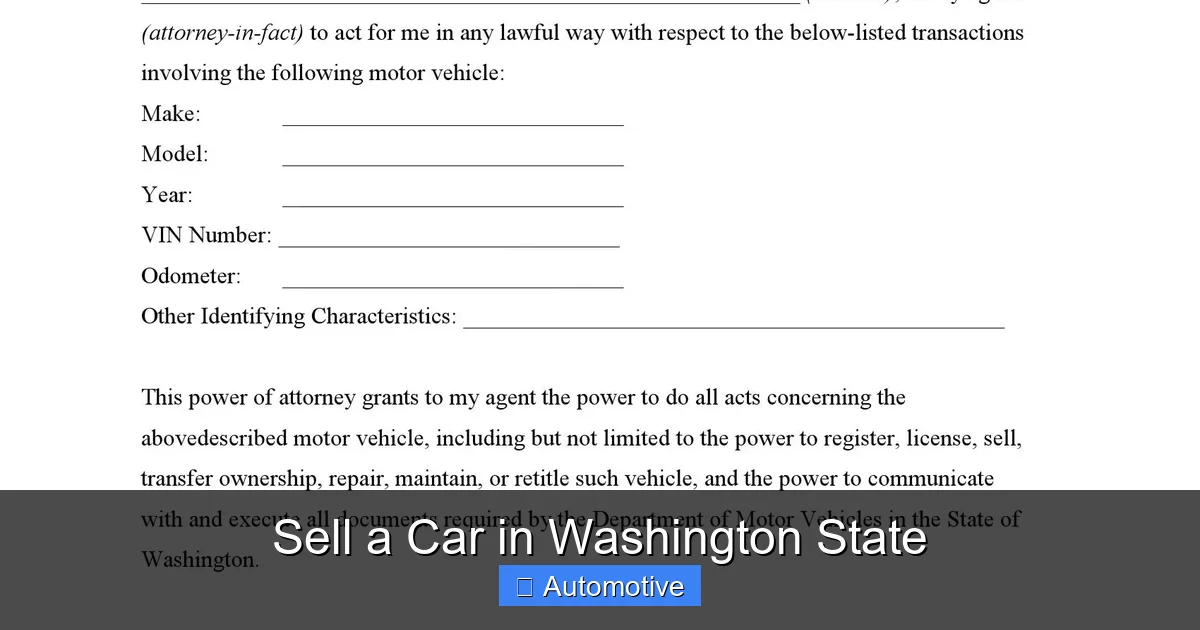
Visual guide about Sell a Car in Washington State
Image source: formspal.com
You wouldn’t show up to a job interview in wrinkled clothes, right? The same goes for selling your car. First impressions matter. A clean, well-maintained vehicle not only sells faster but also commands a higher price.
Clean and Detail Your Car
Start with a thorough wash—inside and out. Use a high-quality car shampoo, wax the exterior, and clean the windows. Don’t forget the tires and rims. A shiny car looks newer and well-cared-for.
Inside, vacuum the carpets and seats. Wipe down dashboards, door panels, and cup holders. Remove any personal items, trash, or clutter. If your car has unpleasant odors, consider using an odor eliminator or having the interior professionally detailed.
Even small touches like replacing burnt-out bulbs or fixing a cracked windshield can make a big difference. Buyers notice these details—and they can use them to negotiate the price down.
Fix Minor Issues
You don’t need to spend thousands on repairs, but addressing minor issues can boost your car’s value. Replace worn wiper blades, fix a broken radio, or patch a small dent. These fixes cost little but show buyers the car has been maintained.
If your car needs major repairs—like a transmission or engine work—it’s usually better to sell it “as-is” and adjust the price accordingly. Be honest about the condition to avoid disputes later.
Gather Maintenance Records
Buyers love seeing proof that a car has been well-maintained. Gather your service records, receipts, and any warranty information. If you’ve kept up with oil changes, tire rotations, and inspections, let the buyer know.
This builds trust and can justify a higher asking price. For example, a 2018 Honda Civic with full service history and low mileage will sell faster than one with no records.
Step 2: Determine the Right Price
Pricing your car correctly is one of the most important steps in the selling process. Overprice it, and it sits on the market for months. Underprice it, and you lose money. So how do you find that sweet spot?
Research Market Value
Use trusted pricing tools like Kelley Blue Book (KBB), Edmunds, and NADA Guides. Enter your car’s make, model, year, mileage, trim level, and condition. These tools will give you a range—usually “trade-in,” “private party,” and “dealer retail” values.
For private sales, aim for the “private party” value. This is what similar cars are selling for in your area. For example, a 2019 Toyota RAV4 with 60,000 miles in good condition might be worth $22,000–$24,000 in the Seattle area.
Check Local Listings
Don’t rely solely on online tools. Look at actual listings on Craigslist, Facebook Marketplace, and Autotrader. See what similar cars are priced at and how long they’ve been listed. If a car has been up for weeks, it might be overpriced.
Adjust your price based on demand. For instance, trucks and SUVs sell faster in rural areas, while compact cars and hybrids are popular in cities.
Be Realistic
It’s tempting to add a little extra for sentimental value, but buyers won’t pay for that. Be honest about your car’s condition. If it has high mileage, cosmetic flaws, or needs repairs, price it accordingly.
A good rule of thumb: if you’re not getting inquiries within a week, consider lowering the price by $500–$1,000.
Step 3: Gather Required Documents
Selling a car in Washington State requires specific paperwork. Missing documents can delay the sale or even lead to legal issues. Here’s what you’ll need.
Vehicle Title
The title is the most important document. It proves you own the car and have the right to sell it. Make sure the title is signed correctly—your signature must match the name on the title.
If the title is lost, you’ll need to apply for a duplicate from the Washington State Department of Licensing (DOL). This can take a few weeks, so start early.
Odometer Disclosure
Federal law requires you to disclose the vehicle’s mileage at the time of sale. This must be included on the title or a separate form. If the odometer is broken or the mileage is unknown, you must state that clearly.
For vehicles 10 years old or newer, the odometer disclosure is mandatory. Older cars may be exempt, but it’s still a good idea to include it.
Bill of Sale
While not always required, a bill of sale protects both you and the buyer. It includes the sale price, date, vehicle details, and signatures of both parties.
You can download a free Washington State bill of sale form from the DOL website. Keep a copy for your records.
Emissions Test (If Required)
Washington requires emissions testing in certain counties, including King, Pierce, Snohomish, and others. If your car is registered in one of these areas, it must pass an emissions test within 90 days of sale.
Check the DOL website to see if your county requires testing. If it does, get the test done before listing your car. A failed test can scare off buyers.
Release of Liability
After the sale, you must file a Notice of Sale (Form TD-33) with the DOL. This releases you from liability if the buyer gets a ticket or causes an accident after the sale.
You can submit this form online, by mail, or in person. Do it within 10 days of the sale to avoid penalties.
Step 4: Advertise Your Car Effectively
Now that your car is ready and priced, it’s time to find a buyer. The way you advertise can make or break your sale.
Choose the Right Platforms
Popular options include:
– Craigslist: Great for local buyers, but be cautious of scams.
– Facebook Marketplace: Easy to use and widely trusted.
– Autotrader: Ideal for higher-value cars; attracts serious buyers.
– OfferUp and Letgo: Mobile-friendly apps with local reach.
List your car on at least two platforms to maximize exposure.
Write a Clear, Honest Description
Your ad should include:
– Year, make, model, and trim
– Mileage
– Condition (excellent, good, fair, needs work)
– Key features (sunroof, AWD, backup camera, etc.)
– Recent repairs or maintenance
– Reason for selling
Avoid vague statements like “runs great.” Instead, say, “Just had new brakes and tires installed in March 2024.”
Use High-Quality Photos
Take photos in good lighting—preferably outdoors on a sunny day. Shoot from multiple angles: front, back, sides, interior, trunk, and engine bay.
Clean the car before taking pictures. A dirty car in photos looks neglected, even if it’s mechanically sound.
Include close-ups of any flaws, like scratches or dents. Being upfront builds trust and reduces the chance of disputes.
Respond Promptly to Inquiries
When buyers reach out, reply quickly—within a few hours if possible. Answer questions honestly and offer to schedule a test drive.
Avoid giving out personal information like your home address or phone number until you’re ready to meet. Use email or messaging apps for initial contact.
Step 5: Handle Test Drives and Negotiations
Once you have interested buyers, it’s time to meet. This is where many sellers make mistakes—so let’s avoid them.
Meet in a Safe, Public Place
Always meet in a well-lit, public area like a shopping mall parking lot, police station, or busy gas station. Never meet at your home or a remote location.
Bring a friend or family member with you. Let someone know where you’re going and when you expect to return.
Verify the Buyer’s Identity
Ask to see a valid driver’s license. Make sure the name matches the one they’re using to contact you. Be wary of buyers who refuse to show ID or seem evasive.
Allow a Test Drive—But Stay in Control
Let the buyer drive the car, but go with them. This protects you if something goes wrong and gives you a chance to answer questions.
Set ground rules: no highway driving, no passengers unless they’re serious buyers, and keep the drive under 15–20 minutes.
Negotiate Fairly
Buyers will almost always try to negotiate. Be prepared. Know your bottom line—the lowest price you’re willing to accept.
If the offer is too low, explain why your car is worth more. Mention recent repairs, low mileage, or high demand for that model.
Avoid getting emotional. Stay calm and professional, even if the buyer is pushy.
Step 6: Complete the Sale and Transfer Ownership
Once you’ve agreed on a price, it’s time to finalize the sale. Do this correctly to protect yourself legally.
Sign the Title Correctly
On the back of the title, fill in the buyer’s name, address, and sale price. Sign your name exactly as it appears on the front.
If you’re married and the title is in both names, both spouses must sign. Use blue or black ink—no pencil or corrections.
Complete the Bill of Sale
Fill out the bill of sale with the same details: buyer and seller names, address, vehicle info, sale price, and date. Both parties should sign and keep a copy.
Collect Payment Securely
Accept cash, a cashier’s check, or a bank transfer. Personal checks can bounce, so avoid them unless you know the buyer.
If using a cashier’s check, verify it with the bank before handing over the keys. Scammers sometimes use fake checks.
Hand Over the Keys and Documents
Give the buyer the keys, owner’s manual, spare keys, and any extra documentation (service records, warranty info, etc.).
Remove your license plates. In Washington, plates stay with the seller unless you’re transferring them to a new vehicle.
File the Notice of Sale
Within 10 days, submit Form TD-33 to the DOL. This protects you from liability after the sale.
You can do this online at the DOL website. Keep your confirmation number as proof.
Cancel Your Insurance
Once the sale is complete, contact your insurance company to cancel or adjust your policy. Don’t cancel too early—wait until the buyer has registered the car.
Alternative Selling Options
If you want a faster, no-hassle sale, consider these alternatives to private selling.
Sell to a Dealership
Trade in your car when buying a new one, or sell it directly to a used car dealer. You won’t get top dollar, but it’s quick and convenient.
Dealers often offer free appraisals. Use multiple quotes to compare offers.
Sell to an Online Buyer
Companies like CarMax, Carvana, Vroom, and Shift buy cars directly from owners. They offer online quotes, free inspections, and fast payment.
These services are ideal if you want to sell in a day or two. Just be prepared for a lower offer than a private sale.
Sell at Auction
Public or online auctions can attract competitive bidding, especially for rare or high-demand vehicles.
However, auctions often charge fees, and there’s no guarantee your car will sell. Research the auction house first.
Common Mistakes to Avoid
Even experienced sellers make errors. Here are some to watch out for.
Overpricing the Car
Setting a price too high based on emotion or outdated research will scare off buyers. Be realistic.
Skipping the Emissions Test
If your county requires it, don’t skip the test. A failed test can kill a sale.
Not Protecting Personal Information
Never give out your Social Security number, bank details, or home address. Scammers often pose as buyers.
Failing to File the Notice of Sale
This is a legal requirement. Skipping it could leave you liable for tickets or accidents.
Accepting Risky Payment Methods
Avoid wire transfers, gift cards, or personal checks. Stick to cash or verified cashier’s checks.
Final Tips for a Successful Sale
Selling a car in Washington State doesn’t have to be stressful. Follow these final tips for a smooth experience.
– Be honest about your car’s condition. Transparency builds trust.
– Price competitively. Check local listings regularly.
– Advertise early and widely. The sooner you list, the faster it sells.
– Stay safe during meetings. Always meet in public.
– Keep all paperwork organized. You’ll need it for your records.
– Consider professional help if needed. Some sellers hire brokers or use consignment services.
With the right approach, you can sell your car quickly, safely, and for a fair price. Whether you choose a private sale or go through a dealer, knowing the process gives you the upper hand.
So take a deep breath, gather your documents, and get ready to hand over the keys. Your next adventure is just around the corner.
Frequently Asked Questions
Do I need a smog test to sell my car in Washington State?
Yes, if your vehicle is registered in a county that requires emissions testing—such as King, Pierce, or Snohomish. The test must be completed within 90 days of the sale. Check the DOL website to confirm if your area requires it.
Can I sell my car without a title in Washington?
No, you must have a valid title to sell your car. If the title is lost or damaged, apply for a duplicate from the Washington State Department of Licensing before listing the vehicle.
How long do I have to report a car sale to the DOL?
You must file a Notice of Sale (Form TD-33) within 10 days of the sale. This protects you from liability for any incidents involving the vehicle after the transfer.
Should I keep my license plates when selling my car?
Yes, in Washington State, license plates remain with the seller unless you’re transferring them to a new vehicle. Remove the plates before handing over the car.
What payment methods are safest when selling a car?
Cash and cashier’s checks from a local bank are the safest options. Avoid personal checks, wire transfers, or gift cards, as they can be fraudulent.
Can I sell my car if it still has a loan on it?
Yes, but the loan must be paid off first. Contact your lender to get a payoff amount. Once the loan is cleared, the title will be released to you, and you can proceed with the sale.
