
Sell My Car to Carfax

Selling your car directly to Carfax isn’t an option—but Carfax offers a powerful Buyback Guarantee that protects buyers and boosts your vehicle’s resale value. This guide explains how the program works, what it covers, and how you can leverage it to sell your car faster and with confidence.
So, you’ve typed “sell my car to Carfax” into Google—maybe hoping for a quick cash offer or a hassle-free trade-in. It’s a common search, especially when you’re tired of dealing with tire-kickers on Craigslist or lowball offers from dealerships. But here’s the truth: **you can’t actually sell your car directly to Carfax**. Carfax isn’t a car buyer or dealership. Instead, it’s a leading provider of vehicle history reports—those detailed documents that show accidents, title issues, odometer readings, and service records.
That said, Carfax plays a huge role in the car-selling process. In fact, having a clean Carfax report can be one of your biggest assets when trying to sell your vehicle. Why? Because buyers trust transparency. When someone sees a well-documented history with no red flags, they’re more likely to make an offer—and often at a higher price. So while you won’t be handing over your keys to a Carfax employee, understanding how Carfax works can help you sell your car faster, smarter, and with more confidence.
In this guide, we’ll clear up the confusion around “sell my car to Carfax,” explain what Carfax really does, and show you how to use its tools and guarantees to your advantage. Whether you’re selling a used sedan, a family SUV, or a classic truck, knowing how to leverage Carfax can make all the difference in getting top dollar and avoiding headaches.
Key Takeaways
- Carfax doesn’t buy cars directly: You can’t “sell my car to Carfax” like you would to CarMax or Carvana—Carfax is a data and reporting service, not a dealership.
- Carfax Buyback Guarantee protects buyers: If a reported accident or damage is missing from a Carfax report, the company may buy back the vehicle up to $50,000.
- A clean Carfax report increases resale value: Buyers trust vehicles with transparent histories, making your car easier to sell at a higher price.
- You must provide accurate records: To qualify for the Buyback Guarantee, sellers should maintain and share service and repair documentation.
- Private sellers benefit most: The guarantee adds credibility when selling directly to individuals, reducing buyer hesitation.
- Not all vehicles qualify: The guarantee applies only to cars with a valid Carfax report and specific types of undisclosed damage.
- Use Carfax to market your vehicle: Include the report in your listing to attract serious buyers and justify your asking price.
📑 Table of Contents
What Is Carfax and How Does It Work?
Carfax is a consumer-focused company that collects and compiles vehicle history data from thousands of sources—including DMVs, insurance companies, repair shops, and law enforcement agencies. When you request a Carfax report (either for free through certain dealerships or for a small fee online), you get a detailed snapshot of a vehicle’s past. This includes:
– Accident history
– Title status (clean, salvage, rebuilt, etc.)
– Odometer readings over time
– Number of previous owners
– Service and maintenance records
– Recall information
– Flood or fire damage reports
Think of Carfax as the background check for cars. Just like you’d want to know someone’s credit score before lending them money, buyers want to know a car’s history before handing over cash.
But here’s the key point: **Carfax doesn’t own cars, set prices, or make purchase offers**. It’s purely an information service. So when people search “sell my car to Carfax,” they’re usually misunderstanding the company’s role. You can’t walk into a Carfax office with your keys and walk out with a check. However, Carfax does offer something even more valuable to sellers: credibility.
A clean, well-documented Carfax report acts like a seal of approval. It tells buyers, “This car has been cared for, and there are no hidden surprises.” That kind of trust can shorten your selling timeline and help you negotiate a better price.
How Carfax Collects Data
Carfax doesn’t generate its own data—it aggregates information from over 100,000 sources across the U.S. and Canada. These include:
– State motor vehicle departments
– Auto auctions
– Collision repair facilities
– Fleet and rental companies
– Insurance claims databases
Every time a car is involved in an accident, gets repaired, changes ownership, or has its odometer rolled back, that information can end up in the Carfax system—usually within a few weeks. However, not all events are reported immediately. For example, a minor fender bender handled privately (without insurance) might never appear on a Carfax report. That’s why it’s important for sellers to keep their own records.
Why Buyers Rely on Carfax Reports
In today’s used car market, buyers are more cautious than ever. With stories of odometer fraud, flood-damaged vehicles, and hidden accidents making headlines, shoppers want proof that they’re not buying a lemon. A Carfax report provides that peace of mind.
According to a 2023 survey by Cox Automotive, over 70% of used car buyers said they would walk away from a deal if the vehicle didn’t have a clean Carfax report. Even more telling: vehicles with a clean history report sell for an average of 5–10% more than similar models with questionable backgrounds.
This is why including a Carfax report in your listing—whether you’re selling on Facebook Marketplace, Autotrader, or Craigslist—can give you a serious edge. It’s not just about proving your car is safe; it’s about proving you’re an honest seller.
Can You Actually Sell Your Car to Carfax?
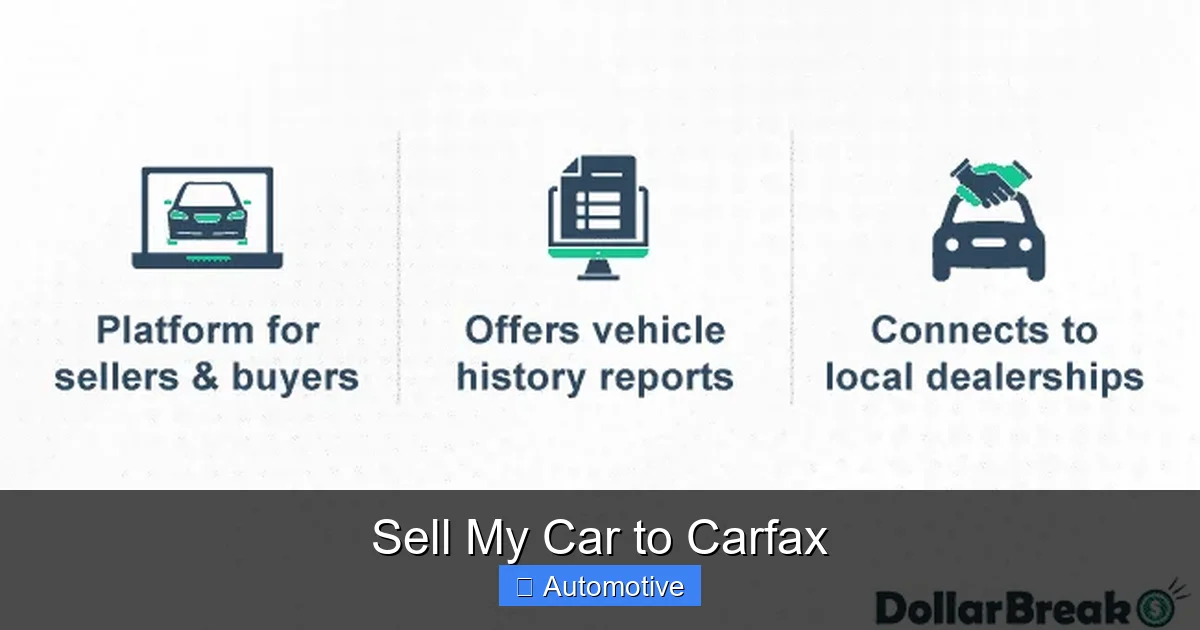
Visual guide about Sell My Car to Carfax
Image source: dollarbreak.com
Let’s get straight to the point: **No, you cannot sell your car directly to Carfax**. Carfax is not a car buyer, dealer, or marketplace. It doesn’t have physical locations where you can drop off your vehicle, nor does it offer instant cash quotes like CarMax or Vroom.
So why do so many people search “sell my car to Carfax”? It’s likely because of confusion with other services or misleading online ads. Some third-party websites claim to “sell your car through Carfax,” but these are usually lead-generation sites that connect you with local dealers—not Carfax itself.
That said, Carfax does offer a program that indirectly supports sellers: the **Carfax Buyback Guarantee**. While it doesn’t let you sell your car to Carfax, it can make your vehicle more attractive to buyers—and that’s almost as good.
Understanding the Carfax Buyback Guarantee
The Carfax Buyback Guarantee is a promise to buyers: if certain types of damage or accidents are missing from a Carfax report, and those issues are later discovered, Carfax may buy back the vehicle—up to $50,000.
Here’s how it works:
1. A buyer purchases a used car with a Carfax report.
2. After the sale, they discover significant damage (like frame damage or flood exposure) that wasn’t listed in the report.
3. If the damage was reported to Carfax’s data sources but didn’t appear in the report, the buyer can file a claim.
4. If approved, Carfax may repurchase the vehicle at the original sale price (up to $50,000).
This guarantee only applies to specific types of undisclosed damage—primarily structural or flood-related issues that were reported to Carfax but omitted from the report. It does not cover normal wear and tear, unreported minor accidents, or mechanical problems.
For sellers, this means that providing a complete and accurate Carfax report isn’t just good practice—it’s a selling tool. Buyers know that if something major was missed, Carfax has their back. That reduces their risk and increases their confidence in your vehicle.
What the Buyback Guarantee Means for Sellers
While the Buyback Guarantee protects buyers, it indirectly benefits sellers in several ways:
– **Builds trust:** Buyers are more likely to consider your car if they know Carfax stands behind the report.
– **Reduces negotiation pressure:** When buyers feel secure, they’re less likely to lowball you over minor concerns.
– **Speeds up the sale:** A guaranteed clean history report can eliminate weeks of back-and-forth questions and inspections.
However, there’s a catch: to qualify for the Buyback Guarantee, the vehicle must have a valid Carfax report at the time of sale. That means you, as the seller, should obtain and share the report with potential buyers. Many private sellers now include a free Carfax report link in their online listings—a smart move that signals honesty and transparency.
How to Use Carfax to Sell Your Car Faster and for More Money
Now that you know you can’t “sell my car to Carfax” directly, let’s talk about how to use Carfax to your advantage. The goal isn’t to sell to Carfax—it’s to sell *with* Carfax.
Here’s a step-by-step strategy to maximize your car’s value and appeal:
Step 1: Get Your Carfax Report Early
Don’t wait until you’re ready to list your car. Order your Carfax report as soon as you decide to sell. This gives you time to review it for accuracy and address any discrepancies.
You can get a free report if you’re trading in at a dealership that uses Carfax, or you can purchase one directly from Carfax.com for around $40. Some sites like AutoCheck or VinAudit offer cheaper alternatives, but Carfax is the most trusted by buyers.
Once you have the report, scan it for errors. For example:
– Is the mileage correct?
– Are all accidents and repairs listed?
– Does it show the correct number of owners?
If you spot a mistake—like a minor accident that was repaired but not reported—contact Carfax to update the record. Accurate data builds credibility.
Step 2: Fix Minor Issues Before Listing
Even if your car has a clean Carfax report, buyers will still inspect it. Use the report as a checklist. If it shows a past repair, make sure the work was done properly. If it lists a recall, confirm it’s been addressed.
Small fixes—like replacing a cracked windshield, fixing a dent, or servicing the AC—can make a big difference. A car that looks and runs well, backed by a clean history, is far more appealing.
Step 3: Include the Carfax Report in Your Listing
When you create your ad on platforms like Facebook Marketplace, Craigslist, or Autotrader, include a link to the Carfax report. Many sellers now upload a PDF or use a free sharing tool provided by Carfax.
In your description, highlight key points:
– “Clean Carfax—no accidents reported”
– “Single owner, full service history available”
– “Carfax Buyback Guarantee eligible”
This tells buyers you’re serious, honest, and confident in your vehicle’s condition.
Step 4: Be Transparent About the History
If your Carfax report shows a past accident or repair, don’t hide it. Instead, explain it honestly. For example:
– “Minor rear-end collision in 2020—repaired at certified shop, no structural damage.”
– “Flood damage reported in 2018—vehicle was dried and inspected, all systems functioning.”
Buyers appreciate honesty. And if the issue was properly resolved, it may not be a dealbreaker—especially with the Buyback Guarantee as a safety net.
Step 5: Price Your Car Competitively
Use tools like Kelley Blue Book (KBB) or Edmunds to determine a fair market value. Then, adjust based on your Carfax report. A clean history can justify pricing at the higher end of the range.
For example, if similar models are listed for $15,000–$17,000, and yours has a clean Carfax with low mileage and recent maintenance, aim for $16,500–$17,000. Buyers will pay more for peace of mind.
Common Misconceptions About Selling to Carfax
Despite the popularity of the phrase “sell my car to Carfax,” there are several myths that keep circulating. Let’s clear them up:
Myth 1: Carfax Buys Cars Like CarMax
No. CarMax, Carvana, and Vroom are car-buying companies that offer instant quotes and purchase vehicles directly. Carfax does not. It’s a data provider, not a retailer.
Myth 2: Carfax Will Pay Top Dollar for Your Car
Carfax doesn’t set prices or make offers. The value of your car depends on market conditions, condition, mileage, and demand—not Carfax.
Myth 3: A Clean Carfax Report Guarantees a High Sale Price
While a clean report helps, it’s not the only factor. A well-maintained car with a minor accident history might still sell for more than a neglected car with a clean report.
Myth 4: Carfax Reports Are Always 100% Accurate
Carfax relies on third-party data, which can be delayed or incomplete. Always verify the report and keep your own records.
Myth 5: You Need a Carfax Report to Sell Your Car
You don’t *need* one, but it’s highly recommended. Most serious buyers will ask for it—and may walk away if you don’t have one.
Tips for Private Sellers Using Carfax
If you’re selling your car privately, Carfax can be your secret weapon. Here are some pro tips:
– **Get the report early** and review it with a critical eye.
– **Keep all receipts** for repairs, oil changes, and inspections. These can supplement the Carfax report.
– **Take high-quality photos** of the interior, exterior, engine, and trunk. A clean, well-documented car sells faster.
– **Be responsive** to inquiries. Buyers with Carfax reports are often serious and ready to move quickly.
– **Consider a pre-purchase inspection (PPI).** Offer to cover the cost or split it. It shows confidence in your vehicle.
When Carfax Might Not Be Enough
While Carfax is powerful, it’s not a magic solution. Some buyers will still want a mechanic’s inspection, especially for older or high-mileage vehicles. Others may prefer alternative reports like AutoCheck, which uses different data sources.
Additionally, if your car has a salvage title or major damage history, even a Carfax report may not overcome buyer hesitation. In those cases, consider selling to a dealer or at auction, where buyers expect some risk.
Final Thoughts: Sell Smarter with Carfax
So, can you “sell my car to Carfax”? The short answer is no—but you can absolutely sell your car *with* Carfax as your ally. By understanding how the system works, providing a clean and accurate report, and leveraging the Buyback Guarantee, you can attract more buyers, negotiate from a position of strength, and close the deal faster.
In today’s used car market, transparency is king. And Carfax gives you the tools to prove your vehicle’s worth—not just in miles and maintenance, but in trust.
Whether you’re upgrading to a new ride or downsizing, don’t overlook the power of a good Carfax report. It might just be the difference between a quick sale and months of waiting.
Frequently Asked Questions
Can I sell my car directly to Carfax?
No, Carfax does not buy or sell vehicles. It is a vehicle history reporting service, not a dealership or car-buying company. You cannot “sell my car to Carfax” in the traditional sense.
What is the Carfax Buyback Guarantee?
The Carfax Buyback Guarantee protects buyers if certain types of damage (like frame or flood damage) were reported to Carfax but missing from the report. If approved, Carfax may buy back the vehicle up to $50,000.
Does a clean Carfax report increase my car’s value?
Yes. Vehicles with clean Carfax reports typically sell for 5–10% more than similar models with questionable histories, as buyers trust transparency and reduced risk.
How do I get a Carfax report for my car?
You can purchase a report directly from Carfax.com for around $40, or get a free one through certain dealerships or online platforms when listing your vehicle for sale.
What if my Carfax report has errors?
Contact Carfax to dispute inaccuracies. Provide documentation like repair receipts or DMV records to support your claim and update the report.
Should I include the Carfax report in my car listing?
Yes. Including a link to the report builds trust, attracts serious buyers, and can help you justify a higher asking price.
