
How to Sell a Car in Minnesota

Selling a car in Minnesota doesn’t have to be stressful. With the right preparation, pricing, and paperwork, you can complete the process smoothly and legally. This guide walks you through every step—from cleaning your car to transferring ownership—so you can sell with confidence.
Selling a car in Minnesota might seem like a big task, but with the right approach, it can be straightforward and even rewarding. Whether you’re upgrading to a newer model, downsizing, or simply ready to part ways with your current vehicle, understanding the process is key to a smooth and successful sale. From preparing your car to finalizing the paperwork, every step matters—especially when it comes to following Minnesota’s specific rules and regulations.
Unlike some states, Minnesota has particular requirements for title transfers, emissions testing, and liability release that sellers must follow. Missing even one detail can lead to fines, legal issues, or complications down the road. That’s why it’s important to go into the process informed and prepared. This guide will walk you through everything you need to know—how to price your car fairly, where to advertise it, how to handle test drives safely, and how to complete the sale legally and securely.
Key Takeaways
- Understand Minnesota’s legal requirements: You must complete a proper title transfer, provide a bill of sale, and notify the DMV to avoid future liability.
- Price your car accurately: Use tools like Kelley Blue Book and Edmunds to research fair market value based on your car’s condition, mileage, and location.
- Prepare your vehicle for sale: Clean it inside and out, fix minor issues, and gather maintenance records to boost buyer confidence.
- Choose the right selling method: Decide between private sale, trade-in, or selling to a dealership based on your timeline and profit goals.
- Advertise effectively: Use high-quality photos, write a clear description, and list on trusted platforms like Craigslist, Facebook Marketplace, or Autotrader.
- Ensure a safe transaction: Meet in public places, accept secure payment methods, and complete the title transfer immediately to protect yourself.
- Notify the DMV after the sale: Submit a Notice of Sale form within 10 days to release liability and avoid fines or penalties.
📑 Table of Contents
Understand Minnesota’s Legal Requirements
When it comes to selling a car in Minnesota, the law is clear: you must follow specific steps to transfer ownership properly and protect yourself from future liability. The Minnesota Department of Public Safety (DPS) and the Driver and Vehicle Services (DVS) division oversee vehicle sales, and they require sellers to complete certain paperwork and notifications.
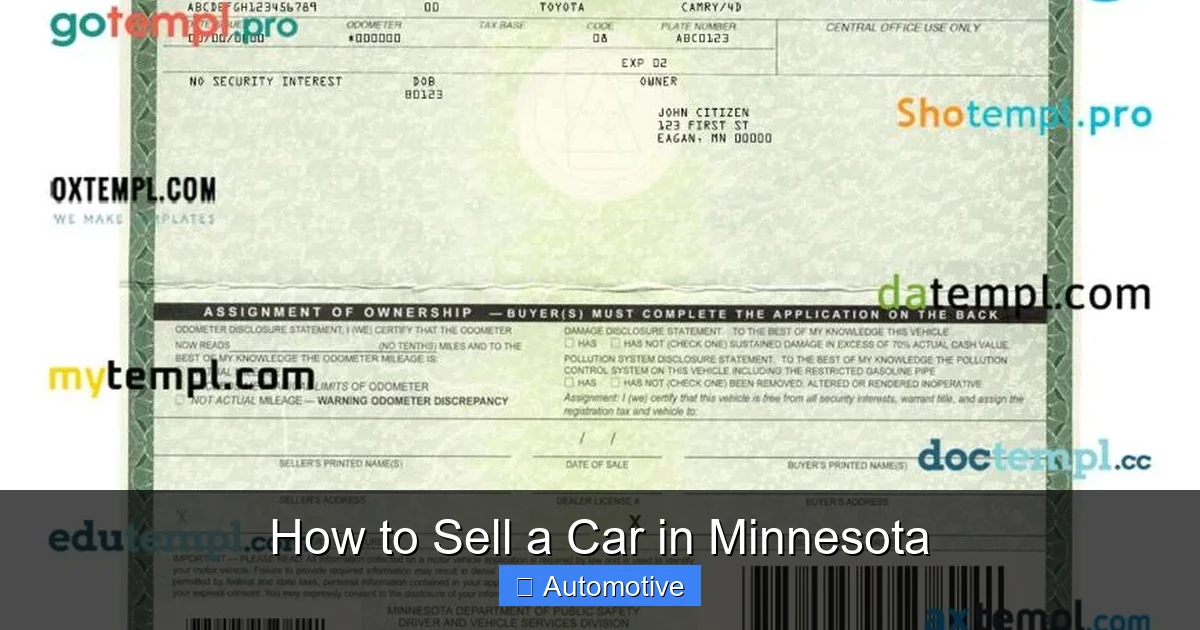
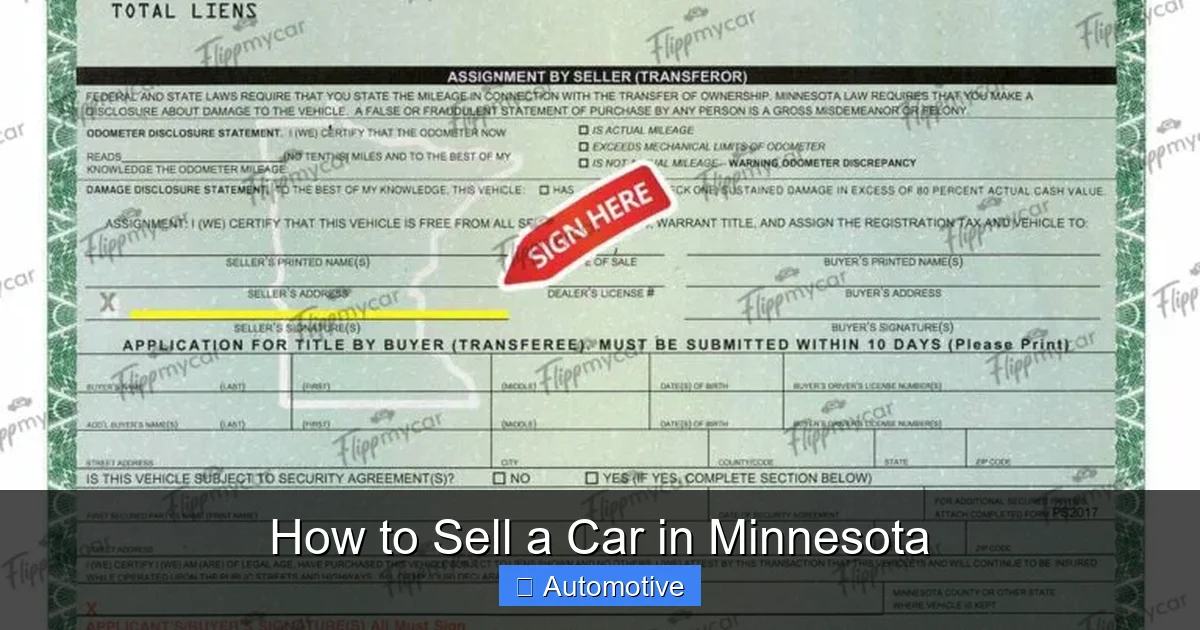
One of the most critical documents is the vehicle title. In Minnesota, the title must be signed over to the buyer at the time of sale. Both the seller and buyer must sign the back of the title in the designated areas. If the title is lost, you’ll need to apply for a duplicate before you can sell the car. You can do this online, by mail, or in person at a DVS office.
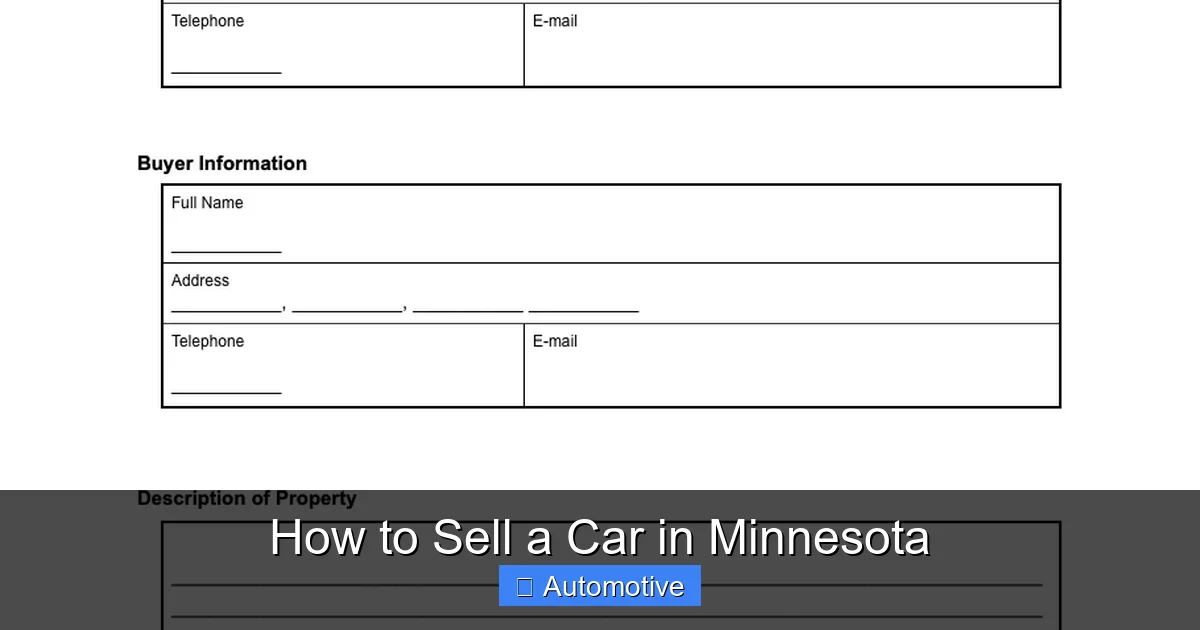
Another essential document is the Bill of Sale. While not always required by law, it’s highly recommended. This form includes details like the sale price, vehicle identification number (VIN), date of sale, and both parties’ names and addresses. It serves as proof of the transaction and can help resolve disputes later. Minnesota provides a free Bill of Sale template on the DVS website, which you can download and fill out.
Liability Release and DMV Notification
After the sale, you must notify the Minnesota DVS that the vehicle is no longer in your possession. This is done by submitting a Notice of Sale form (Form PS2000) within 10 days of the sale. You can file this online, by mail, or in person. Failing to do so could result in fines or even liability if the new owner gets into an accident or receives a ticket before transferring the title.
The Notice of Sale form releases you from responsibility for the vehicle after the sale date. It’s a crucial step that many sellers overlook, but it’s one of the most important parts of the process. Without it, you could be held accountable for parking tickets, toll violations, or even criminal activity involving the car.
Emissions and Safety Inspections
Minnesota does not require a statewide emissions or safety inspection for most vehicles. However, if your car is registered in the Twin Cities metropolitan area (including Hennepin, Ramsey, Dakota, and Anoka counties), it may need an emissions test every two years. This applies to vehicles model year 1996 and newer.
If your car is due for an emissions test, you should complete it before selling. A valid emissions certificate can make your car more attractive to buyers and help avoid last-minute surprises. You can find testing locations and schedules on the Minnesota Pollution Control Agency (MPCA) website.
Determine the Right Price for Your Car
Visual guide about How to Sell a Car in Minnesota
Image source: mytempl.cc
Pricing your car correctly is one of the most important factors in selling it quickly and for a fair amount. Overpricing can scare off buyers, while underpricing means you lose money. The key is to research the market and set a competitive price based on your car’s condition, mileage, features, and local demand.
Start by using trusted online valuation tools like Kelley Blue Book (KBB), Edmunds, or NADA Guides. These platforms allow you to enter your car’s make, model, year, mileage, trim level, and condition to get an estimated value. Be honest about your car’s condition—selecting “excellent” when it’s only “good” will lead to inflated estimates.
Adjust for Local Market Conditions
National pricing tools give you a good starting point, but you should also look at local listings to see what similar cars are selling for in your area. Check platforms like Craigslist, Facebook Marketplace, Autotrader, and Cars.com for vehicles with similar mileage and features. This will help you understand what buyers in Minnesota are willing to pay.
For example, if you’re selling a 2018 Honda CR-V with 60,000 miles in Minneapolis, look at other 2018 CR-Vs in the Twin Cities area. If most are listed between $18,000 and $20,000, pricing yours at $19,500 might be competitive. But if you’re in a rural area like Duluth or Rochester, demand might be lower, so you may need to adjust slightly.
Factor in Condition and Upgrades
Your car’s condition plays a big role in its value. A well-maintained vehicle with clean interiors, new tires, and a full service history will command a higher price than one with dents, stains, or mechanical issues. Be transparent about any problems—buyers appreciate honesty, and it builds trust.
If you’ve made upgrades like new brakes, a recent oil change, or aftermarket features (e.g., a backup camera or premium sound system), mention them in your listing. These can add value, especially if they’re safety-related or improve functionality.
Prepare Your Car for Sale
Visual guide about How to Sell a Car in Minnesota
Image source: legaltemplates.net
First impressions matter—especially when selling a car. A clean, well-maintained vehicle is more likely to sell quickly and for a higher price. Buyers want to see that the car has been cared for, and a little effort on your part can go a long way.
Start by giving your car a thorough cleaning. Wash the exterior, wax it if possible, and clean the windows inside and out. Vacuum the interior, wipe down surfaces, and remove any personal items. Don’t forget the trunk and glove compartment. A fresh scent—like an air freshener or a natural cleaner—can make the car feel inviting.
Address Minor Repairs and Maintenance
You don’t need to spend hundreds on major repairs, but fixing small issues can increase your car’s appeal. Replace burnt-out light bulbs, fix cracked windshields, and patch minor dents or scratches. If the check engine light is on, consider getting it diagnosed—even if it’s a minor issue, buyers may assume the worst.
Gather all maintenance records and receipts. Having a documented history of oil changes, tire rotations, and major repairs shows that the car has been well cared for. You can include these in a folder or binder to give to the buyer.
Take High-Quality Photos
Photos are the first thing buyers see online, so make them count. Take pictures in natural daylight, preferably outdoors. Capture the front, back, sides, interior, dashboard, trunk, and engine bay. Show any flaws honestly—this builds trust and reduces the chance of disputes later.
Use a smartphone or camera with good resolution. Avoid shadows, glare, or cluttered backgrounds. If possible, stage the car in a clean, neutral location like a driveway or empty parking lot.
Choose the Best Way to Sell Your Car
Visual guide about How to Sell a Car in Minnesota
Image source: flippmycar.com
There are several ways to sell a car in Minnesota, and the best method depends on your priorities. Do you want the highest possible price, or do you need a quick sale? Are you comfortable meeting strangers, or would you prefer a hands-off approach?
Private Sale
Selling privately typically yields the highest return. You set the price, negotiate directly with buyers, and avoid dealer fees. However, it requires more effort—advertising, responding to inquiries, scheduling test drives, and handling paperwork.
Private sales are ideal if you have time and want to maximize profit. Just be sure to follow safety precautions: meet in public places, bring a friend, and never share personal information like your home address or Social Security number.
Sell to a Dealership or Online Car Buyer
If you want a fast, hassle-free sale, consider selling to a dealership or an online car-buying service like CarMax, Carvana, or Vroom. These companies offer instant quotes based on your car’s details and will buy it on the spot—often with same-day payment.
The downside is that you’ll likely get less money than a private sale. Dealers need to make a profit when they resell the car, so their offers are usually lower. However, the convenience and speed can be worth it, especially if you’re in a hurry.
Trade-In
Trading in your car at a dealership is another option, especially if you’re buying a new vehicle. The trade-in value is applied directly to your new purchase, reducing the amount you need to finance.
While convenient, trade-ins often offer the lowest value. Dealers may bundle the trade-in with financing or add-ons, making it seem like a better deal than it is. Always get a separate appraisal before agreeing to a trade-in.
Advertise Your Car Effectively
Once your car is ready, it’s time to list it for sale. A strong advertisement can attract serious buyers and help you sell faster. Focus on clarity, honesty, and visibility.
Write a Compelling Description
Your listing should include key details: make, model, year, mileage, trim, engine size, transmission type, fuel economy, and any notable features (e.g., AWD, sunroof, heated seats). Mention recent repairs, maintenance, and upgrades.
Be honest about the car’s condition. Saying “minor paint scratches on rear bumper” is better than hiding flaws. Buyers appreciate transparency, and it reduces the chance of them walking away after a test drive.
Choose the Right Platforms
List your car on multiple platforms to reach more buyers. Popular options in Minnesota include:
– **Craigslist**: Free to list, widely used, but requires caution due to scams.
– **Facebook Marketplace**: Easy to use, integrates with your profile, and allows messaging.
– **Autotrader and Cars.com**: Great for serious buyers, but may charge listing fees.
– **Local classifieds**: Check local newspapers or community boards, especially in smaller towns.
Include your location (e.g., “Minneapolis, MN”) and respond to inquiries quickly. The faster you reply, the more likely you are to close the sale.
Handle the Sale Safely and Legally
When a buyer shows interest, it’s time to move toward closing the deal. Safety and legality should be your top priorities.
Conduct Safe Test Drives
Always meet potential buyers in a public place, like a police station parking lot or a busy shopping center. Bring a friend or family member with you. Ask for the buyer’s driver’s license and verify it matches their name.
Never let the buyer drive alone. Ride along during the test drive, and keep your personal belongings secure. If something feels off, trust your instincts and end the meeting.
Accept Secure Payment
Avoid cash for large amounts—it’s risky and hard to trace. Instead, use a cashier’s check, certified check, or bank transfer. Verify the check with your bank before handing over the keys.
Never accept personal checks or wire transfers from unknown sources. These are common scam tactics.
Complete the Title Transfer
At the time of sale, both you and the buyer must sign the title. Make sure all information is accurate, including the sale price and date. The buyer is responsible for registering the car in their name, but you must provide the signed title and a Bill of Sale.
After the sale, keep copies of all documents for your records. Submit the Notice of Sale form to the DVS within 10 days to release liability.
Conclusion
Selling a car in Minnesota doesn’t have to be complicated. By understanding the legal requirements, pricing your car fairly, preparing it well, and choosing the right selling method, you can complete the process smoothly and securely. Whether you go private, trade-in, or sell to a dealer, the key is to stay informed and take your time.
Remember to clean your car, gather maintenance records, advertise honestly, and protect yourself during transactions. And most importantly, don’t forget to notify the DMV after the sale—it’s a small step that can save you big problems later.
With this guide, you’re ready to sell your car in Minnesota with confidence. Take the first step today, and you could be driving away in your new vehicle—or cashing in on your old one—sooner than you think.
Frequently Asked Questions
Do I need a bill of sale to sell a car in Minnesota?
While not legally required, a bill of sale is highly recommended. It serves as proof of the transaction and includes important details like the sale price, VIN, and both parties’ information. Minnesota provides a free template on the DVS website.
How long do I have to notify the DMV after selling my car in Minnesota?
You must submit a Notice of Sale form (PS2000) to the Minnesota DVS within 10 days of the sale. This releases you from liability and avoids potential fines.
Does my car need an emissions test to be sold in Minnesota?
Only vehicles registered in the Twin Cities metro area (Hennepin, Ramsey, Dakota, and Anoka counties) and model year 1996 or newer require emissions testing. If your car is due, complete the test before selling.
Can I sell my car if the title is lost?
Yes, but you must first apply for a duplicate title through the Minnesota DVS. You can do this online, by mail, or in person. The duplicate must be obtained before the sale can proceed.
What payment methods are safest when selling a car?
Cashier’s checks, certified checks, or bank transfers are the safest options. Avoid personal checks or wire transfers from unknown sources, as they are common scam tactics.
Can I sell my car to a dealership in Minnesota?
Yes, many dealerships in Minnesota buy used cars directly. While the offer may be lower than a private sale, it’s often faster and more convenient. Get multiple quotes to compare.
