
Sell a Car in Minnesota

Selling a car in Minnesota doesn’t have to be stressful. With the right steps—like preparing your vehicle, setting a fair price, and handling legal paperwork—you can complete the process smoothly and securely. Whether you’re upgrading or downsizing, this guide walks you through everything you need to know.
Key Takeaways
- Know Minnesota’s title transfer rules: Minnesota requires a notarized title for most private sales, so plan ahead to avoid delays.
- Clean and inspect your car: A well-maintained vehicle with service records sells faster and for a higher price.
- Price it right: Use tools like Kelley Blue Book or Edmunds to research fair market value based on your car’s condition, mileage, and location.
- Advertise effectively: Use high-quality photos, write a clear description, and list your car on trusted platforms like Craigslist, Facebook Marketplace, or Autotrader.
- Meet buyers safely: Always meet in public places, bring a friend, and never share personal information like your home address or Social Security number.
- Complete the bill of sale: Minnesota requires a bill of sale for private vehicle transactions—download the official form from the MN Department of Public Safety.
- Cancel insurance after sale: Notify your insurer once the sale is complete to avoid unnecessary charges.
📑 Table of Contents
Sell a Car in Minnesota: A Step-by-Step Guide
Thinking about selling your car in Minnesota? Whether you’re upgrading to a newer model, switching to a more fuel-efficient vehicle, or simply don’t need a second car anymore, selling your current ride can be a smart financial move. But like any major transaction, it pays to be prepared. Minnesota has specific rules and best practices when it comes to private car sales, and understanding them can save you time, money, and headaches.
The good news? Selling a car in Minnesota is entirely doable—even if you’ve never done it before. With a little planning, attention to detail, and the right resources, you can find a buyer quickly and complete the sale with confidence. From pricing your vehicle accurately to handling the legal paperwork, this guide covers everything you need to know. We’ll walk you through each step, share practical tips, and help you avoid common pitfalls. So grab a cup of coffee, settle in, and let’s get your car sold the right way.
Why Sell Your Car in Minnesota?
Visual guide about Sell a Car in Minnesota
Image source: cashforcars.com
There are plenty of reasons people choose to sell their cars in Minnesota. Maybe you’ve moved to a city with great public transit, like Minneapolis or St. Paul, and no longer need a vehicle. Or perhaps your current car is costing you too much in repairs, and it’s time to cut your losses. Some Minnesotans sell their cars to fund a down payment on a new one, while others simply want to downsize or switch to an electric vehicle.
Whatever your reason, selling your car can be a smart financial decision. Unlike trading it in at a dealership—which often results in a lower offer—selling privately typically nets you more money. In fact, private sales can bring in hundreds or even thousands of dollars more than a trade-in value. Plus, you have full control over the price, the negotiation, and who you sell to.
Another benefit? Minnesota’s strong used car market. With cold winters and rural areas requiring reliable transportation, there’s consistent demand for well-maintained vehicles—especially SUVs, trucks, and all-wheel-drive models. If your car is in good shape and priced fairly, you’re likely to find a buyer quickly, especially in the spring and summer months when people are more active in the market.
Preparing Your Car for Sale
Visual guide about Sell a Car in Minnesota
Image source: ussellmycar.com
Before you list your car, take the time to get it ready. First impressions matter, and a clean, well-maintained vehicle is far more appealing to buyers. Think of it like staging a house—small improvements can make a big difference in how quickly your car sells and how much you get for it.
Clean Inside and Out
Start with a thorough cleaning. Wash the exterior, wax it if possible, and clean the windows inside and out. Don’t forget the wheels and tires—grime buildup can make a car look neglected. Inside, vacuum the carpets, wipe down surfaces, and remove any personal items. Consider using an odor eliminator if there’s a lingering smell from pets, smoke, or food.
If your car has minor cosmetic issues—like small dents, scratches, or a cracked windshield—consider getting them fixed. These repairs might cost a few hundred dollars, but they can significantly increase your car’s resale value. A fresh coat of paint on a bumper or a repaired dent can make your vehicle look newer and more cared for.
Gather Maintenance Records
Buyers love transparency. Having a complete set of maintenance records shows that you’ve taken good care of your car. Include receipts for oil changes, tire rotations, brake work, and any major repairs. If you’ve kept a log of regular servicing, even better. This builds trust and can justify a higher asking price.
If you don’t have all the records, don’t panic. You can still mention in your ad that the car has been well-maintained and offer to provide what documentation you do have. Just be honest—buyers appreciate honesty more than perfection.
Get a Pre-Sale Inspection
Consider getting a pre-sale inspection from a trusted mechanic. This isn’t required, but it can give you peace of mind and help you spot any hidden issues before a buyer does. If the inspection reveals problems, you can either fix them or adjust your price accordingly. Alternatively, you can offer the inspection report to potential buyers as proof of your car’s condition.
Some sellers even use the inspection as a selling point. For example, “Recently inspected—brakes, tires, and fluids all in great shape!” This kind of detail can set your listing apart from others.
How to Price Your Car in Minnesota
Visual guide about Sell a Car in Minnesota
Image source: images.template.net
Pricing your car correctly is one of the most important steps in the selling process. Set it too high, and you’ll scare off buyers. Set it too low, and you’ll leave money on the table. The key is to find the sweet spot—a price that reflects your car’s true market value.
Use Online Valuation Tools
Start by researching your car’s value using trusted online tools. Kelley Blue Book (KBB), Edmunds, and NADA Guides are all excellent resources. Enter your vehicle’s make, model, year, mileage, condition, and location (Minnesota, in this case). These tools will give you a range of values—typically “private party,” “trade-in,” and “dealer retail.”
For private sales, focus on the “private party” value. This is what individual buyers are likely to pay. Keep in mind that these tools provide estimates, so use them as a starting point, not the final word.
Check Local Listings
Next, look at similar cars for sale in your area. Check Craigslist, Facebook Marketplace, Autotrader, and local classifieds. Compare vehicles with similar mileage, condition, and features. Are they priced higher or lower than your KBB estimate? This will help you understand the local market and adjust your price accordingly.
For example, if you’re selling a 2018 Honda CR-V with 60,000 miles and most similar listings are priced between $18,000 and $20,000, you’ll want to stay within that range. If your car has extra features like a sunroof or leather seats, you might price it on the higher end.
Factor in Condition and Extras
Your car’s condition plays a big role in pricing. A vehicle with low mileage, no accidents, and a clean title will command a higher price than one with high mileage or a history of repairs. Be honest about your car’s condition when setting your price.
Also, consider any extras that add value. New tires, a recent brake job, a premium sound system, or a full tank of gas can all be selling points. You don’t need to increase your price dramatically for these, but they can justify staying on the higher end of your range.
Where to List Your Car for Sale
Once your car is clean, priced, and ready to go, it’s time to find a buyer. There are several platforms you can use to list your vehicle, each with its own pros and cons.
Online Marketplaces
Online platforms are the most popular way to sell a car in Minnesota. They offer wide reach, easy listing tools, and built-in communication features. Here are some top options:
– **Facebook Marketplace:** Free to use and integrated with your Facebook profile. Great for local buyers and easy to share with friends and family.
– **Craigslist:** A long-standing favorite for private sales. Free in most areas, but be cautious of scams.
– **Autotrader:** A trusted site for car buyers. Offers both free and paid listing options, with paid listings getting more visibility.
– **Cars.com:** Another reputable platform with detailed listing tools and buyer resources.
When creating your listing, use a clear, descriptive title like “2019 Toyota Camry – Low Mileage, Clean Title, Excellent Condition.” Include high-quality photos from multiple angles—front, back, sides, interior, engine bay, and trunk. Good lighting and a clean background make a big difference.
Local Classifieds and Community Boards
Don’t overlook traditional methods. Local newspapers, community bulletin boards, and even word of mouth can still be effective. If you live in a smaller town or rural area, posting a flyer at the library, grocery store, or community center might attract local buyers.
You can also tell friends, family, and coworkers you’re selling your car. Sometimes the best buyers are people you already know and trust.
Avoid Scams and Fraud
Unfortunately, car scams are common. Be wary of buyers who:
– Offer to pay with a cashier’s check or money order and ask for a refund.
– Want to ship the car without seeing it.
– Ask for your Social Security number or bank details.
– Pressure you to act quickly.
Always meet in person, in a public place, and never accept payment until the funds have cleared. If something feels off, trust your instincts and walk away.
Handling the Sale: Paperwork and Legal Requirements
Selling a car in Minnesota involves more than just handing over the keys. You’ll need to complete several legal steps to transfer ownership and protect yourself from liability.
Minnesota Title Transfer Rules
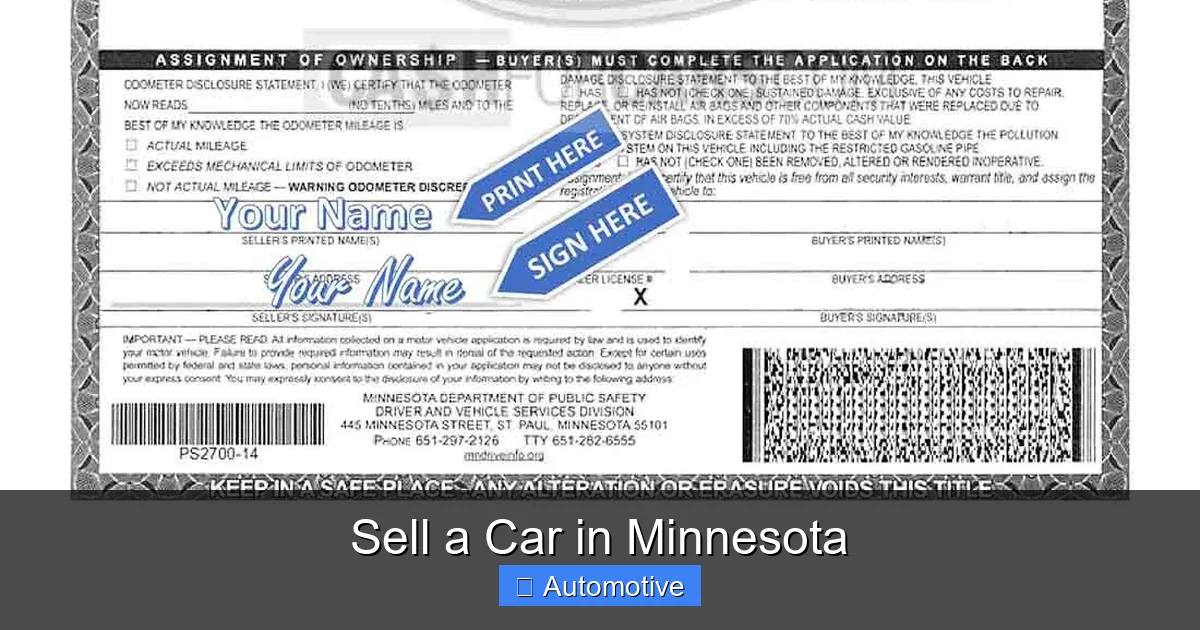
In Minnesota, the seller must sign over the title to the buyer. The title must be notarized for most private sales—this is a key requirement. Both you and the buyer should be present when the title is signed, or the buyer can sign with a notarized power of attorney.
Make sure the title is filled out correctly. Include the sale price, odometer reading, and both parties’ names and addresses. Never leave any fields blank—use “N/A” if necessary.
Bill of Sale
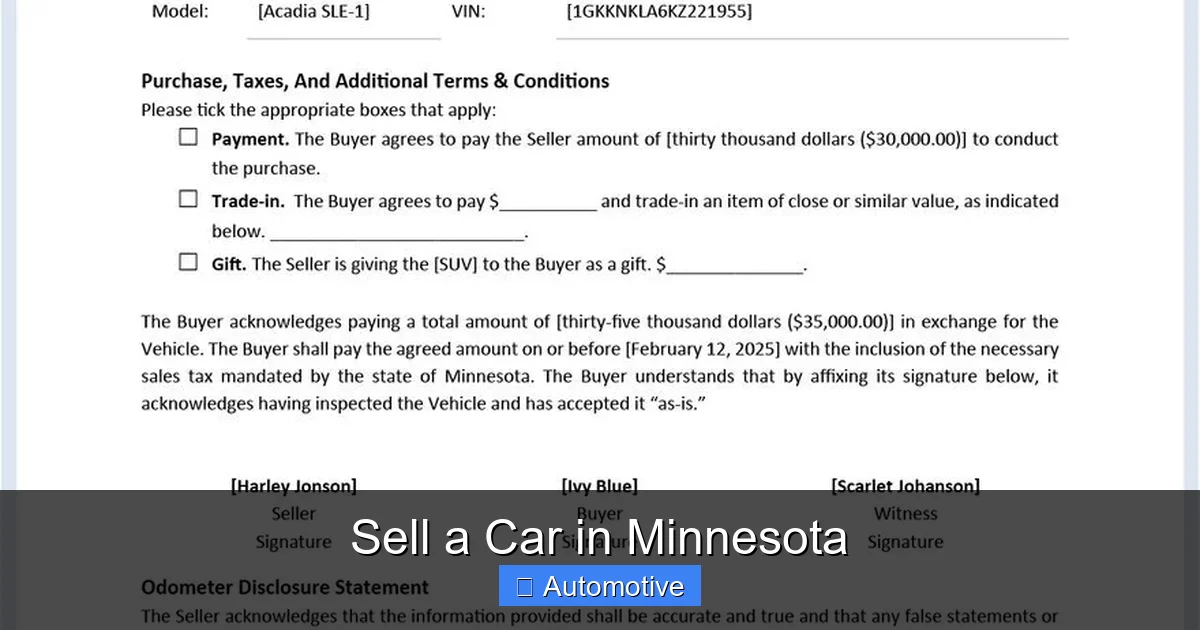
Minnesota requires a bill of sale for private vehicle transactions. This document serves as proof of the sale and includes details like the vehicle identification number (VIN), sale price, date, and both parties’ information.
You can download the official Minnesota Bill of Sale form from the Minnesota Department of Public Safety website. Fill it out completely and have both you and the buyer sign it. Keep a copy for your records.
Release of Liability
After the sale, you must notify the Minnesota Department of Public Safety that you’ve sold the vehicle. This is called a “release of liability.” It protects you from being held responsible for parking tickets, tolls, or accidents that occur after the sale.
You can submit the release of liability online or by mail. It’s free and takes just a few minutes. Be sure to do this within 10 days of the sale to avoid any issues.
Cancel Your Insurance
Once the sale is complete, contact your insurance company to cancel or adjust your coverage. You don’t want to keep paying for a car you no longer own. If you’re buying a new vehicle, you can often transfer your policy or get a new quote right away.
Negotiating with Buyers
Negotiation is a normal part of selling a car. Most buyers will try to haggle, so be prepared. Know your bottom line—the lowest price you’re willing to accept—and stick to it.
Be Polite but Firm
Stay calm and respectful during negotiations. If a buyer offers too low, explain why your price is fair. Mention the car’s condition, low mileage, recent repairs, or any extras. You can say something like, “I understand you’d like a lower price, but this car has been well-maintained and is priced competitively based on local listings.”
Know When to Walk Away
Not every offer is worth accepting. If a buyer is overly aggressive, asks for unreasonable discounts, or seems suspicious, it’s okay to say no. There are plenty of other buyers out there.
Consider Offering Incentives
If you’re having trouble selling, consider sweetening the deal. Offer to include a full tank of gas, a free oil change, or a set of winter tires. These small perks can make your listing more attractive without significantly cutting into your profit.
Final Tips for a Smooth Sale
Selling a car in Minnesota can be a smooth and rewarding experience if you follow these final tips:
– **Be honest in your listing.** Don’t hide problems or exaggerate features. Honesty builds trust and prevents disputes later.
– **Respond quickly to inquiries.** Buyers often contact multiple sellers. A fast reply can put you ahead of the competition.
– **Meet in a safe, public place.** Police stations often have designated “safe exchange zones” for online transactions.
– **Bring a friend.** Safety first—never meet a buyer alone.
– **Have all documents ready.** Bring the title, bill of sale, and any maintenance records to the meeting.
– **Accept secure payment.** Cash, cashier’s checks, or bank transfers are safest. Avoid personal checks.
Conclusion
Selling a car in Minnesota doesn’t have to be complicated. With the right preparation, pricing, and paperwork, you can complete the process efficiently and securely. Start by cleaning and inspecting your vehicle, then research a fair price using online tools and local listings. List your car on trusted platforms, respond promptly to inquiries, and always meet buyers in safe, public locations.
Remember to handle the legal side carefully—sign a notarized title, complete a bill of sale, and file a release of liability with the state. These steps protect both you and the buyer and ensure a smooth transfer of ownership.
Whether you’re upgrading to a new ride or simply making a change, selling your car privately in Minnesota can put extra cash in your pocket. Take your time, stay organized, and don’t rush the process. With patience and attention to detail, you’ll find the right buyer and close the deal with confidence.
Frequently Asked Questions
Do I need to notarize the title when selling a car in Minnesota?
Yes, in most cases, the title must be notarized when selling a car in Minnesota. Both the seller and buyer should sign the title in front of a notary public. This helps prevent fraud and ensures the transfer is legally valid.
Can I sell my car in Minnesota if I still owe money on it?
Yes, but you’ll need to pay off the loan first or arrange for the buyer to assume the loan. Most private buyers prefer to purchase a car with a clear title, so it’s usually best to pay off the loan before listing your vehicle.
How long does it take to sell a car in Minnesota?
It varies, but most cars sell within 2 to 6 weeks if priced correctly and listed on popular platforms. Well-maintained vehicles in high-demand categories (like SUVs or trucks) often sell faster, especially in spring and summer.
What should I do if a buyer wants to pay with a personal check?
Be cautious. Personal checks can bounce. If you accept one, wait for it to fully clear with your bank before handing over the keys and title. Cash, cashier’s checks, or bank transfers are safer options.
Do I need to provide a warranty when selling my car privately in Minnesota?
No, private sales in Minnesota are typically “as-is,” meaning the buyer accepts the car in its current condition. However, you must disclose any known issues. Offering a short warranty or repair credit can make your listing more attractive.
Can I sell my car online without meeting the buyer in person?
It’s not recommended. Meeting in person allows you to verify the buyer’s identity, inspect payment, and complete the paperwork safely. If the buyer is from out of state, consider using an escrow service or meeting at a secure location like a police station.