
Is It Illegal to Sell a Car Without a Catalytic Converter

Selling a car without a catalytic converter is illegal in most U.S. states and violates federal emissions laws. Doing so can result in hefty fines, failed inspections, and legal liability. Always ensure your vehicle meets emissions standards before listing it for sale.
Key Takeaways
- Federal law prohibits tampering with emissions equipment: The Clean Air Act makes it illegal to remove or disable a catalytic converter on vehicles designed to have one.
- State laws vary but are generally strict: Most states require catalytic converters on vehicles registered within their borders, especially in emissions testing zones.
- Selling a car without a catalytic converter can lead to fines: Penalties range from hundreds to thousands of dollars, depending on jurisdiction and intent.
- Buyers may face registration and inspection issues: A vehicle missing a catalytic converter will likely fail state inspections and cannot be legally registered.
- Exceptions exist for certain vehicles: Older cars (pre-1975), off-road vehicles, and some custom builds may be exempt, but documentation is key.
- Disclose modifications honestly: If you’ve removed the catalytic converter, you must disclose it to potential buyers to avoid fraud claims.
- Reinstalling the part is often required: To legally sell the car, you may need to reinstall a compliant catalytic converter before transfer of ownership.
📑 Table of Contents
- Is It Illegal to Sell a Car Without a Catalytic Converter?
- Understanding the Role of the Catalytic Converter
- Federal Laws and the Clean Air Act
- State Laws and Emissions Requirements
- Can You Legally Sell a Car Without a Catalytic Converter?
- Disclosure and Honesty in Car Sales
- What to Do If You Want to Sell a Car Without a Catalytic Converter
- The Environmental and Social Impact
- Conclusion: Play It Safe and Stay Legal
Is It Illegal to Sell a Car Without a Catalytic Converter?
So, you’ve got a car you want to sell—maybe it’s been sitting in the garage for years, or you’re upgrading to something newer. But there’s a catch: the catalytic converter is missing. Maybe it was stolen, or perhaps you removed it for performance reasons. Now you’re wondering: can you legally sell this car as-is?
The short answer? No, it’s generally illegal to sell a car without a catalytic converter—especially if it was originally equipped with one. But the full story is a bit more complicated. Federal law, state regulations, and even local emissions programs all play a role in determining whether your sale is on the right side of the law.
This article will walk you through everything you need to know about selling a car without a catalytic converter. We’ll cover the legal landscape, the risks involved, exceptions to the rule, and what you should do if you find yourself in this situation. Whether you’re a private seller or a dealership, understanding these rules can save you from fines, legal trouble, and a failed sale.
Let’s dive in.
Understanding the Role of the Catalytic Converter
Visual guide about Is It Illegal to Sell a Car Without a Catalytic Converter
Image source: i.ytimg.com
Before we get into the legal nitty-gritty, it helps to understand what a catalytic converter actually does—and why it’s so important.
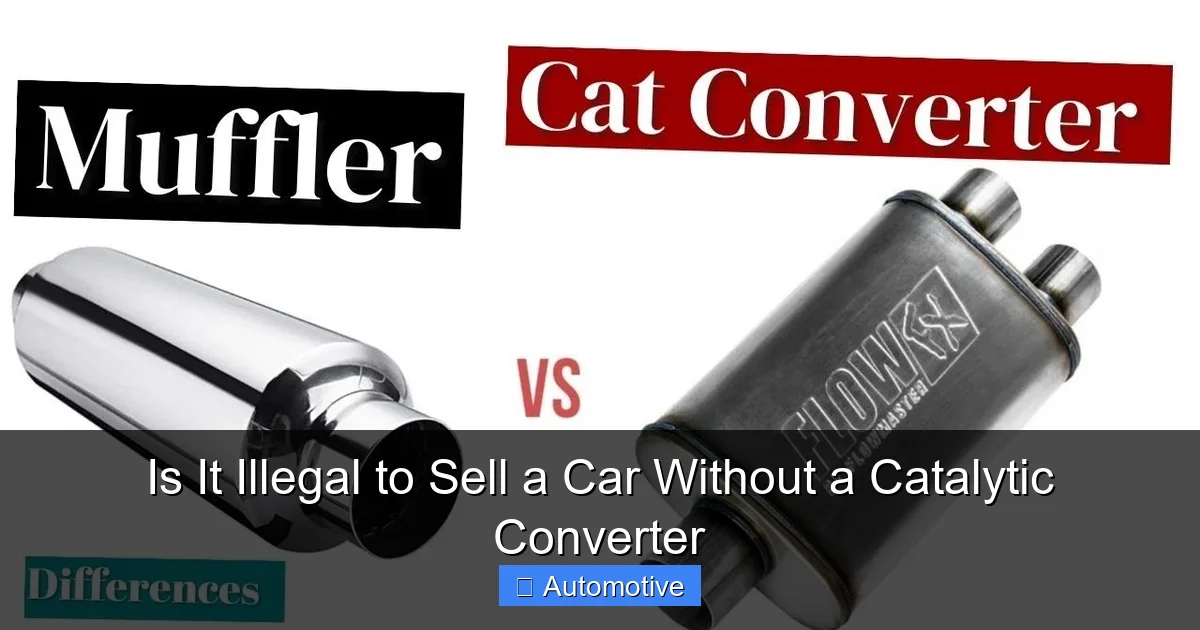
The catalytic converter is a key part of your car’s exhaust system. It’s designed to reduce harmful emissions by converting toxic gases like carbon monoxide, nitrogen oxides, and hydrocarbons into less harmful substances like carbon dioxide, nitrogen, and water vapor. In short, it helps your car pollute less.
Most gasoline-powered vehicles manufactured after 1975 are required to have a catalytic converter. This requirement came into effect as part of the Clean Air Act, a landmark piece of environmental legislation passed in the 1970s to combat air pollution.
Over the years, catalytic converters have become more advanced and efficient. Modern vehicles often have multiple converters—some even have them integrated into the exhaust manifold for faster warm-up and better performance.
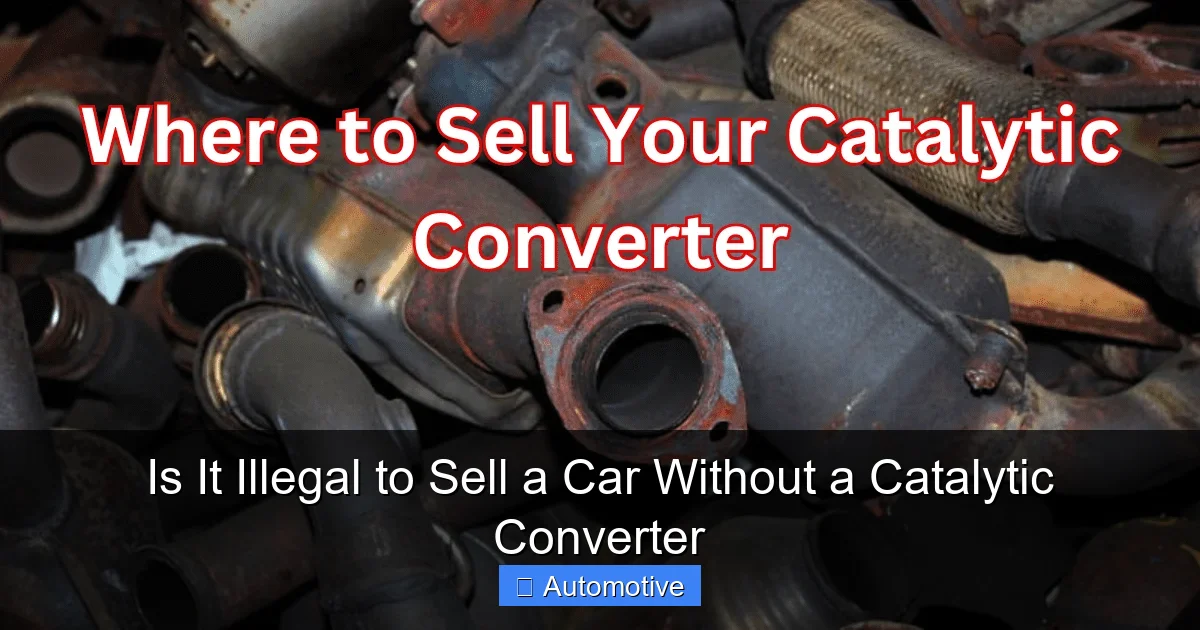
But here’s the thing: catalytic converters contain precious metals like platinum, palladium, and rhodium. That’s made them a target for thieves. In recent years, catalytic converter theft has surged, especially in areas with high vehicle density. A stolen converter can cost hundreds or even thousands of dollars to replace.
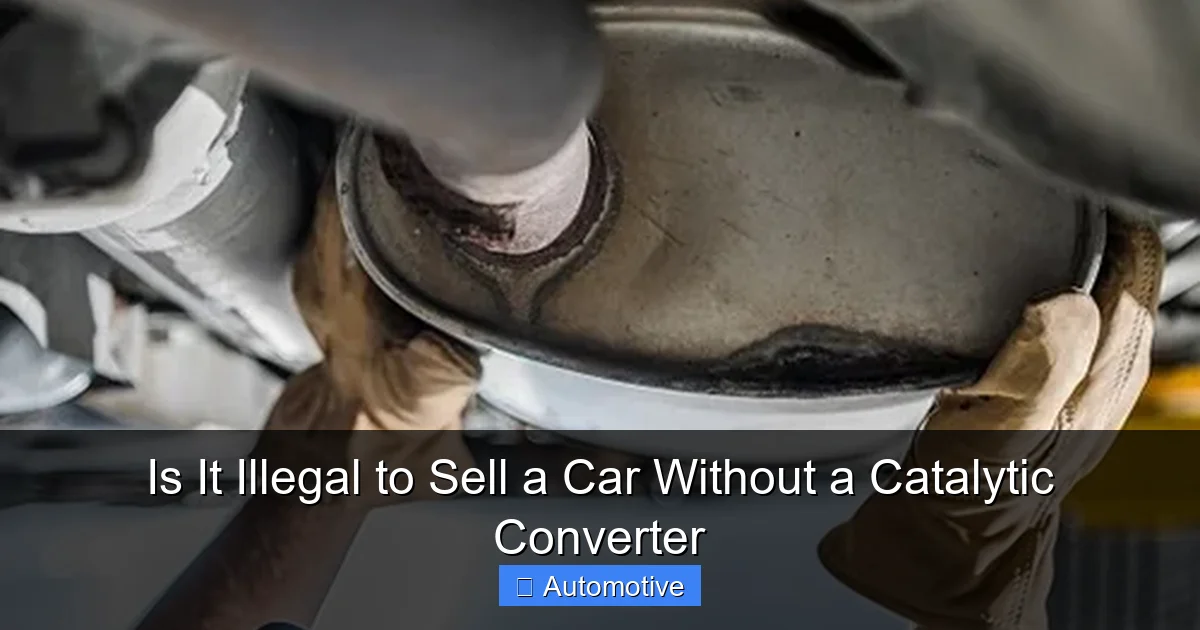
Some car owners, particularly those modifying vehicles for performance, choose to remove the catalytic converter to increase horsepower or improve exhaust flow. While this might sound appealing, it’s not without consequences—especially when it comes to selling the car.
Federal Laws and the Clean Air Act
Visual guide about Is It Illegal to Sell a Car Without a Catalytic Converter
Image source: mechanictimes.com
When it comes to emissions equipment, federal law sets the baseline. The Clean Air Act, enforced by the Environmental Protection Agency (EPA), is the cornerstone of U.S. air quality regulation.
Under Section 203(a)(3) of the Clean Air Act, it is illegal to:
– Remove or render inoperative any device or element of design installed on a motor vehicle in compliance with regulations.
– Knowingly sell, offer for sale, or install any part that bypasses, defeats, or renders inoperative any emissions control device.
This means that if your car was originally manufactured with a catalytic converter, removing it—or selling a car without one—is a violation of federal law.
The EPA takes this seriously. While they typically focus enforcement on manufacturers and large-scale violators, private individuals can still face penalties, especially if they’re knowingly selling non-compliant vehicles.
Penalties for Violating the Clean Air Act
Violating the Clean Air Act can result in serious consequences. Civil penalties can reach up to $4,819 per violation per day, according to 2023 EPA figures. Criminal penalties may apply in cases of intentional tampering, especially if the violation contributes to significant environmental harm.
While it’s rare for an individual seller to face criminal charges, the risk isn’t zero—particularly if you’re selling multiple vehicles or advertising them as “performance-tuned” without disclosing the missing emissions equipment.
Does the EPA Enforce This Against Private Sellers?
You might be thinking: “Will the EPA really come after me for selling my old Honda Civic?” The answer is probably not—but that doesn’t mean you’re off the hook.
The EPA typically focuses on manufacturers, repair shops, and aftermarket parts sellers who systematically violate emissions laws. However, if your sale draws attention—say, a buyer reports you, or you’re advertising a fleet of modified vehicles—you could become a target.
More commonly, the legal risk comes from state and local authorities, which have their own enforcement mechanisms.
State Laws and Emissions Requirements
Visual guide about Is It Illegal to Sell a Car Without a Catalytic Converter
Image source: albertacashforcars.ca
While federal law sets the standard, state laws often go further. Most states have adopted their own emissions standards, and many require vehicles to pass emissions inspections before they can be registered or sold.
In states with strict emissions programs—like California, New York, and Colorado—a missing catalytic converter will almost certainly cause a vehicle to fail inspection. That means the buyer won’t be able to register the car, making the sale practically impossible.
Even in states without mandatory emissions testing, the vehicle must still comply with federal emissions standards if it was originally equipped with a catalytic converter.
California’s Strict Emissions Standards
California is a leader in vehicle emissions regulation. The state’s Air Resources Board (CARB) enforces some of the toughest rules in the country.
In California, it is illegal to sell a vehicle that has been modified to remove or bypass emissions controls—including the catalytic converter. Vehicles must pass a smog check before transfer of ownership, and a missing converter will result in an automatic failure.
Sellers in California must also provide a Smog Check certificate at the time of sale. If the car doesn’t have a catalytic converter, it won’t pass—and you can’t legally complete the sale.
Other States with Emissions Testing
Several other states require emissions inspections, including:
– New York
– Colorado
– Illinois
– Massachusetts
– Maryland
– New Jersey
– Pennsylvania
– Texas (in certain counties)
– Virginia
In these states, a vehicle without a catalytic converter will fail inspection. Even if you’re not in an inspection zone, the vehicle must still comply with federal standards if it was originally equipped with emissions controls.
States Without Emissions Testing
In states without mandatory emissions testing—like Florida, Arizona, or Alabama—the rules are a bit looser. However, the federal Clean Air Act still applies. Selling a car without a catalytic converter could still be considered a violation, especially if the vehicle was manufactured after 1975 and originally had one.
Additionally, if the buyer plans to register the vehicle in a state with emissions requirements, they’ll face the same hurdles. This could lead to disputes, returns, or even legal action against you as the seller.
Can You Legally Sell a Car Without a Catalytic Converter?
Now for the million-dollar question: can you legally sell a car without a catalytic converter?
The answer depends on several factors, including the vehicle’s age, its original equipment, and where you’re selling it.
Vehicles Exempt from Catalytic Converter Requirements
There are a few exceptions where selling a car without a catalytic converter may be legal:
– Pre-1975 vehicles: Cars manufactured before 1975 were not required to have catalytic converters. If your vehicle is from this era and was never retrofitted, it may be exempt.
– Off-road or competition vehicles: Vehicles designed exclusively for off-road use (like dirt bikes or race cars) may not require catalytic converters. However, they cannot be driven on public roads.
– Custom or kit cars: Some custom-built vehicles may be exempt if they’re not intended for street use or are registered as such.
– Vehicles with documented modifications: In rare cases, a vehicle may have been legally modified under a state-approved program. Documentation is essential.
Even with these exceptions, you must be able to prove the vehicle qualifies. Simply claiming it’s “vintage” or “off-road” won’t cut it without proper paperwork.
Selling a Car with a Removed Converter: The Risks
If your car was originally equipped with a catalytic converter and you’ve removed it, selling it without reinstalling the part is risky.
Here’s why:
– It violates federal law: The Clean Air Act prohibits tampering with emissions equipment.
– It may violate state law: Many states have their own anti-tampering statutes.
– The buyer can’t register it: Most states won’t allow registration without a functioning emissions system.
– You could be sued: If the buyer discovers the missing converter after purchase, they may claim fraud or misrepresentation.
– You may face fines: Authorities can impose penalties, especially if the sale is reported.
What If the Converter Was Stolen?
If your catalytic converter was stolen—and you haven’t replaced it—you’re in a tough spot. While theft is not your fault, selling the car without addressing the issue is still problematic.
You have a few options:
1. Replace the converter: Install a new, EPA-compliant catalytic converter before selling. This is the safest and most legal route.
2. Disclose the theft: Be upfront with buyers about the missing part and the reason. Some buyers may still be interested, especially if they plan to use the car off-road or in a state with no emissions testing.
3. Lower the price: Factor in the cost of replacement when pricing the vehicle. A missing converter can reduce a car’s value by $1,000 or more.
Even with disclosure, selling a car with a missing converter due to theft may still raise red flags. Some buyers will walk away, and others may report the sale to authorities.
Disclosure and Honesty in Car Sales
When selling a car, honesty is not just the best policy—it’s often the law.
In most states, sellers are required to disclose known defects or modifications that affect the vehicle’s safety, emissions, or value. Failing to disclose a missing catalytic converter could be considered fraud.
What You Should Disclose
If your car is missing a catalytic converter—whether due to theft, modification, or damage—you should disclose it in your listing and during negotiations. Include:
– The fact that the converter is missing
– Why it was removed (e.g., theft, performance upgrade)
– Whether you plan to replace it before sale
– Any documentation (e.g., police report for theft)
Being transparent builds trust and reduces the risk of legal trouble.
How to Disclose in Your Listing
When listing your car online or in print, be clear and direct. For example:
> “Catalytic converter was stolen in 2023. Not replaced. Vehicle sold as-is. Buyer responsible for emissions compliance and registration.”
This sets expectations and protects you from future claims.
As-Is Sales and Liability
Selling a car “as-is” means the buyer accepts it in its current condition, with all faults. While this limits your liability, it doesn’t absolve you of legal obligations.
You still cannot sell a vehicle that violates federal or state emissions laws—even if it’s “as-is.” The buyer’s inability to register the car doesn’t excuse your violation.
What to Do If You Want to Sell a Car Without a Catalytic Converter
If you’re determined to sell your car—even without a catalytic converter—here’s what you should do to minimize risk:
1. Check Your State’s Laws
Research your state’s emissions requirements. Visit your state’s Department of Motor Vehicles (DMV) or environmental agency website. Look for rules on catalytic converters, emissions testing, and vehicle sales.
2. Determine if Your Vehicle Is Exempt
If your car is pre-1975, off-road only, or otherwise exempt, gather documentation. This might include the owner’s manual, build records, or DMV classification.
3. Consider Reinstalling the Converter
The safest and most legal option is to replace the catalytic converter. You can buy a new or used EPA-compliant unit. While it’s an added expense, it increases the car’s value and ensures a smooth sale.
4. Disclose Everything
Be honest about the missing part. Include it in your listing, during test drives, and in any written agreements.
5. Price the Car Accordingly
Factor in the cost of replacement. A car without a catalytic converter is worth less—sometimes significantly less. Price it fairly to attract serious buyers.
6. Consult a Mechanic or Attorney
If you’re unsure about the legality, talk to a trusted mechanic or attorney. They can help you understand your obligations and avoid costly mistakes.
The Environmental and Social Impact
Beyond the legal risks, removing a catalytic converter has real environmental consequences.
Catalytic converters reduce harmful emissions by up to 90%. Without one, your car releases more carbon monoxide, nitrogen oxides, and hydrocarbons—contributing to smog, respiratory illness, and climate change.
While one car may seem like a small part of the problem, widespread removal of emissions controls would have a significant impact on air quality.
Additionally, catalytic converter theft has become a major issue. Thieves often target hybrids and SUVs, stripping the precious metals and leaving owners with expensive repairs. Selling a car without a converter—even if legally replaced—can perpetuate demand for stolen parts.
Conclusion: Play It Safe and Stay Legal
Selling a car without a catalytic converter is a risky move—both legally and practically. While there are a few exceptions, most vehicles manufactured after 1975 must have a functioning catalytic converter to comply with federal and state laws.
The best course of action is to reinstall the part before selling. It ensures compliance, increases the car’s value, and protects you from fines or legal trouble.
If you can’t or won’t replace it, be honest with buyers and price the car accordingly. But understand that many buyers will walk away, and you may still face regulatory scrutiny.
At the end of the day, the catalytic converter isn’t just a piece of metal—it’s a critical component of your car’s emissions system. Respecting its role helps keep our air cleaner and our roads safer.
So before you list that car for sale, ask yourself: is it legal, safe, and fair? If the answer isn’t a clear “yes,” it’s time to make some changes.
Frequently Asked Questions
Can I sell a car without a catalytic converter in Texas?
In Texas, only certain counties require emissions testing. However, federal law still applies—selling a car without a catalytic converter that was originally equipped with one is illegal. Buyers in non-testing areas may still face registration issues if they move to a testing zone.
What happens if I sell a car without a catalytic converter?
You could face fines, legal action, or a failed sale. The buyer may not be able to register the vehicle, and if they report the issue, authorities may investigate. In some cases, you could be sued for fraud if you didn’t disclose the missing part.
Is it legal to remove a catalytic converter for performance?
Removing a catalytic converter for performance reasons is illegal under the Clean Air Act, even if you’re not selling the car. It’s considered tampering with emissions equipment and can result in fines or failed inspections.
Can I sell a car with a stolen catalytic converter?
You can sell it, but you must disclose the theft and the missing part. The buyer will need to replace it to register the vehicle in most states. Selling without disclosure could lead to legal trouble.
Do all cars need a catalytic converter?
Most gasoline-powered cars made after 1975 require a catalytic converter. Pre-1975 vehicles, off-road vehicles, and some custom builds may be exempt, but documentation is required.
How much does it cost to replace a catalytic converter?
Replacement costs vary widely, from $500 to $2,500 or more, depending on the vehicle and whether you use OEM or aftermarket parts. Labor costs can add another $100–$300.